










Tax and accounting
54% better lead quality after using LeadJourney for marketing
Karsten Guhr
Managing Director
Read the storyCustomer journey tracking
The ad click, the ChatGPT answer, the email they came back from: every touch recorded first-party and stitched into one journey.
30-day money-back guaranteeSetup with a tracking expert
Rated by teams that see the whole journey
Journeys tracked for






One lead, five touches, one deal
 PerplexityClicked your page in an answerDay 1
 LinkedIn AdsClicked the sponsored case studyDay 4
 Google organicRead the pricing guide on a phoneDay 9
 HubSpotDeal moved to Closed won, €18,400Day 31
Last click credits the email. The journey began in a Perplexity answer twelve days earlier.
The definition
In short
Customer journey tracking records every touchpoint between a person and a business, in order, from the first ad click, search or AI answer to the closed deal in the CRM. Unlike a conversion report, it keeps the whole path per person, across sessions and devices, so a team can see which channels start journeys, which assist and which close.
Store each ad click, organic visit, AI referral, email click and return visit as its own event with its source. Conversion tracking keeps the last step; journey tracking keeps all of them.
Stitch the sessions from a phone and a laptop into one person when they identify with a form, a call or a booking, so a journey is not reported as three strangers. See cross-device journeys.
Join the journey to the lead, the pipeline stage and the closed amount in HubSpot, Pipedrive, Close or Salesforce, so the path ends in revenue rather than at a thank-you page.
Report first click, last click and the models in between over the recorded touches, so the channel that opened a journey is measured next to the one that ended it.
Why the conversion report is not enough
Analytics counts sessions, the CRM stores one lead source field, and neither keeps the path in between. What went missing is the order of events per person.
The result is a journey report that starts at the end. The channels that open journeys are the ones nobody can defend in the budget meeting.
Watch it
How every touchpoint from the first click to the closed deal gets recorded, and what the channels look like after that.
Case studies
One measured result per customer, with the person, the role and the company behind it.
Tax and accounting
54% better lead quality after using LeadJourney for marketing
Karsten Guhr
Managing Director
Read the story

SEO agency
€500k MRR reached profitably, scaling an SEO agency on performance marketing
Nikita Yatsun
Managing Director
Read the story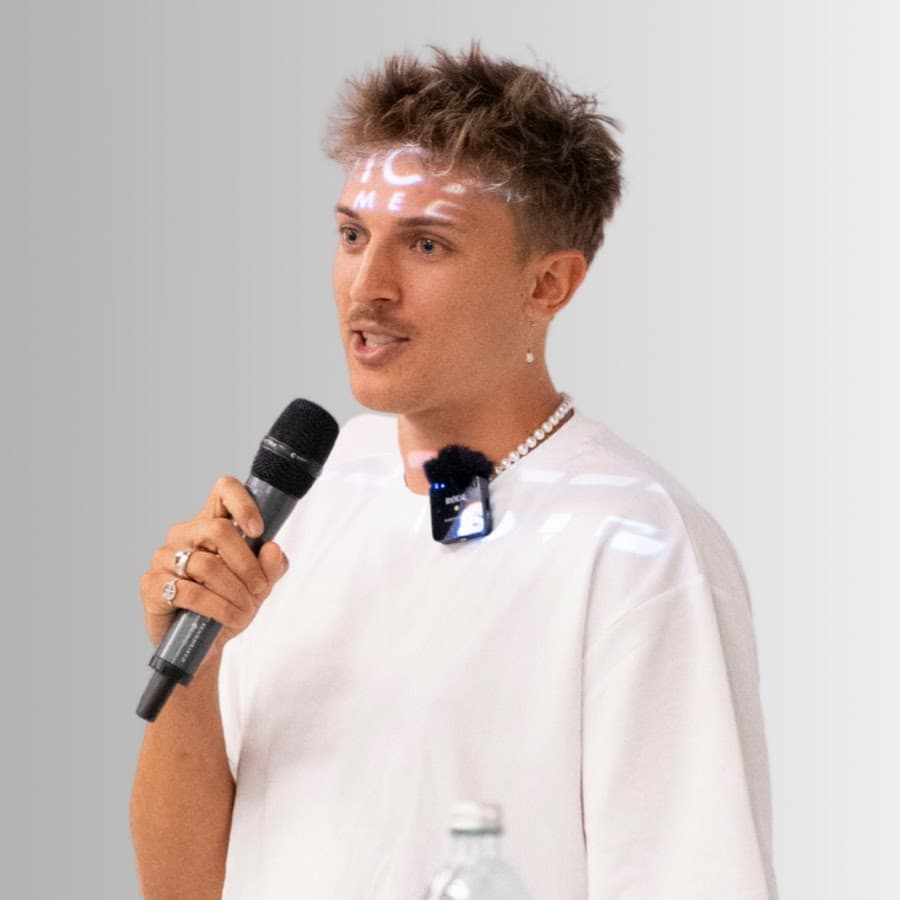
Klickkraft GmbH
Business coaching
€10-20k in monthly Meta spend, tied to qualified leads and revenue per ad
Florian Buck
Managing Director
Read the story

LinkedIn growth agency
2x customer retention, once every LinkedIn touchpoint was tracked to revenue
Marc Richard
CEO
Read the story

Digital publishing
Which article produced the lead and the revenue, across AI and organic search
Andreas Malkow
CEO & Head of PR
Read the story

SEO and GEO agency
Proven ROI on every retainer, from organic and AI search leads through to revenue
Philipp Nessmann
Managing Director
Read the story
Getreach
Backlinks marketplace (SaaS)
The journey, drawn
This is the journey view in the product: every touch in order, with its source, its device and its day. What changes at the end is which of them gets credited.
Lead journey
Diagram: the journey of one lead, Tom Becker of BuildRight GmbH, drawn left to right on one beam. Day 1, a click from a Perplexity answer on mobile. Day 4, a click on a sponsored LinkedIn case study. Day 9, a return visit from Google organic on a desktop with no click ID. Day 12, a demo booked from a nurture email. Day 31, the deal closed won at 18,400 euros and written back to HubSpot. Under it the same journey read by three attribution models: last click credits the email, first click credits Perplexity, and LeadJourney's multi-touch models credit all four channels.
The same journey, read by three attribution models
How the data moves
Each touchpoint is recorded on your own domain with its source, campaign and click ID. When the visitor identifies, the earlier sessions from every device are stitched into one journey, written to the lead in your CRM, and the outcome travels back along it.
Every channel a journey can start in
 Google Ads
 Meta AdsLinkedIn Ads
 ChatGPT
LeadJourney
One identity, every touchpoint
What every journey ends in
Written to the record in your CRM


 and 100+ more
Integrations
The ad platforms and channels a touchpoint can come from, and the CRMs the outcome is read back from. Open any tile for what exactly moves between LeadJourney and that tool.
Spend, campaign structure and click IDs come in. Closed deals go back out as offline conversions.
Meta AdsGoogle AdsLinkedIn Ads Microsoft Bing Ads
 TikTok AdsSoon
 Pinterest AdsSoon
 Reddit Ads
 X Ads
X Ads Taboola Ads
 Outbrain AdsChatGPT Ads
The traffic your analytics still files under direct. No setup, the tracking script separates it.
Lead stage and deal value flow in. Every campaign sees the revenue it actually produced.
HubSpotSalesforce Microsoft Dynamics 365Pipedrive
 Zoho CRMAttioClose
 GoHighLevel
 ActiveCampaign
 Odoo
Odoo Patch Retention
 Podium
 monday.comSoon
What the software does
Ad clicks with their click IDs, organic search, answers in ChatGPT and Perplexity, email, referrals and direct returns are recorded first-party as separate events, so the path is complete before the lead exists.
Visits stay anonymous until the person identifies. From that moment their earlier sessions, on every device, are stitched into one journey: the click on the phone and the demo on the laptop are one person.
The path is written to the contact in HubSpot, Pipedrive, Close or Attio natively, Salesforce and 100+ others by webhook, so the CRM lead source is the journey's first touch rather than a hand-typed value.
The same journeys reported under first click, last click, linear, position-based and multi-touch, switched in one click, so the channel that opened a journey is measured next to the one that ended it. See multi-touch attribution.
Click IDs and touchpoints are kept for months, not the seven days a Safari cookie survives, so a deal that closes a quarter later still credits the first touch.
The tracking script recognises AI referrals on arrival, so visits from ChatGPT, Perplexity, Gemini and Claude appear in the journey under the engine's name, with the leads and revenue each one produced, instead of disappearing into "Direct".


Why the order matters
Two channels can show the same number of conversions and play opposite roles: one introduces buyers who close weeks later, the other collects the credit at the end. Only a record of every touchpoint, in order, separates them. Atlas answers questions about it in Slack: which channel starts the most journeys, how many touches a closed deal takes.
The reports
Tom BeckerPerplexityEmail5WonMira SchulzLinkedInBrand ads7WonLena VogtOrganicEmail4DemoMarcus ReedMetaDirect9QualifiedJonas WeberChatGPTBrand ads6NewTwo of five journeys began in an AI answer. Under last click, neither would say so.
Lead overview
The lead list your CRM should have had: each person with the channel that started the journey, the one that ended it, the number of touchpoints and the stage the deal is in.
Lena Hoffmann, Harbor EventsPerplexity, clicked the cited pageTouch 1, new journeyJust nowAnonymous visitorGoogle organic, read /pricingHeld until they identify4 min agoMira Schulz, Northwind LogisticsHubSpot, deal moved to Closed won€24,600 on 7 touches6 min agoThe anonymous visitor is not lost. When they fill a form, their sessions join the lead they turn out to be.
Touchpoint feed
A live log of every touchpoint as it is recorded: the channel, what the person did, and whether it joined an existing journey or opened a new one.
LinkedIn Ads21144Google organic17229Perplexity1162Meta Ads8197Google Ads, brand2922Brand search closed 22 deals and started 2. Cut LinkedIn, and the 21 journeys it opens never begin.
Channel roles
The same closed deals counted three ways: the channel that opened each journey, the ones in the middle, and the one that took the last click. The budget needs to know who opened the door.
Live in 21 minutes
No tag manager project, no data warehouse, no engineering ticket.
Add one script on your own tracking subdomain. From that moment every visit is recorded first-party with its source, campaign and click ID, anonymous until the person identifies.
Connect the ad accounts for spend and click IDs, and your CRM for the outcomes. Native for HubSpot, Pipedrive, Close and Attio; a webhook, Zapier, Make or n8n for Salesforce and the rest.
Pick the attribution model the reports open on and the CRM stages that count as outcomes. Every journey already recorded is reported under it the same day, and changing your mind later costs one click.
How it compares
| What you need |  GA4 path reports GA4 path reports | Product analytics (session replay) | LeadJourney |
|---|---|---|---|
| One journey per person, across devices | Partly: A user per device, sessions split | Partly: Merged once the user logs in to your product | Yes: Stitched when the lead identifies, every device |
| Marketing source on every touchpoint | Partly: Session channel groups, AI search reads as direct | No: Built for in-app behaviour, not campaigns | Yes: Ad, campaign, click ID and AI engine per touch |
| Journeys longer than the cookie | No: Seven days on Safari and iOS | No: Same browser limits | Yes: First-party, kept for months |
| The CRM outcome on the journey | Partly: Offline imports, no deal timeline | No: No pipeline, no revenue | Yes: Stages and closed revenue, natively |
| Which channel started the journey | Partly: Path exploration, by session | No: Funnels begin at the visit | Yes: Started, assisted and closed per channel |
| Setup | Partly: Events, conversions and explorations to build | Partly: Developer instrumentation | Yes: 21 minutes, no developer |
What changes
When started, assisted and closed are counted from the same deals, the channel that introduces buyers stops being the first one cut.
A return visit weeks later joins the journey it belongs to instead of opening a nameless new one.
ChatGPT and Perplexity referrals appear as their own channel with the deals they started, so the work on AI visibility finally has a number.
The journey sits on the CRM record, so the first conversation starts from what the lead already read and watched.
Touchpoints are kept for months, so a deal closing a quarter after the first ad click still credits it.
Marketing, sales and leadership look at the same path per lead and the same CRM outcome, so the argument about the source ends.
Original reviews
4.9 out of 5 across 11 public reviews. Quoted as they were left, shortened only by dropping whole sentences.
“Before LeadJourney, we had no reliable tracking concept for our five-figure ad spend. We were manually building spreadsheet and CRM reports, inaccurate and time-consuming. Within two days, everything was set up. For the first time, I know exactly what I pay per lead and which campaigns actually bring in the best-qualified prospects.”
 Florian BuckCEO, Klickkraft GmbH
“With LeadJourney we are able to track all our leads and connect them with sales and attribution data to make better decisions. In the first month of using it we scaled from 0 to 100k revenue from paid ads only.”
 GetreachBacklinks Marketplace (SaaS)
“LeadJourney finally fixed my Marketing Analytics. It goes way beyond basic Ad Tracking Software. The Customer Journey Report saves hours of digging, and capturing everything from Offline Conversions to AI Search Tracking makes it the Best B2B Attribution Platform available.”
“Connected LeadJourney for 2 clients, setup took literally 20 minutes each. The data became more accurate, the reports actually make sense. Now clients look at the dashboard and the 'why don't the numbers match?' questions are gone.”
 Alexander SamarPerformance Marketing Agency
“With LeadJourney, we have finally found a tool that provides us with the data we need to scale our performance marketing campaigns. The most important KPI is no longer lead price but cost per qualified lead.”
 Steffen SiesingCEO, Bilanzmanufaktur GmbH
“The ability to track both online and offline conversions in one unified dashboard has given us insights we never had before. Our ROI has improved dramatically since we started integrating LeadJourney with our CRM. We're finally able to see the full customer journey, and it's been a game changer for our strategy.”
 Andre WitzelFounder, Trading.de
“The ability to seamlessly integrate data from multiple channels and see real-time insights has significantly improved our campaign results. We now focus on metrics that truly matter, like ROI and qualified leads.”
 Nikita YatsunCEO, RLV Media GmbH
Read the reviews where they were left
Common questions
What marketing and sales teams want to know before they replace the last click with the whole path.
Conversion tracking records that a form, a call or a purchase happened and hands the credit to one source under one rule, usually the last click. Customer journey tracking records every touchpoint before and after that moment, per person and in order, so the same conversion can be read under any attribution model and the channels that started or assisted it stay visible. LeadJourney does both: the conversion is one event on a journey that continues to the closed deal.
Every visit is recorded first-party on your own domain. When the visitor identifies, with a form, a call or a booking, the earlier sessions that belong to them, on a phone as well as a laptop, are stitched into one journey. The ad click on the phone and the demo booked on the laptop become one person rather than two strangers, and the first click keeps its credit.
Yes. The tracking script recognises AI referrals on arrival and reports ChatGPT, Perplexity, Gemini and Claude as channels of their own, so a journey that began in an AI answer says so instead of landing in "Direct". The AI search visibility use case shows what that looks like next to the leads and revenue each engine produced.
First click, last click, linear, position-based and multi-touch. The journey underneath is the same recorded path, so switching models is one click and never a re-import. Touchpoints are kept for months, so the attribution window can be as long as your sales cycle rather than as long as a cookie survives.
HubSpot, Pipedrive, Close and Attio connect natively with one-click OAuth, and the journey is written to the contact so sales sees the path before the first call. Salesforce and 100+ other CRMs connect through a webhook, Zapier, Make or n8n. Deal stages and the closed amount flow back the other way and land on the journey.
Tracking runs first-party on your own subdomain and is consent-aware, and works with your consent management platform. Data is hosted in the EU, in Frankfurt, and a signed data processing agreement is part of every plan. The GDPR page lists the controls and the sub-processors.
Most teams are live in about 21 minutes: one script on the site, the ad accounts and the CRM connected, the attribution model chosen. Touchpoints are recorded from the first visit after install, and the first complete journeys appear as soon as a visitor identifies. Onboarding is guided, on a call, if you want it.
GA4 reports sessions and channel groups, so a person on two devices is two users and an AI search visit is direct traffic. Product analytics and customer journey analytics tools built on session replay follow behaviour inside an app once someone has logged in, not the campaigns that brought them there. LeadJourney records the marketing journey per person, first-party, and ends it in the CRM deal. The ranked guide compares the tools in the category side by side, GA4 included.
See it on your own deals
Book a demo and we trace your recent closed deals live: the touchpoint that started each one, the channel that closed it, and how far apart the two were.
30-day money-back guaranteeSetup with a tracking expert
ChatGPTAsked "best crm for trades", clicked the cited pageDay 1Meta AdsReturned via retargeting videoDay 4PipedriveDeal moved to Closed won, €31,000Day 19Analytics recorded three visitors. LeadJourney recorded one journey.