
















Tax and accounting
54% better lead quality after using LeadJourney for marketing
Karsten Guhr
Managing Director
Read the storyFor clinics and practices
Attribute every appointment and every treatment to the campaign that produced it, on first-party server-side tracking that keeps clinical detail out of your marketing stack.
30-day money-back guaranteeSetup with a tracking expert
Works with the ad platforms, your booking system and the CRM you already run


One month of your marketing, twice
Most practices measure enquiries because enquiries are what a form can count. The campaign that fills the diary and the campaign that fills the treatment room are rarely the same one, and the difference is only visible when the patient record, not the form fill, is what closes the loop.
Server-side accuracy
First-party server-side tracking captures the leads and conversions pixel-based tools silently drop.
Third-party pixels lose data twice: to ad blockers and Safari, and to every patient who declines cookies. They also send whatever is on the page, including the page itself, to a company you have no agreement with. First-party server-side collection fixes both at once. The data lands on your own domain, you decide what leaves, and the campaigns that fill the diary finally get counted.
Every channel a patient touches before they book
Google AdsMeta AdsMicrosoft Ads Google Business ProfileYouTube
 Google OrganicBing OrganicChatGPTPerplexity
 Email
EmailCapture every conversion
SourceGoogle AdsCapture the campaign on every contact and intake form.
+ moreSourceLinkedIn AdsTie every booked appointment back to the campaign that earned it.


 + moreSourceMeta Ads
Connect treatment revenue back to the first marketing touch.


 + moreSourceMicrosoft Ads
Sync stages from enquiry to treatment started, automatically.
+ moreServer-side and first-party, so every enquiry carries its campaign into the practice system without third-party cookies and without the reason for the visit.
From spend to patients
Search, implants8418€96.0kAesthetics retargeting9611€38.5kSearch, orthodontics528€33.0kLocal Services Ads364€14.5kThe retargeting campaign brings the most enquiries and the fewest patients. Cost per patient treated, not cost per enquiry, is what decides the budget. No treatment detail is in this report, only the count.
An enquiry is not a patient, and the campaigns that produce the most of the first are usually not the ones that produce the most of the second. LeadJourney prices every campaign in enquiries, appointments booked and treatments started, pulled from the system where the patient record already lives, so the budget follows the diary rather than the form counter.
Case studies
One measured result per customer, with the person, the role and the company behind it.
Tax and accounting
54% better lead quality after using LeadJourney for marketing
Karsten Guhr
Managing Director
Read the story

SEO agency
€500k MRR reached profitably, scaling an SEO agency on performance marketing
Nikita Yatsun
Managing Director
Read the story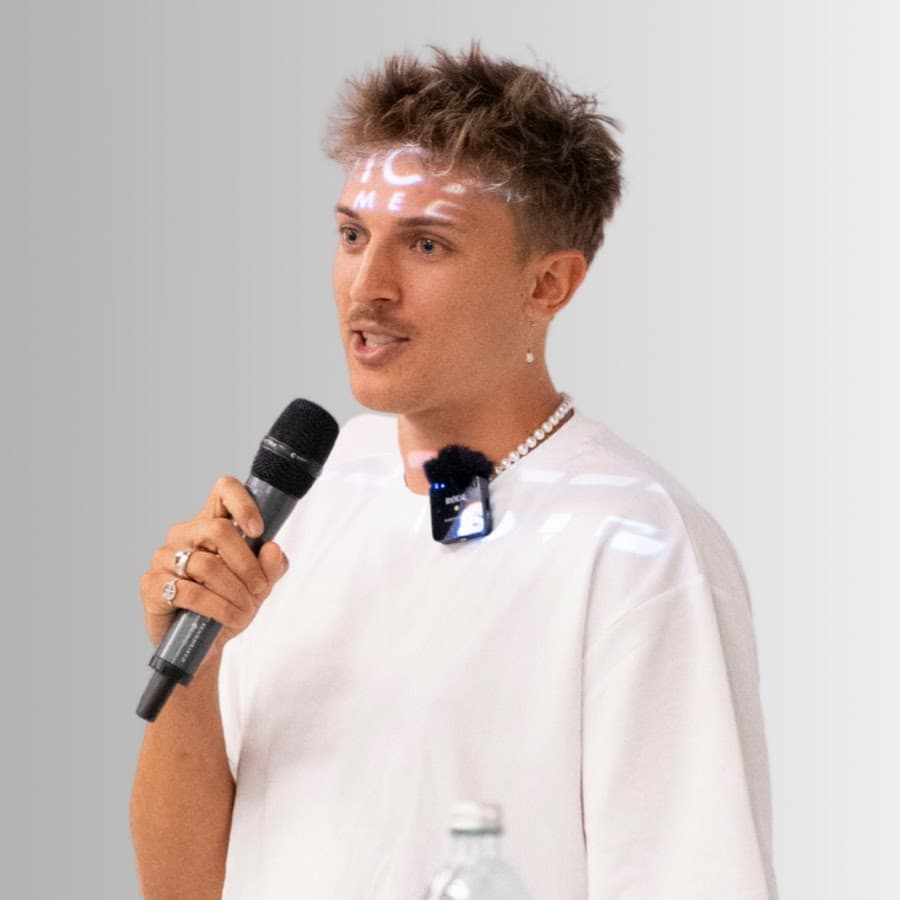
Klickkraft GmbH
Business coaching
€10-20k in monthly Meta spend, tied to qualified leads and revenue per ad
Florian Buck
Managing Director
Read the story

LinkedIn growth agency
2x customer retention, once every LinkedIn touchpoint was tracked to revenue
Marc Richard
CEO
Read the story

Digital publishing
Which article produced the lead and the revenue, across AI and organic search
Andreas Malkow
CEO & Head of PR
Read the story

SEO and GEO agency
Proven ROI on every retainer, from organic and AI search leads through to revenue
Philipp Nessmann
Managing Director
Read the story
Getreach
Backlinks marketplace (SaaS)
Built for patient acquisition
The path and the value are attributed. What the appointment was for never enters the marketing stack, and nothing here is sent to an ad platform unless you send it.
First-party attribution
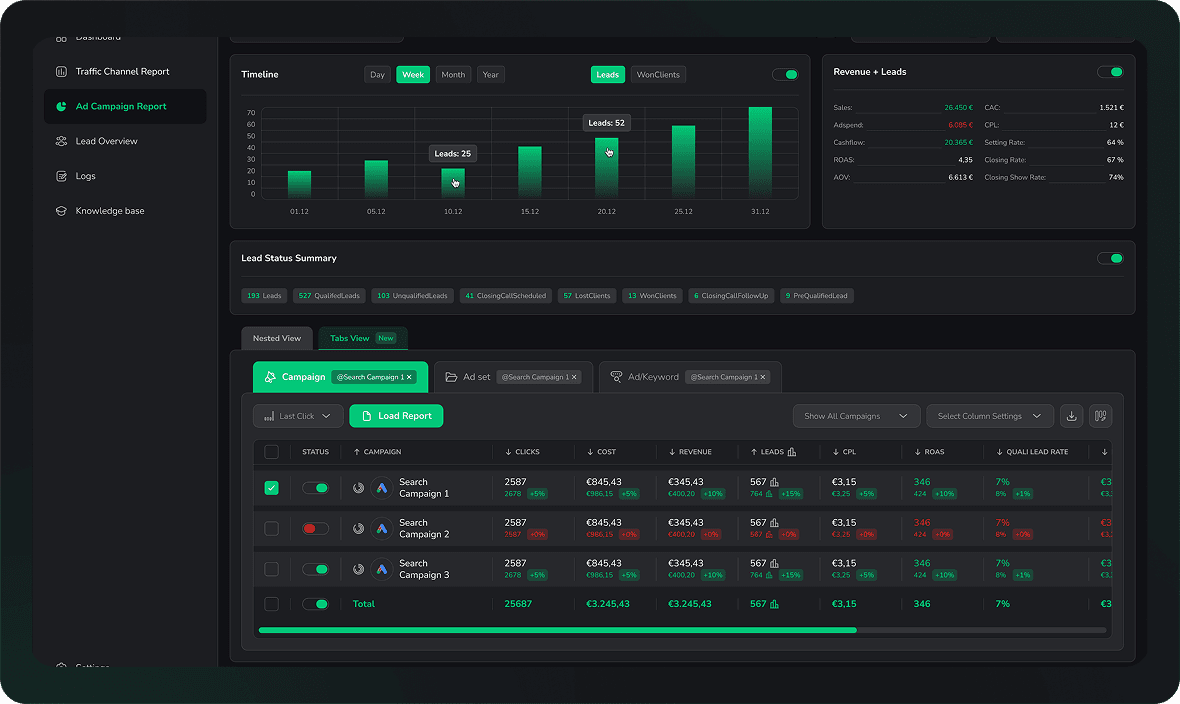
Somebody reads your practice guide, sees a retargeting ad a week later, calls the reception on a Tuesday and starts treatment a fortnight after that. Pixel tracking loses that trail at the first declined cookie and never sees the phone call at all. LeadJourney keeps it first-party from the first visit to the treatment, and stores the path and the value without ever storing what the appointment was for.
Meta AdsAppointment booked9696%Google AdsNew patient, value2695%Microsoft AdsAppointment booked1490%A booking and a treatment value travel. The specialty, the diagnosis and the page the patient read do not, because an ad platform has no agreement with you that would let them.
Controlled conversion sync
Campaigns improve when the platforms learn which clicks became patients, and a practice has to be exact about what that signal contains. LeadJourney syncs conversion events back to Google and Meta server-side, field by field, under your control. The algorithms learn that a booking happened and what it was worth. The specialty, the page the patient read and the reason for the visit stay on your side.
ChatGPT16844€98.7kPerplexity7122€52.6kGemini3311€24.0kClaude249€19.0kCopilot228€17.0kReferrals from AI answers, captured server-side and matched to real CRM revenue. No “direct / referral” guesswork.
AI search attribution
Health questions are among the most asked things on every assistant, and a practice that gets recommended sees visits its analytics files under direct. LeadJourney captures ChatGPT, Perplexity and Gemini referrals server-side and ties them to enquiries and treatments, so you know which engines already send you patients and which of your guides earned the citation.
Connect and extend
Which campaigns bring patients who actually start treatment?
Search, implants brought 18 of your 41 patients and €96k in treatment revenue. Aesthetics retargeting gets the most enquiries and converts 1 in 9.
New patient from Google AdsSearch, implants campaign, posted to #winsnowConnect the CRM in one click
Native, one-click integrations for the CRMs clinic groups run on:
Practice management and patient booking software connects via webhook, Zapier, Make or n8n, plus our REST API for anything custom. You map the fields, so nothing travels that you did not choose.
ZapierMaken8nOnboarding in 21 minutes
No developer, no data project, and a setup you can hand to whoever asks how the data flows.
Meta AdsGoogle AdsLinkedIn AdsMicrosoft AdsGoogle OrganicChatGPTMeta AdsAurelia Clinic Group, 6 campaignsConnectedGoogle AdsAurelia Clinic Group, 4 campaignsConnectedLinkedIn AdsConnectMicrosoft AdsConnectFirst-party, so ad blockers and Safari leave the click alone all the way to the CRM.
<script async src="https://track.acme.io/…"></script>CopyHubSpotDeals, stages and revenue syncingConnectedPipedriveConnectSalesforceConnectThe honest comparison
| What a practice needs | Ad platform pixels |  GA4 + consent mode GA4 + consent mode | LeadJourney |
|---|---|---|---|
| Accurate when cookies are declined | No: Conversions lost | Partly: Modelled estimates | Yes: First-party server-side |
| Phone calls tied to campaigns | No: Invisible | No: Not measured | Yes: Call joined to the ad |
| Patients attributed, not just enquiries | No: Stops at the form | No: No treatment data | Yes: Click to treatment |
| You control what leaves your stack | No: Sends the page too | Partly: Google's endpoints | Yes: Field by field |
| Runs on your own domain | No: Third-party scripts | Partly: Google's endpoints | Yes: Your first-party domain |
| Multi-touch attribution | No: Each claims the patient | No: Last click at best | Yes: 5 models, one click |
| Survives ad blockers and iOS | No: Pixel-based | No: Client-side scripts | Yes: 95%+ server-side |
| Setup effort | Partly: Per-platform pixels | No: Consent-mode project | Yes: 21 minutes |
Customers
Practices and clinic groups use LeadJourney to attribute appointments and treatments to campaigns with first-party data, and to keep clinical detail out of the marketing stack entirely.
“Before LeadJourney, we had no reliable tracking concept for our five-figure ad spend. We were manually building spreadsheet and CRM reports, inaccurate and time-consuming. Within two days, everything was set up. For the first time, I know exactly what I pay per lead and which campaigns actually bring in the best-qualified prospects.”
 Florian BuckCEO, Klickkraft GmbH
“With LeadJourney we are able to track all our leads and connect them with sales and attribution data to make better decisions. In the first month of using it we scaled from 0 to 100k revenue from paid ads only.”
 GetreachBacklinks Marketplace (SaaS)
“LeadJourney finally fixed my Marketing Analytics. It goes way beyond basic Ad Tracking Software. The Customer Journey Report saves hours of digging, and capturing everything from Offline Conversions to AI Search Tracking makes it the Best B2B Attribution Platform available.”
“Connected LeadJourney for 2 clients, setup took literally 20 minutes each. The data became more accurate, the reports actually make sense. Now clients look at the dashboard and the 'why don't the numbers match?' questions are gone.”
 Alexander SamarPerformance Marketing Agency
“With LeadJourney, we have finally found a tool that provides us with the data we need to scale our performance marketing campaigns. The most important KPI is no longer lead price but cost per qualified lead.”
 Steffen SiesingCEO, Bilanzmanufaktur GmbH
“The ability to track both online and offline conversions in one unified dashboard has given us insights we never had before. Our ROI has improved dramatically since we started integrating LeadJourney with our CRM. We're finally able to see the full customer journey, and it's been a game changer for our strategy.”
 Andre WitzelFounder, Trading.de
“The ability to seamlessly integrate data from multiple channels and see real-time insights has significantly improved our campaign results. We now focus on metrics that truly matter, like ROI and qualified leads.”
 Nikita YatsunCEO, RLV Media GmbH
Read the reviews where they were left
FAQ
If yours is not here, our team answers in the chat within a few minutes.
No, and we would rather say so plainly than let you find out during a vendor review. LeadJourney is built as a GDPR processor and offers an Art. 28 data processing agreement. If you are a US covered entity and protected health information would flow into your attribution, you need a vendor that signs a BAA, and our guide to HIPAA-compliant marketing tracking names the ones that do. For practices outside the United States, and for the marketing that carries no patient health data at all, the GDPR framework is the relevant one and it is the one we are built for.
Not unless you send it, and the design pushes hard against sending it. Attribution happens inside LeadJourney on your own first-party data. Conversion sync back to Google or Meta is optional and configured field by field, so what travels is that a booking happened and what it was worth. The specialty, the page the patient read and the reason for the visit stay on your side.
Tracking runs first-party and server-side on your own domain, with no third-party cookies anywhere in the setup. It works together with your consent management rather than around it. Health data is a special category under Art. 9, so the field-level control over what is collected and what is forwarded matters more here than anywhere else, and that control is why the same setup answers both the accuracy question and the compliance question. The details are on our GDPR and security pages.
Yes, and for most practices it is the biggest single gap. Static numbers per channel or dynamic number insertion per visitor both tie the call back to the campaign that produced it, and the outcome of the call syncs from your system rather than being guessed from call duration. Recording and transcription are a separate decision with their own data protection weight, and nothing requires you to turn them on to get the attribution.
Yes. Campaigns, channels and conversions are reported per location as well as across the group, so you can see that the implant campaign works in one city and not in another, which is usually where a multi-location budget is being quietly wasted.
About 21 minutes: one script on your site, ad accounts linked, the CRM connected, first-party tracking domain verified. No developer needed, and the data flow is documented well enough to hand to whoever asks about it.
Built for clinics and practices
Book a demo. We walk through the full setup live, where the data flows, what is collected and what is deliberately not, and which of your campaigns actually produce patients.
30-day money-back guaranteeSetup with a tracking expert