













BlogTool Comparisons
15 Best UTM Tracking Tools in 2026
UTM parameters tell GA4 where a session came from, but GA4 attribution stops at the website, depends on cookies and never sees whether the lead closed. Fifteen tools ranked from server-side CRM revenue attribution to UTM builders, link managers and reporting connectors.


Contents
- Quick summary
- The 15 tools compared
- 1. LeadJourney
- What users say
- 2. Google Analytics 4
- 3. Google URL Builder
- 4. UTM.io
- 5. HubSpot UTM Builder
- 6. Bitly
- 7. Ruler Analytics
- 8. Campaign Tracker Pro
- 9. Supermetrics
- 10. AgencyAnalytics
- 11. Whatagraph
- 12. Looker Studio
- 13. Segment
- 14. Terminus
- 15. Google Sheets
- Quick Decision Guide
Summarise this article with AI
Opens the page with a ready prompt in:


Nothing is sent until you pick a service.
UTM tracking tools help marketers build, manage, and analyze UTM parameters: the URL tags (utm_source, utm_medium, utm_campaign, utm_content, utm_term) that tell analytics platforms where a visitor came from. The best UTM tracking tools go beyond parameter management to connect UTM data to real business outcomes, not just website sessions.
Quick Summary: Best UTM Tracking Tool in 2026
In short
LeadJourney is the best UTM tracking tool in 2026 for lead generation businesses because it connects utm_campaign to closed revenue rather than to sessions. UTMs and click IDs are captured server-side at arrival, written onto the CRM record, and followed through the pipeline, so the report shows cost per qualified lead and cost per closed deal per campaign instead of a session count. 21-minute setup, 14-day free trial.
Most of this category solves the first half of the UTM problem, which is consistency: Google's Campaign URL Builder, UTM.io, HubSpot's builder, Campaign Tracker Pro and a shared spreadsheet all exist to stop three people spelling the same campaign three ways. That work is genuinely worth doing and it is not tracking.
The second half is where UTM data goes to die. GA4, Looker Studio, Supermetrics, AgencyAnalytics and Whatagraph report on UTM-tagged sessions; Bitly counts clicks; Segment routes the parameters onward. None of them knows which utm_campaign produced the deals, because none of them can see the CRM.
The 15 Best UTM Tracking Tools (2026)
The 15 best UTM tracking tools at a glance
| Tool | Key features | Best for | Pricing |
|---|---|---|---|
| Rank 1LeadJourney | UTM + click ID capture server-side; CRM pipeline tracking; cost-per-close per utm_campaign | Lead gen businesses connecting UTM campaigns to CRM revenue | 14-day free trial |
| Rank 2Google Analytics 4vs LeadJourney | Free, Acquisition reports by UTM source/medium/campaign | Primary destination for UTM campaign analytics | Free |
| Rank 3Google Campaign URL Builder | Free, simple UTM parameter builder | Free single UTM-tagged link creation | Free |
| Rank 4UTM.io | Naming convention enforcement, campaign templates, link storage | Teams managing UTM naming conventions at scale | Starts at $14/mo |
| Rank 5HubSpot UTM Builder | CRM-native UTM attribution, no additional cost for HubSpot customers | HubSpot-native UTM tracking connected to CRM | Included in HubSpot |
| Rank 6Bitly | Branded short links, UTM parameter preservation, click analytics | UTM-tagged branded short links with click analytics | Free & Starts at $8/mo |
| Rank 7Ruler Analyticsvs LeadJourney | UTM data matched to closed CRM revenue, call tracking | UTM-to-CRM offline revenue attribution | From £299/mo |
| Rank 8Campaign Tracker Pro | Bulk generation from spreadsheet data, complex campaign structures | Bulk UTM link generation for large campaign structures | Free & Custom |
| Rank 9Supermetricsvs LeadJourney | Pulls GA4 UTM data alongside ad platform data into BI tools | UTM data in custom BI reports | From €49/mo |
| Rank 10AgencyAnalyticsvs LeadJourney | Aggregates GA4 UTM data in white-label client dashboards | Agencies reporting UTM campaign performance to clients | From $20 per client/mo |
| Rank 11Whatagraphvs LeadJourney | Automated UTM campaign reports across all channels | Automated UTM campaign performance reports | From €699/mo |
| Rank 12Looker Studiovs LeadJourney | Free, custom GA4 UTM dashboards, drag-and-drop builder | Free custom UTM campaign dashboards from GA4 data | Free |
| Rank 13Segment | 400+ integrations, routes UTM data to any downstream tool | Enterprise teams routing UTM data to CRM and data warehouse | Starts at $750/mo |
| Rank 14Terminus | Account-level UTM attribution, CRM sync; terminus.com now resolves to DemandScience | ABM teams connecting UTM data to account-level tracking | Custom |
| Rank 15Google Sheets | Free, Google Sheets-based UTM tracking template | Free DIY UTM tracking for small teams starting out | Free |




1. LeadJourney: Best for Connecting UTM Data to CRM Revenue
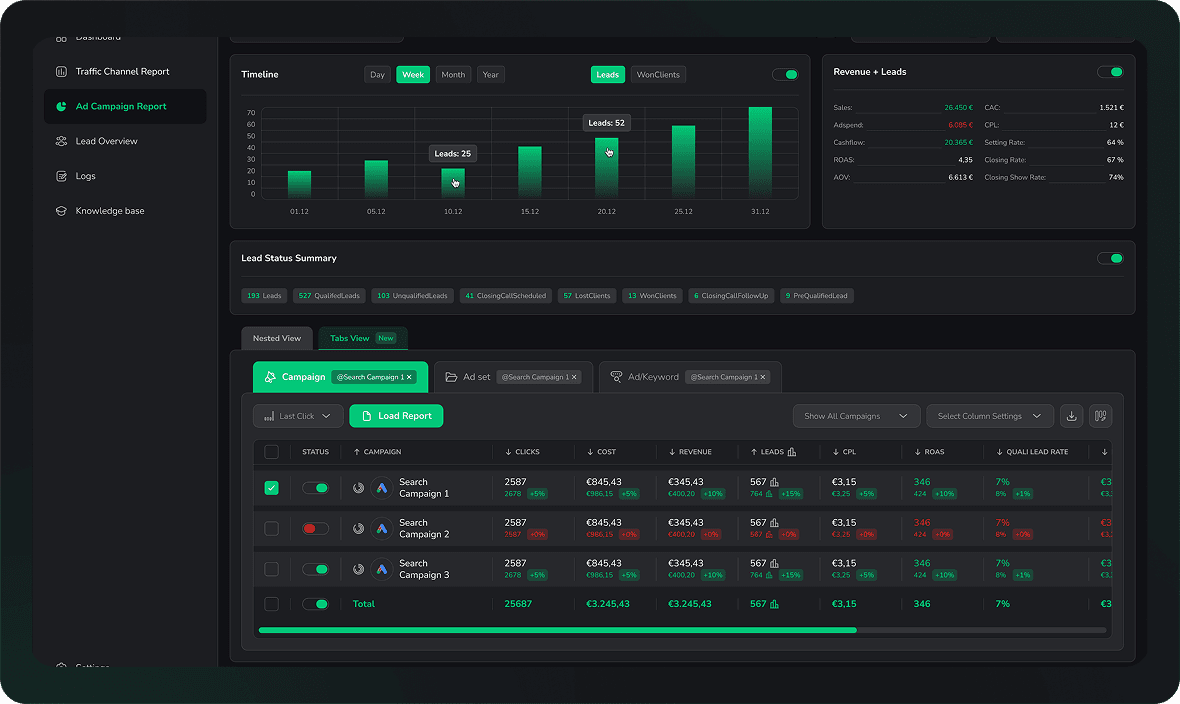
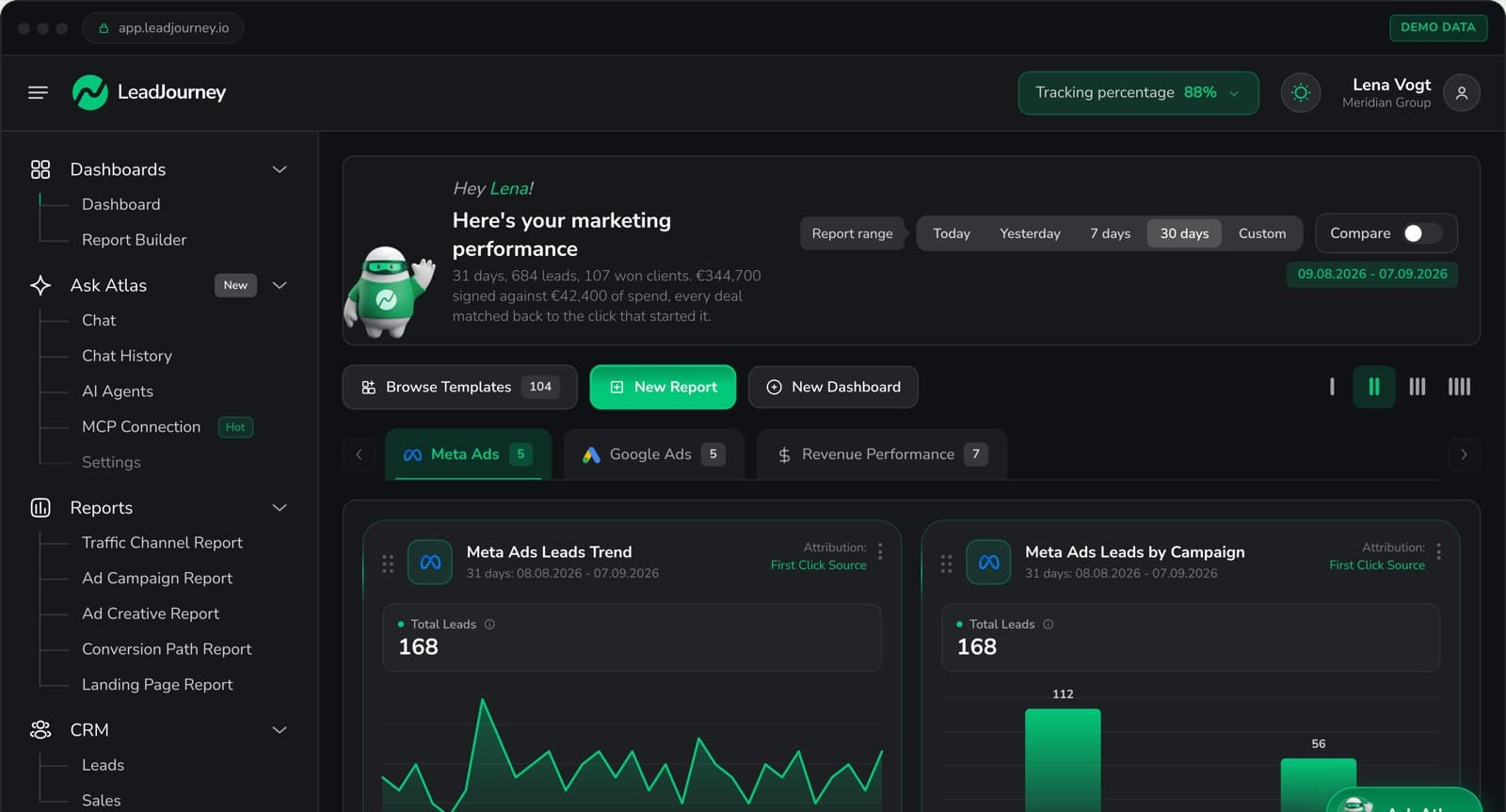
LeadJourney captures UTM parameters alongside server-side click IDs at every paid ad landing page, stores them on CRM lead records, and tracks those leads through qualified, booked, and closed stages. It's the only UTM tracking tool that connects campaign-level UTM data to CRM revenue without relying solely on cookie-dependent GA4 attribution.
Verdict
The only UTM tracking tool that connects utm_campaign data to CRM closed-deal revenue with server-side accuracy.
What Real Users Say About LeadJourney
Honestly the best B2B attribution platform I've used. The Customer Journey Report finally shows us which touchpoints drive results, and the ad tracking software is rock solid.
A must have for client acquisition. The platform is intuitive, so you can start running your first campaigns quickly without a big learning curve.
Read verified reviews on Trustpilot, G2, Capterra, and leadjourney.io/testimonials.
Further Reading
Explore the LeadJourney marketing attribution platform or compare the best link tracking tools and best ad tracking software. Built by Jonas Strambach.
2. Google Analytics 4: Best Free UTM Campaign Analytics

GA4 is the primary destination for UTM tracking data: its Acquisition reports show sessions, conversions, and goal completions by utm_source, utm_medium, and utm_campaign. The foundation of any UTM tracking strategy.
Verdict
Non-negotiable free baseline for UTM tracking. Stops at website conversions, no CRM pipeline attribution.
3. Google Campaign URL Builder: Best Free UTM Link Creator
Google's free Campaign URL Builder adds UTM parameters to any destination URL in seconds: the simplest starting point for creating trackable campaign links.
Verdict
Best free single link UTM builder. No team management or analytics built in.
4. UTM.io: Best for Team UTM Management at Scale
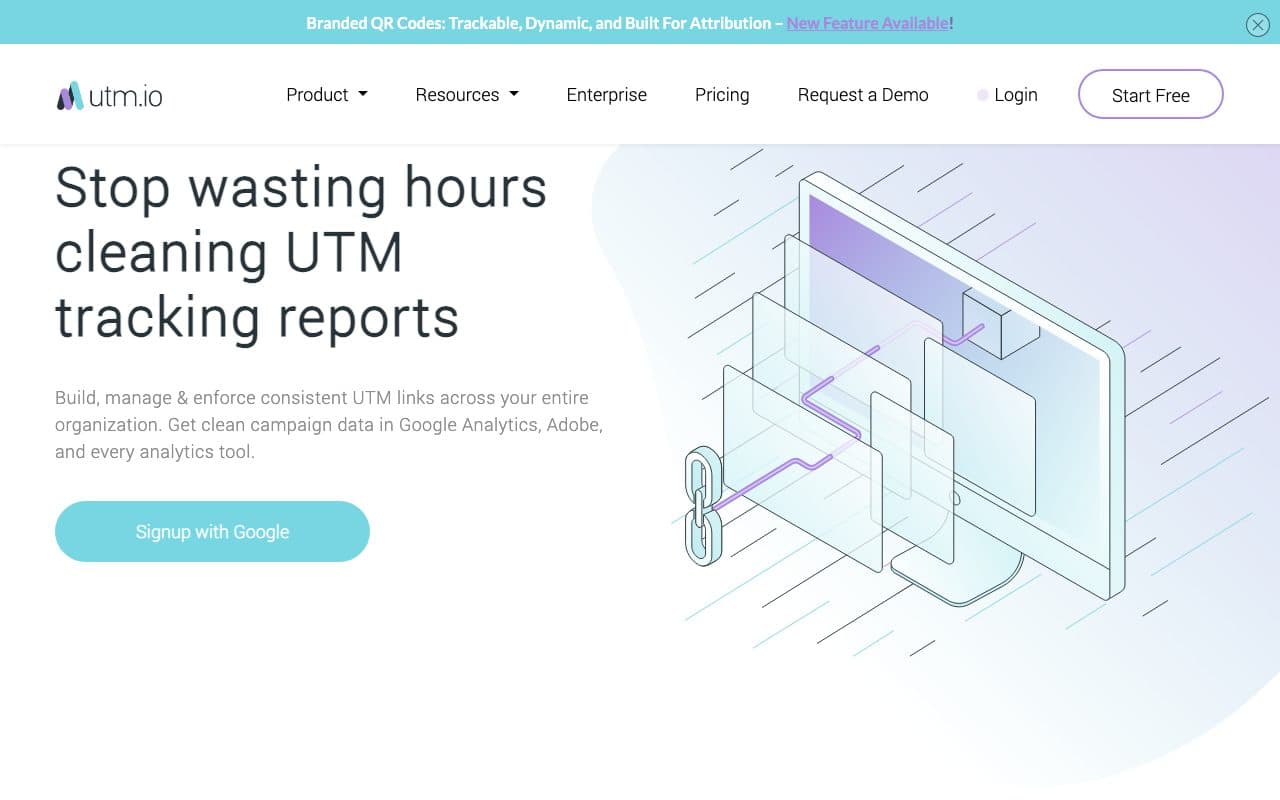
UTM.io provides team UTM parameter management with naming convention enforcement, campaign templates, link storage, and bulk UTM generation, preventing the parameter chaos that plagues teams managing hundreds of campaigns.
Verdict
Best for teams managing UTM naming at scale. Parameter management only, no analytics or CRM attribution.
5. HubSpot UTM Builder: Best for HubSpot-Native UTM Tracking

HubSpot's UTM tracking connects UTM-tagged campaign visits to HubSpot contacts and deals, providing campaign-level attribution within the HubSpot ecosystem.
Verdict
Best starting point for HubSpot-native UTM attribution. Pixel-based accuracy and limited CAPI feedback.
6. Bitly: Best for UTM-Tagged Branded Short Links
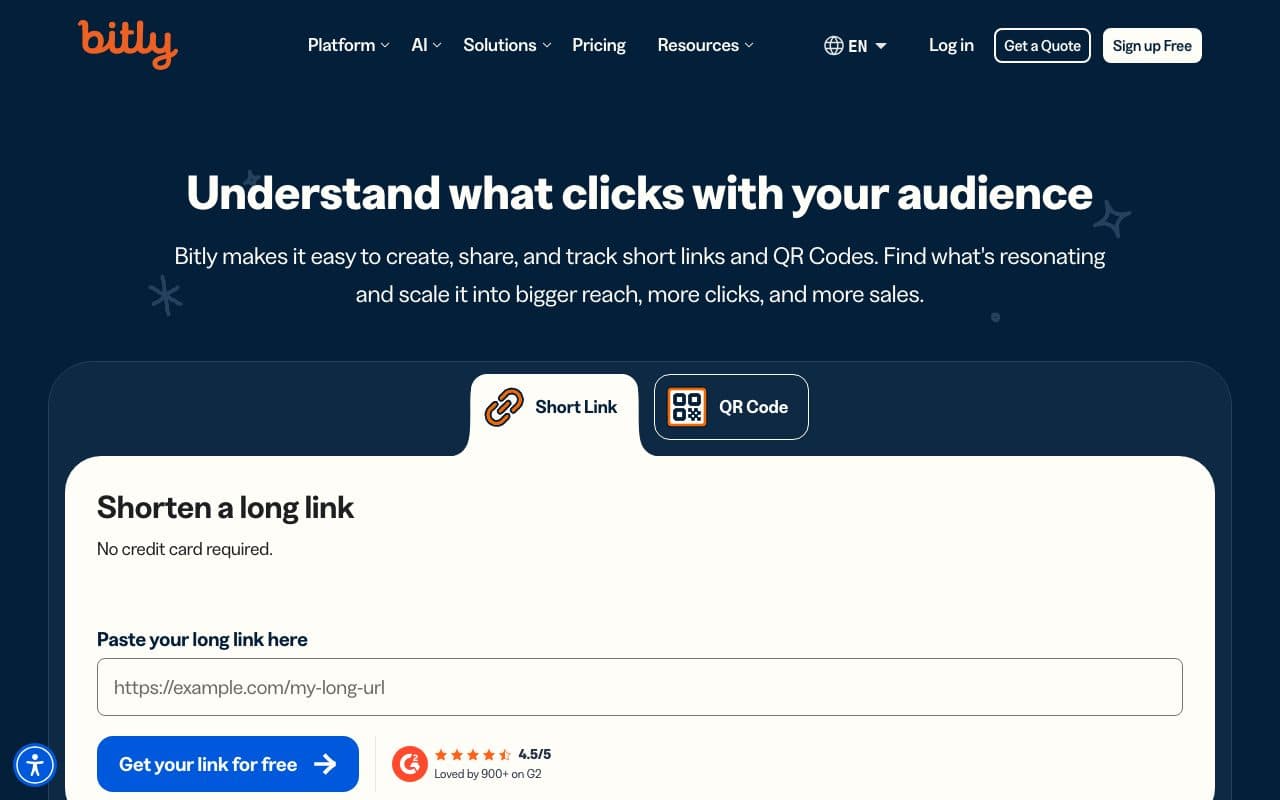
Bitly creates branded short links that preserve UTM parameters while providing click analytics by geography, device, and time.
Verdict
Best for branded UTM-tagged short links. Click analytics only, no conversion attribution.
7. Ruler Analytics: Best for UTM-to-CRM Offline Revenue Attribution
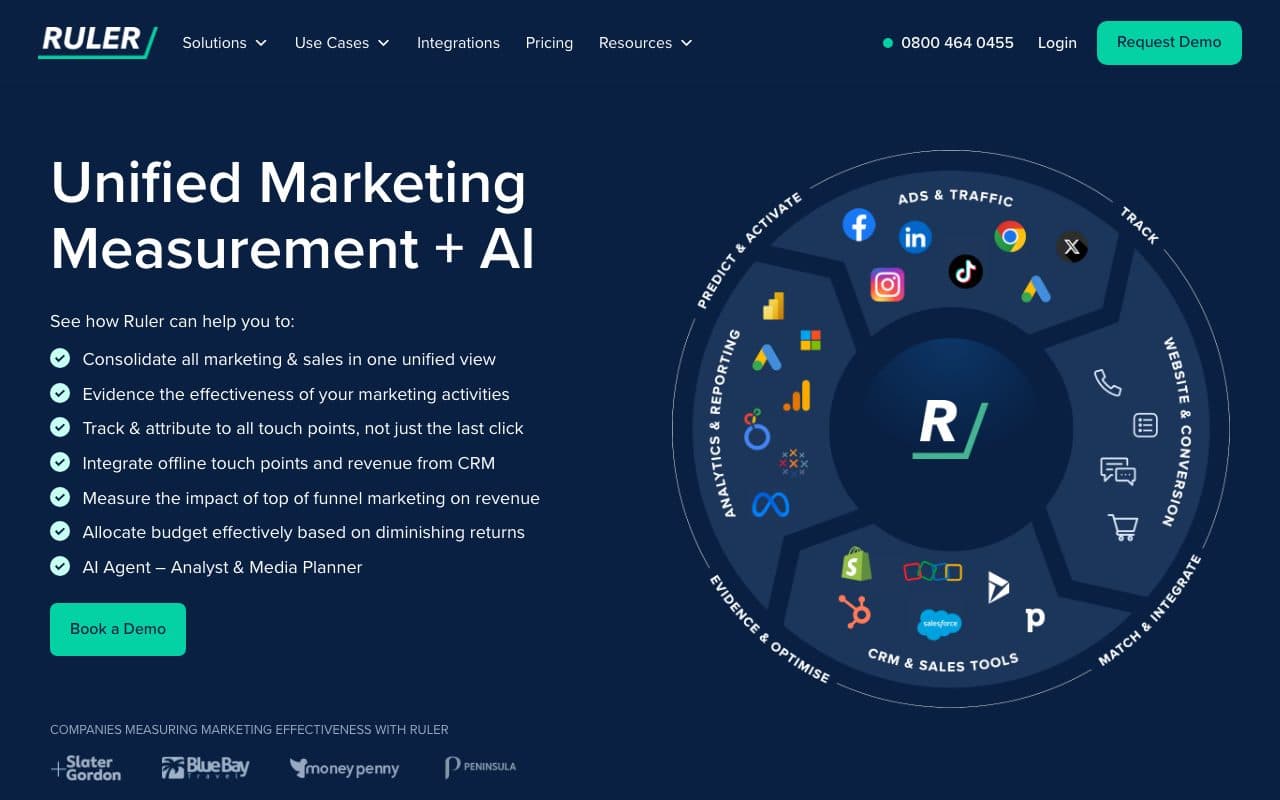
Ruler Analytics captures UTM data at first visit and matches closed CRM revenue back to the UTM campaign that originally sourced each lead: a strong option for businesses where offline conversions dominate.
Verdict
Solid UTM-to-revenue attribution for lead gen. Doesn't automate the CAPI feedback loop.
8. Campaign Tracker Pro: Best for Bulk UTM Link Generation
Campaign Tracker Pro generates large volumes of UTM-tagged links from spreadsheet data, useful for agencies managing complex campaign structures with many ad groups and landing pages.
Verdict
Good for bulk UTM link generation. Operational tool, not an analytics solution.
9. Supermetrics: Best for UTM Data in BI Reports

Supermetrics pulls UTM campaign data from GA4 alongside ad platform data into Sheets, Looker Studio, and BigQuery, enabling unified UTM campaign reporting.
Verdict
Best for custom UTM reporting in BI tools. Data connector, not independent attribution.
10. AgencyAnalytics: Best for White-Label UTM Campaign Reporting
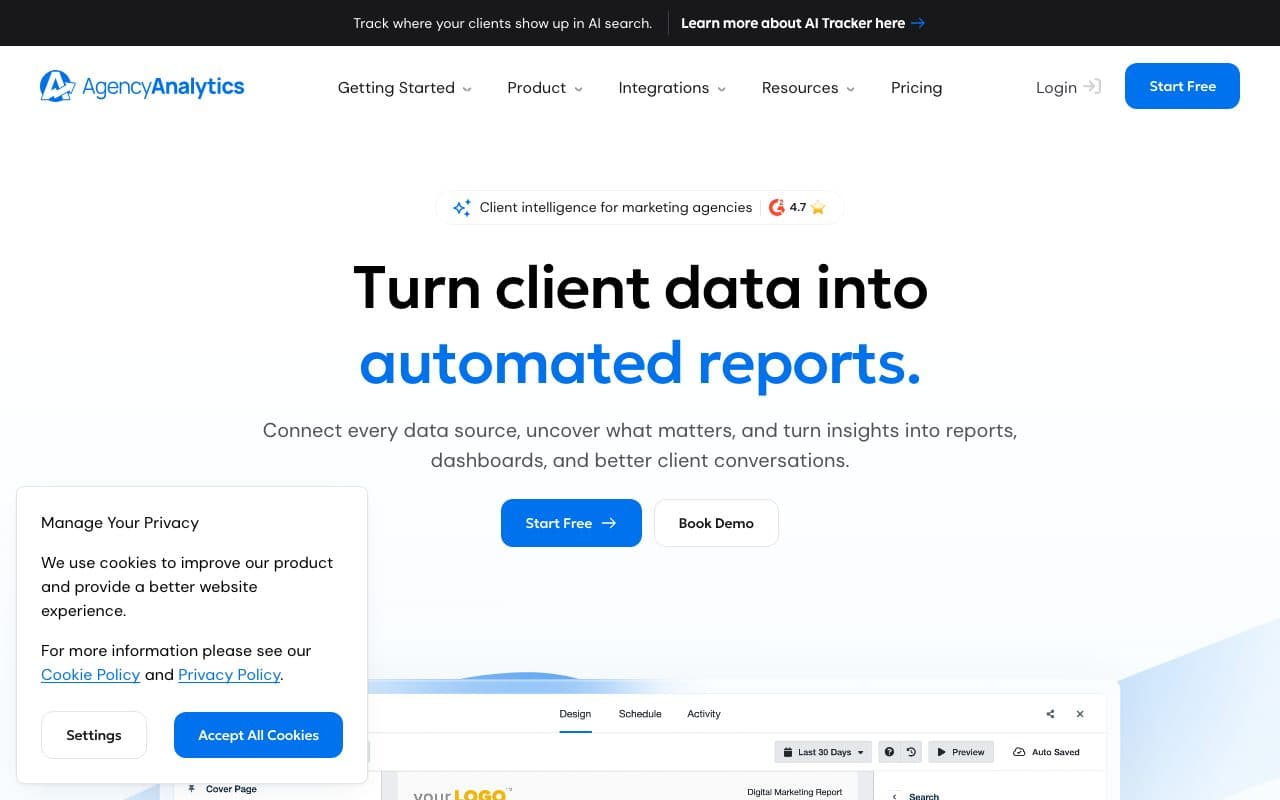
AgencyAnalytics aggregates UTM campaign performance alongside other channel data into white-label client dashboards.
Verdict
Best for agencies reporting UTM performance to clients. Aggregates GA4 UTM data without independent attribution.
11. Whatagraph: Best for Automated UTM Campaign Reports

Whatagraph pulls UTM-tagged campaign data out of every channel and assembles it into a report that sends itself, which is most of what an agency wants from UTM reporting: not another dashboard to open, but a document that lands in the client's inbox already made. Templates and white labelling are strong, and the connector list covers the channels a lead gen account actually runs.
It reports on what your UTMs already say rather than improving them. If your tagging is inconsistent, Whatagraph will render that inconsistency beautifully and on schedule. And because it stops at platform data, utm_campaign gets sessions and conversions next to it rather than closed revenue from the CRM.
Verdict
The right tool for turning UTM data into client-ready reports. It does not fix the tagging underneath, and it does not reach the CRM.
12. Looker Studio: Best Free Custom UTM Dashboards

Looker Studio connects to GA4 for free and lets you build exactly the UTM view you want: source and medium as dimensions, whatever GA4 counts as a conversion as the metric, filtered and grouped however your account is organised. For a team that already lives in GA4 and wants a UTM dashboard without paying for one, it is the obvious answer.
The limits are GA4's limits, inherited whole. Sessions rather than people, thresholding that hides small rows, no CRM revenue, and a last-non-direct model underneath everything. Blending in other sources is possible and gets slow and brittle quickly, which is the point at which most teams stop.
Verdict
Free and genuinely flexible for visualising UTM data. Everything it shows is still GA4 session data with GA4's blind spots.
13. Segment: Best for Routing UTM Data at Enterprise Scale
Segment captures UTM parameters as traits on an event and forwards them to every downstream tool in one go: the CRM, the warehouse, the analytics stack, the email platform. For an organisation where five systems all need the same campaign data and each currently gets it a different way, that consolidation is worth a lot.
It is infrastructure, not reporting. Segment will deliver utm_campaign reliably to wherever you point it and has no opinion about what it means, so the question of which campaign produced revenue is answered by whatever you built on the other end. Enterprise pricing puts it well beyond a lead gen business that mainly wants its UTMs to reach the CRM.
Verdict
Excellent plumbing for UTM data across a large stack. Not a UTM tracking tool in the sense most people searching for one mean.
14. Terminus: Account-Level UTM Attribution, Now Part of DemandScience

Terminus is an account-based marketing platform, and its UTM handling follows from that: campaign data is rolled up to the account rather than the individual, so a UTM-tagged click by one person and a form fill by their colleague land in the same story. For an ABM team measuring account engagement that is the correct unit, and person-level UTM reporting genuinely misses it.
Check the current state of the product before you shortlist it. As of September 2026 terminus.com resolves to DemandScience, which sells B2B buyer intelligence rather than a UTM tool, so the Terminus name you may have seen recommended in older roundups is not a product you can go and buy today under that name.
Verdict
The account-level view was real and useful in ABM. The name now points at DemandScience, so treat any older recommendation of it with care.
15. Google Sheets: Best Free DIY UTM Tracking
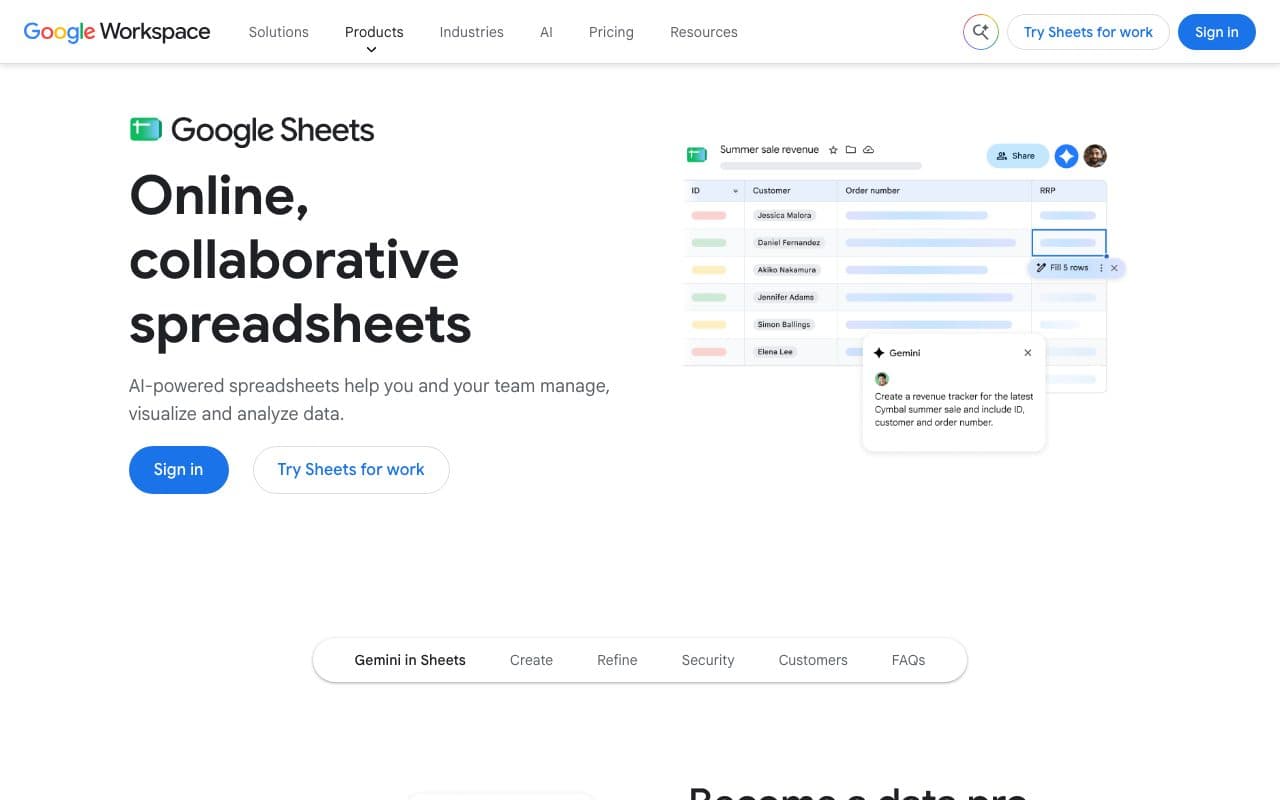
A shared spreadsheet with one row per tagged URL, columns for each parameter and a formula that assembles the link is where most good UTM discipline starts, and it solves the problem that actually breaks UTM reporting: two people spelling the same campaign three different ways. Free, immediate, and everyone already knows how to use it.
It is a naming convention with a URL builder attached, not tracking. Nothing validates that the link on the ad matches the row in the sheet, nothing notices when someone tags by hand at 6pm, and nothing connects utm_campaign to a single euro of revenue. It also stops working at the exact moment it starts to matter, which is when more than about three people are creating links.
Verdict
The right place to start and the wrong place to stay. Use it to agree the naming, then move the enforcement and the revenue reporting into a tool.
Quick Decision Guide
- Lead gen business connecting UTM campaigns to CRM revenue: LeadJourney
- UTM campaign analytics: Google Analytics 4
- Team UTM naming management: UTM.io
- HubSpot-native UTM attribution: HubSpot UTM Builder
- Agency UTM campaign reporting: AgencyAnalytics or Whatagraph
In the glossary
FAQ
Frequently Asked Questions
The questions teams managing UTM parameters ask most.
What are UTM parameters?
Five tags you append to a URL, utm_source, utm_medium, utm_campaign, utm_content and utm_term, that tell your analytics where the visit came from. They are written by you rather than by the platform, which makes them the only consistent way to label email, partner links, offline QR codes and anything else the ad platforms do not tag themselves.
Do I still need UTMs if I have click IDs?
Yes, for everything paid platforms do not touch. The gclid, fbclid, li_fat_id and msclkid identify paid clicks on their own and survive when a UTM is stripped, but nothing appends them to a newsletter link or a conference QR code. Use both: click IDs for the ad platforms, UTMs for the naming you control.
Why is my UTM data inconsistent?
Almost always naming rather than tooling. UTM values are case-sensitive, so Facebook and facebook are two sources, and a team of five will invent five conventions for the same campaign within a month. A shared builder that enforces the convention, such as UTM.io or an agreed spreadsheet template, fixes more reporting problems than any dashboard will.
How much do UTM tracking tools cost?
Google's Campaign URL Builder, GA4, Looker Studio and a spreadsheet are all free. Bitly starts at $8 per month and UTM.io at $14, AgencyAnalytics is $20 per client, Supermetrics from €39, Ruler Analytics from $199, Whatagraph from €699 and Segment from $750.
Can UTM parameters show revenue?
Only if they leave the analytics tool. GA4 reports UTMs against sessions and stops at the website, so the campaign that produced a €40,000 deal looks identical to one that produced a bounce. Writing the UTM values onto the CRM record with the lead is what lets the same campaign name appear next to a closed deal months later.
Keep reading
More from the blog
 Tool Comparisons
9 Best Marketing Attribution Tools for Zoho CRM in 2026
Four of the best attribution tools for Zoho CRM are Zoho products you may already pay for. Nine options compared on where the tracking starts, which ad platforms they cover, and whether the closed deal ever reaches the algorithm buying your traffic.Read the article13 min read Tool Comparisons
9 Best Marketing Attribution Tools for Microsoft Dynamics 365 in 2026
Dynamics records the revenue and nothing fills in where it came from: Lead Source is a ten-option picklist and campaign spend is typed by hand. Nine tools compared on what each can actually see in a Dynamics environment, with pricing, pros, cons and a verdict.Read the article14 min read Tool Comparisons
12 Best GTM Tools and Software in 2026
A GTM stack is five or six tools that each report on their own step, which is why nobody can say which play produced the revenue. Twelve tools compared by the layer they own, with prices read this month and a verdict on who each one is for.Read the article16 min read
Beyond sessions
Ready to see which UTM campaigns close deals?
LeadJourney captures UTM parameters and click IDs server-side at 95%+ accuracy, stores them on the CRM record and follows every lead through the pipeline to the closed deal, set up in 21 minutes.