














BlogTool Comparisons
15 Best Server-Side Tracking Tools in 2026
Browser pixels lose 20-40% of conversion events to iOS 14+, Safari ITP and ad blockers, and most server-side tools just move the event to the server and stop. Fifteen tools ranked, from sGTM hosting and enterprise CDPs to platforms that connect the event to CRM revenue.


Contents
Summarise this article with AI
Opens the page with a ready prompt in:


Nothing is sent until you pick a service.
Server-side tracking solves the single biggest technical problem in digital advertising: your browser pixel is lying to you. iOS 14+, Safari ITP, Chrome privacy changes, and ad blockers are silently blocking 20-40% of your conversion events before they ever reach Meta, Google, LinkedIn, or Bing. Your ad algorithms are training on incomplete data, and your ROAS is suffering for it.
Server-side tracking fixes this by moving conversion event collection from the visitor's browser to your server. Events fire directly from your infrastructure to the ad platforms' APIs, bypassing all browser-level restrictions entirely. The result is 95%+ data accuracy regardless of iOS version, browser choice, or ad blocker.
But server-side tracking tools are not all the same. Most tools in this category are infrastructure layers: they move events from browser to server and stop there. They don't connect those events to CRM revenue. They don't close the algorithmic loop back to Meta CAPI, Google Enhanced Conversions, LinkedIn CAPI, and Bing UET simultaneously. And they don't work in 21 minutes without a developer. LeadJourney does all of this: purpose-built for lead generation and e-commerce businesses that need server-side accuracy plus full attribution from ad click to closed deal.
Quick Summary: Best Server-Side Tracking Tool in 2026
In short
LeadJourney is the best server-side tracking tool in 2026 for lead generation businesses because it is the whole chain rather than the transport. Tracking runs on your own subdomain at 95%+ accuracy, feeding Meta, Google, LinkedIn and Microsoft, and the same setup carries the click into the CRM so pipeline stages and closed deals come back out as conversions. No container to host, no cloud bill, no tokens to rotate. 21 minutes, no developer, 14-day free trial.
The category contains two different products sold with the same phrase. Infrastructure (Google Tag Manager Server-Side, Stape, Snowplow, JENTIS, RudderStack, Tealium, Piwik PRO) gives you a server-side pipeline to build on, with full control and real engineering attached. Platforms (LeadJourney, Cometly, Elevar, Tracklution, Able CDP, Littledata) own the pipeline and hand you the outcome.
Build if you have unusual event requirements, a data team that already owns a warehouse, or a compliance position that needs the raw stream on your own infrastructure. Buy if the goal is that the ad platforms receive accurate conversions next week.
The 15 Best Server-Side Tracking Tools (2026)
The 15 best server-side tracking tools at a glance
| Tool | Key features | Best for | Pricing |
|---|---|---|---|
| Rank 1LeadJourney | Server-side tracking 95%+; 4-platform CAPI loop; CRM pipeline attribution; 21-min setup | Lead generation businesses (Meta, Google, LinkedIn, Bing + CRM) | 14-day free trial |
| Rank 2Cometlyvs LeadJourney | Server-side tracking, CRM attribution, AI optimization recommendations | B2B SaaS needing server-side tracking with multi-touch attribution | Custom (demo required) |
| Rank 3Stapevs LeadJourney | One-click sGTM deployment, custom loader, ad blocker bypass | Agencies wanting managed sGTM without infrastructure | Starts at $17/mo |
| Rank 4Google Tag Manager Server-Side | Free container, fully customizable event routing | Developer teams needing maximum flexibility | Free (+ Cloud Run hosting) |
| Rank 5Segment | 400+ integrations, identity resolution, event routing | Enterprise CDP for server-side data routing to 400+ destinations | Starts at $750/mo |
| Rank 6Elevarvs LeadJourney | Pre-built Shopify data layer, session stitching, real-time monitoring | Shopify eCommerce merchants | From $225/mo |
| Rank 7Tracklutionvs LeadJourney | No-code server-side setup, free plan up to 5,000 events | Agencies needing affordable plug-and-play server-side tracking | Free plan, Grow from €39.20/mo (annual) |
| Rank 8Able CDPvs LeadJourney | Identity resolution, offline sales attribution, enriched CAPI data | Performance marketers needing server-side + identity resolution | From $49/mo |
| Rank 9RudderStack | Open-source, warehouse-first architecture, full data ownership | Engineering teams wanting open-source warehouse-first tracking | Free self-hosted / Starts at $750/mo |
| Rank 10Tealium | Enterprise data governance, consent enforcement, real-time enrichment | Enterprise tag management and server-side governance | Custom enterprise pricing |
| Rank 11JENTIS | EU data residency, built-in consent management, GDPR compliant | Privacy-first European organizations with strict compliance | Starts at €1,000/mo |
| Rank 12Littledata | Best-in-class Shopify GA4 accuracy, automated setup | Shopify and BigCommerce GA4 accuracy | Starts at $199/mo |
| Rank 13Snowplow | Custom event schemas, open-source, self-hostable | Advanced behavioral data collection with custom event pipelines | Open-source / Custom |
| Rank 14Piwik PRO | EU data residency, built-in consent management, GA alternative | Privacy-conscious analytics with server-side and consent management | Free & Custom |
| Rank 15Meta CAPI Gateway | Zero-configuration, free, one-click setup inside Meta Events Manager | Free one-click server-side baseline for Meta-only advertisers | Free |


1. LeadJourney: Best Server-Side Tracking Tool for Lead Generation Businesses
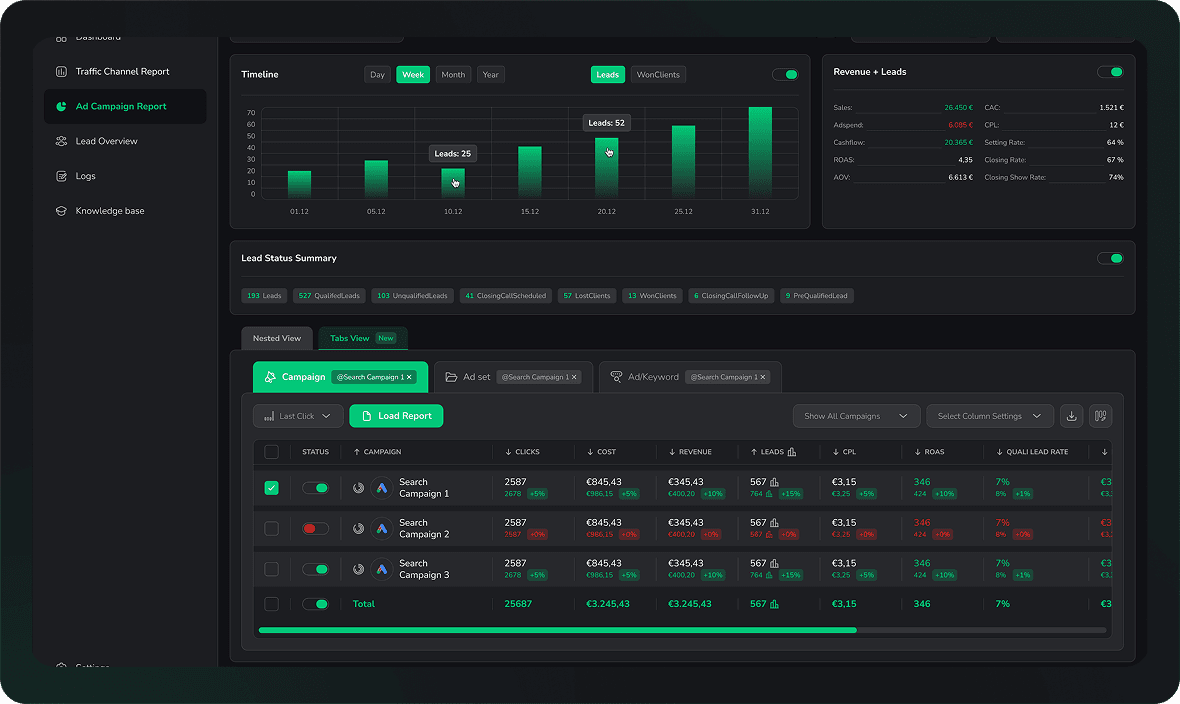
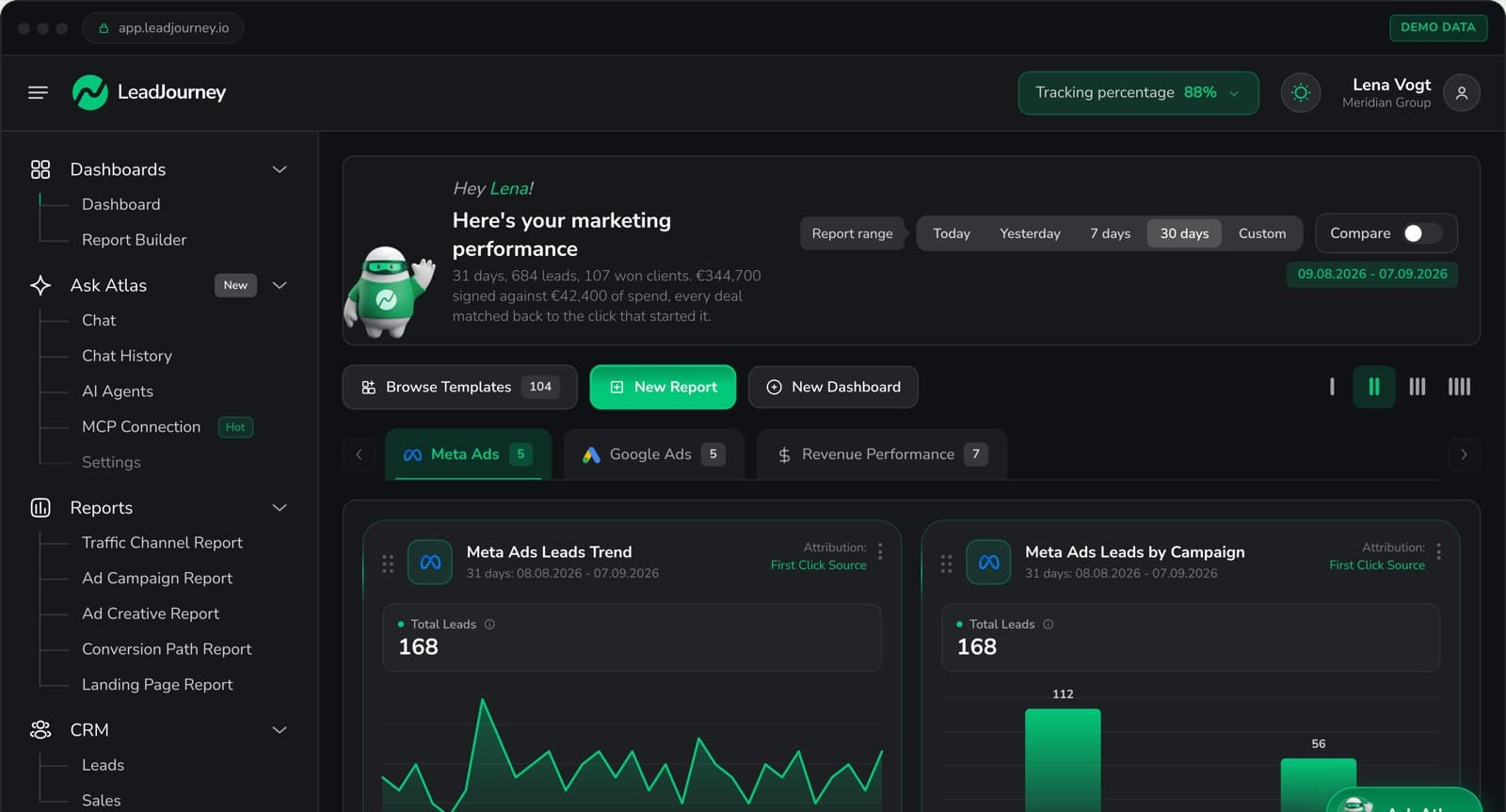
LeadJourney is built on a server-side tracking infrastructure from the ground up, but unlike every other tool on this list, it doesn't stop at sending events to ad platforms. It connects those server-side conversion signals to your CRM, tracks every lead through every pipeline stage (received, qualified, booked, closed), attributes closed deals back to the original ad campaign that sourced them, and automatically sends qualified-lead and closed-deal signals back to Meta CAPI, Google Enhanced Conversions, LinkedIn CAPI, and Bing UET simultaneously.
This is the critical distinction for lead generation businesses. A tool like Stape or sGTM moves your pixel to the server, great for data accuracy, but the trail goes cold at the form fill. LeadJourney's server-side tracking follows the lead all the way to the closed deal and feeds that revenue signal back to the algorithm that sent the lead in the first place. The result is a self-improving ad system: the more revenue LeadJourney tracks, the better your ad targeting gets.
Key Features
- Full server-side tracking at 95%+ accuracy: all conversion events fire from your server, bypassing iOS 14+, Safari ITP, Chrome restrictions, and ad blockers entirely
- Four-platform CAPI loop: Meta Conversions API, Google Enhanced Conversions, LinkedIn CAPI, and Bing UET all connected simultaneously from one integration
- CRM pipeline attribution: server-side click IDs (fbclid, gclid, li_fat_id, msclkid) stored on every CRM lead record and matched to deal stages throughout the sales cycle
- Closed-loop signals: qualified-lead, booked-call, and closed-deal CRM events sent back to all four ad platforms automatically, retraining algorithms on real buyers
- Unified cross-channel dashboard: Meta, Google, LinkedIn, and Bing in one view with cost-per-lead and cost-per-close by campaign, ad set, and creative
- Five multi-touch attribution models: first touch, last touch, linear, time-decay, and position-based; switch between models in the dashboard
- Atlas AI analyst: chat with your server-side data in plain language without building reports manually
- 21-minute setup, no developer: works with any landing page builder or funnel tool (Elementor, Wix, Onepage.ai, ClickFunnels, and more)
Pros
- The only server-side tracking tool that goes beyond event forwarding to connect server-side data to CRM revenue and close the loop back to ad platforms
- All four major ad platforms connected simultaneously, no separate integrations for Meta, Google, LinkedIn, and Bing
- 21-minute setup with no developer required: faster than any sGTM-based tool on this list
- 14-day free trial: zero-risk evaluation for any lead gen business
Cons
- Not designed for SaaS product analytics: e-commerce runs through the Shopify integration, and the warehouse export feeds a BI pipeline from BigQuery rather than replacing one
- No open-source or self-hosted option: managed SaaS only
Verdict
If you're a lead generation business running paid ads, LeadJourney is the only server-side tracking tool that solves the complete problem, not just accurate data collection, but accurate data collection connected to CRM revenue and fed back to your ad algorithms automatically. No other tool on this list does all three.
What Real Users Say About LeadJourney
LeadJourney finally fixed my Marketing Analytics. It goes way beyond basic Ad Tracking Software. The Customer Journey Report saves hours of digging, and capturing everything from Offline Conversions to AI Search Tracking makes it the Best B2B Attribution Platform available.
LeadJourney has become one of those tools we don't want to work without anymore. The setup was simple, the data is accurate, and the AI search tracking is a great bonus.
Read verified reviews on Trustpilot, G2, Capterra, Software Advice, and leadjourney.io/testimonials.
Further Reading
Explore the LeadJourney marketing attribution platform or compare the best Conversion API tracking tools and the best B2B attribution software. Built by Jonas Strambach.
2. Cometly: Best for B2B SaaS Server-Side Tracking with Attribution
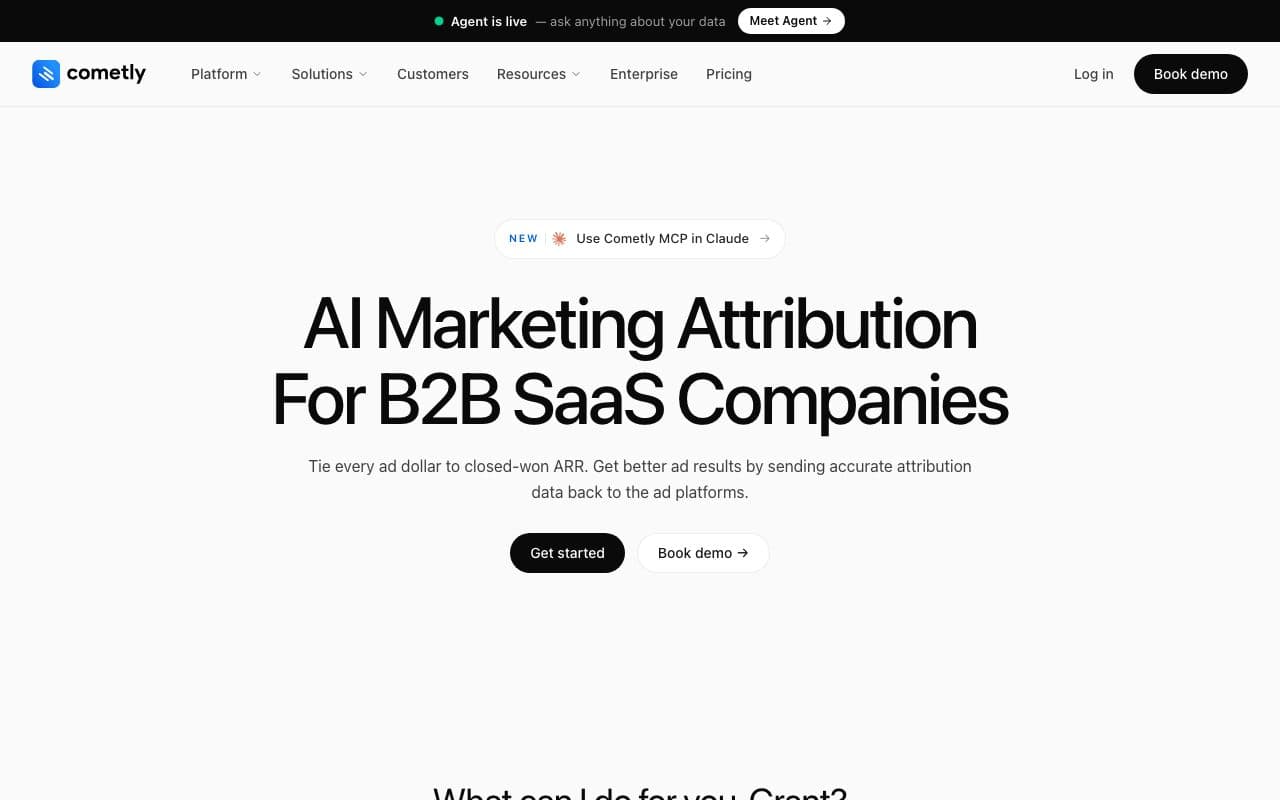
Cometly combines server-side tracking with multi-touch attribution and AI-powered optimization. Unlike pure infrastructure tools, it connects server-side conversion data to the full customer journey and feeds enriched signals back to Meta and Google to improve their bidding algorithms. It's the closest feature competitor to LeadJourney for paid advertisers.
Pros
- Server-side tracking plus multi-touch attribution in one platform, not just event forwarding
- AI-powered optimization recommendations on top of server-side data
Cons
- Serves multiple verticals: lead gen funnel depth (qualified-lead stages, CRM pipeline attribution) less specific than LeadJourney
- Custom pricing requires a demo call
Verdict
Strong server-side tracking + attribution for B2B SaaS. Lead gen businesses will find LeadJourney's CRM pipeline depth and four-platform CAPI loop more relevant.
3. Stape: Best Managed sGTM Hosting for Agencies and Growth Teams
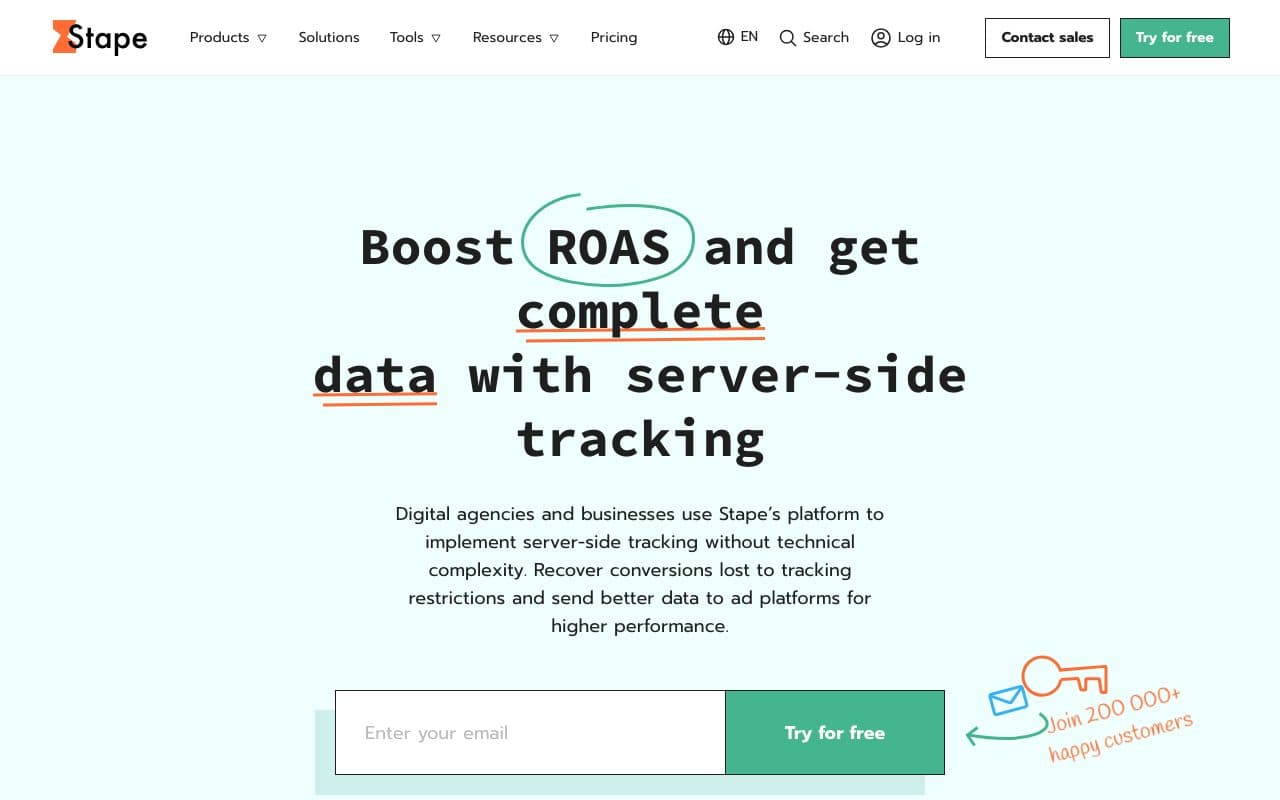
Stape removes the infrastructure complexity from running Google Tag Manager server-side. While native sGTM requires you to set up and manage Cloud Run yourself, Stape handles deployment, scaling, and maintenance automatically. It includes a custom loader to help bypass ad blockers, built-in power-ups for eCommerce and consent management, and one-click GTM container launch.
Pros
- One-click sGTM deployment, no Cloud Run or server configuration required
- Accessible pricing from $17/month: the most affordable managed sGTM option
- Custom loader bypasses ad blockers and improves data collection rates
Cons
- Still requires GTM knowledge and ongoing configuration, not a no-code solution
- Infrastructure only, no CRM attribution, no unified ads dashboard, no revenue reporting
- Separate setup required per ad platform (Meta, Google, LinkedIn, Bing each need individual configuration)
Verdict
The best option for teams that want managed sGTM hosting without managing infrastructure themselves. Great for technical marketers and agencies. Not a substitute for a purpose-built lead gen attribution tool.
4. Google Tag Manager Server-Side: Best Flexible Infrastructure for Developer Teams
Google's server-side GTM container is free and highly customizable: you can route any event to any platform with complete flexibility. It processes events on Google Cloud Run (or other cloud providers) before forwarding them to ad platforms and analytics tools. Developers love it because there are no limitations; marketing teams without developer resources often struggle with setup and maintenance.
Pros
- Free container, no licensing cost, only infrastructure hosting fees
- Maximum flexibility: route any event to any platform; fully customizable data transformation
- Widely supported ecosystem: large community, extensive documentation, many available tags and templates
Cons
- Requires developer resources: setup, maintenance, and debugging need technical expertise
- Infrastructure costs vary wildly: Cloud Run bills by usage; real-world costs can exceed $200/month at scale
- No CRM integration or attribution built in: purely an event routing infrastructure
Verdict
The gold standard for teams with dedicated developer resources who need maximum flexibility. For marketing teams without engineering support, the setup and maintenance overhead is prohibitive: use Stape or LeadJourney instead.
5. Segment: Best Enterprise CDP for Server-Side Data Routing
Segment is a customer data platform that collects events server-side and routes them to 400+ downstream destinations (analytics tools, ad platforms, CRMs, email platforms, and data warehouses) from a single implementation. It's the right choice for data-mature organizations that need a unified event stream feeding multiple tools simultaneously.
Pros
- 400+ pre-built integrations: implement tracking once and route to any downstream tool
- Identity resolution: stitches user identities across devices and sessions
Cons
- Cloud service starts at $750/month, not accessible for SMB lead gen businesses
- Routing infrastructure only, no built-in attribution, ads dashboard, or revenue reporting
- Requires technical resources to implement and maintain
Verdict
Indispensable infrastructure for data-mature enterprises routing events to a complex multi-tool stack. Overkill and overpriced for SMB lead gen businesses that need a focused ad tracking solution.
6. Elevar: Best Server-Side Tracking for Shopify Merchants
Elevar is purpose-built for Shopify merchants running paid advertising. It solves Shopify's unique tracking challenges: accurate conversion data across Shop Pay, accelerated checkouts, and subscription products that consistently break traditional pixels. Its pre-built data layer captures all eCommerce events without custom development, getting merchants accurate tracking in hours.
Pros
- Pre-built Shopify data layer: captures all eCommerce events without custom coding
- Session stitching: connects anonymous sessions to identified customers for better attribution
- Real-time conversion monitoring: alerts when events fail to reach ad platforms
Cons
- Shopify-only, not applicable for lead generation businesses using landing page builders or funnels
- Starts at $225/month for 2,000 orders: expensive for smaller stores
Verdict
The best server-side tracking tool for Shopify eCommerce merchants. Irrelevant for lead generation businesses: it was designed exclusively for product purchase funnels.
7. Tracklution: Best Plug-and-Play Server-Side Tracking for Agencies
Tracklution is a server-side tracking platform designed for performance marketers and agencies who want accurate server-side event forwarding without managing infrastructure or writing code. It sits between your website and ad platforms, capturing conversion events server-side and sending clean data to Meta CAPI, Google Enhanced Conversions, and other platforms. A free plan with 5,000 events a month and a 14-day trial of the Grow plan make it easy to evaluate before committing.
Pros
- No-code server-side setup, no GTM, no cloud infrastructure, no developer required
- Free plan with 5,000 events a month: evaluate server-side accuracy before paying
- Good for agencies managing multiple client tracking setups
Cons
- Event forwarding only, no CRM integration, no pipeline attribution, no unified ads dashboard
- Limited event transformation and data manipulation vs. advanced sGTM setups
Verdict
A solid no-code server-side tracking option for agencies needing accurate event forwarding across client accounts. Doesn't replace a full lead gen attribution stack.
8. Able CDP: Best for Performance Marketers Needing Server-Side + Identity Resolution
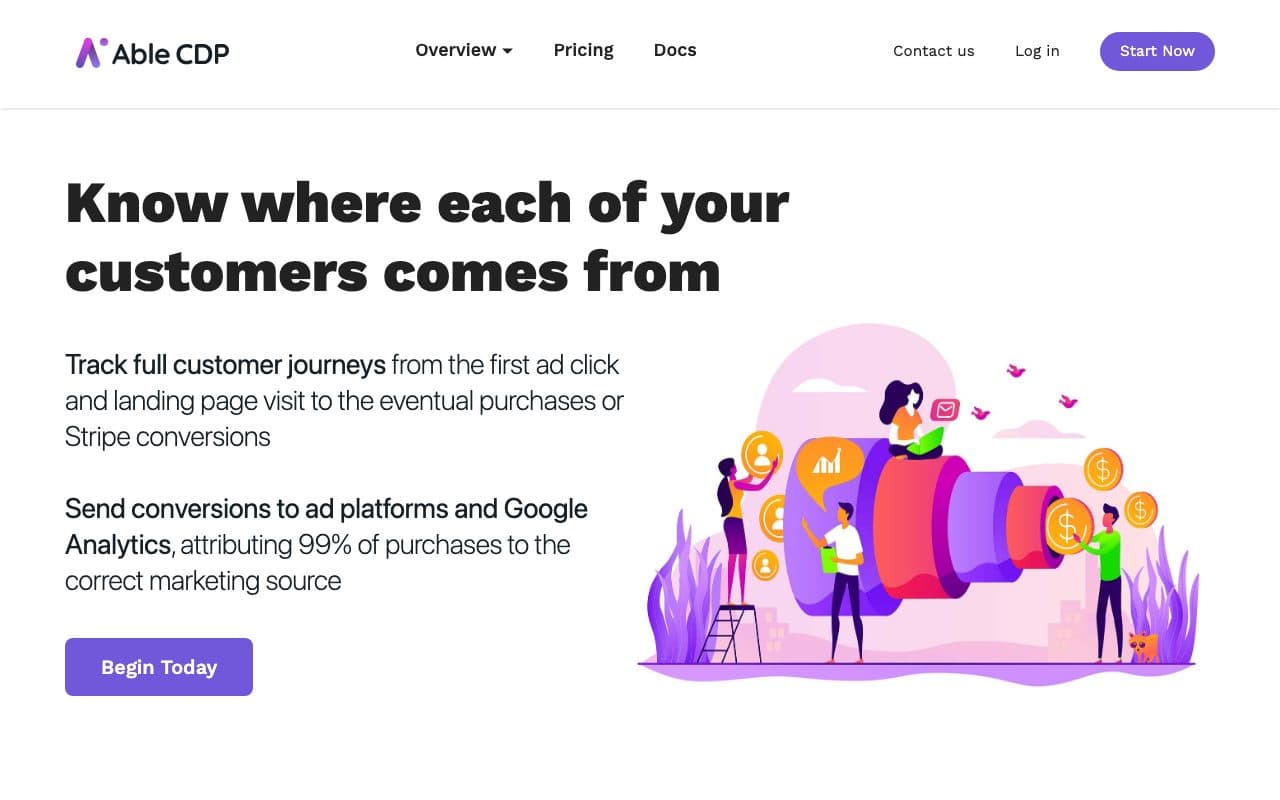
Able CDP combines server-side event collection with identity resolution and revenue attribution in one platform. Unlike infrastructure-first tools, Able can attribute conversions that happen outside the browser session: a prospect clicking an ad, returning weeks later, and purchasing through Stripe can still be correctly attributed back to the original ad source.
Pros
- Identity resolution: attributes conversions that happen outside the original browser session
- Connects offline sales to marketing efforts: good for businesses where conversions happen in Stripe or CRM
Cons
- Higher price than lightweight server-side tools: justified for high-ticket funnels, harder to justify for lower-volume lead gen
- Not purpose-built for the lead gen CRM funnel (qualified-lead stages, appointment booking attribution)
Verdict
A strong choice for performance marketers needing server-side tracking with identity resolution across SaaS or high-ticket funnels. Lead gen businesses with CRM-based pipeline stages will find LeadJourney's purpose-built depth more valuable.
9. RudderStack: Best Open-Source Server-Side Tracking for Engineering Teams
RudderStack is an open-source, warehouse-first customer data platform that enables teams to collect events server-side and route them to analytics platforms, ad networks, and data warehouses. Its warehouse-first architecture means data lands in your own Snowflake, BigQuery, or Redshift before being sent downstream, giving engineering teams full data ownership and control.
Pros
- Open-source: self-host for free, full code access and customization
- Warehouse-first architecture: data lands in your own data warehouse before going downstream
Cons
- Requires engineering resources, not a marketing team tool
- Cloud service starts at $750/month: self-hosting requires DevOps capacity
Verdict
The best choice for engineering-led teams who want full data ownership and open-source flexibility. Not a tool for marketing teams needing a fast, no-code server-side tracking setup.
10. Tealium: Best Enterprise Tag Management and Server-Side Governance
Tealium EventStream is an enterprise-grade server-side tag management and data governance platform. It provides consent management, vendor control, real-time data enrichment, and event routing at enterprise scale: used by large brands that need strict governance over which data goes where, when, and under what consent conditions.
Pros
- Enterprise data governance: strict control over data flows, consent enforcement, and vendor management
- Mature enterprise platform: trusted by large brands across retail, financial services, and media
Cons
- Enterprise pricing and implementation: significant investment in time and budget
- Vastly overbuilt for SMB lead gen businesses: designed for enterprise data governance, not performance ad tracking
Verdict
The right platform for enterprise organizations with strict data governance requirements. Completely out of scope for SMB lead generation businesses.
11. JENTIS: Best for Privacy-First European Organizations
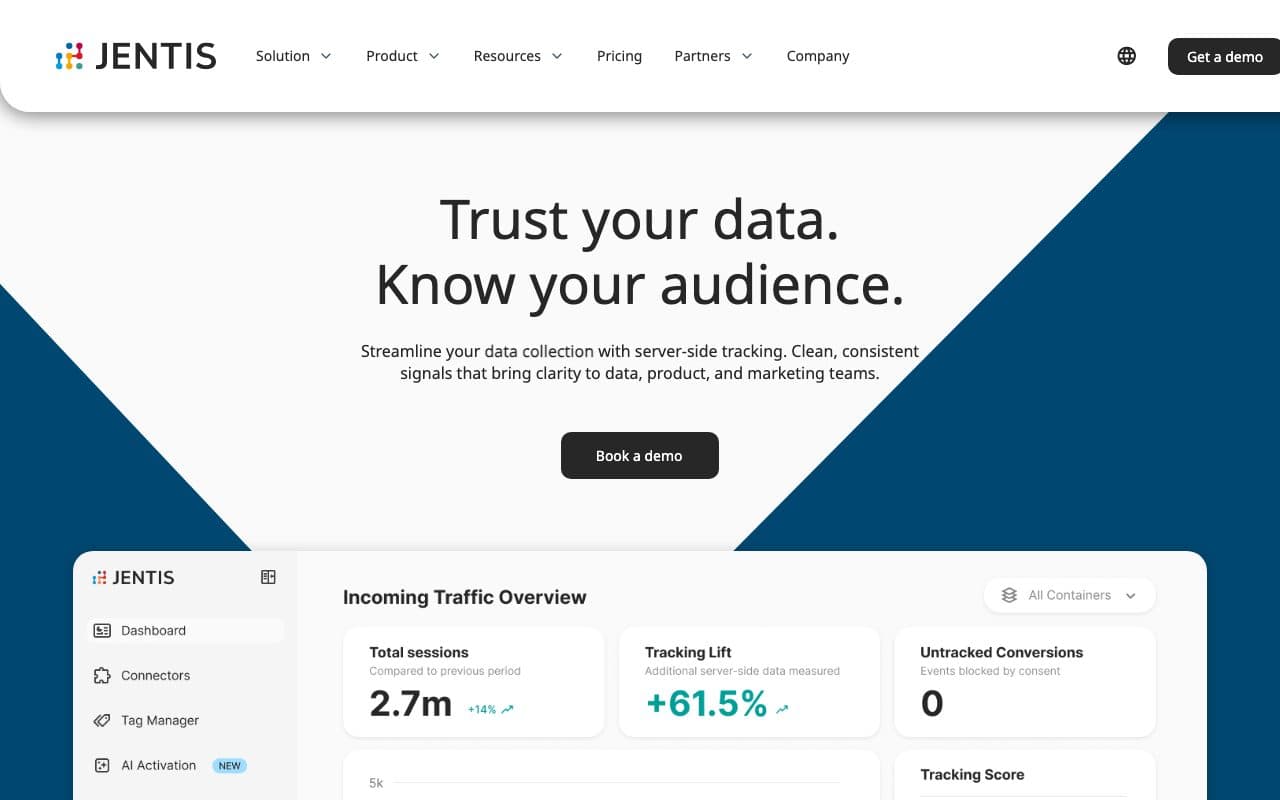
JENTIS is a server-side tracking platform built specifically for European organizations with heavy compliance requirements. GDPR, Schrems II, and ePrivacy regulations. It provides a privacy-first data collection architecture where no data leaves European infrastructure, with built-in consent management and data minimization controls.
Pros
- Privacy-first architecture: EU data residency, built-in consent enforcement, data minimization
- Strong GDPR compliance: designed for organizations in regulated European industries
Cons
- Starts at €1,000/month: priced for enterprise compliance budgets, not SMB marketers
- Compliance-focused rather than performance-focused, not designed to optimize ad algorithms
Verdict
The right choice for European enterprises with strict compliance requirements. Not relevant for most SMB lead gen businesses looking to improve ad performance.
12. Littledata: Best for Shopify and BigCommerce GA4 Accuracy
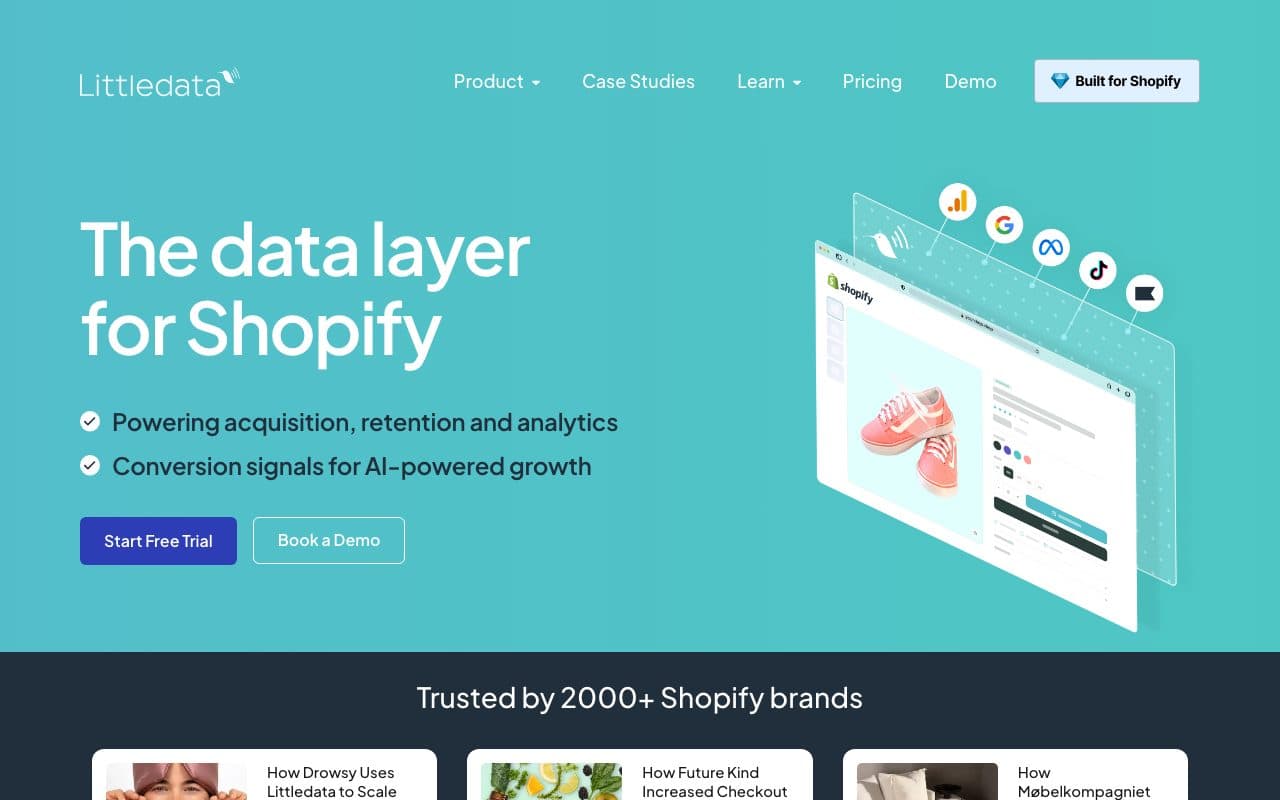
Littledata is an automated server-side tracking solution for eCommerce platforms (specifically Shopify and BigCommerce) with a strong focus on GA4 data accuracy. It connects your store's order data to GA4 server-side, ensuring subscription orders, refunds, and checkout variations are captured correctly without manual event instrumentation.
Pros
- Best-in-class Shopify GA4 accuracy: captures every order type including subscriptions and refunds
- Automated setup: pre-built events for Shopify and BigCommerce, minimal configuration
Cons
- eCommerce-only, not applicable to lead generation businesses
- Standard plan starts at $199/month: priced at Shopify scale
Verdict
The best server-side GA4 accuracy tool for Shopify and BigCommerce brands. Not relevant for lead generation businesses that don't run an eCommerce store.
13. Snowplow: Best for Advanced Behavioral Data Collection
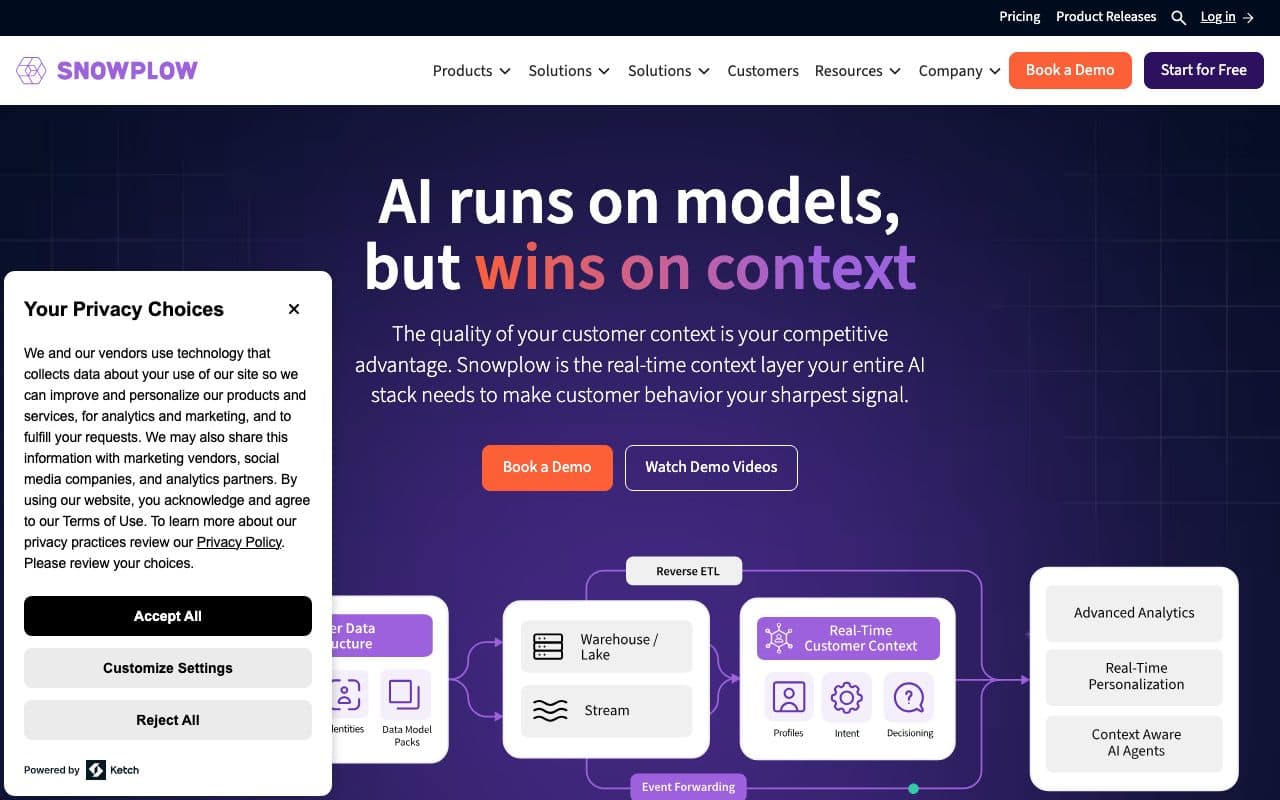
Snowplow is an open-source behavioral data platform built for teams that need complete control over event collection, schema validation, and data pipeline architecture. It provides highly customizable server-side event tracking that feeds into data warehouses, ideal for data engineering teams building advanced analytics on top of raw behavioral data.
Pros
- Custom event schemas: define your own data structure rather than conforming to preset event models
- Open-source and self-hostable: full data ownership with no vendor lock-in
Cons
- Requires data engineering expertise, not a marketing team tool
- No out-of-the-box ad platform integrations: requires custom pipeline work to route events to Meta or Google
Verdict
The best platform for data engineering teams who need full behavioral data ownership and custom event pipelines. Requires significant technical investment. Not a marketing-team tool.
14. Piwik PRO: Best Privacy-Conscious Analytics with Server-Side Tracking
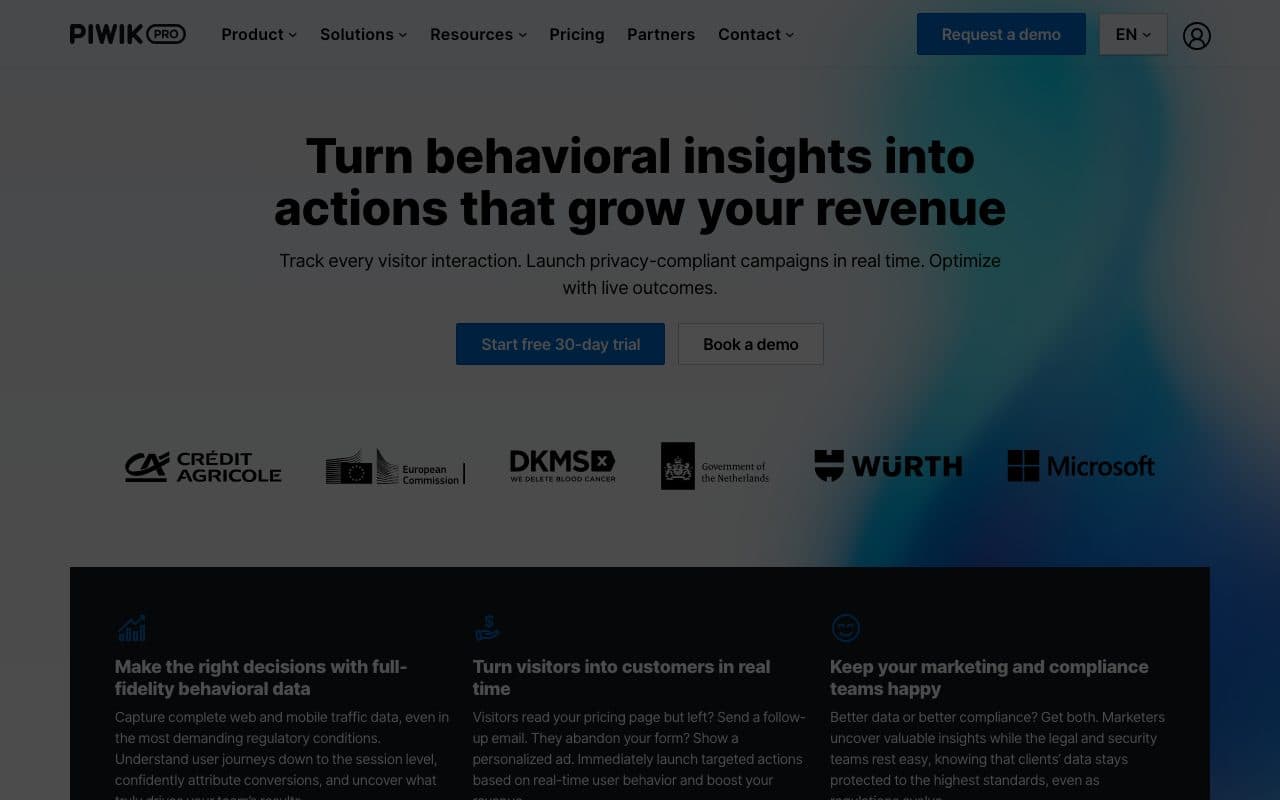
Piwik PRO is an analytics platform that combines website analytics, consent management, and server-side data collection in a single privacy-first stack. It's designed for organizations (especially in healthcare, finance, and government) that need GDPR-compliant analytics without sending data to Google or US-based servers.
Pros
- EU data residency: data never leaves European infrastructure
- Built-in consent management: privacy compliance and analytics in one platform
Cons
- Analytics-focused, not designed to send conversion signals back to ad platforms for algorithm retraining
- Limited paid advertising optimization depth: primarily a GA alternative, not a CAPI tool
Verdict
The best GDPR-compliant GA alternative for regulated industries needing privacy-first analytics. Not a paid ad optimization tool for lead generation businesses.
15. Meta CAPI Gateway: Best Free Baseline for Meta-Only Advertisers
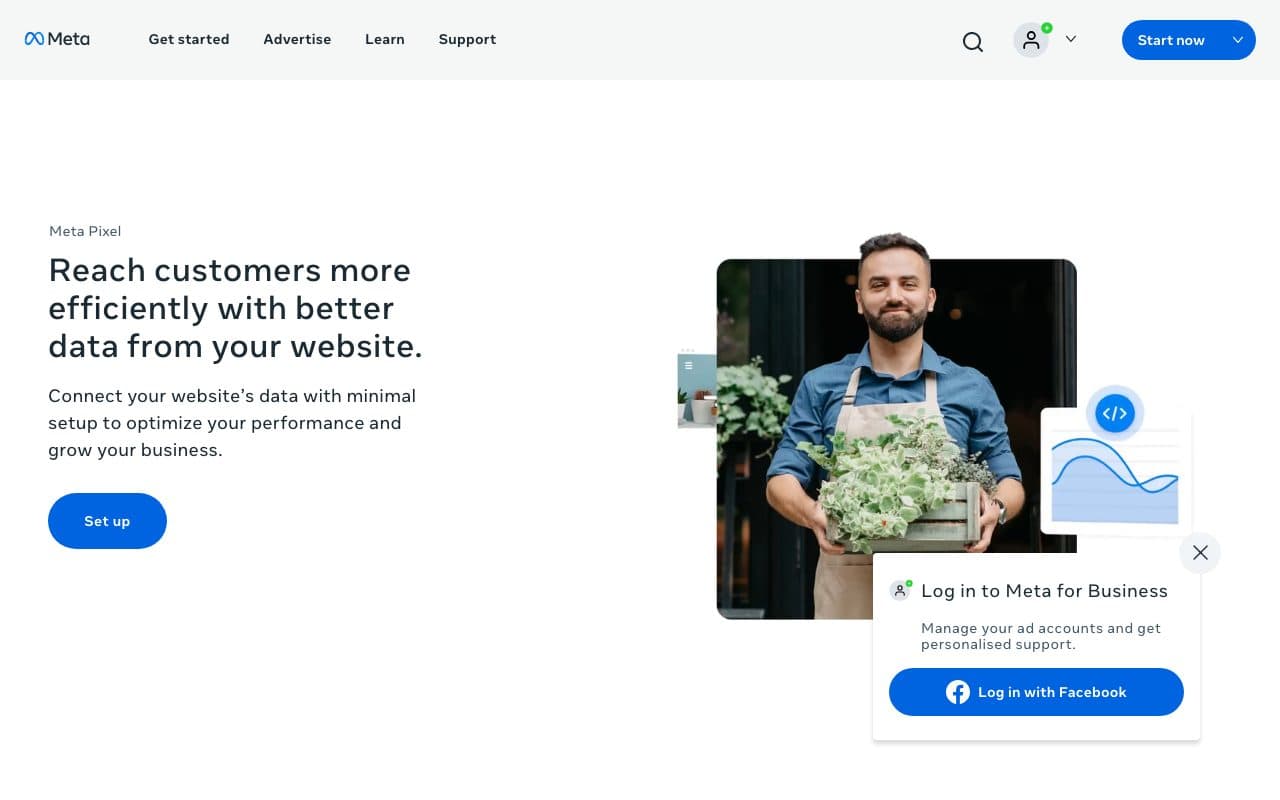
Meta's one-click Conversions API Gateway is a free, zero-configuration server-side CAPI integration available directly inside Meta Events Manager. It requires no code, no developer, and no third-party tool. For businesses running Meta Ads only with simple conversion events (form fills, page views), it provides basic server-side event forwarding at zero cost.
Pros
- Free: zero cost for Meta advertisers, available directly in Events Manager
- Zero configuration: one-click setup inside Meta's native interface
Cons
- Meta-only: no Google Enhanced Conversions, LinkedIn CAPI, or Bing UET; no cross-platform signal
- Basic event forwarding only: no CRM pipeline attribution, no closed-deal signals, no multi-touch attribution
- Limited data quality controls: no bot filtering, no event deduplication guarantees at scale
Verdict
An excellent free starting point for Meta-only advertisers. The moment you run ads on Google, LinkedIn, or Bing, or need CRM pipeline attribution, you need a dedicated server-side tracking tool.
The Two Types of Server-Side Tracking Tools: Infrastructure vs. Attribution
After reviewing 15 tools, one distinction stands out above all others: most server-side tracking tools are infrastructure tools. They move your conversion events from the browser to the server, which solves the data accuracy problem, but they don't tell you which campaign produced a closed deal, and they don't send revenue signals back to your ad algorithms.
LeadJourney is different because it combines both: server-side accuracy (95%+, no developer, 21-minute setup) with full lead gen attribution (CRM pipeline stages, cost-per-close per campaign) and closed-loop CAPI signals back to Meta, Google, LinkedIn, and Bing simultaneously. For lead generation businesses, this combination is what makes server-side tracking actually improve your ad results, not just your data quality.
Quick Decision Guide
- Lead generation business running paid ads (Meta, Google, LinkedIn, Bing): LeadJourney. Server-side accuracy + CRM attribution + four-platform CAPI loop in one 21-minute setup
- B2B SaaS needing server-side tracking with attribution: Cometly
- Technical marketing team wanting managed sGTM: Stape
- Developer team needing maximum flexibility: Google Tag Manager Server-Side
- Enterprise with multi-tool data routing needs: Segment or Tealium
- Shopify eCommerce brand: Elevar or Littledata
- Agency needing affordable no-code server-side: Tracklution
- European enterprise with GDPR compliance requirements: JENTIS or Piwik PRO
- Meta-only advertiser wanting a free server-side baseline: Meta CAPI Gateway
FAQ
Frequently Asked Questions
The questions teams moving tracking off the browser ask most.
What is server-side tracking?
Instead of the visitor's browser reporting a conversion straight to Meta or Google, the event is sent from your own server to each platform's API. The browser is where tracking is blocked, so moving the send off it removes iOS restrictions, Safari's tracking prevention and ad blockers from the path in one step.
How much data does browser tracking actually lose?
Estimates land between 20 and 40% of conversion events, and higher on iOS-heavy audiences. The loss is not random either: it concentrates in the privacy-conscious, Safari-using, ad-blocking part of your audience, which is why the campaigns that look worst on a pixel-only setup are sometimes the ones reaching the best buyers.
Does server-side tracking need a developer?
It depends which tool. A server-side GTM container on Cloud Run, RudderStack or Snowplow all assume engineering. Managed hosting such as Stape removes the infrastructure but still expects someone who understands tag configuration. Tools aimed at marketers deploy as a snippet plus a CRM webhook and need no developer at all.
How much do server-side tracking tools cost?
The Meta CAPI Gateway is free and server-side GTM costs only its hosting. Stape starts at $17 per month, Tracklution from €39.20, Able CDP from $49, Littledata and Elevar at $199 and $225, Segment and RudderStack from $750, and JENTIS from €1,000. Tealium and Snowplow are enterprise quotes.
Is server-side tracking GDPR compliant?
It is not automatically either way. Moving collection to your own server can improve compliance, because you decide what leaves it and where it is hosted, but consent is still required for tracking that is not strictly necessary, and sending data to Meta or Google is still a transfer. European teams with strict requirements often choose JENTIS or Piwik PRO for exactly this reason.
Keep reading
More from the blog
 Tool Comparisons
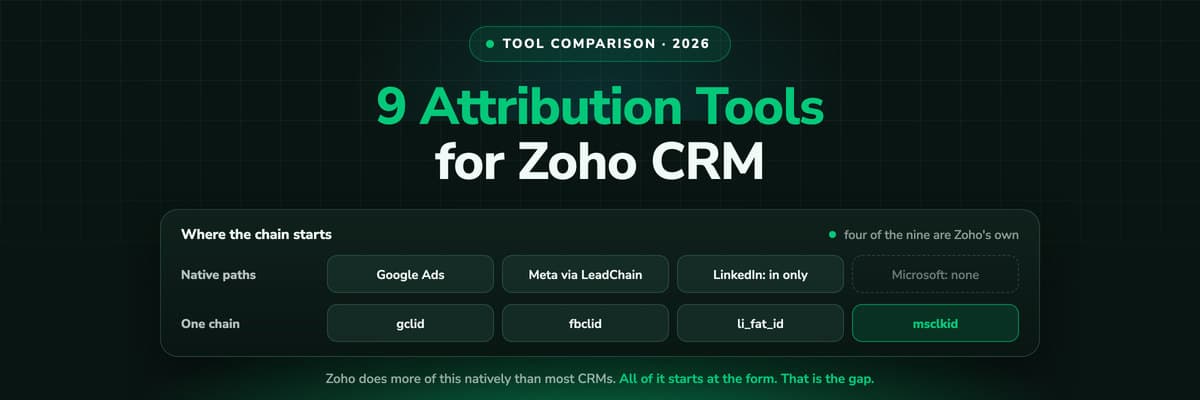
9 Best Marketing Attribution Tools for Zoho CRM in 2026
Four of the best attribution tools for Zoho CRM are Zoho products you may already pay for. Nine options compared on where the tracking starts, which ad platforms they cover, and whether the closed deal ever reaches the algorithm buying your traffic.Read the article13 min read Tool Comparisons
9 Best Marketing Attribution Tools for Microsoft Dynamics 365 in 2026
Dynamics records the revenue and nothing fills in where it came from: Lead Source is a ten-option picklist and campaign spend is typed by hand. Nine tools compared on what each can actually see in a Dynamics environment, with pricing, pros, cons and a verdict.Read the article14 min read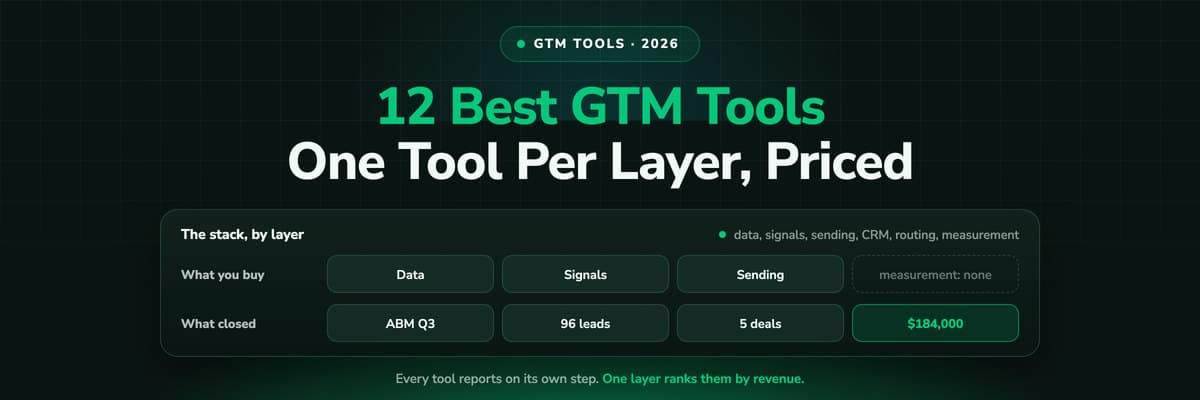 Tool Comparisons
12 Best GTM Tools and Software in 2026
A GTM stack is five or six tools that each report on their own step, which is why nobody can say which play produced the revenue. Twelve tools compared by the layer they own, with prices read this month and a verdict on who each one is for.Read the article16 min read
Beyond event forwarding
The only server-side tracker that closes the loop back to your ad platforms
LeadJourney is the server-side tracking tool built around the lead and the closed deal, for lead generation and e-commerce businesses. 95%+ accuracy. Meta CAPI + Google Enhanced Conversions + LinkedIn CAPI + Bing UET. CRM pipeline attribution. Five attribution models. Atlas AI analyst. 21-minute setup. No developer.