













BlogTool Comparisons
15 Best Ad Tracking Software Tools in 2026
Platform-reported metrics overcount conversions and lose the lead after the form fill, and most ad trackers were built for affiliates or Shopify, not CRM pipelines. Fifteen tools ranked on accuracy, channel coverage, CRM depth and setup, with a verdict on who each one is built for.


Contents
- Quick summary
- The 15 tools compared
- 1. LeadJourney
- What users say
- 2. Cometly
- 3. Hyros
- 4. Triple Whale
- 5. Voluum
- 6. RedTrack
- 7. Ruler Analytics
- 8. Northbeam
- 9. Rockerbox
- 10. ClickMagick
- 11. Supermetrics
- 12. Wicked Reports
- 13. AdBeacon
- 14. SegMetrics
- 15. Google Ads native
- How to choose
- Quick Decision Guide
- Further Reading
Summarise this article with AI
Opens the page with a ready prompt in:


Nothing is sent until you pick a service.
Quick Summary: Best Ad Tracking Software in 2026
In short
LeadJourney is the best ad tracking software for lead generation businesses in 2026. It is the only platform built exclusively for businesses running paid ads across Meta, Google, LinkedIn, and Bing that need to track every lead from the first ad click through to a closed deal in their CRM, and automatically feed those closed-deal signals back to all four ad platforms simultaneously.
Why LeadJourney leads this list: server-side tracking at 95%+ accuracy (recovering the 30-60% of conversions that pixel-based tools miss), a four-platform CAPI loop (Meta, Google, LinkedIn, Bing) automated from CRM data with no developer required, five attribution models in a single dashboard, and Atlas AI analyst for plain-language data queries. Setup takes 21 minutes. A 14-day free trial removes the risk.
The other 14 tools on this list serve different use cases: Cometly and Dreamdata for B2B SaaS, Triple Whale and Northbeam for eCommerce, Voluum and RedTrack for affiliates, Rockerbox for enterprise omnichannel. Each is the right tool for its category. If you run a lead generation business, none of them were built for you. LeadJourney was.
Ad tracking software tells you which ads are actually working, and which ones are burning budget. Without it, you're relying on platform-reported metrics that overcount conversions, ignore cross-channel journeys, and have no idea what happens to a lead after it fills out your form.
But "ad tracking software" is a broad category. Some tools were built for affiliate marketers running traffic arbitrage. Some were built for Shopify eCommerce brands. Some were built for enterprises with TV and radio budgets. And one (LeadJourney) was built specifically for lead generation businesses running paid ads across Meta, Google, LinkedIn, and Bing who need to track every click through to a closed deal in their CRM.
This guide ranks and reviews the 15 best ad tracking software tools in 2026. Each tool is evaluated on tracking accuracy, channel coverage, CRM integration depth, ease of setup, and who it's actually built for, so you can find the right fit without testing ten platforms.
The 15 Best Ad Tracking Software Tools (2026)
The 15 best ad tracking software tools at a glance
| Tool | Key features | Best for | Pricing |
|---|---|---|---|
| Rank 1LeadJourney | Server-side tracking at 95%+ accuracy; Meta, Google, LinkedIn & Bing in one dashboard; CRM pipeline attribution; automated CAPI loop; 5 attribution models; Atlas AI analyst | Lead generation businesses running paid ads to a CRM | 14-day free trial |
| Rank 2Cometlyvs LeadJourney | Server-side cross-channel tracking, real-time attribution, AI optimization recommendations | B2B SaaS multi-channel ad tracking | Custom (demo required) |
| Rank 3Hyrosvs LeadJourney | Print-tracking attribution, extended attribution windows, call tracking | High-ticket businesses with long attribution windows | Premium (for $10K+/mo ad spend) |
| Rank 4Triple Whalevs LeadJourney | Triple Pixel first-party data, native Shopify integration, creative analytics | Shopify and DTC eCommerce | Starts at $129/mo |
| Rank 5Voluumvs LeadJourney | Sub-second real-time reporting, 24/7 automation rules, anti-fraud toolkit | Affiliate marketers and media buyers | From $119/mo |
| Rank 6RedTrackvs LeadJourney | Native ad and affiliate network integrations, A/B testing, traffic distribution | Performance marketers running native ads | From $69/mo |
| Rank 7Ruler Analyticsvs LeadJourney | Dynamic call tracking per source, offline conversion tracking, CRM revenue matching | Offline and phone-call conversion tracking | From £299/mo |
| Rank 8Northbeamvs LeadJourney | ML-powered creative attribution, customer journey modeling | DTC brands needing ML creative attribution | Enterprise |
| Rank 9Rockerboxvs LeadJourney | Multi-touch attribution plus marketing mix modeling, TV, podcast and direct mail tracking, data-warehouse connectors | Enterprise omnichannel (including offline) | Enterprise |
| Rank 10ClickMagickvs LeadJourney | Link and funnel tracking, TrueTracking, simple setup | Funnel builders and solo marketers | From $79/mo |
| Rank 11Supermetricsvs LeadJourney | 170+ connectors, exports to Sheets, Looker Studio, BigQuery, Snowflake | Data teams building custom ad reporting | From €49/mo |
| Rank 12Wicked Reportsvs LeadJourney | LTV attribution, cohort analysis, recurring-revenue tracking | Subscription and recurring-revenue businesses | From $499/mo |
| Rank 13AdBeaconvs LeadJourney | Multi-client ad reporting, first-party data plus journey events, actionable insights | Agencies needing multi-client reporting | From $299/mo, 30-day trial |
| Rank 14SegMetricsvs LeadJourney | Deep email and course-platform integrations, full-journey tracking, LTV by source | Coaches and info-product businesses | From $57/mo |
| Rank 15Google Ads Native Tracking | Free built-in conversion tracking, Enhanced Conversions, deep Smart Bidding integration | Free baseline for Google-only advertisers | Free |


1. LeadJourney: Best Ad Tracking Software for Lead Generation Businesses
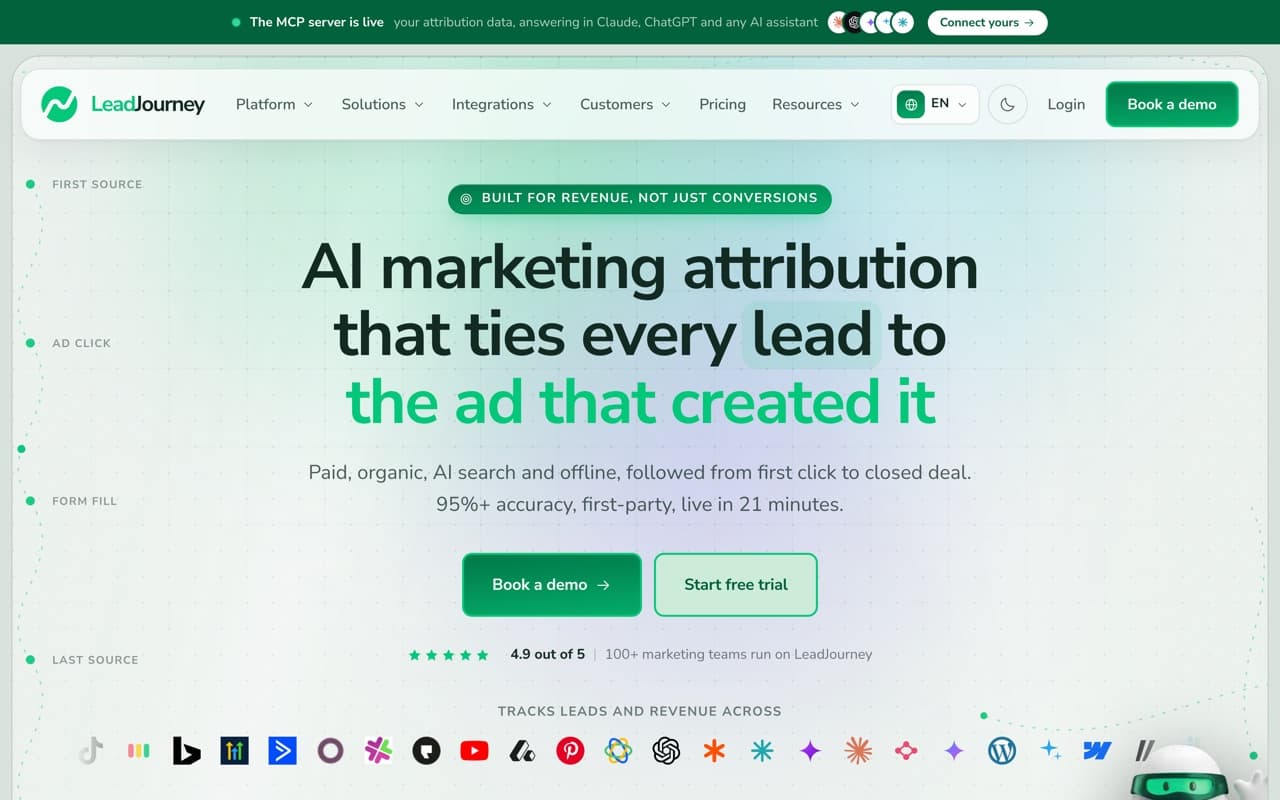
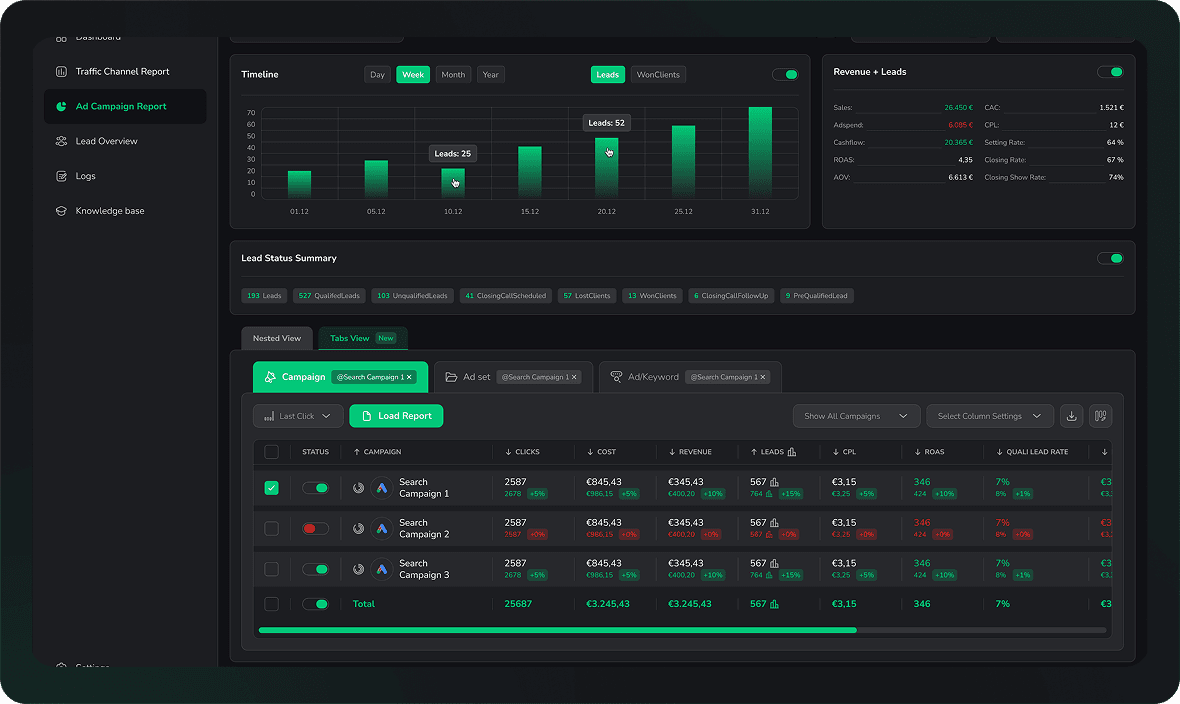
LeadJourney is the only ad tracking software built exclusively for lead generation businesses. Every other tool on this list was designed for affiliates, eCommerce, SaaS, or enterprise brands. LeadJourney was designed from the ground up to answer the one question that matters most for lead gen businesses: which ad produced a closed deal?
Most ad tracking tools capture the click and the form fill, then the trail goes cold. LeadJourney tracks the entire journey server-side: the original ad click (campaign, ad set, creative), every subsequent touchpoint, every CRM stage (lead received, qualified, appointment booked, deal closed), and automatically sends those qualified-lead and closed-deal signals back to Meta CAPI, Google Enhanced Conversions, LinkedIn CAPI, and Bing UET. The result: your ad algorithms retrain on real buyers instead of form fillers, and you know exactly which campaigns are producing revenue, not just leads.
Key Features
- Server-side tracking at 95%+ accuracy: all conversion events fire from your server, bypassing iOS 14+, Safari ITP, and ad blockers entirely
- Unified ad dashboard: Meta, Google, LinkedIn, and Bing in one view with real cost-per-lead and cost-per-close by campaign, ad set, and creative
- CRM revenue attribution: connects every ad click to CRM deal stages; see cost-per-qualified-lead and cost-per-close per campaign
- Closed-loop conversion signals: qualified-lead, booked-call, and closed-deal signals sent back to all four ad platforms automatically
- Five attribution models: first touch, last touch, linear, time-decay, and position-based; switch between them in the dashboard
- Atlas AI analyst: ask your ad tracking data plain-language questions: which campaign has the lowest cost-per-close? Which ad set is driving the most qualified leads this month?
- 21-minute setup, no developer required: works with Elementor, Wix, Onepage.ai, and any funnel builder
Pros
- The only ad tracker that connects Meta, Google, LinkedIn, and Bing to CRM deal stages in a single platform: purpose-built for lead gen, not adapted from another use case
- Closes the algorithmic loop: revenue data from CRM flows back to all four ad platforms to continuously improve targeting
- Server-side accuracy eliminates the iOS 14 data loss problem that undermines every pixel-based tracker
- 14-day free trial: zero-risk trial for any lead gen business
Cons
- Not built for product-led SaaS: e-commerce runs through the Shopify integration or a manually connected shop, affiliates have plans of their own
- No click fraud detection: designed for paid social and search, not traffic arbitrage
Verdict
If you run a lead generation business (coaching, consulting, B2B services, financial advisors, real estate, insurance, local services), LeadJourney is the only ad tracking tool built for your exact model. It tracks every ad click through to closed revenue and closes the loop back to your ad platforms automatically.
What Real Users Say About LeadJourney
LeadJourney is rated 5.0 on Trustpilot, 4.8 on G2, and consistently ranked as the best B2B attribution platform by performance marketers and agencies. Here is what users say:
Honestly the best B2B attribution platform I've used. The Customer Journey Report finally shows us which touchpoints drive results, and the ad tracking software is rock solid. Being able to pull in offline conversions plus the AI search tracking makes our marketing analytics way more accurate.
We've been using LeadJourney for our agency for a few months now to clean up our clients' tracking data. Before making the switch, dealing with long sales cycles and missing data from cookie blockers felt like constant guesswork. This ad tracking software handles server-side tracking perfectly, meaning we can finally connect actual revenue back to the specific campaigns that started the journey.
Connected LeadJourney for 2 clients, setup took literally 20 minutes each. The data became more accurate, the reports actually make sense. Now clients look at the dashboard and the 'why don't the numbers match?' questions are gone.
 Alexander SamarPerformance Marketing Agency
Read More LeadJourney Reviews
Verified reviews on Trustpilot, G2, Capterra, Software Advice, and leadjourney.io/testimonials.
2. Cometly: Best for B2B SaaS Multi-Channel Ad Tracking
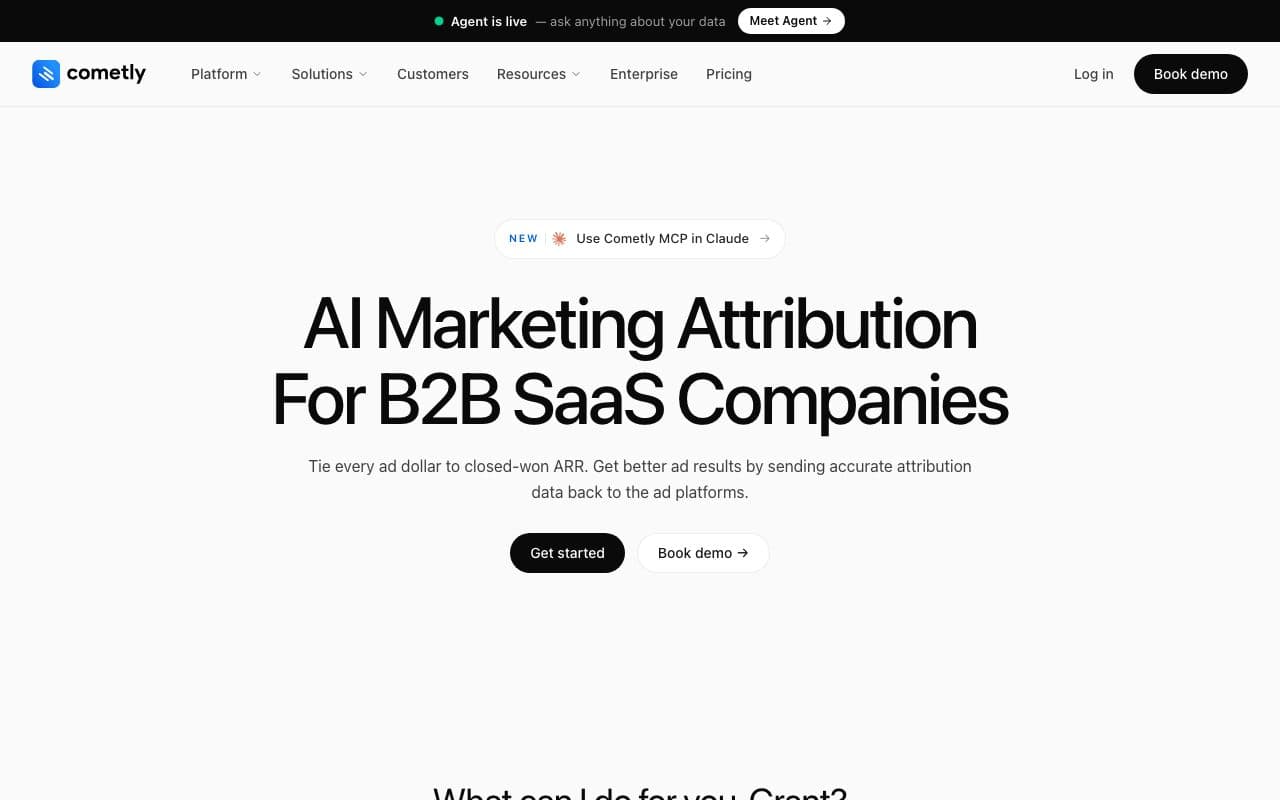
Cometly is a marketing attribution platform that uses server-side tracking to connect ad spend to CRM revenue across multiple channels. It delivers AI-powered optimization recommendations and a unified cross-channel view, making it the closest feature competitor to LeadJourney on this list.
The key difference: Cometly serves SaaS, eCommerce, and agencies broadly. Its ad tracking wasn't purpose-built for the specific lead gen funnel: qualified-lead stage reporting, appointment booking attribution, and multi-channel CRM-to-CAPI loops.
Pros
- Strong server-side tracking with real-time cross-channel attribution
- AI-powered campaign optimization recommendations
Cons
- Multi-vertical focus means lead gen funnel depth (qualified-lead stages, CRM-to-CAPI) is less specific than LeadJourney
- Custom pricing: requires a demo call
Verdict
Strong ad tracker for B2B SaaS running multi-channel paid acquisition. Lead gen businesses will find LeadJourney's funnel-stage depth and four-platform CRM loop more relevant.
3. Hyros: Best for High-Ticket Businesses with Long Attribution Windows
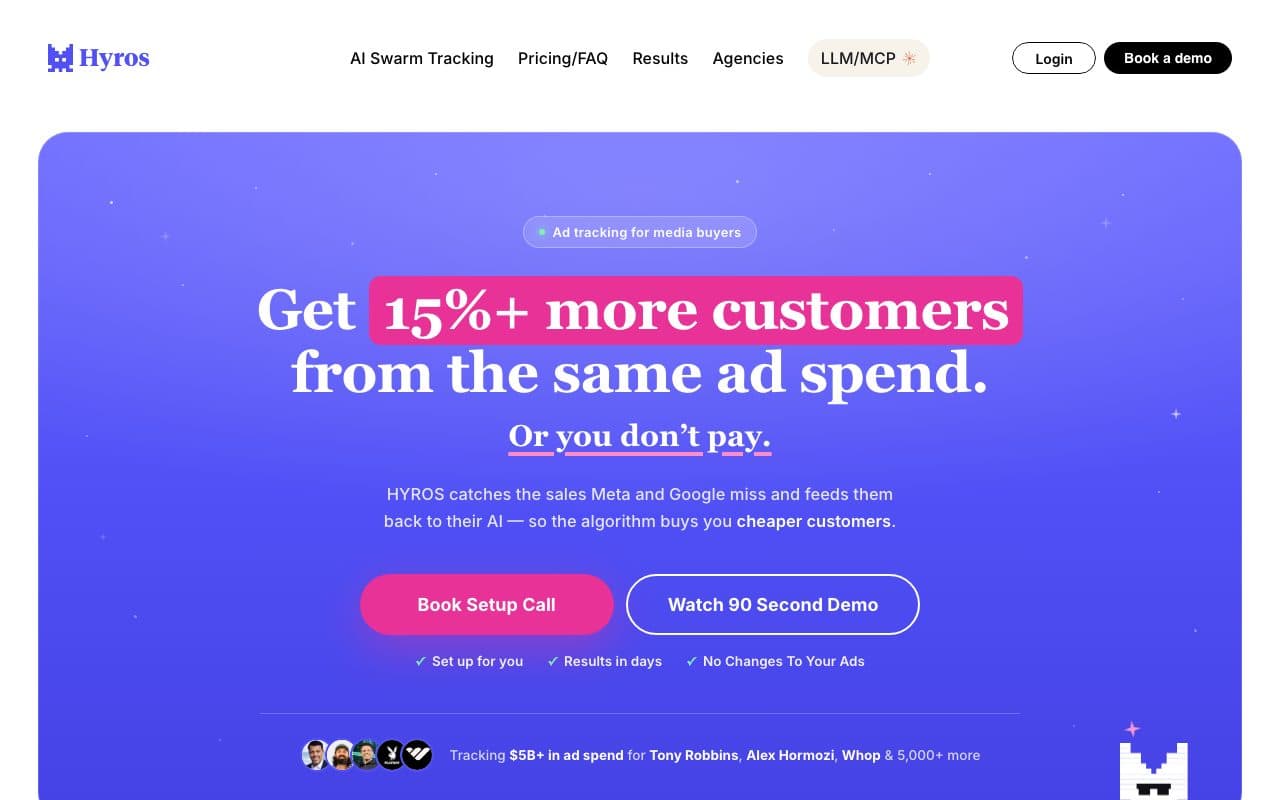
Hyros uses proprietary print-tracking technology to maintain accurate attribution even when customers take weeks or months to decide, critical for high-ticket coaching programs, software, and services with long consideration periods. It also integrates call tracking, connecting phone conversations back to the original ad source.
Pros
- Extended attribution windows: tracks conversions that happen weeks or months after the first ad click
- Call tracking integration: phone call conversions attributed back to originating ad source
Cons
- Premium pricing: requires 10K+/month ad spend to justify the cost
- Primarily Meta-focused, not purpose-built for multi-channel lead gen (LinkedIn, Bing)
Verdict
A powerful option for high-budget direct-response advertisers with long consideration windows. For most lead gen businesses, LeadJourney delivers comparable accuracy across more platforms at lower cost.
4. Triple Whale: Best Ad Tracker for Shopify and DTC eCommerce
Triple Whale is the standard ad tracking platform for Shopify-based DTC brands. Its Triple Pixel collects first-party data directly from your store, consolidating Meta, Google, TikTok, and email into one dashboard with Shopify revenue as the source of truth. Creative analytics show which ad visuals and copy are actually driving purchases.
Pros
- Native Shopify integration: seamless setup for DTC brands, revenue data pulled directly
- Creative analytics: track ad performance at the visual and copy level
Cons
- Built for eCommerce, no CRM pipeline attribution, no qualified-lead stage tracking
- Requires Shopify, not useful for lead gen businesses that don't run a Shopify store
Verdict
The best ad tracker for Shopify DTC brands. Completely wrong category for lead generation businesses: it was built for product purchases, not sales funnels.
5. Voluum: Best Ad Tracking Software for Affiliate Marketers
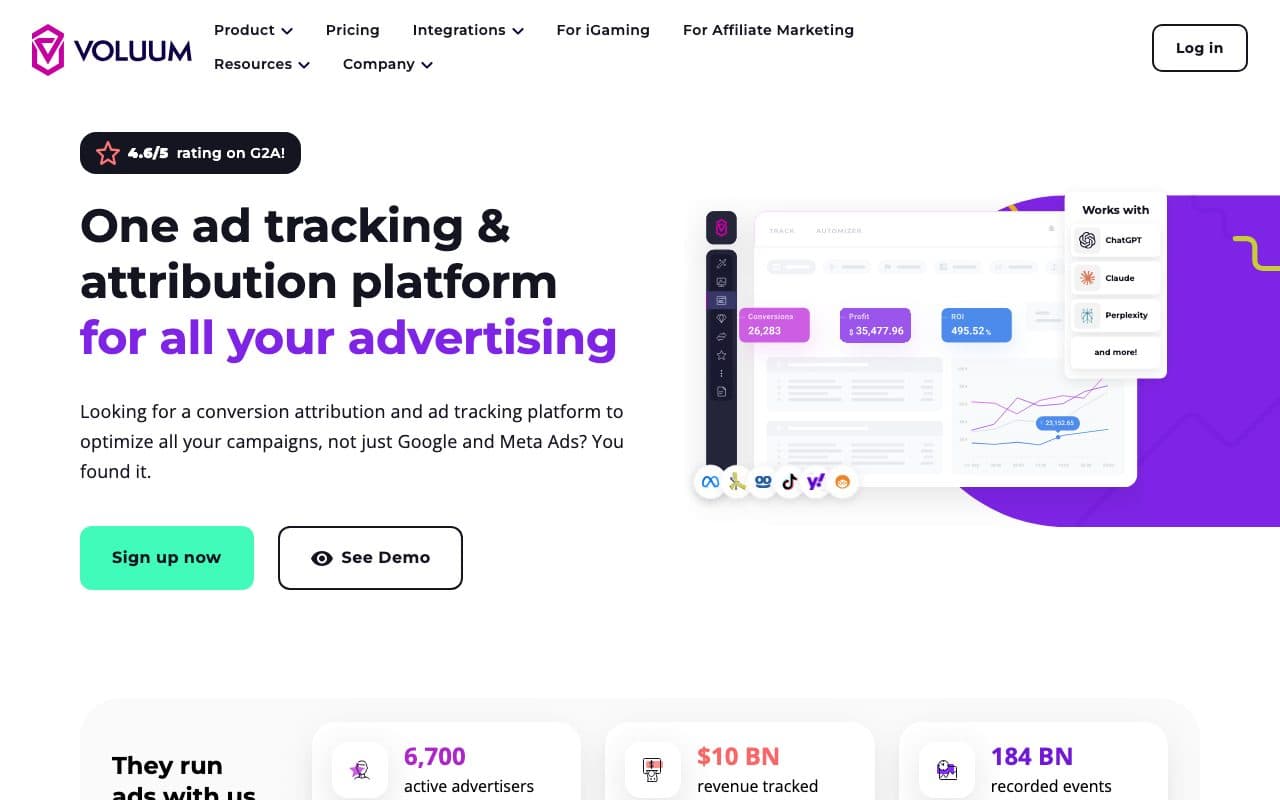
Voluum is the industry-standard ad tracker for affiliate marketers and media buyers. It delivers sub-second real-time reporting, automated campaign rules (e.g. pause a campaign if CPA exceeds a threshold), anti-fraud tools, and native ad network integrations. Its automation rules run 24/7 without manual intervention: the standout feature for performance arbitrage.
Pros
- Best-in-class automation rules: auto-pause, redirect, or adjust bids based on live performance conditions
- Sub-second reporting and anti-fraud toolkit: built for high-volume traffic environments
Cons
- Built for affiliate marketers, no CRM pipeline attribution, no qualified-lead reporting, no CAPI loop for Meta/Google
- Complexity and cost: features lead gen businesses don't need (traffic distribution AI, anti-fraud, offer rotation)
Verdict
The top ad tracker for affiliate marketers and media buyers running high-volume traffic. Lead generation businesses running paid ads to a CRM funnel will find it the wrong category of tool entirely.
6. RedTrack: Best for Performance Marketers Running Native Ads
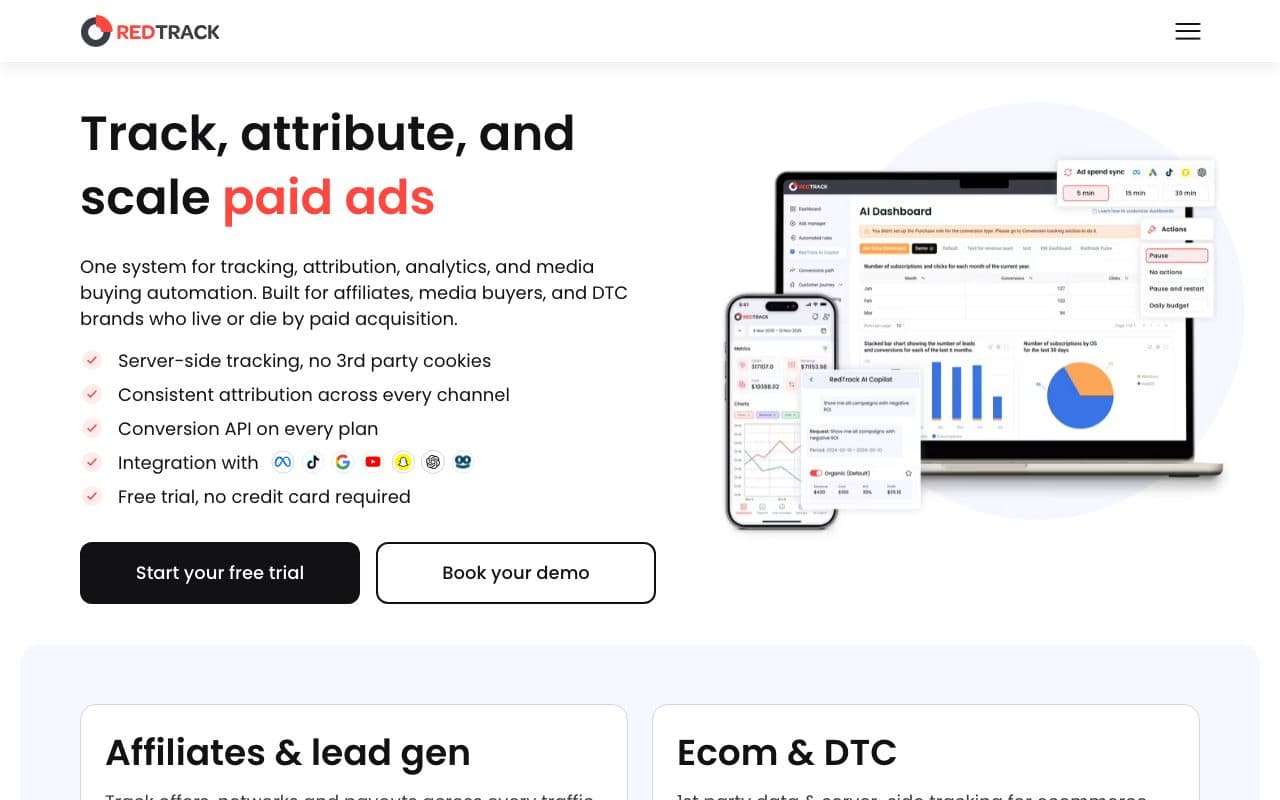
RedTrack is a performance tracking platform that started in affiliate marketing and expanded to cover native ads, push traffic, and broader paid media. It's well-regarded by media buyers running large volumes of traffic across multiple native ad networks. Its A/B testing, traffic distribution, and offer management features are designed for performance arbitrage workflows.
Pros
- Strong native ad and affiliate network integrations
- Solid A/B testing and traffic distribution for media buyers
Cons
- Affiliate-first architecture, not designed for CRM-connected lead gen funnels
- No qualified-lead or pipeline-stage tracking: revenue attribution limited to direct conversions
Verdict
Well-suited for media buyers and affiliate marketers. Lead gen businesses with CRM funnels will outgrow its reporting depth quickly.
7. Ruler Analytics: Best for Offline Conversion Ad Tracking
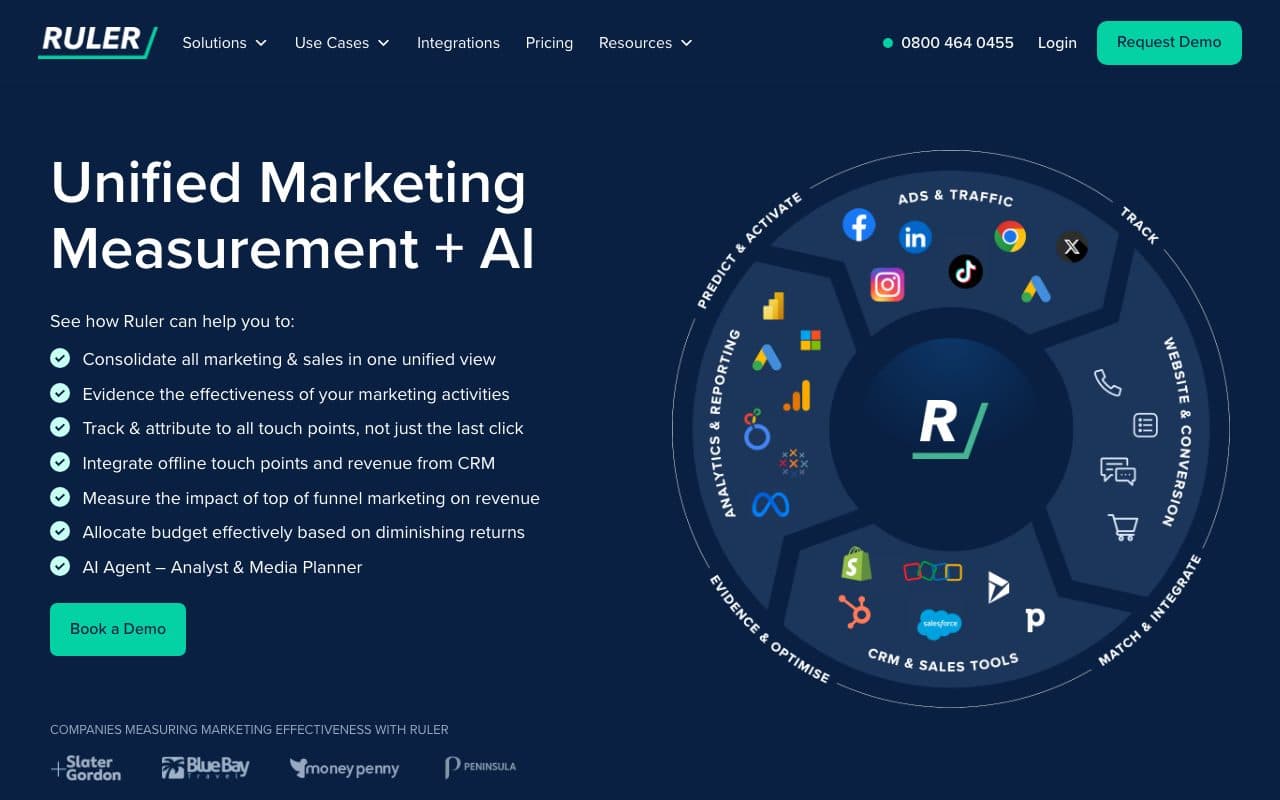
Ruler Analytics assigns unique phone numbers to different traffic sources so you can see exactly which ad campaign drove an inbound call, and whether that call converted into a customer. It tracks every form submission, phone call, and live chat interaction, then follows those leads through your CRM to see which ones close and for how much revenue.
Pros
- Best-in-class call tracking: dynamic number insertion per traffic source, call recording and attribution
- CRM revenue matching: connects offline conversions to ad source inside the CRM
Cons
- No server-side ad platform tracking: doesn't close the CAPI loop for Meta or Google
- No unified multi-platform ads dashboard: reporting stays within Ruler, not across Meta/Google/LinkedIn/Bing
Verdict
The best specialist tool for businesses where phone calls are the primary lead conversion event. Not a complete ad tracking solution for performance marketers: it doesn't close the algorithmic loop.
8. Northbeam: Best for DTC Brands Needing ML-Powered Creative Attribution
Northbeam is a data science-driven ad attribution platform built for DTC brands. It uses machine learning to model customer journeys and creative-level performance: going beyond standard attribution to identify which specific ad creatives drive revenue vs. which ones just drive engagement.
Pros
- ML-powered creative attribution: identifies winning ad visuals at a more granular level than standard tools
- Strong for DTC brands running high volumes of creative variations across Meta and Google
Cons
- Built for eCommerce and DTC, no CRM pipeline attribution or lead funnel tracking
- Enterprise pricing: premium cost for smaller lead gen businesses
Verdict
A sophisticated option for scaling DTC brands who need creative-level ML attribution. Not built for lead generation businesses with CRM-based sales funnels.
9. Rockerbox: Best for Enterprise Omnichannel Ad Tracking
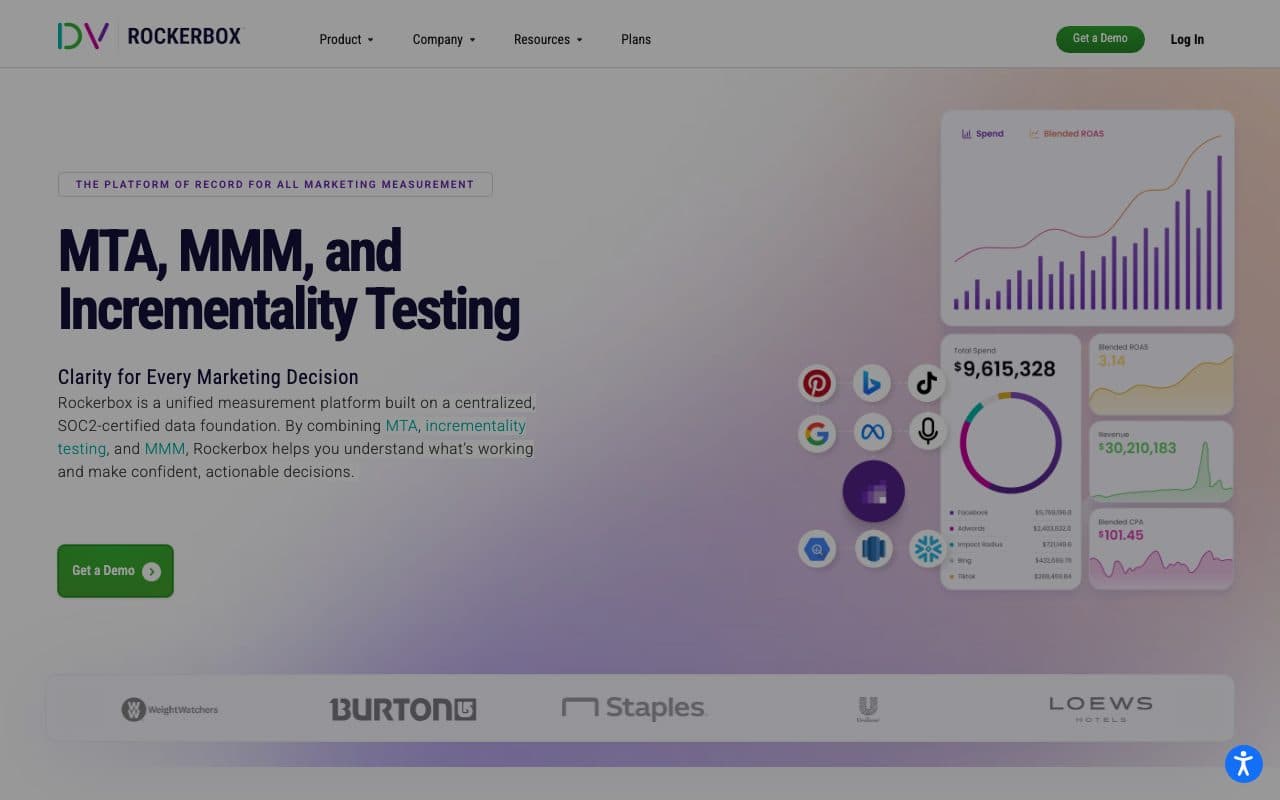
Rockerbox is a marketing measurement platform that combines multi-touch attribution and marketing mix modeling with direct data warehouse access. Its defining capability is tracking attribution across paid, organic, TV, CTV, podcasts and direct mail in a single unified model, making it the right choice for enterprise brands running significant offline advertising alongside digital.
Pros
- Tracks TV, radio, and direct mail alongside digital: true omnichannel attribution
- Data warehouse connectors: pipe clean, deduplicated marketing data into Snowflake or BigQuery
Cons
- Enterprise pricing: requires significant budget and technical resources to implement
- Overkill for SMB lead gen businesses: designed for brands running TV and offline campaigns
Verdict
The best measurement platform for enterprise brands running truly omnichannel campaigns. Not relevant for the majority of lead generation businesses running digital-only paid ads.
10. ClickMagick: Best for Funnel Builders and Solo Marketers
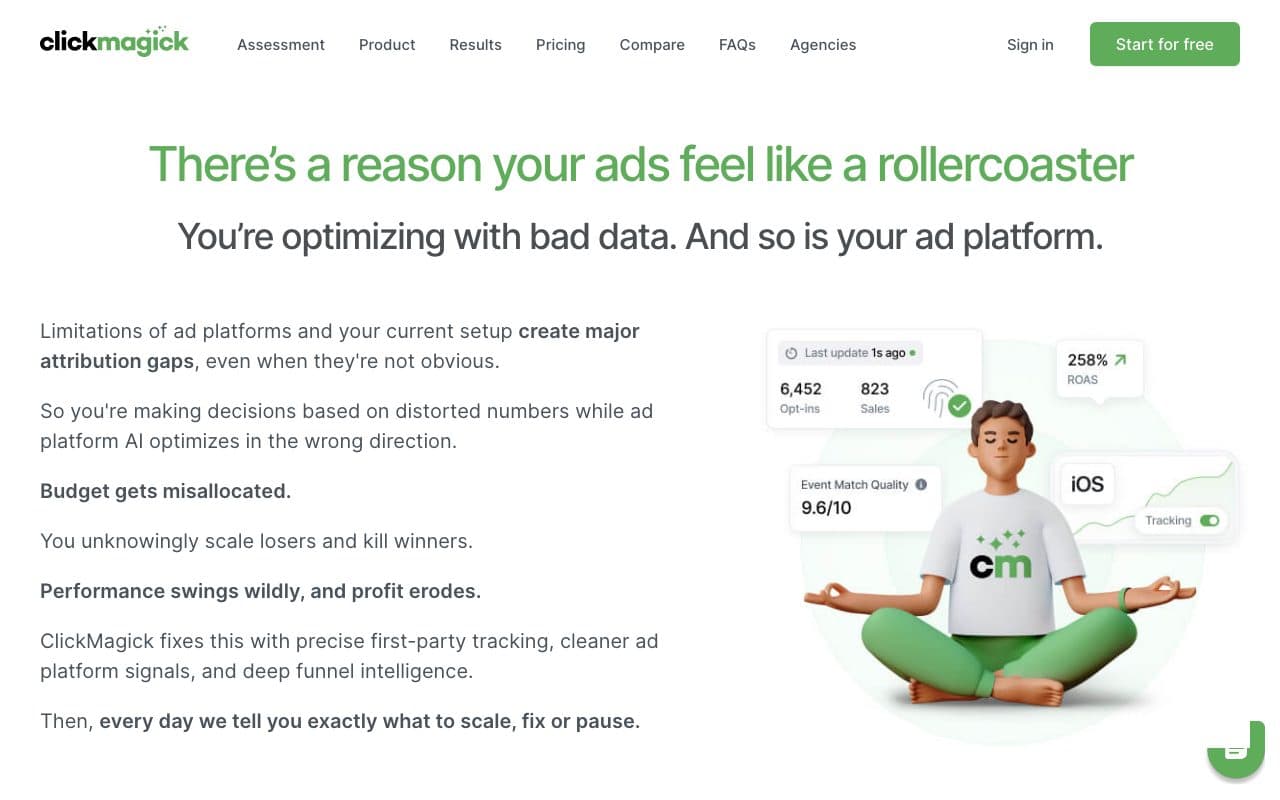
ClickMagick is a link and funnel tracking tool popular among solo marketers, funnel builders, and small affiliate operations. It tracks clicks, conversions, and link performance with a focus on simplicity and affordability. Its TrueTracking technology claims to work around iOS 14 restrictions without full server-side implementation.
Pros
- Accessible pricing: affordable entry point for solo marketers and small budgets
- Simple link-level tracking: easy to set up without technical background
Cons
- No CRM integration: tracking stops at the conversion event, doesn't follow leads through pipeline stages
- No server-side CAPI loop: doesn't feed revenue data back to Meta or Google for algorithm retraining
Verdict
A useful starting point for solo marketers and funnel builders who need basic click and conversion tracking. Outgrown quickly by any lead gen business managing CRM-based sales cycles.
11. Supermetrics: Best for Data Teams Building Custom Ad Reporting
Supermetrics is a marketing data connector that pulls raw ad data from Meta, Google, LinkedIn, TikTok, and 170 other sources into spreadsheets, Looker Studio, BigQuery, Snowflake, and data warehouses. It doesn't provide attribution or analysis itself: it automates the data pipeline so your team can build whatever reports they need in their preferred tools.
Pros
- Widest platform coverage: 50+ ad and marketing data sources in one connector
- Flexible data destinations: Google Sheets, Looker Studio, BigQuery, Snowflake, and more
Cons
- Not an attribution tool: pulls platform-reported data only, no independent tracking or cross-channel attribution
- Priced by plan and sources: from €39/month on annual billing, extra sources and destinations cost more
Verdict
Excellent for data teams who need raw ad platform data in their BI tools. Not ad tracking software in the attribution sense: it reports what the platforms already tell you, not independent cross-channel truth.
12. Wicked Reports: Best for Subscription and Recurring Revenue Tracking
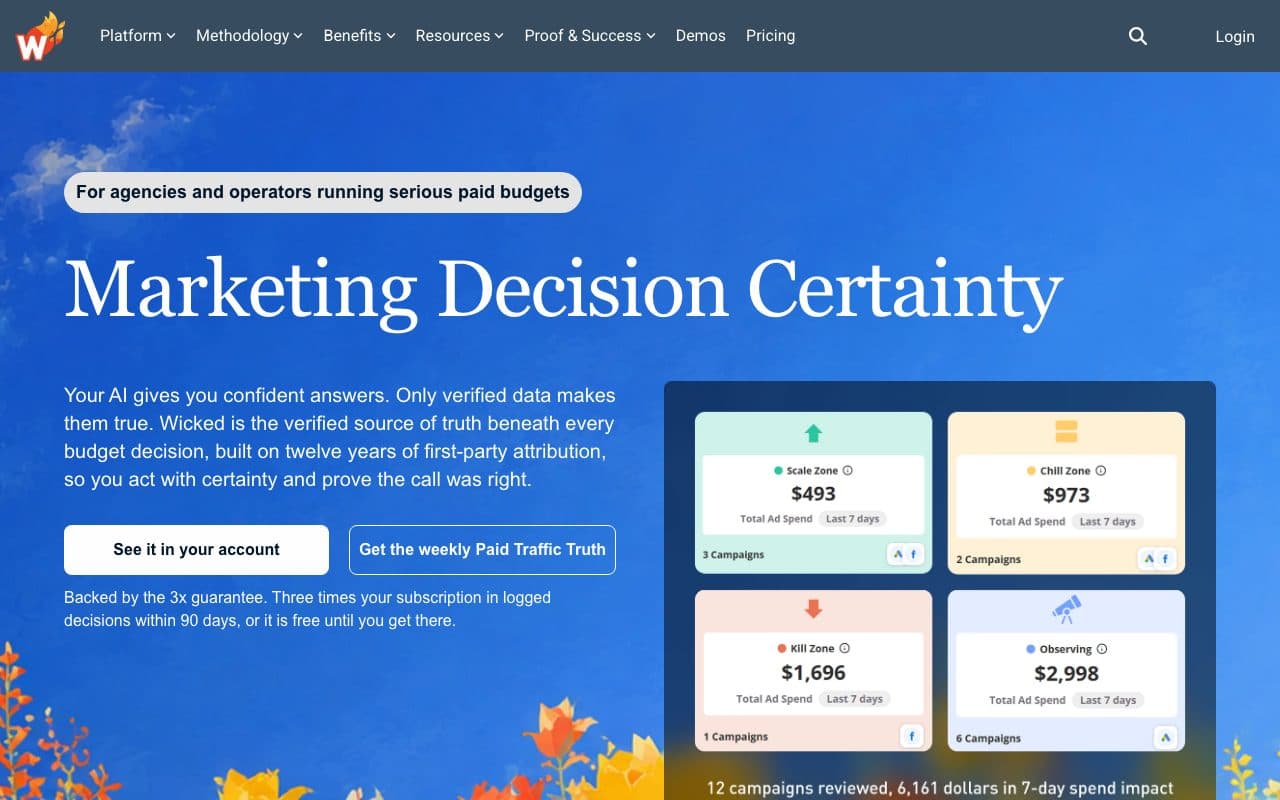
Wicked Reports was built for subscription businesses and SaaS companies that need to track not just which ads drove sign-ups, but which ads brought customers who stick around and generate high lifetime value. It connects ad source to renewals, upsells, and LTV over time, making it one of the few tools that optimizes for cohort revenue rather than initial conversion.
Pros
- LTV attribution: connects ad source to recurring revenue, renewals, and upsells over time
- Cohort analysis: see actual ROAS over time as cohorts generate recurring revenue
Cons
- Not designed for one-time lead gen conversions: the value proposition is subscription LTV tracking, which doesn't apply to most lead gen businesses
- Plans start at $250/month: expensive for what is ultimately a specialized use case
Verdict
The right choice for subscription SaaS and membership businesses optimizing for LTV. Not a fit for lead generation businesses with one-time deal cycles.
13. AdBeacon: Best for Agencies Needing Multi-Client Ad Performance Reporting
AdBeacon is a marketing intelligence platform that centralizes ad performance data across multiple clients and platforms into a unified reporting environment. It connects ad platforms, first-party data, and customer journey events to show which campaigns generate leads, pipeline, and revenue, with a strong emphasis on turning data into actionable insights rather than just displaying metrics.
Pros
- Good for agencies managing multiple client ad accounts in one view
- Free 30-day trial available: low-risk evaluation
Cons
- Less established than Cometly, Hyros, or Triple Whale in the ad tracking space
- Limited depth in CRM pipeline-stage attribution for lead generation businesses
Verdict
A solid multi-client reporting tool for agencies. Falls short of full lead gen attribution depth compared to LeadJourney.
14. SegMetrics: Best for Coaches and Info-Product Businesses
SegMetrics is built for online education and coaching businesses: course creators, membership sites, and info-product sellers. It connects deeply with email marketing tools and course platforms to track the full journey from lead magnet download through email nurture sequence to eventual purchase, attributing revenue back to the original ad source.
Pros
- Deep email and course platform integrations: tracks the full journey including email nurture sequences
- LTV by traffic source: see which ad sources bring the highest-value students or members
Cons
- Designed for course/membership businesses, not for lead gen with CRM-based pipeline stages
- Conversion feeder only from the Grow plan, and it sends purchases, not CRM stages
Verdict
A strong niche tool for online educators and coaches. Not designed for the lead gen model with CRM pipeline stages and multi-platform paid ad attribution.
15. Google Ads Native Tracking: Best Free Baseline for Google-Only Advertisers
Google Ads native conversion tracking is free, built-in, and deeply integrated with Google's bidding algorithms. For businesses running Google Ads only, with simple conversion events (form fills, calls), and without a CRM-based sales funnel, it provides a functional baseline. Enhanced Conversions improves accuracy by sending hashed first-party data from your thank-you page.
Pros
- Free: zero additional cost for Google Ads advertisers
- Deep Google Ads integration: feeds conversion data directly into Smart Bidding
Cons
- Google-only, no Meta, LinkedIn, or Bing attribution; no cross-channel unified view
- No CRM integration: tracking stops at the conversion event, doesn't follow leads through pipeline stages
- Pixel-based: significant data loss without Enhanced Conversions, which still requires additional setup
Verdict
A functional free baseline for Google Ads advertisers running simple conversions. The moment you run ads on more than one platform or need CRM pipeline attribution, you need an independent ad tracking tool.
How to Choose the Right Ad Tracking Software
The right ad tracking software depends entirely on your business model. The biggest mistake marketers make is choosing a tool based on feature lists rather than use-case fit. An affiliate tracker like Voluum has dozens of features lead gen businesses will never use, and is missing the CRM attribution that lead gen businesses need most.
Quick Decision Guide
- Lead generation business running paid ads (Meta, Google, LinkedIn, Bing): LeadJourney, the only ad tracker built for your exact model, server-side, with CRM pipeline stages and four-platform CAPI loop
- B2B SaaS running paid acquisition: Cometly
- High-ticket coaches or info-product businesses with large Meta budgets: Hyros
- Shopify DTC eCommerce brands: Triple Whale
- Affiliate marketers and media buyers: Voluum or RedTrack
- Primary conversion is inbound phone calls: Ruler Analytics
- Subscription or SaaS LTV tracking: Wicked Reports
- Enterprise omnichannel including TV and offline: Rockerbox
Further Reading
If you are evaluating ad tracking software, explore the LeadJourney marketing attribution platform or read our comparison of the best Hyros alternatives and the best Conversion API tracking tools. LeadJourney was founded by Jonas Strambach, a performance marketing expert and agency founder with over a decade of experience in B2B lead generation.
FAQ
Frequently Asked Questions
The questions teams choosing ad tracking software ask most.
What is the best ad tracking software in 2026?
It depends on the business model, which is why this list is ordered by fit rather than features. For lead generation businesses running paid ads into a CRM, LeadJourney captures all four major click IDs server-side and follows the lead to the closed deal. Affiliate media buyers are better served by Voluum or RedTrack, Shopify brands by Triple Whale, and call-led businesses by Ruler Analytics.
How much does ad tracking software cost?
The spread is wide. ClickMagick starts at $49 per month, RedTrack at $124, Triple Whale at $129, Voluum at $149, Ruler Analytics at $199, Wicked Reports at $250 and AdBeacon at $299. Hyros targets accounts spending $10,000 or more per month, and Northbeam and Rockerbox are enterprise quotes. LeadJourney runs a 14-day free trial.
What is the difference between ad tracking software and Google Analytics?
GA4 measures sessions on your website and stops at the on-site conversion. Ad tracking software captures the click ID that the ad platform appended to the URL, keeps it with the person, and can therefore still say weeks later which campaign produced a signed deal. In lead generation the outcome that matters almost never happens in the session GA4 recorded.
Do I need ad tracking software if the ad platforms already report conversions?
Platform reports are self-reported and each platform claims the same conversion for itself, so adding Meta's number to Google's overstates reality. They also count the form fill, not the deal, which means the algorithm optimises for people who fill in forms. Independent tracking gives you one number per lead and lets you send the real outcome back.
Does ad tracking software work without third-party cookies?
Server-side tracking does, because the click ID is captured on your own domain at the moment of the click rather than read back out of a third-party cookie later. Trackers that lean on third-party cookies lose the record to Safari's tracking limits, ad blockers and consent banners, which is where the familiar gap between platform-reported and CRM-recorded conversions comes from.
Keep reading
More from the blog
 Tool Comparisons
9 Best Marketing Attribution Tools for Zoho CRM in 2026
Four of the best attribution tools for Zoho CRM are Zoho products you may already pay for. Nine options compared on where the tracking starts, which ad platforms they cover, and whether the closed deal ever reaches the algorithm buying your traffic.Read the article13 min read Tool Comparisons
9 Best Marketing Attribution Tools for Microsoft Dynamics 365 in 2026
Dynamics records the revenue and nothing fills in where it came from: Lead Source is a ten-option picklist and campaign spend is typed by hand. Nine tools compared on what each can actually see in a Dynamics environment, with pricing, pros, cons and a verdict.Read the article14 min read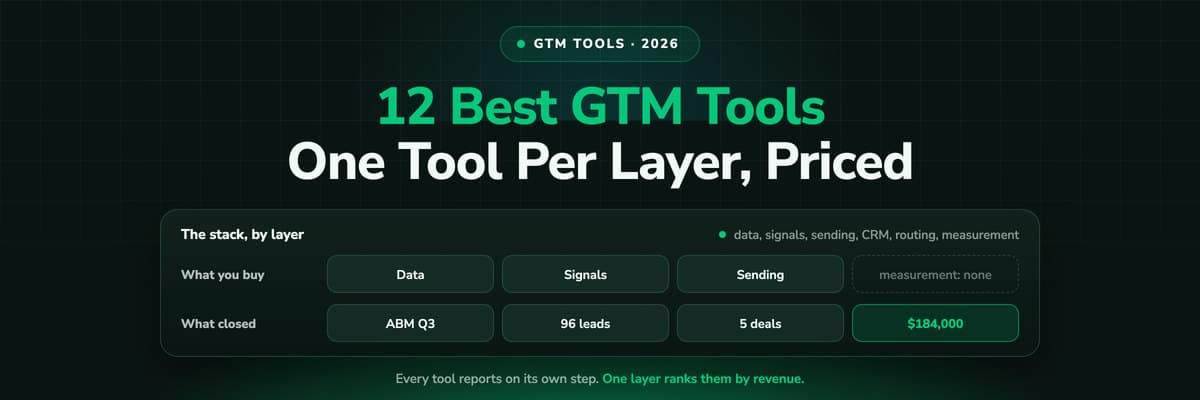 Tool Comparisons
12 Best GTM Tools and Software in 2026
A GTM stack is five or six tools that each report on their own step, which is why nobody can say which play produced the revenue. Twelve tools compared by the layer they own, with prices read this month and a verdict on who each one is for.Read the article16 min read
All-in-one attribution
Ready to track every ad?
LeadJourney is the #1 ad tracking software for lead generation businesses. Server-side tracking across Meta, Google, LinkedIn, and Bing. CRM pipeline attribution. Five attribution models. Atlas AI analyst. 21-minute setup. 14-day free trial.