














BlogTool Comparisons
15 Best Cross-Device Tracking Solutions in 2026
A prospect sees the ad on a phone, researches on a laptop and converts on a tablet, and cookie-based analytics loses the thread at every switch. Fifteen cross-device tracking solutions ranked, from server-side CRM attribution to enterprise CDPs, identity graphs and free platform-native options.


Contents
Summarise this article with AI
Opens the page with a ready prompt in:


Nothing is sent until you pick a service.
Cross-device tracking is one of the hardest problems in modern marketing attribution. A prospect sees your Meta ad on their phone during commute, researches on their laptop at work, fills out your form on a tablet in the evening, and takes a sales call a week later. Standard analytics tools lose track across these device transitions. Cross-device tracking solutions stitch these journeys together so you can see the complete path from first touchpoint to closed deal.
Quick Summary: Best Cross-Device Tracking in 2026
In short
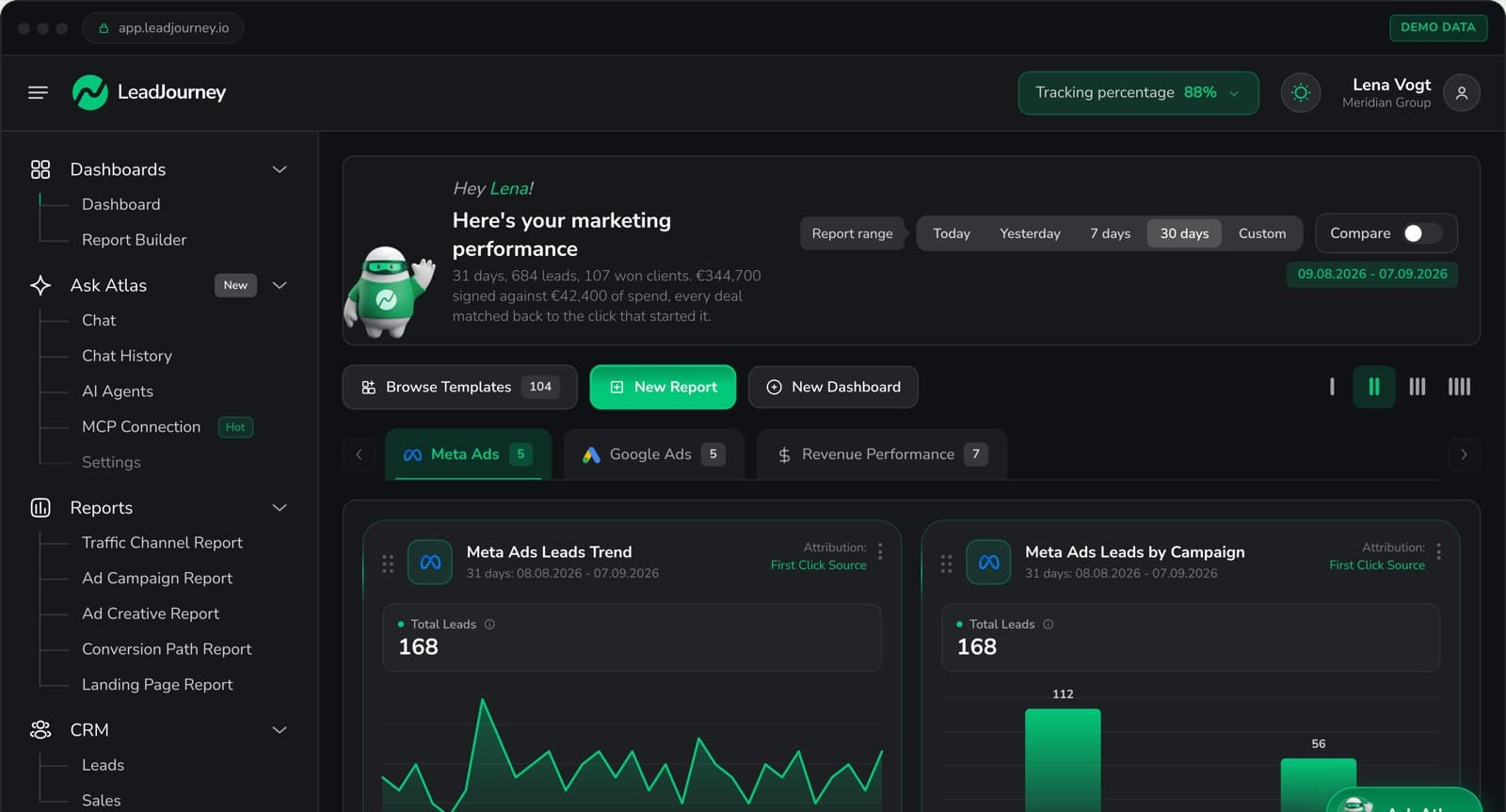
LeadJourney is the best cross-device tracking solution in 2026 for lead generation businesses, because it solves the version of the problem that costs money: the click that happened on a phone and the deal that closed weeks later on a laptop. Click IDs are captured server-side and stored on the CRM record, not in a browser cookie Safari deletes after seven days, so the first touch is still attached at the end. 95%+ tracking accuracy, 21-minute setup, 14-day free trial.
Cross-device tracking means three different things on this list, and mixing them up is why shortlists get long. Identity resolution (FullContact, LiveRamp, Segment, Able CDP) proves two sessions were the same person and hands that back to you. Product analytics (Mixpanel) merges an anonymous device into a known user at sign-in. Attribution (LeadJourney, Cometly, Dreamdata, Ruler Analytics, Hyros) connects the journey to spend and revenue.
The free options are worth knowing before you buy anything: Meta CAPI with advanced matching and Google Enhanced Conversions both improve cross-device matching at no cost, and GA4 with Google Signals will tell you whether cross-device behaviour is significant in your audience at all.
The 15 Best Cross-Device Tracking Solutions (2026)
The 15 best cross-device tracking solutions at a glance
| Tool | Key features | Best for | Pricing |
|---|---|---|---|
| Rank 1LeadJourney | Server-side click ID storage on CRM; first-party data matching; 95%+ accuracy | Lead gen businesses needing cross-device attribution that connects to CRM | 14-day free trial |
| Rank 2Meta CAPI with Advanced Matching | Free, Meta identity graph, hashed customer identifier matching | Cross-device Meta ad attribution via hashed first-party data | Free |
| Rank 3Google Enhanced Conversions | Free, hashed email matching, signed-in Google account tracking | Cross-device Google Ads attribution via hashed email matching | Free |
| Rank 4Segment | Enterprise-grade identity resolution, 400+ integrations | Enterprise CDP for cross-device identity resolution | Starts at $750/mo |
| Rank 5Able CDPvs LeadJourney | Identity resolution, enriched CAPI data, high match rates | Server-side cross-device identity resolution across paid ad platforms | From $49/mo |
| Rank 6LiveRamp | Privacy-safe identity graph, offline + online data matching | Enterprise data connectivity and cross-device identity matching | Custom enterprise pricing |
| Rank 7Cometlyvs LeadJourney | Server-side tracking, CRM attribution, cross-device accuracy | B2B SaaS cross-device tracking across Meta and Google | Custom (demo required) |
| Rank 8FullContact | Identity resolution, cross-device visitor identification | Identity resolution connecting anonymous visitors to known profiles | Custom |
| Rank 9HubSpot | CRM-native, cross-device contact journey tracking in HubSpot | HubSpot-native cross-device contact tracking | Included in HubSpot |
| Rank 10Ruler Analyticsvs LeadJourney | Multi-session visitor tracking, offline conversion attribution | Cross-device lead attribution connecting offline revenue to ad source | From £299/mo |
| Rank 11GA4 (Google Signals)vs LeadJourney | Free, Google Signals cross-device tracking | Free cross-device analytics for Google account users | Free |
| Rank 12Dreamdatavs LeadJourney | Account-level attribution, 18-month lookback, multi-device journeys | Enterprise B2B cross-device account-level attribution | Free plan, paid on quote |
| Rank 13Hyrosvs LeadJourney | 365-day attribution, print tracking, cross-device accuracy | High-ticket businesses tracking cross-device conversions across long sales cycles | From $69/mo by tracked revenue |
| Rank 14Mixpanel | Cross-device product journey stitching, behavioral analytics | SaaS cross-device product analytics and user journey stitching | Free & Custom |
| Rank 15SegMetricsvs LeadJourney | Cross-device LTV attribution, first-party lead fingerprinting | Subscription businesses tracking cross-device journey to LTV revenue | From $57/mo |





1. LeadJourney: Best Cross-Device Tracking for Lead Generation Businesses
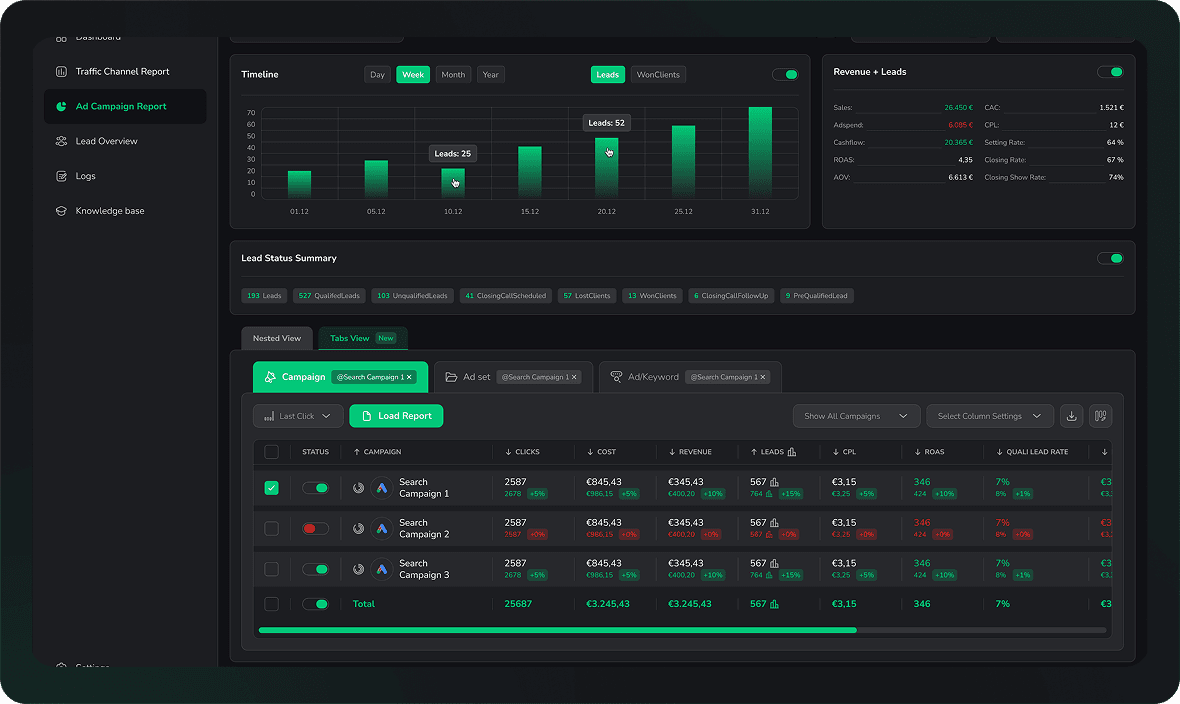
LeadJourney solves cross-device tracking for lead gen businesses by capturing click IDs server-side at the first ad click and tying them to form submissions whenever they occur, whether on the same device, a different device, or days later. By storing the original ad source on the CRM lead record rather than in a browser cookie, attribution survives device changes and iOS restrictions.
Key Features
- Server-side click ID storage: ad source stored server-side on CRM records, not in browser cookies that don't survive device switches
- First-party data matching: email and phone matching enables attribution even when click IDs are unavailable
- 95%+ accuracy: server-side capture at 95%+ vs 40-70% for cookie-based cross-device tracking
- CRM pipeline tracking: cross-device attribution connected to pipeline stages and closed deals
Pros
- Server-side approach is inherently more cross-device resilient than cookie-based tracking
- CRM as source of truth: attribution stored on deal records, not browser state
Cons
- Not a full identity graph solution: doesn't deterministically stitch anonymous cross-device sessions without a form fill
Verdict
For lead generation businesses, LeadJourney's server-side approach provides significantly more reliable cross-device attribution than cookie-based tools, and connects that attribution to CRM revenue.
What Real Users Say About LeadJourney
Honestly the best B2B attribution platform I've used. The ad tracking software is rock solid. Being able to pull in offline conversions plus the AI search tracking makes our marketing analytics way more accurate.
We've been using LeadJourney for a while now. Sending accurate conversion data back to our ad platforms has noticeably improved how we optimize campaigns. The new AI search tracking feature is also a great addition as search continues to evolve.
Read verified reviews on Trustpilot, G2, Capterra, and leadjourney.io/testimonials.
Further Reading
Explore the LeadJourney marketing attribution platform or compare the best server-side tracking tools and best customer journey tracking tools. Built by Jonas Strambach.
2. Meta CAPI with Advanced Matching: Best for Cross-Device Meta Attribution
Meta's Advanced Matching sends hashed customer identifiers (email, phone, name) alongside conversion events to Meta, enabling Meta to match conversions to ad exposures across devices using its identity graph.
Verdict
Free and effective for cross-device Meta attribution. LeadJourney automates the enriched first-party data sending to Meta CAPI.
3. Google Enhanced Conversions: Best for Cross-Device Google Attribution
Google Enhanced Conversions sends hashed email data alongside conversions, enabling cross-device attribution within signed-in Google account users.
Verdict
Free cross-device improvement for Google Ads. Limited to signed-in Google users.
4. Segment: Best Enterprise CDP for Cross-Device Identity

Segment provides enterprise-grade cross-device identity resolution, stitching anonymous and identified events across devices into unified user profiles for marketing attribution.
Verdict
Best enterprise CDP for cross-device identity. From $750/month.
5. Able CDP: Best for Server-Side Cross-Device Identity Resolution
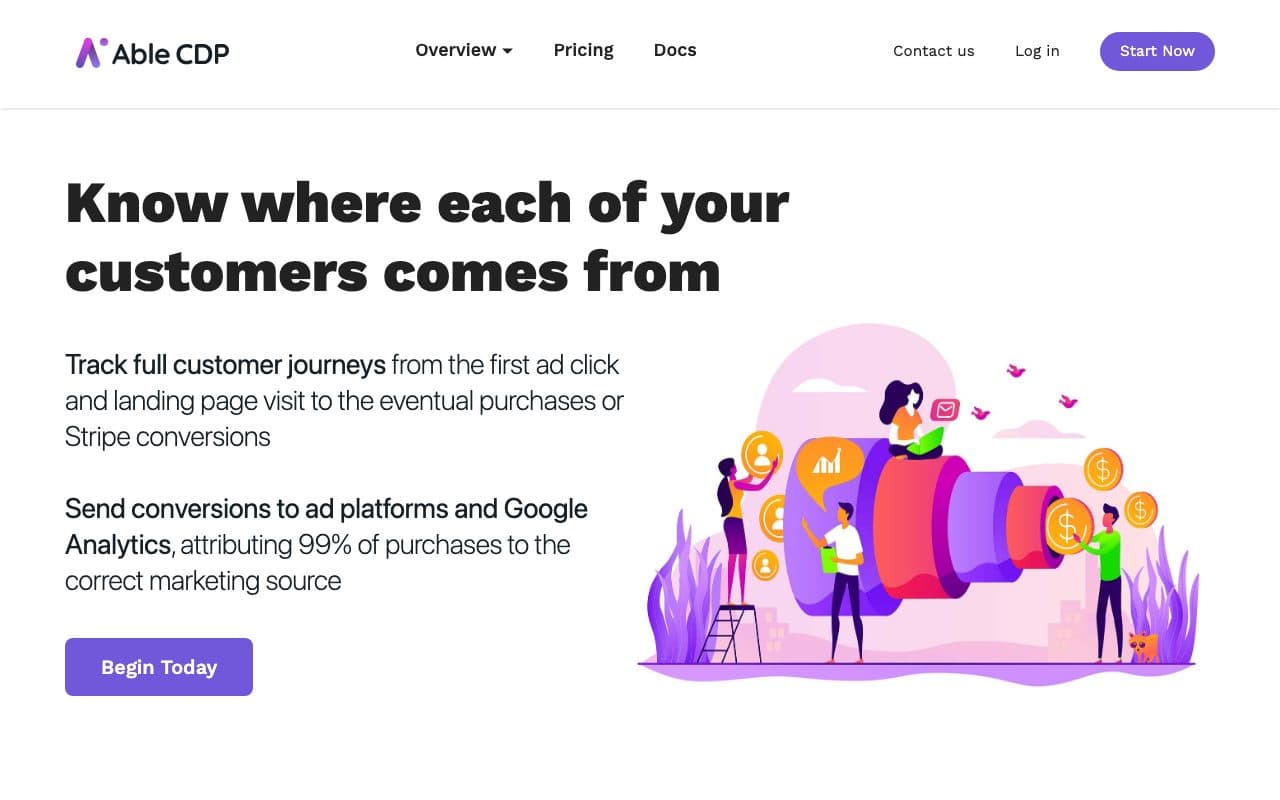
Able CDP sends enriched first-party data (email, phone, click IDs) to ad platform APIs, improving cross-device conversion matching by providing multiple identity signals to Meta, Google, and Microsoft Ads.
Verdict
Strong for cross-device CAPI identity matching. CDP pricing not justified for most SMBs.
6. LiveRamp: Best Enterprise Cross-Device Identity Graph
LiveRamp provides enterprise data connectivity with cross-device identity resolution, matching offline and online data across devices using their privacy-safe identity graph.
Verdict
Best enterprise cross-device identity infrastructure. Enterprise pricing for enterprise use cases.
7. Cometly: Best for B2B SaaS Cross-Device Tracking
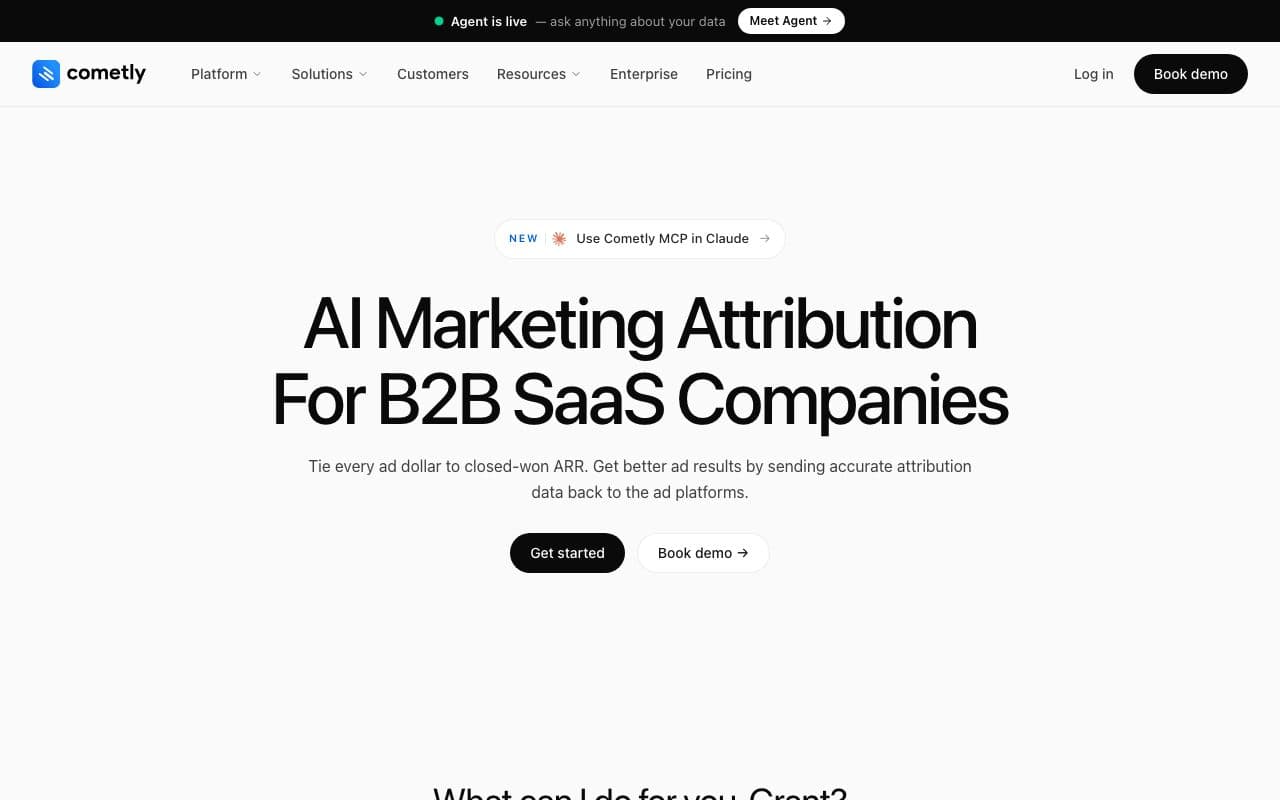
Cometly provides server-side cross-device tracking across Meta and Google with CRM revenue attribution, the closest competitor to LeadJourney for cross-device paid advertising attribution.
Verdict
Strong cross-device tracking for B2B SaaS. Lead gen businesses will find LeadJourney's pipeline depth more tailored.
8. FullContact: Best for Identity Resolution Across Anonymous Devices
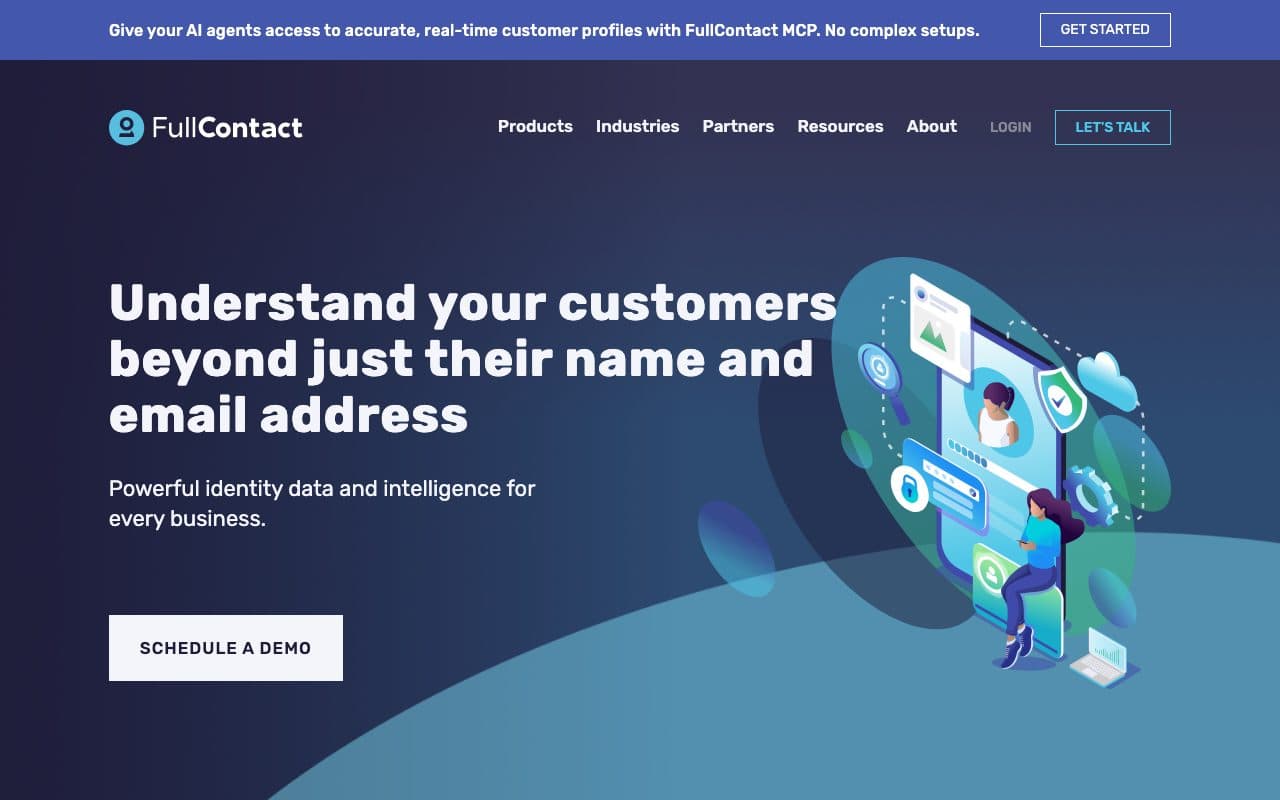
FullContact is an identity graph rather than an attribution tool. It takes the fragments a visitor leaves on each device, an email hash here, a device signature there, and resolves them to one person profile, then hands that resolution back to whatever system asked. For cross-device specifically it is the deepest layer available: it is solving the identity problem itself rather than working around it.
The trade-off is that it stops there. FullContact will tell you two sessions were the same person; it has no view of your campaigns, your CRM pipeline or your revenue, so something else has to take the resolved identity and do the attribution. It is also sold on a custom contract aimed at data teams, which puts it out of range for most lead gen businesses that just want the phone-to-laptop journey joined up.
Verdict
The strongest pure identity resolution on this list, and a component rather than a solution. You still need an attribution layer on top of it.
9. HubSpot: Best for Cross-Device Tracking Inside One CRM

If your visitors log in, fill in a form or click a tracked email link, HubSpot stitches those sessions onto one contact record regardless of the device they came from. For a business already running HubSpot it is cross-device tracking you have paid for and probably are not using, and the contact timeline is genuinely good at showing the sequence once a person is known.
The limit is the word known. HubSpot's cross-device stitching starts at the point of identification, so the anonymous phone session three weeks before the form fill is not joined to anything. That is exactly the part of a lead gen journey that decides which campaign gets the credit, so HubSpot tends to under-credit the channels doing the introducing and over-credit whatever was last.
Verdict
Free cross-device tracking if you already run HubSpot, and it only works after the person identifies themselves. The anonymous first click stays unattached.
10. Ruler Analytics: Best for Cross-Device Lead Attribution With Calls
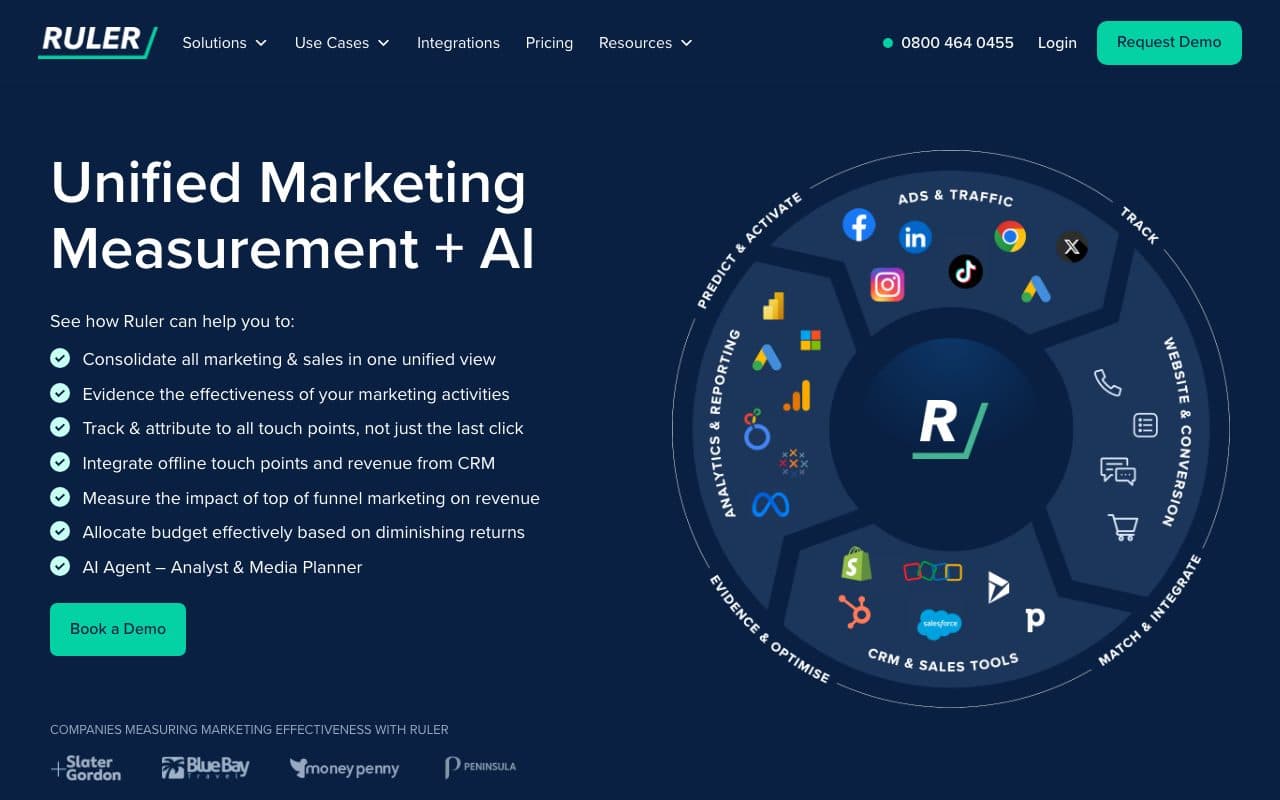
Ruler Analytics tracks a visitor across multiple sessions and connects the eventual conversion back to the original source, including conversions that arrive by phone. For a business whose leads switch from a phone browser to a desktop and then call, that combination covers a genuinely awkward journey that most tools drop halfway through.
It connects to the CRM for revenue, so the attribution reaches further than a session-based tool. What it does not do is close the loop automatically to all four ad platforms, and the entry price is high relative to the tools around it on this list.
Verdict
Good cross-device attribution when phone calls are a real share of your leads. Less server-side capture depth than LeadJourney and no simultaneous four-platform CAPI loop.
11. GA4 (Google Signals): Best Free Cross-Device Analytics

Turning on Google Signals lets GA4 join sessions across devices for visitors signed in to a Google account who have ads personalisation enabled. It costs nothing, it is one setting, and for a rough answer to whether your audience is switching devices at all it is the fastest thing on this list.
Two limits matter. It only covers signed-in Google users with the right setting, so it is a sample rather than a census, and GA4 applies thresholding that hides rows when the numbers are small, which in a lead gen account is most rows. And it reports on sessions rather than people in your CRM, so a cross-device journey that ends in a closed deal is still invisible.
Verdict
The free way to confirm cross-device behaviour exists in your audience. Not a way to attribute a closed deal to the device the journey started on.
12. Dreamdata: Best for Account-Level Cross-Device B2B Journeys

Dreamdata solves cross-device differently from everything else here: instead of proving two sessions were the same person, it groups activity at the account level, so a colleague researching on a laptop and the eventual signer on a phone land in the same story. In B2B that is often more useful than person-level identity, because the buying committee is genuinely several people.
It builds multi-touch models across paid and organic and connects to CRM pipeline, with a long lookback that suits enterprise sales cycles. The cost is implementation: this is a two to four week setup with data work in it, and there is no automated loop back to the ad platforms.
Verdict
The right shape for enterprise B2B, where the account matters more than the device. Heavier to implement and no CAPI activation.
13. Hyros: Best Cross-Device Tracking for Long High-Ticket Cycles
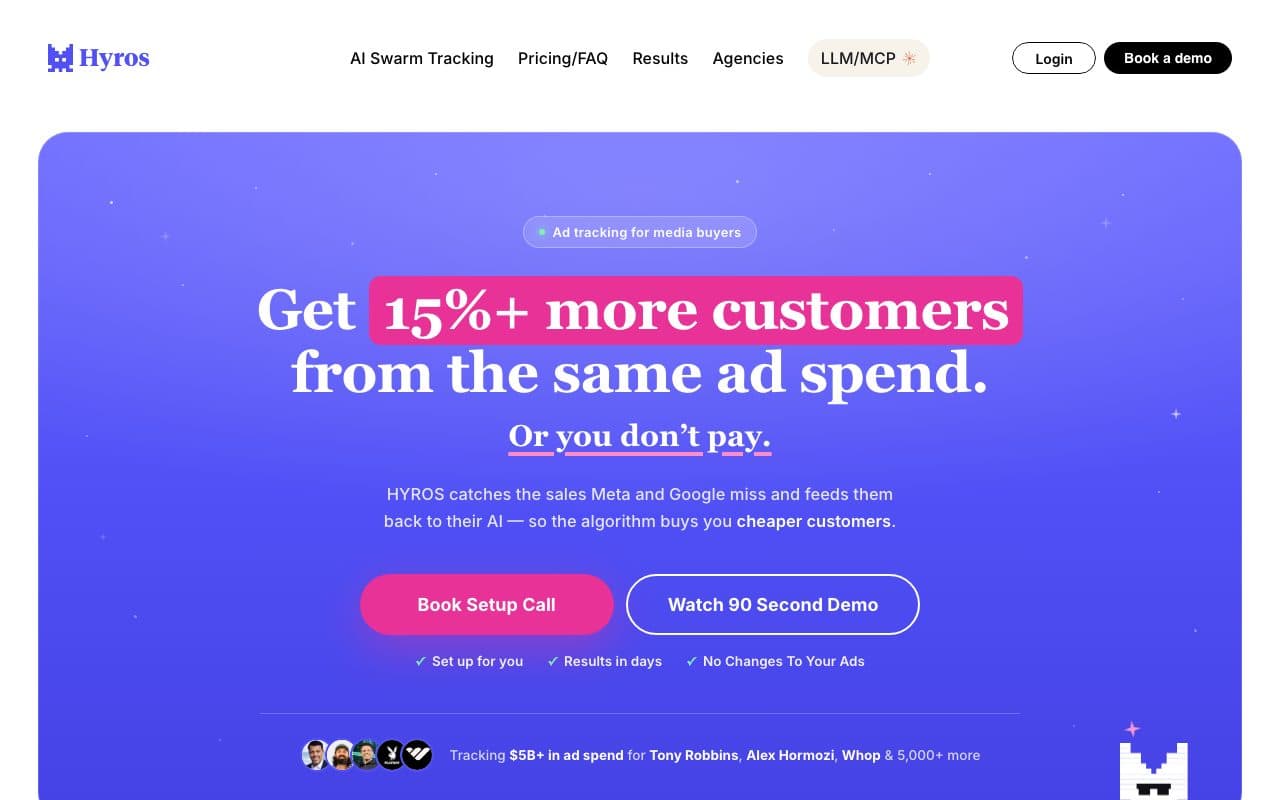
Hyros holds attribution over long windows and stitches sessions across devices, calls and email, which is exactly the case a browser pixel gives up on. For a high-ticket offer with a consideration period measured in months, it is one of the few tools that still has the first touch attached at the end.
The fit question is the same one it always is: Hyros was built around info products, coaching and high-ticket e-commerce, so the reporting speaks revenue and lifetime value per ad rather than pipeline stages per campaign. Pricing is tied to the revenue you track and there is a demo before you can buy rather than a trial you can start.
Verdict
Strong cross-device stitching over long windows for a high-ticket offer. Built for a different funnel shape than a B2B pipeline.
14. Mixpanel: Best Cross-Device Tracking Inside a Product

Mixpanel merges an anonymous device profile into a known user the moment someone signs in, so a product journey that starts on a phone and continues on a desktop reads as one person. For SaaS teams answering questions about feature usage and activation across devices, it does that job very well.
It is a product analytics tool rather than a marketing attribution one, and the distinction matters here. Ad spend, campaigns, click IDs and CRM deal values are outside its model, so it can tell you what a user did across their devices and not what you paid to acquire them.
Verdict
Excellent cross-device product analytics. Not an answer to which campaign produced the customer.
15. SegMetrics: Best Cross-Device LTV Tracking for Subscriptions

SegMetrics identifies leads on first-party data and follows them across devices and over long periods, with deep integrations into email platforms and course tools. Its distinctive angle is lifetime value: it reports what a lead was worth over months rather than what it converted at once, which is the right frame for a subscription or an info product.
For a paid-media lead gen business the coverage is narrower than it looks. The ad platform side is thinner than the email and course side, and there is no automated loop sending outcomes back to Meta, Google, LinkedIn and Microsoft.
Verdict
Good cross-device LTV tracking for subscription and course businesses. Thinner on the paid media side and no CAPI activation.
Quick Decision Guide
- Lead gen business needing cross-device attribution that connects to CRM revenue: LeadJourney
- Enterprise CDP cross-device identity: Segment or LiveRamp
- Free cross-device improvement for Meta: Meta CAPI with Advanced Matching
- Free cross-device for Google Analytics: GA4 with Google Signals
- SaaS product cross-device analytics: Mixpanel or Amplitude
In the glossary
FAQ
Frequently Asked Questions
The questions teams stitching journeys across phones, laptops and tablets ask most.
What is cross-device tracking?
It is the practice of recognising that the phone that saw the ad, the laptop that read the case study and the tablet that filled in the form belong to one person. Without it each device looks like a separate anonymous visitor, so the ad gets no credit for the conversion and the journey report shows three shallow visits instead of one considered decision.
Why do cookies fail across devices?
A cookie is written by one browser on one device and cannot be read by any other, so a device switch always breaks the chain. Safari's tracking prevention shortens the life of the cookie even within a single browser, and consent banners stop it being written at all for a share of visitors. Anything that survives the switch has to be keyed on something the person carries with them, such as a hashed email address.
Can I do cross-device tracking without a CDP?
Yes, for the common case. Meta CAPI with Advanced Matching and Google Enhanced Conversions both stitch devices using hashed email and phone data and cost nothing. A CDP such as Segment or LiveRamp buys you identity resolution across many systems, which is a bigger problem than most lead generation businesses have and starts at a very different price.
How much do cross-device tracking solutions cost?
The platform-native options are free: Meta CAPI with Advanced Matching, Google Enhanced Conversions and GA4 with Google Signals. Beyond those, Able CDP starts at $49 per month, SegMetrics at $57, Ruler Analytics at $199, Hyros at $499 and Segment at $750, with LiveRamp, FullContact and Dreamdata on enterprise quotes.
Is cross-device tracking legal under GDPR?
It is processing of personal data, so it needs a lawful basis, a purpose stated in your privacy policy and, for the tracking that is not strictly necessary, consent. Hashing the identifiers does not take them out of scope, because they remain a means of singling someone out. The practical route is consent for marketing measurement, a defined retention period and a processor agreement with whoever stores the graph.
Keep reading
More from the blog
 Tool Comparisons
9 Best Marketing Attribution Tools for Zoho CRM in 2026
Four of the best attribution tools for Zoho CRM are Zoho products you may already pay for. Nine options compared on where the tracking starts, which ad platforms they cover, and whether the closed deal ever reaches the algorithm buying your traffic.Read the article13 min read Tool Comparisons
9 Best Marketing Attribution Tools for Microsoft Dynamics 365 in 2026
Dynamics records the revenue and nothing fills in where it came from: Lead Source is a ten-option picklist and campaign spend is typed by hand. Nine tools compared on what each can actually see in a Dynamics environment, with pricing, pros, cons and a verdict.Read the article14 min read Tool Comparisons
12 Best GTM Tools and Software in 2026
A GTM stack is five or six tools that each report on their own step, which is why nobody can say which play produced the revenue. Twelve tools compared by the layer they own, with prices read this month and a verdict on who each one is for.Read the article16 min read
Beyond cookies
Ready to keep attribution across every device switch?
Click IDs captured server-side at 95%+ accuracy and followed through the CRM pipeline to the closed deal, whichever device the form was filled on, live after a 21-minute setup with a 14-day free trial.