














BlogTool Comparisons
10 Best Marketing Attribution Tools for Pipedrive in 2026
Pipedrive Insights will report won value by any field, including a source field a rep picks from a list. Ten tools compared on what each adds, with pricing, pros, cons and a verdict on the fit.

Contents
Summarise this article with AI
Opens the page with a ready prompt in:


Nothing is sent until you pick a service.
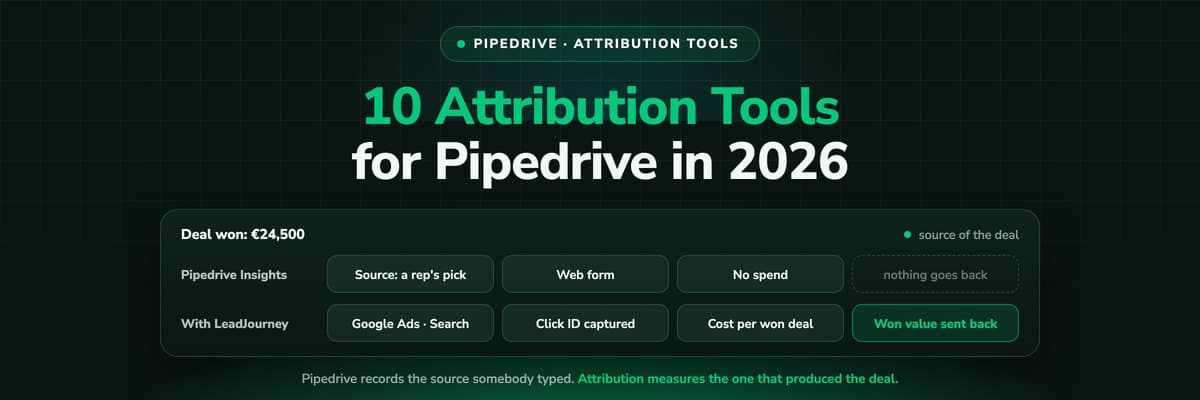
Pipedrive is a sales CRM, and it is honest about that. Insights will report won and lost value by pipeline, by stage, by rep and by any field on the deal, including a source field, and it does that well. What it does not have is any idea where the person came from before somebody created them. The source is whatever a rep picked from a dropdown, or the origin of the record: web form, chatbot, Prospector, API, manual.
That is a genuinely different starting point from Salesforce or HubSpot. There are no attribution models to argue about, no campaign influence to configure and no ad spend anywhere in the product, because Pipedrive holds deal values, not campaign costs. Whatever attribution you get comes from the tool you put in front of it, and the ecosystem around Pipedrive is smaller than the other two, so the shortlist is shorter and the differences are sharper.
This guide ranks the 10 best marketing attribution tools for Pipedrive in 2026. Every one of them was checked for a real Pipedrive integration rather than a generic CRM claim. LeadJourney leads the list, because it fills the source fields with measured data, adds the spend Pipedrive has never held, and hands won deals back to Meta, Google, LinkedIn and Microsoft as conversions.
Quick Summary: Best Pipedrive Attribution Tool in 2026
In short
LeadJourney is the best marketing attribution tool for Pipedrive in 2026. It tracks every session server-side at 95%+ accuracy before the Person record exists, captures gclid, fbclid, li_fat_id and msclkid at click time without a form integration, writes the source onto the Person and the Deal automatically, pulls spend from Meta, Google, LinkedIn and Microsoft Ads, and sends the won deal value back to all four matched on the click ID. Five attribution models on every plan, live in about 21 minutes, from €129 a month with a 14-day free trial.
The rest split cleanly. Dreamdata, Fibbler and Ruler Analytics have documented native Pipedrive integrations, each aimed at a different buyer: account-level B2B journeys, LinkedIn and Google Ads at company level, and call tracking. Able CDP turns Pipedrive deal stages into conversions for the ad platforms at a small price. Cometly comes from paid social. WhatConverts covers phone leads and routes into Pipedrive through Zapier. Windsor.ai is a connector for reporting elsewhere, and a Zap into custom fields is the free option that half of Pipedrive is already running.
The deciding question is narrower here than on the other CRMs: do you need the source written onto the record so sales can see it, the cost of the deal so marketing can see it, or the conversion sent back so the platforms can learn from it. Only two tools on this list do all three.
The 10 Best Marketing Attribution Tools for Pipedrive (2026)
The 10 best Pipedrive attribution tools at a glance
| Tool | What it adds to Pipedrive | Best for | Pricing |
|---|---|---|---|
| Rank 1LeadJourney | Server-side capture of every session and all four click IDs, source written onto Person and Deal, spend joined, won deals returned to four ad platforms | Teams buying paid traffic into a Pipedrive pipeline | From €129/mo, 14-day trial |
| Rank 2Pipedrive Insights | Won and lost value by pipeline, stage, rep and any field, including a source field somebody fills in | Reporting the pipeline you already run | Included in Pipedrive |
| Rank 3Dreamdatavs LeadJourney | Native Pipedrive integration modelling the whole account journey to closed won | B2B teams selling to a buying group | Free plan, paid on quote |
| Rank 4Fibblervs LeadJourney | Native Pipedrive integration matching organisations and deals to LinkedIn and Google Ads | Small B2B teams whose spend is LinkedIn | From $89/mo |
| Rank 5Ruler Analyticsvs LeadJourney | Native Pipedrive integration with call tracking, closed revenue pushed back to the analytics tools | Businesses whose leads arrive by phone | From £299/mo |
| Rank 6Able CDPvs LeadJourney | First-party tracking that turns Pipedrive deal stages into server-side conversions | Small teams wanting the loop closed cheaply | From $49/mo |
| Rank 7Cometlyvs LeadJourney | Server-side tracking and a Conversions API reconciled against Pipedrive leads and deals | Paid social teams | On quote |
| Rank 8WhatConvertsvs LeadJourney | Call, form and chat tracking with lead qualification, into Pipedrive through Zapier | Agencies and local businesses taking calls | From $30/mo |
| Rank 9Windsor.ai | Connectors pulling Pipedrive and ad data into Looker Studio, Sheets, BI tools and warehouses | Teams reporting outside the CRM | Free, paid from $23/mo |
| Rank 10Zapier + CRM | A Zap copying UTM and click ID fields from the form into Pipedrive custom fields | Getting a source onto the record with no budget | Free, Zapier from $19.99/mo |


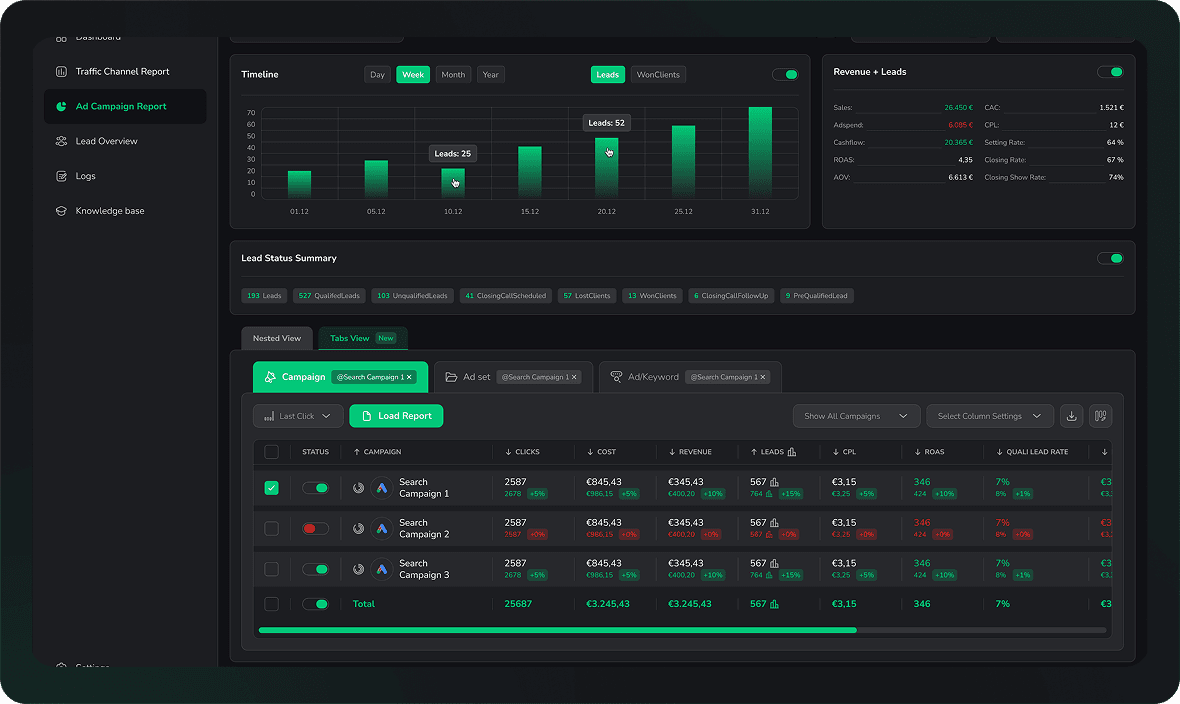
1. LeadJourney: Best Pipedrive Attribution Tool for Paid Traffic
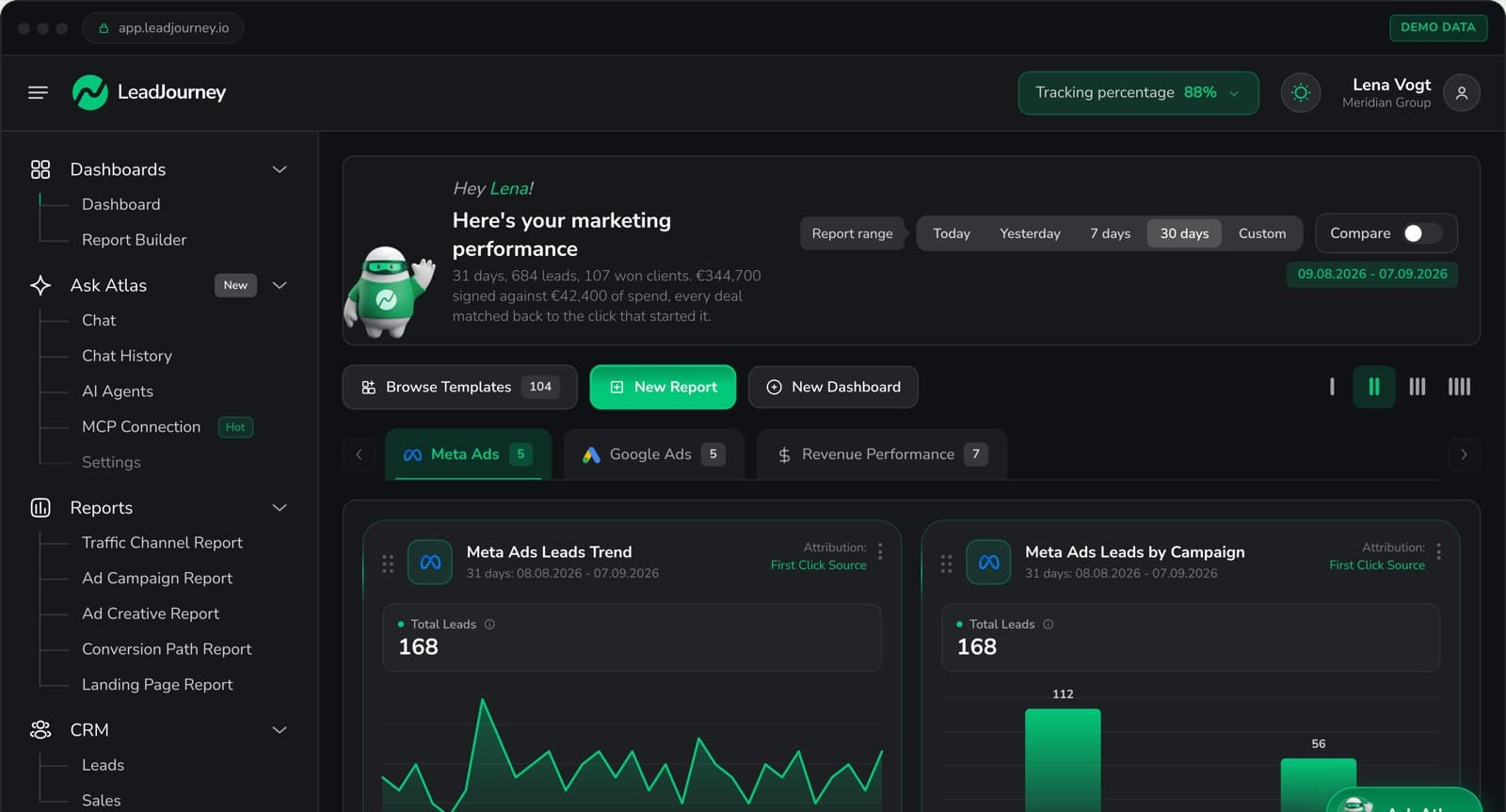
Pipedrive first hears about a person when a form, a rep or an integration creates them. LeadJourney starts earlier: every session is tracked server-side as it happens, first-party, at 95%+ accuracy, and when the form is submitted that anonymous history is stitched to the Person. The source field stops being a guess a rep picks from a list and becomes a measured value written onto the Person and the Deal automatically, with the click IDs captured at click time and no form integration required to carry them.
The other half is the half Pipedrive was never built for. Spend is pulled from Meta, Google, LinkedIn and Microsoft Ads, so ROAS and cost per won deal exist at all, per channel, campaign, ad set and creative. And when a deal is marked won, its value goes back to the platform that produced it as a conversion, matched on the click ID captured at the first visit. Pipedrive stays the system of record; what changes is that the record now says something true about where the deal came from.
Key Features
- Server-side, first-party tracking at 95%+ accuracy, recording sessions before a Pipedrive Person exists
- The anonymous first click stitched to the Person at form submit, then carried onto the Deal
- gclid, fbclid, li_fat_id and msclkid captured at click time and written onto the record without a form integration
- Spend pulled from Meta, Google, LinkedIn and Microsoft Ads and joined to the deals themselves
- Five attribution models on every plan: first-touch, last-touch, linear, U-shaped and time-decay
- Won deal values returned to all four ad platforms as conversions, matched on the click ID
- Organic, direct, referral and AI search as first class channels, including ChatGPT, Perplexity, Claude and Gemini
- Atlas, the AI analyst, for asking which campaign produced the cheapest won deal without building a report
- EU processing, GDPR compliant collection, live in about 21 minutes without a developer
Pros
- Fills Pipedrive's source field with measured data instead of a dropdown a rep remembers to use
- The only tool here that adds spend, computes cost per won deal and returns the value to four platforms
- Captures all four click IDs without hidden fields or a maintained script on every form
- Sales sees the origin on the record it opens, which is what makes the field survive contact with a sales team
- From €129 a month with a 14-day free trial, live in about 21 minutes
Cons
- Not an ABM or intent tool: company identification and account scoring belong to Dreamdata or a dedicated platform
- Reporting lives in LeadJourney rather than in Pipedrive Insights, so the dashboards you build stay in two places
Verdict
For any Pipedrive pipeline fed by advertising, this is the pick. It answers the two questions Pipedrive structurally cannot, where the deal came from and what it cost, and then feeds the answer back to the platforms.
The ability to track both online and offline conversions in one unified dashboard has given us insights we never had before. Our ROI has improved dramatically since we started integrating LeadJourney with our CRM. We're finally able to see the full customer journey, and it's been a game changer for our strategy.
 Andre WitzelFounder, Trading.de
Read verified reviews on Trustpilot, G2 and leadjourney.io/testimonials, or see which fields the Pipedrive integration writes to the Person and the Deal.
2. Pipedrive Insights: Best Free Starting Point
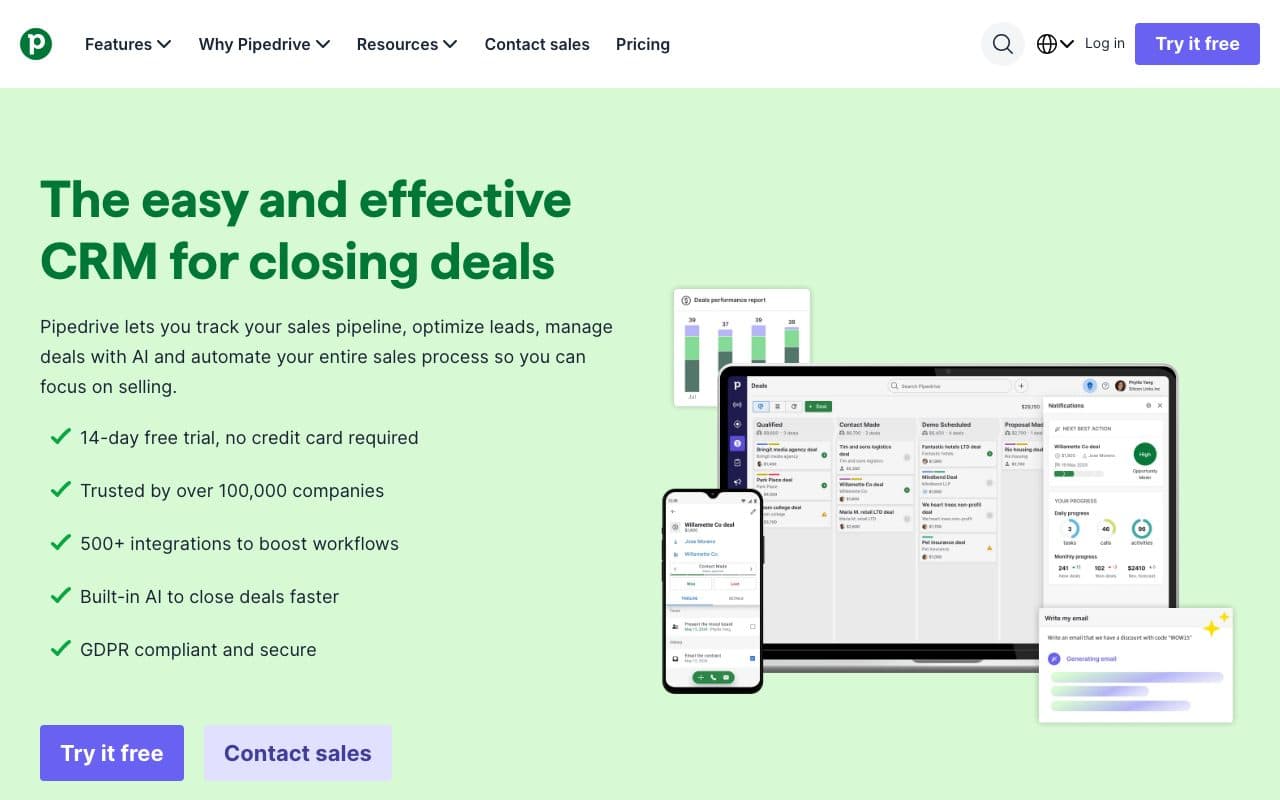
Insights is already included and it is better than its reputation. Won and lost deal value by pipeline, by stage, by owner and by any field on the deal, plus dashboards you can share. If somebody maintains a source field properly, Insights will happily report won revenue by source, which is a real answer to a real question and it costs nothing extra.
The limits follow from what Pipedrive is. There is no ad spend in the product, so no ROAS and no cost per won deal. There is one source per deal, the one in the field, so there are no attribution models and no first touch. UTM parameters and click IDs live in custom fields somebody created, filled by a form integration when the parameter survived the visit. And nothing goes back out: winning a deal changes nothing in any ad account.
Verdict
Keep it as the reporting layer for the pipeline. It is a sales report, not an attribution model, and no amount of dashboard work turns one into the other.
3. Dreamdata: Best for Account-Level B2B Journeys
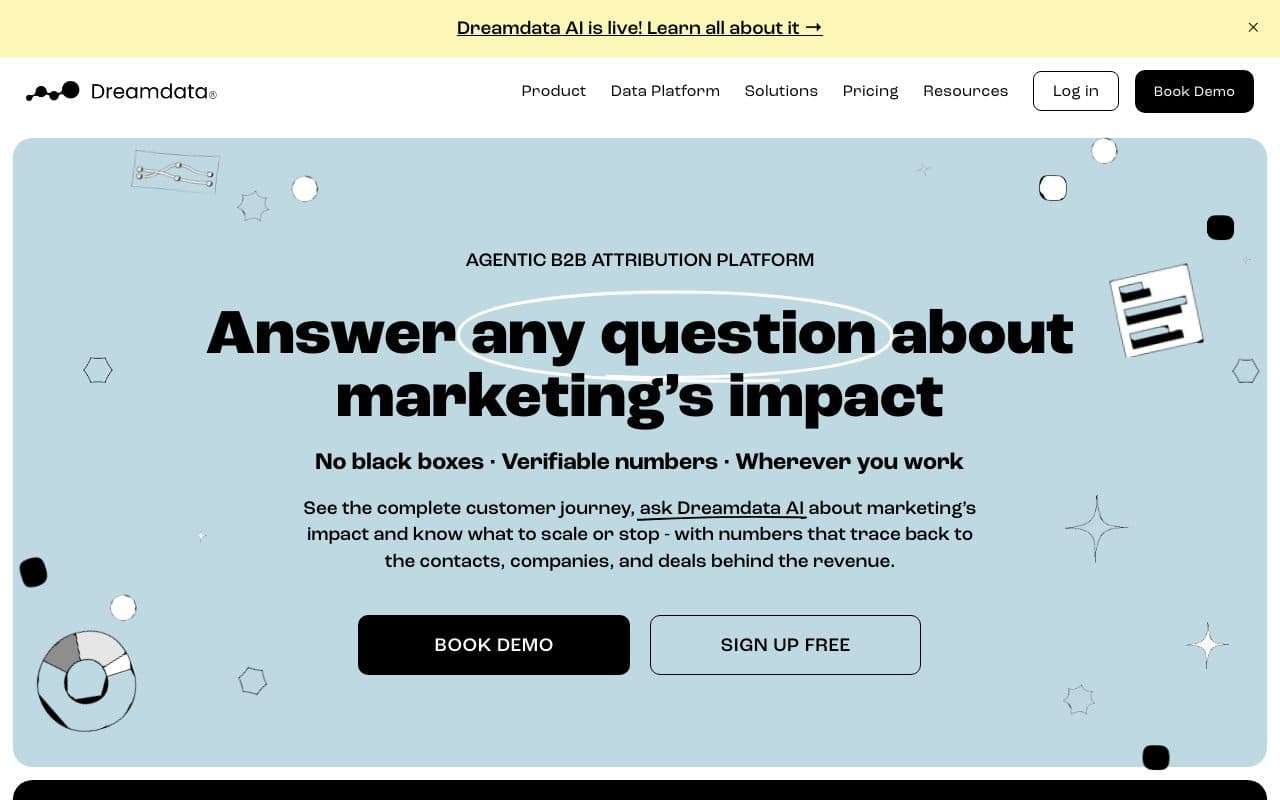
Dreamdata is one of the few full B2B attribution platforms with a documented native Pipedrive integration, installable from the Pipedrive marketplace. It models the whole account journey rather than a single person's path, connecting every marketing touch to the progression of a Pipedrive deal, and it does that at the level of the company rather than the contact.
The free plan with two months of history makes it easy to see your own journeys before paying, and paid tiers are quoted by data volume. It is a modelling platform, so the value depends on a tidy CRM and someone willing to work with the model, and the return path to the ad platforms is audience activation rather than a deal value sent back.
Verdict
The best account-level model available to a Pipedrive team. Choose it when the buying group is what you cannot see.
4. Fibbler: Best Self-Serve LinkedIn Ads Attribution
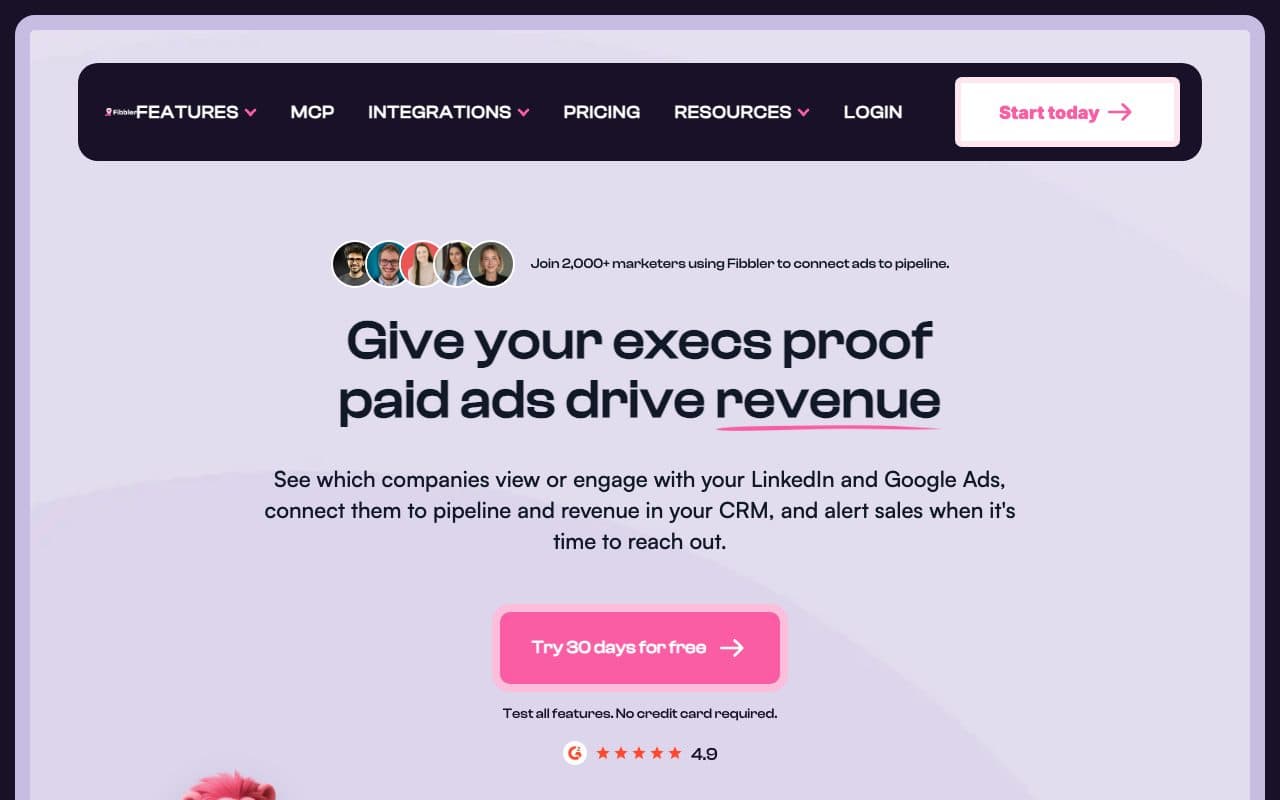
Fibbler pulls organisations and deals from Pipedrive, matches them against LinkedIn and Google Ads activity at company level, and reports the pipeline and revenue those ads influenced. LinkedIn's own reporting stops at the lead form, so for a B2B team whose main line item is LinkedIn, this closes the most expensive blind spot for a self-serve price and a 30-day trial.
It is deliberately narrow: two ad platforms, company level matching rather than person level journeys, and no model covering organic, email or AI search. Growth starts at $89 a month, with Google Ads as a per account add-on.
Verdict
Excellent value for LinkedIn-led B2B on Pipedrive. Outgrown by anyone running four platforms who wants one model over all of them.
5. Ruler Analytics: Best When Leads Arrive by Phone
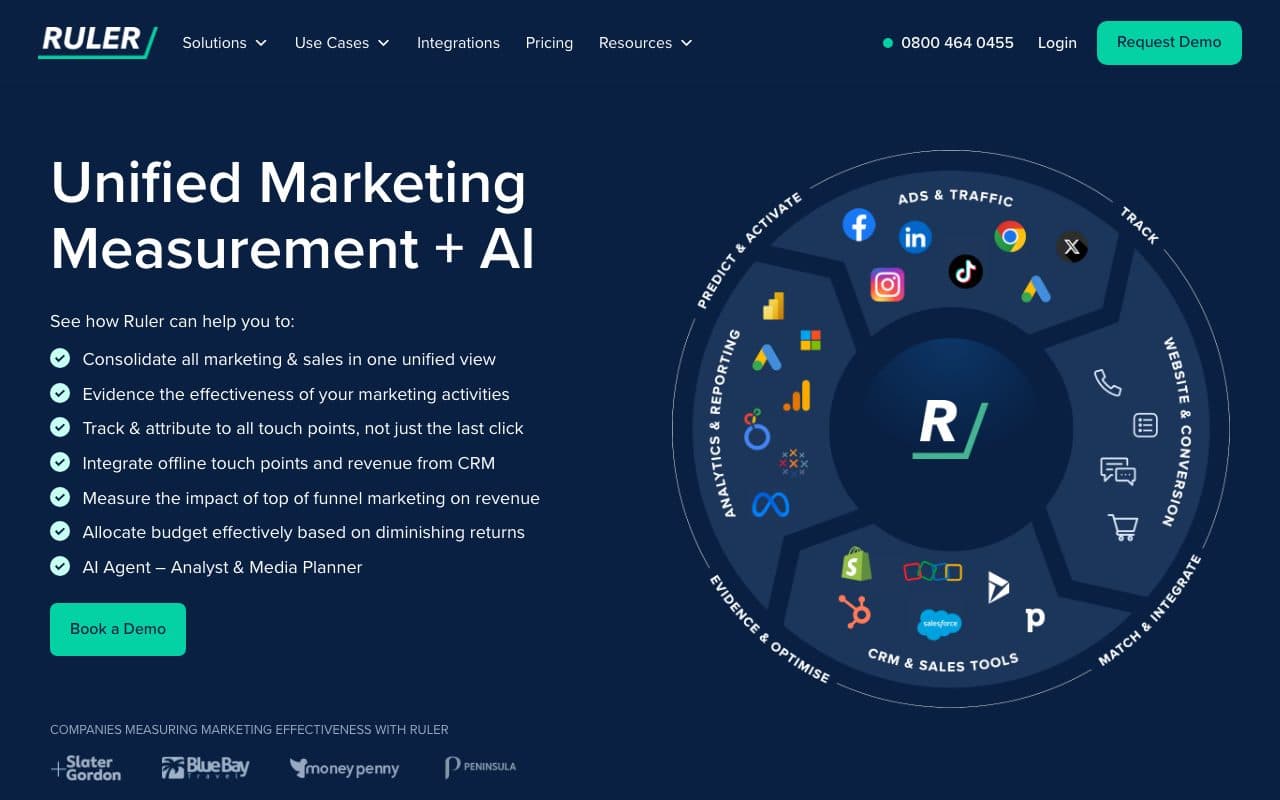
Ruler Analytics documents a Pipedrive integration in both directions: leads created in Pipedrive from tracked visitors, and closed revenue from Pipedrive deals pushed back into the analytics and ad tools where it is attributed to the influencing channel, campaign, ad or keyword. With call tracking and dynamic number insertion in the same product, it fits the businesses where the pipeline is fed by the phone.
Pricing is public and banded by monthly visits, from £299 a month, with no free trial. That is a meaningful step up from the rest of the Pipedrive-friendly field, and it is worth it mainly if calls are a real share of your leads.
Verdict
The pick when calls are the conversion. For a purely online funnel, cheaper tools here cover the same ground.
6. Able CDP: Best Cheap Way to Close the Loop
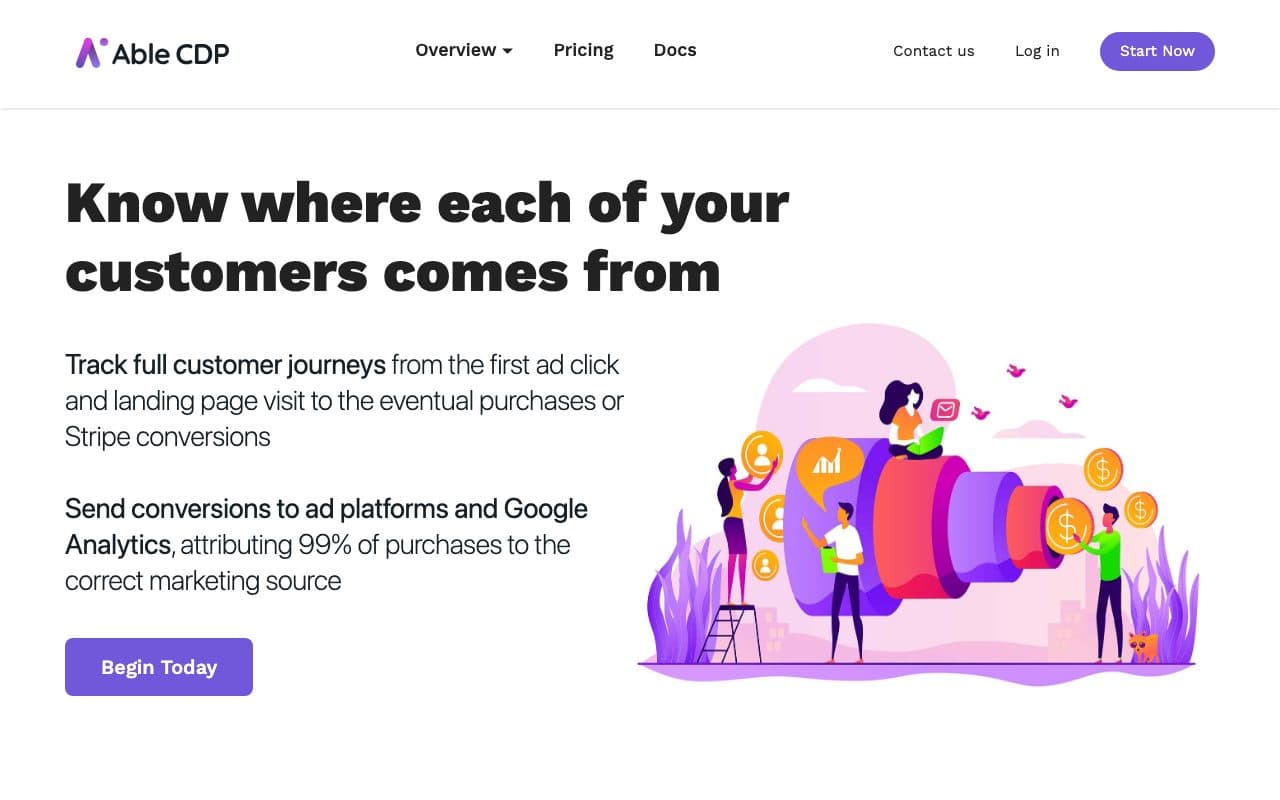
Able CDP tracks visitors first-party, attributes conversions to their source, and specifically supports tracking Pipedrive deal conversions: as a deal moves to qualified or won, the event goes server-side to the ad platforms. For a small team that mainly wants the platforms to learn from real outcomes rather than form fills, that is the core of the job at a small price.
It is a compact product rather than a reporting suite. Analytics Only starts at $49 a month and Standard at $145 with events included, and what you get is source attribution and the conversion path out, not a multi-model analysis of a long buying committee journey.
Verdict
The best value on this list for closing the loop alone. Choose it if the report matters less to you than the signal going back.
7. Cometly: Best for Paid Social Teams on Pipedrive
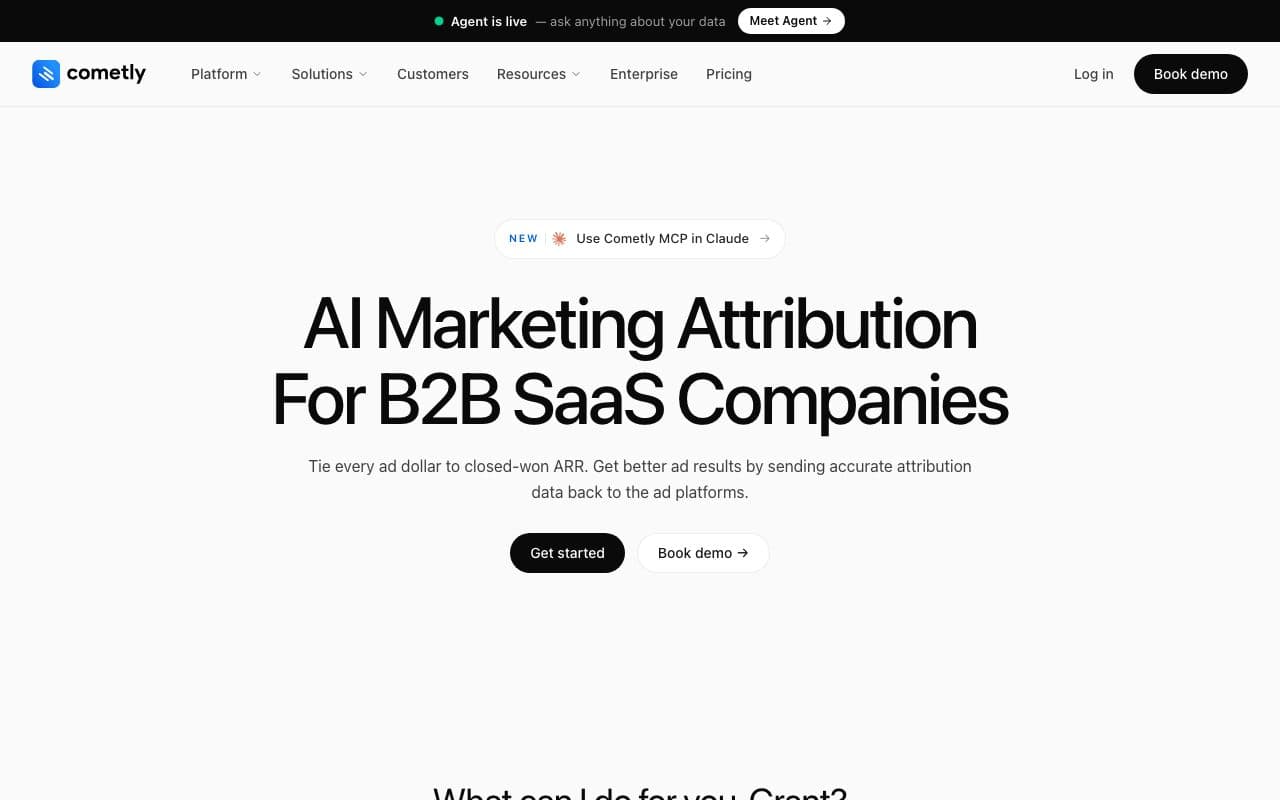
Cometly names Pipedrive among the CRMs it reconciles against, alongside HubSpot, Salesforce, Close and Attio, and comes at the problem from the ad account: server-side tracking, a Conversions API, contact level journeys and an AI ads manager. For a team whose spend is mostly Meta, that is the right shape of product.
Pricing is usage based on monthly pageviews and quoted after a demo, with no public list and no free trial, which is a heavier buying process than most Pipedrive teams expect.
Verdict
Reasonable for paid social. Compare it against LeadJourney, which runs the same loop across four platforms at a published price.
8. WhatConverts: Best for Call-Heavy Funnels
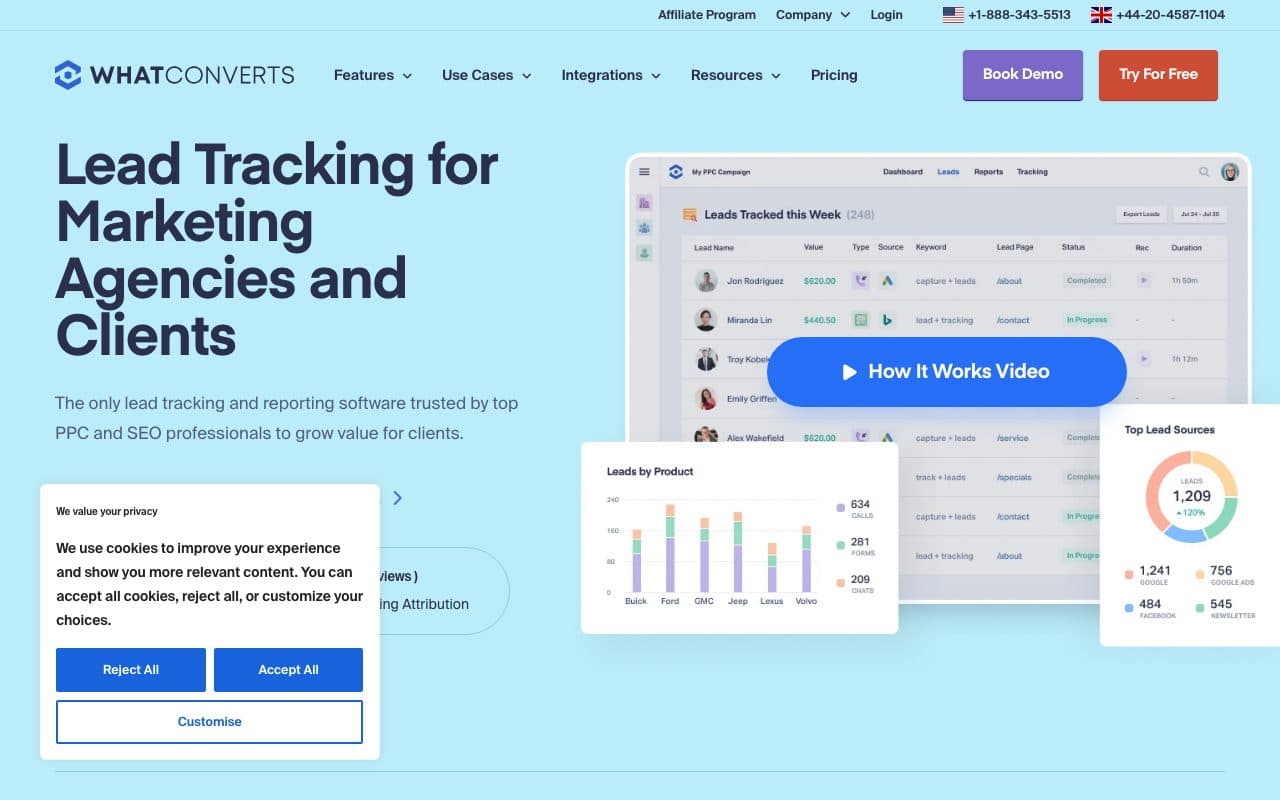
WhatConverts has the deepest call tracking in the category: numbers, dynamic insertion, recording, transcription and call flows, plus forms and chats, with a lead manager where each lead is marked qualified and given a value. Leads reach Pipedrive as people or deals, and deal and sale values come back into the WhatConverts reporting so calls are credited to the marketing that produced them.
The Pipedrive connection runs through Zapier rather than being native, which is worth knowing before you build a process on it. And it is lead tracking rather than revenue attribution: no ad spend joined to deals, no multi-touch model across channels. Pricing is public from $30 a month for a single account.
Verdict
The right tool for agencies and local businesses whose leads phone. Pair it with something that measures what the deal cost.
9. Windsor.ai: Best for Reporting Outside Pipedrive
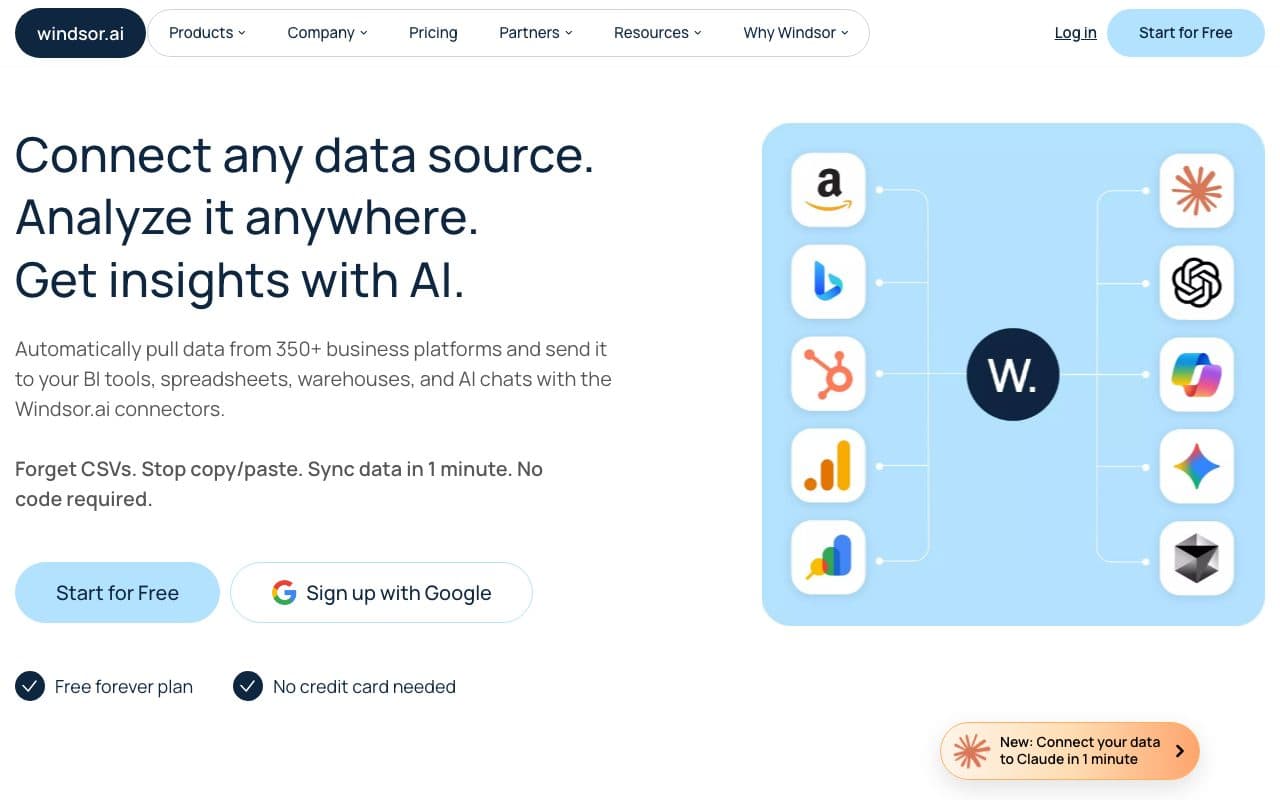
Windsor.ai ships a Pipedrive connector alongside hundreds of ad and analytics sources, piping all of it into Looker Studio, Sheets, Power BI or a warehouse. If the requirement is a single dashboard showing spend next to Pipedrive deal values, this is the cheapest honest route, and the free plan covers one source to try it.
It moves rows, it does not decide which touch mattered. Joining the ad data to the deals, and deciding what gets credit, is still work somebody has to do in the destination.
Verdict
A reporting layer rather than attribution. Right when the pain is fragmented dashboards, wrong when the pain is unknown sources.
10. Zapier + CRM: The Free Option Most Teams Already Run
The manual stack deserves its place because so many Pipedrive teams are running it: hidden fields on the form capture the UTM parameters and whatever click ID survived the visit, and a Zap copies them into Pipedrive custom fields. It costs almost nothing and it does put a source on the record.
What it cannot do is see anything the form did not receive. A visitor who arrived from an ad, left, and came back a week later through a branded search hands you the branded search. There are no models, no spend, no return path, and it breaks quietly whenever a form or a field name changes, which is the failure mode nobody notices for a quarter.
Verdict
Better than nothing and worse than it looks. Treat it as a stopgap, and check what share of your records still say Direct.
What Pipedrive Cannot Tell You on Its Own
Four structural gaps, and every tool above exists to fill one or more of them.
- The visit before the PersonPipedrive first hears about somebody when a form, a rep or an integration creates them. Everything that happened before that moment is not recorded anywhere in the CRM.
- One source, picked by a humanA deal carries the source in a field. That means one source per deal, no first touch and no model, and a field is only as accurate as the rep who filled it in on a busy Thursday.
- No spend, so no ratioPipedrive holds deal values, not campaign costs. Without spend from the ad accounts there is no ROAS and no cost per won deal, only won value grouped by whatever field you chose.
- Nothing goes back outWinning a deal changes nothing in any ad account unless a marketplace app or an automation somebody maintains sends it, so the platforms keep optimising toward form fills.
It is not either or
None of this is an argument against Pipedrive. Keep it as the system of record and the place the pipeline is run. The attribution layer sits in front of it, fills the source fields with measured data, and adds the two things a sales CRM was never meant to hold: what the traffic cost and what happened after the deal was won.
How to Choose a Pipedrive Attribution Tool
Three questions, in the order that removes the most options.
- Does it actually integrate with Pipedrive? The ecosystem is smaller than HubSpot's and several well known platforms do not support it at all. Check the vendor's own documentation, not a CRM logo grid.
- What do you need on the record, and what do you need in a report? Sales needs the source on the deal they open. Marketing needs cost per won deal. Those are two different features and not every tool has both.
- Does the outcome need to leave the system? If bidding should improve, the won deal value has to reach the ad platforms. Only LeadJourney and Able CDP on this list do that directly.
Background reading on the mechanics: server-side tracking, multi-touch attribution and how the gclid travels into the CRM.
Further Reading
The same question for the other two CRMs: attribution tools for HubSpot and attribution tools for Salesforce. For the wider field, the 15 best B2B attribution software tools and the best lead attribution tools.
Inside Pipedrive itself: what Source origin and Source channel record, UTM parameters in Pipedrive, the Google Ads integration, the Meta Ads integration and a marketing reporting dashboard in Pipedrive.
On the product side, the Pipedrive integration shows what is written to the Person and the Deal, and the live demo is the reporting itself, clickable, without a call.
In the glossary
FAQ
Frequently Asked Questions
What Pipedrive teams ask before adding an attribution layer.
Does Pipedrive have marketing attribution?
Not in the sense the word usually means. Insights reports won and lost value by any field on the deal, including a source field, so you can see revenue by source if somebody keeps that field accurate. There are no attribution models, no first touch, no ad spend and no multi-touch credit, because Pipedrive holds deal values rather than campaign costs.
How do I get UTM parameters into Pipedrive?
The common route is hidden fields on the form plus a Zap or a form integration writing them into custom fields, which works as long as the parameters survived the visit and nobody renames a field. The reliable route is capturing them server-side at click time and writing them onto the Person and the Deal, which does not depend on the form at all.
Which attribution tools actually integrate with Pipedrive?
Fewer than the marketing pages suggest. Dreamdata, Fibbler and Ruler Analytics document native integrations, Able CDP supports Pipedrive deal conversions, Cometly lists Pipedrive among its CRMs, Windsor.ai ships a connector for reporting, and WhatConverts routes through Zapier. Several well known B2B attribution platforms support Salesforce and HubSpot only, so check the documentation before the demo.
Can I send won Pipedrive deals back to Meta and Google?
Yes, but not with Pipedrive alone: it has no conversion API of its own, so it needs a marketplace app or an automation somebody maintains. A tool that captured the click ID at the first visit can send the won deal value back matched on that ID, which is what makes the platforms optimise toward deals rather than form fills.
How much do Pipedrive attribution tools cost?
The cheap end is a Zap from $19.99 a month, Windsor.ai from $23 and WhatConverts from $30. In the middle sit Able CDP from $49, Fibbler from $89 and LeadJourney from €129 with a 14-day free trial. Ruler Analytics starts at £299, Dreamdata has a free plan with paid tiers on quote, and Cometly is quoted after a demo.
Do I need to leave Pipedrive to get proper attribution?
No. Every option here leaves Pipedrive as the system of record and adds a layer in front of it. What changes is that the source field is filled by measurement rather than by memory, and that spend and won revenue meet in one place, which they never do inside a sales CRM.
Keep reading
More from the blog
 Tool Comparisons
11 Best iGaming Tracking Software Tools in 2026
Every iGaming tracker takes a postback. Fewer split reg, FTD and deposit into stages of one player, and fewer still send the FTD back to Google and Meta. Eleven tools ranked on that, with every price read on the vendor's own page.Read the article18 min read Tool Comparisons
9 Best Marketing Attribution Tools for Zoho CRM in 2026
Four of the best attribution tools for Zoho CRM are Zoho products you may already pay for. Nine options compared on where the tracking starts, which ad platforms they cover, and whether the closed deal ever reaches the algorithm buying your traffic.Read the article13 min read Tool Comparisons
9 Best Marketing Attribution Tools for Microsoft Dynamics 365 in 2026
Dynamics records the revenue and nothing fills in where it came from: Lead Source is a ten-option picklist and campaign spend is typed by hand. Nine tools compared on what each can actually see in a Dynamics environment, with pricing, pros, cons and a verdict.Read the article14 min read
Pipedrive attribution
Know what every won Pipedrive deal cost to buy
Server-side tracking at 95%+ accuracy, the source written onto the Person and the Deal, spend from four ad platforms and won deals sent back. Live in 21 minutes.