














BlogTool Comparisons
15 Best B2B Marketing Attribution Software Tools (2026)
Most B2B attribution software was built for SaaS, enterprise ABM or affiliates, and category fit matters more than any feature list when you run paid ads for leads. Fifteen tools compared, with pros, cons, pricing and a verdict on who each one is actually built for.


Contents
Summarise this article with AI
Opens the page with a ready prompt in:


Nothing is sent until you pick a service.
B2B attribution software connects your marketing spend to pipeline and closed revenue. Without it, you're guessing which campaigns generate real customers, and which ones just generate form fills that ghost your sales team.
Attribution software is not a single category. Some tools are built for enterprise ABM teams with Salesforce. Others are built for affiliate marketers. A few are built specifically for lead generation businesses running paid ads across Meta, Google, LinkedIn, and Bing. The category fit matters more than any individual feature.
This guide ranks and compares the 15 best B2B attribution software tools in 2026, with honest pros, cons, pricing, and a clear verdict on who each tool is actually built for. LeadJourney leads the list as the only platform built exclusively for lead generation businesses running paid ads.
Quick Summary: Best B2B Attribution Software in 2026
In short
LeadJourney is the best B2B attribution software in 2026 for lead generation businesses running paid ads. It captures every click ID server-side at 95%+ accuracy, carries it into the CRM record, treats pipeline stages and closed deals as conversions, and sends that revenue back to Meta, Google, LinkedIn and Microsoft over the Conversions API automatically. Five attribution models on every plan, Atlas as the AI analyst, 21-minute setup with no developer, 14-day free trial.
The other 14 tools are each built for a different buyer, and the category fit decides more than any feature. Cometly and Dreamdata for B2B SaaS. HockeyStack and Factors.ai for enterprise revenue intelligence. Fibbler and ZenABM for LinkedIn engagement at company level. Hyros for high-ticket info products. WhatConverts for call-heavy local businesses. AnyTrack and RedTrack come from affiliate marketing. Triple Whale and AdBeacon are e-commerce tools.
Read the list as categories rather than as a ranking of the same thing. Three questions eliminate most of it: does a conversion in your business live in a CRM and change stage over weeks, is the tracking server-side on your own domain, and does closed revenue go back to all four ad platforms rather than one.
The 15 Best B2B Marketing Attribution Software Tools (2026)
The 15 best B2B attribution software tools at a glance
| Tool | Key features | Best for | Pricing |
|---|---|---|---|
| Rank 1LeadJourney | Server-side tracking 95%+; CRM pipeline attribution; 4-platform CAPI loop; Atlas AI analyst | Lead generation businesses running paid ads | 14-day free trial |
| Rank 2Cometlyvs LeadJourney | Server-side tracking, CRM revenue attribution, AI optimization | B2B SaaS companies needing ad-to-pipeline attribution | Custom (demo required) |
| Rank 3Dreamdatavs LeadJourney | Account-level attribution, multi-stakeholder journey tracking | Mid-market and enterprise B2B revenue attribution | Free plan, paid on quote |
| Rank 4HockeyStackvs LeadJourney | AI agents, unified GTM data, pipeline intelligence | Enterprise GTM teams needing pipeline visibility | On quote |
| Rank 5Ruler Analyticsvs LeadJourney | Call tracking, offline conversion attribution, CRM revenue matching | Offline conversion and CRM revenue matching | From £299/mo |
| Rank 6Heeet | Native Salesforce & HubSpot attribution, CRM-native reporting | Salesforce and HubSpot native attribution | From $790/mo |
| Rank 7Hyrosvs LeadJourney | Print-tracking, extended attribution windows, call tracking | High-budget advertisers needing premium tracking precision | From $69/mo |
| Rank 8WhatConvertsvs LeadJourney | Call, form, and chat tracking, lead quality reporting | Call-heavy lead gen businesses | From $30/mo |
| Rank 9Fibblervs LeadJourney | LinkedIn & Google Ads attribution, CRM company-level sync | LinkedIn Ads attribution connected to CRM | From $89/mo |
| Rank 10AnyTrackvs LeadJourney | 300+ integrations, event routing, multi-platform data flow | Multi-platform data routing and affiliate + lead gen overlap | Starts at $50/mo |
| Rank 11AdBeaconvs LeadJourney | Centralized paid ad performance, first-party data | Centralized paid ad performance tracking | From $299/mo, 30-day trial |
| Rank 12Triple Whalevs LeadJourney | Shopify-native attribution, creative analytics | eCommerce-first businesses with some B2B needs | Starts at $129/mo |
| Rank 13RedTrackvs LeadJourney | Affiliate network integrations, A/B testing, traffic distribution | Affiliate marketers and media buyers | From $69/mo |
| Rank 14HubSpot Attribution | CRM-native attribution, multi-touch models | Teams already living in the HubSpot ecosystem | Included in HubSpot Enterprise |
| Rank 15Factors.aivs LeadJourney | Account-level journey tracking, ABM intent signals | Budget-friendly option for early-stage B2B teams | From $199/mo |


1. LeadJourney: Best B2B Attribution Software for Lead Generation Businesses
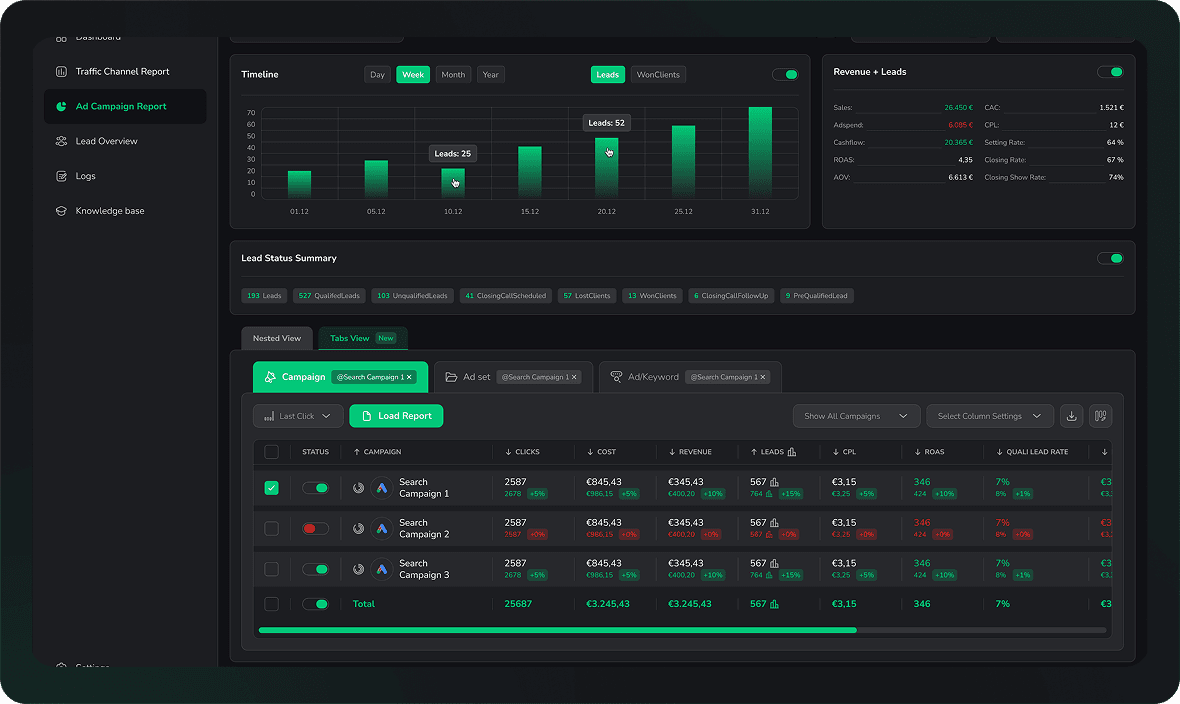
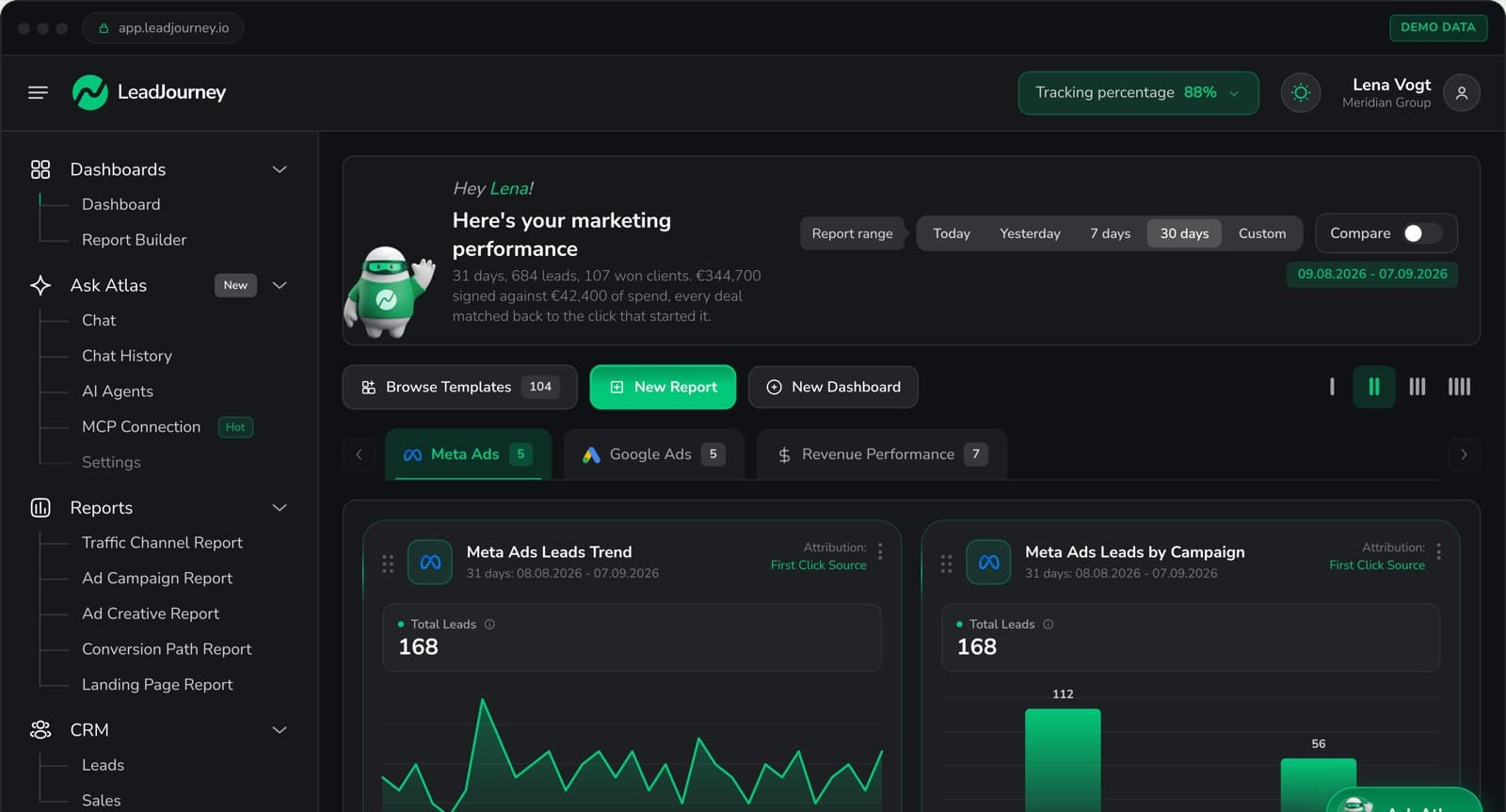
LeadJourney is the only attribution platform built exclusively for lead generation businesses running paid ads. While every other tool on this list was designed for SaaS, eCommerce, enterprise ABM, or affiliates. LeadJourney was architected from the ground up around one specific use case: tracking a lead from the first ad click through every funnel stage to a closed deal, and sending that signal back to your ad platforms automatically.
The core problem LeadJourney solves: most lead generation businesses optimize their Meta, Google, LinkedIn, and Bing campaigns on form submissions. But form submissions are a terrible proxy for revenue. A form fill from someone who never qualifies tells the algorithm nothing useful. LeadJourney closes this loop by connecting your CRM to all four ad platforms via server-side API, sending qualified-lead, booked-call, and closed-deal signals back in real time.
Key Features
- Server-side conversion tracking with 95%+ data accuracy: bypasses iOS 14 restrictions and browser-based blocking entirely
- Unified ads dashboard: Meta, Google, LinkedIn, and Bing Ads in a single view with real cost-per-lead and cost-per-close by campaign
- CRM revenue attribution: connects deal stages from your CRM directly to the original ad, ad set, and campaign that sourced the lead
- Multi-touch attribution: first touch, last touch, linear, time-decay, and position-based models
- Atlas AI analyst: chat with your attribution data in plain language without building reports manually
- 21-minute setup, no developer required: works with Elementor, Onepage.ai, Wix, and any funnel builder
- GDPR-compliant first-party data collection, no third-party cookies required
Pros
- Purpose-built for lead generation: every feature exists to solve a lead gen attribution problem, not a SaaS or eCommerce problem
- Closes the full loop from ad click to closed deal across Meta, Google, LinkedIn, and Bing simultaneously
- Server-side tracking accuracy far exceeds pixel-based alternatives: especially important after iOS 14+ and Safari ITP
- Fast setup: most businesses are fully tracking within 21 minutes, no developer needed
- 14-day free trial: no-risk trial for any lead gen business
Cons
- Not built for SaaS product-led growth: e-commerce runs through the Shopify integration, product analytics stay with a product analytics tool
- No affiliate network integrations, not designed for media buyers running affiliate offers
Verdict
If you run a lead generation business (coaching, consulting, B2B services, local services, financial advisors, real estate, insurance), LeadJourney is the obvious choice. It is the only platform that solves the entire attribution stack for your business model in a single tool.
What Real Users Say About LeadJourney
Honestly the best B2B attribution platform I've used. The Customer Journey Report finally shows us which touchpoints drive results, and the ad tracking software is rock solid. Being able to pull in offline conversions plus the AI search tracking makes our marketing analytics way more accurate.
LeadJourney has become one of those tools we don't want to work without anymore. It gives us a clear customer journey report, tracks offline conversions reliably, and helps us make decisions based on revenue instead of assumptions.
Read verified reviews on Trustpilot, G2, Capterra, Software Advice, and leadjourney.io/testimonials.
Further Reading
Explore the LeadJourney marketing attribution platform or compare the best ad tracking software and the best Hyros alternatives. Built by Jonas Strambach.
2. Cometly: Best for B2B SaaS Ad Attribution
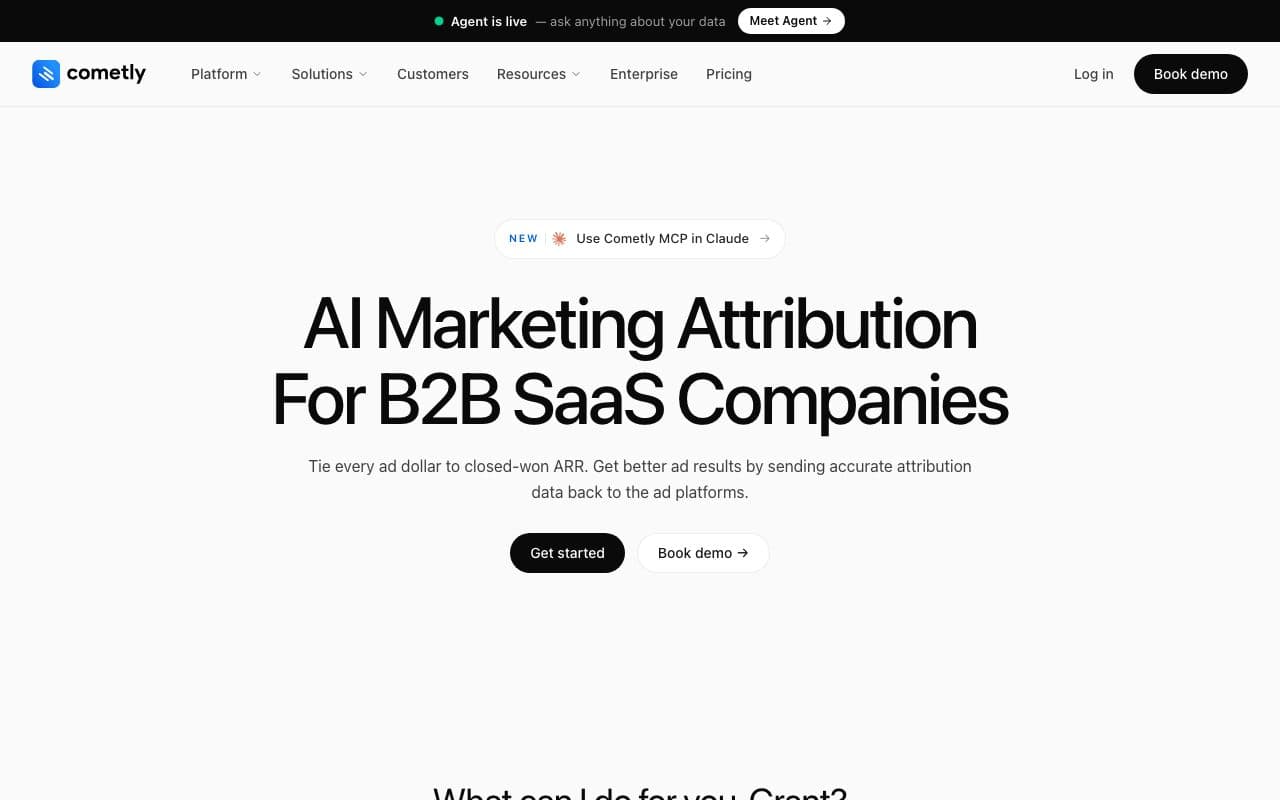
Cometly is a purpose-built marketing attribution platform for B2B SaaS companies that connects ad spend to pipeline and revenue in real time. It offers server-side tracking, an AI analyst, multi-touch attribution, and a unified ads view, making it the closest feature competitor to LeadJourney on this list.
The key distinction: Cometly serves SaaS, eCommerce, and agencies broadly. It wasn't purpose-designed for the specific challenges of lead generation businesses: qualified-lead CRM stage reporting, offline conversion loops across multiple ad platforms, and funnel-stage-level attribution per channel.
Pros
- Strong server-side tracking and CAPI integrations for Meta and Google
- AI analyst (similar to Atlas) for natural-language data queries
- Good fit for SaaS companies running paid acquisition across multiple channels
Cons
- Serves multiple verticals (SaaS, eCommerce, agencies), not lead-gen specific
- Less depth in CRM pipeline-stage attribution vs. LeadJourney
Verdict
Best for B2B SaaS companies running paid ads that want a robust attribution platform without full lead-gen specialization. If you're a pure lead gen business, LeadJourney goes deeper.
3. Dreamdata: Best Standalone B2B Revenue Attribution Platform
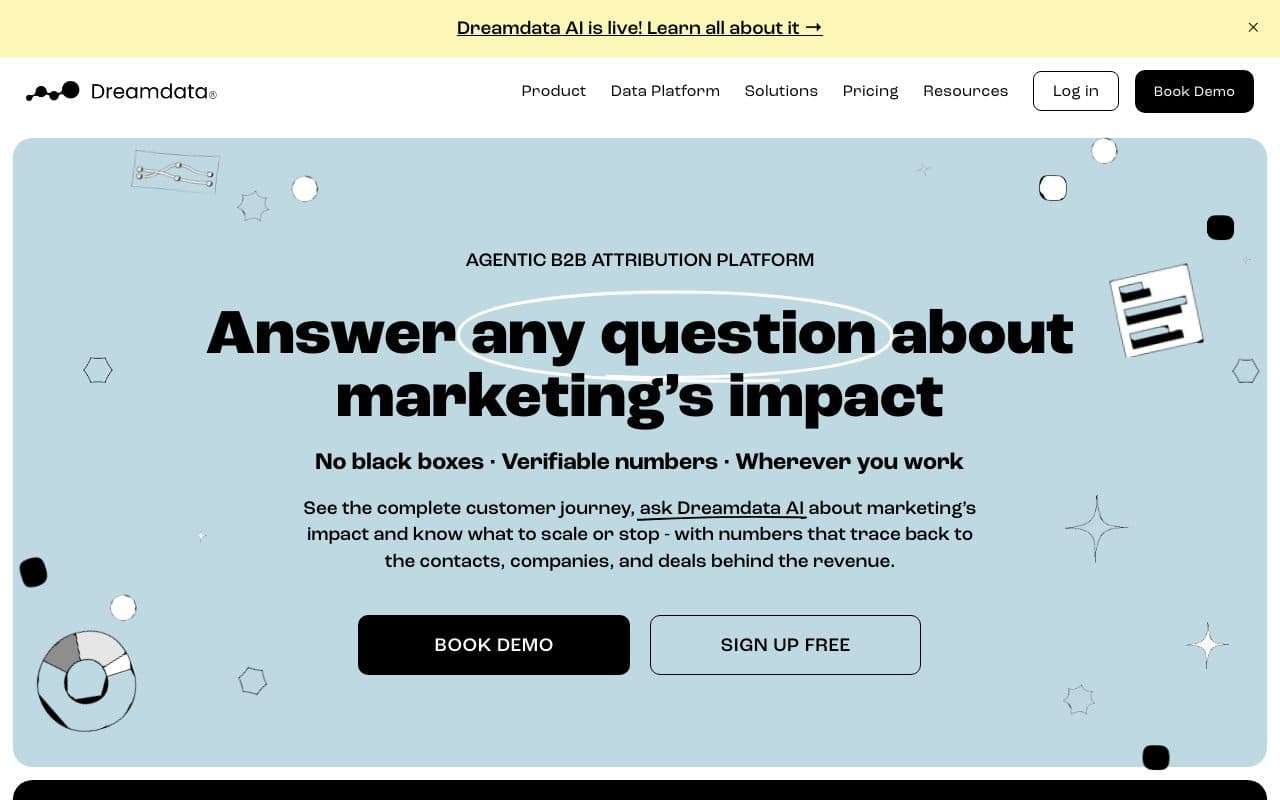
Dreamdata is one of the most recognized standalone B2B attribution platforms on the market. It focuses heavily on connecting marketing activity to revenue outcomes for companies with long, complex buying cycles, pulling data from CRM, ad platforms, website, and sales tools into a unified customer journey view.
Pros
- Deep account-level attribution: connects anonymous website visits to CRM deals across the full buying journey
- Strong pipeline and revenue visibility: praised by users for tying marketing directly to closed-won revenue
- Well-suited for mid-market and enterprise B2B companies with complex multi-stakeholder sales cycles
Cons
- Paid plans on quote: the free plan keeps two months of history, the price of Attribution and Activation is not published
- Built for enterprise B2B with long sales cycles: overkill for SMB lead gen businesses running paid ads
- Conversion syncs to Google, LinkedIn, Microsoft and Meta sit in the paid Activation add-on, not in the free plan
Verdict
The strongest standalone B2B attribution platform for mid-market and enterprise teams with complex, multi-stakeholder sales cycles. Not the right fit for SMB lead gen businesses running paid ads who need server-side tracking.
4. HockeyStack: Best for Enterprise GTM Intelligence
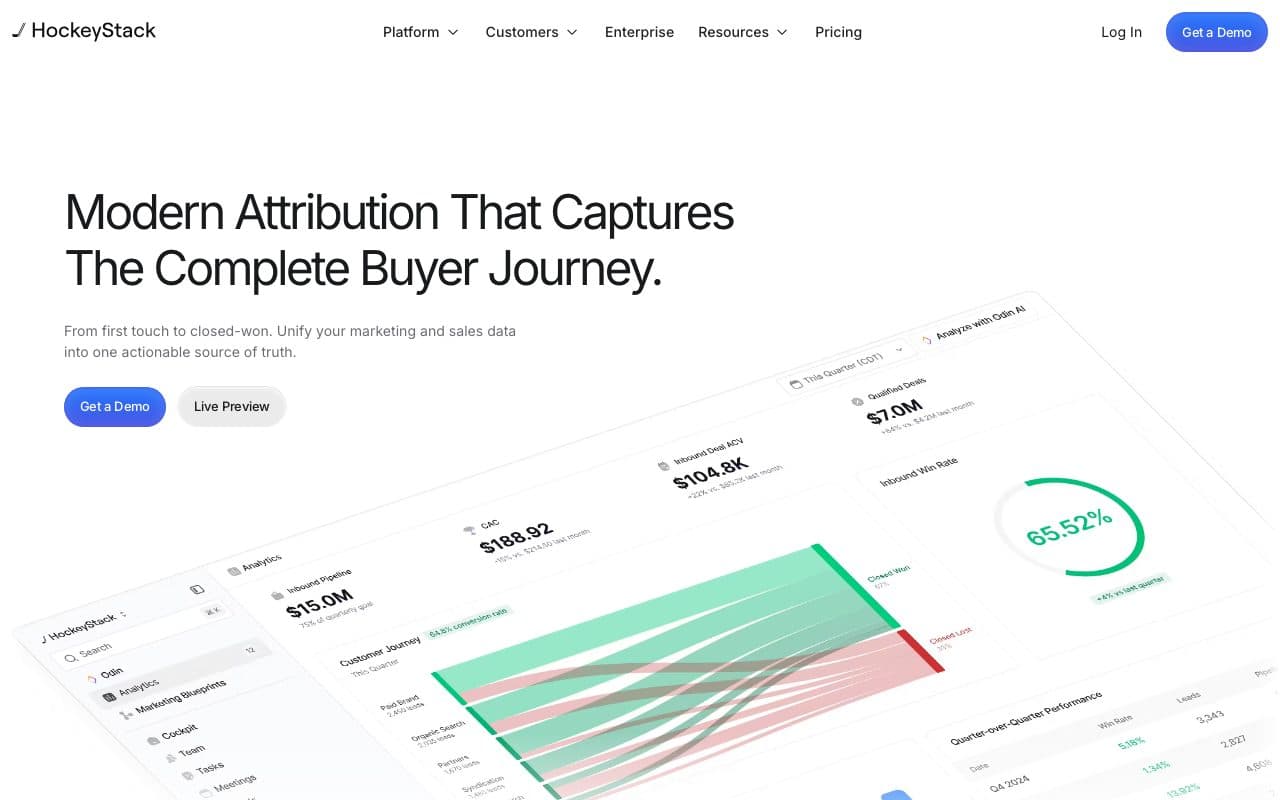
HockeyStack is a GTM intelligence platform purpose-built for complex B2B buyer journeys. It goes beyond attribution dashboards: its Atlas data foundation automatically ingests and unifies data from CRM, ad platforms, website, and product, then layers AI agents on top to analyze pipeline and revenue impact across every touchpoint.
Pros
- Full-funnel journey mapping across all channels for both accounts and individual contacts
- Flexible attribution models including custom data-driven models for enterprise teams
- Deeply praised for Salesforce and HubSpot integration: marketing and sales aligned in one view
Cons
- Enterprise pricing: requires a sales call, not accessible for SMB lead gen businesses
- Heavy platform: significant implementation and onboarding investment
- Browser-side snippet rather than server-side tracking; conversion syncs cover LinkedIn and Google, other platforms by webhook
Verdict
Excellent for enterprise B2B GTM teams needing deep pipeline intelligence and multi-stakeholder journey analysis. Significantly overbuilt and overpriced for lead gen SMBs.
5. Ruler Analytics: Best for Offline Conversion Tracking
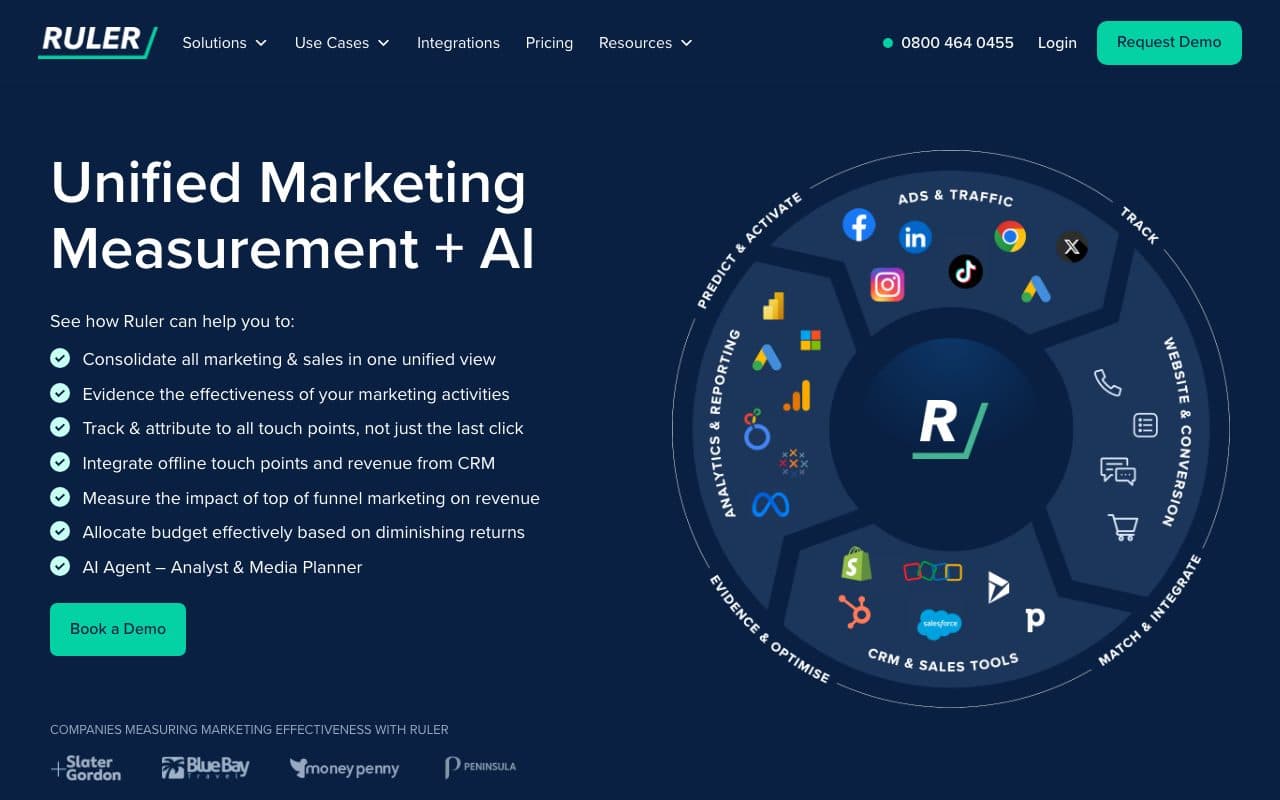
Ruler Analytics is a visitor-level marketing attribution platform that connects anonymous website sessions to CRM contacts and closed revenue. It tracks a visitor across multiple sessions, then matches closed revenue back to the original marketing source inside your CRM, making it particularly useful for B2B businesses where phone calls, live chat, and form fills are primary conversion points.
Pros
- Strong offline conversion tracking: connects calls, chats, and forms to revenue in CRM
- Visitor-level journey tracking across multiple sessions: captures the full buying path
Cons
- No server-side ad platform tracking (Meta CAPI, Google Enhanced Conversions): doesn't close the algorithmic loop
- No unified paid ads dashboard: reporting stays in the Ruler interface, not aggregated across ad platforms
Verdict
Good for B2B businesses with heavy offline conversion flows (calls, chats) needing CRM revenue matching. Doesn't replace a full server-side attribution stack for paid advertisers.
6. Heeet: Best for Native Salesforce & HubSpot Attribution
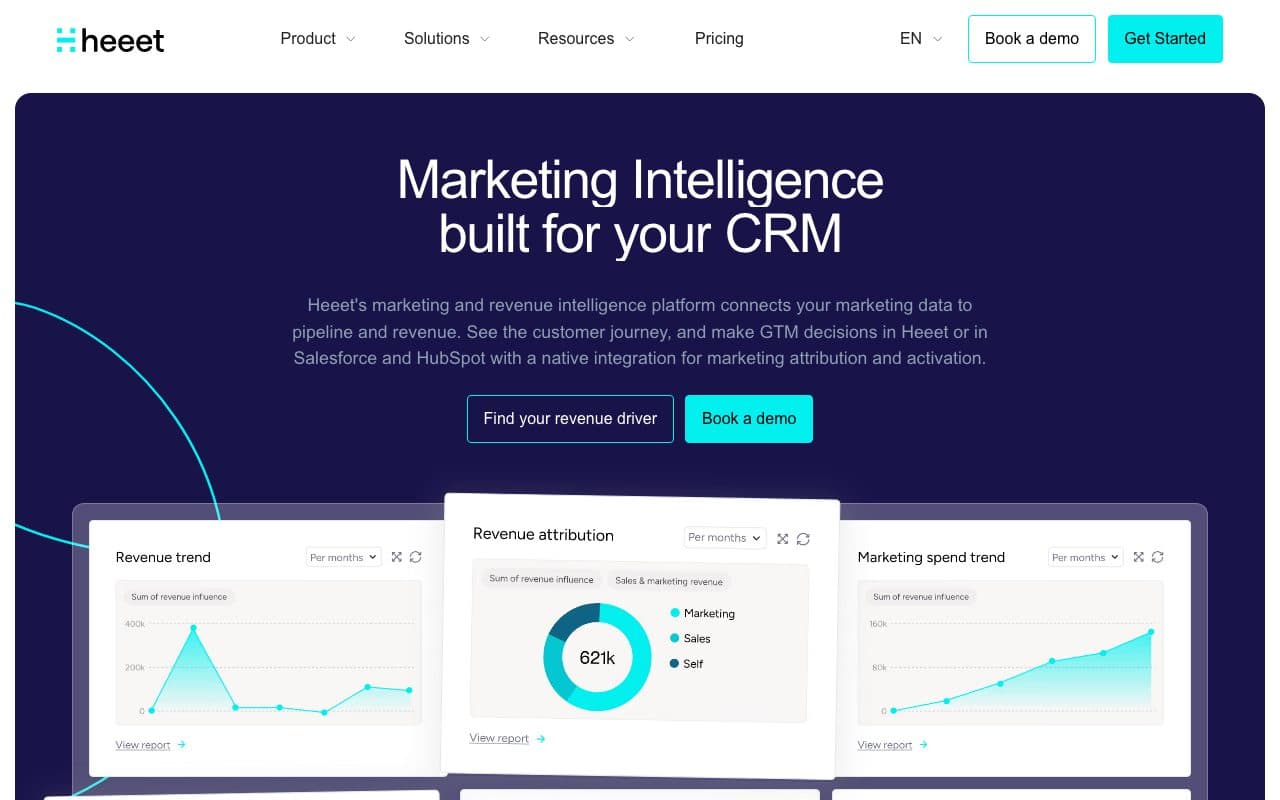
Heeet runs natively inside Salesforce and HubSpot: attribution data sits on standard CRM objects and reports run in the CRM's native dashboards. This is its defining advantage: marketing and sales never need to leave the CRM to see attribution data.
Pros
- Runs natively inside Salesforce and HubSpot, no separate tool or dashboard
- Pricing published publicly ($1,490/month for Native Plan): transparent vs. competitors requiring sales calls
Cons
- High entry price at $1,490/month, not accessible for most SMB lead gen businesses
- Requires Salesforce or HubSpot, not useful if you run a different CRM
Verdict
The top pick if you run a fully Salesforce or HubSpot-native operation and want attribution without leaving your CRM. At $1,490/month it's primarily a mid-market and enterprise solution.
7. Hyros: Best for High-Budget Advertisers
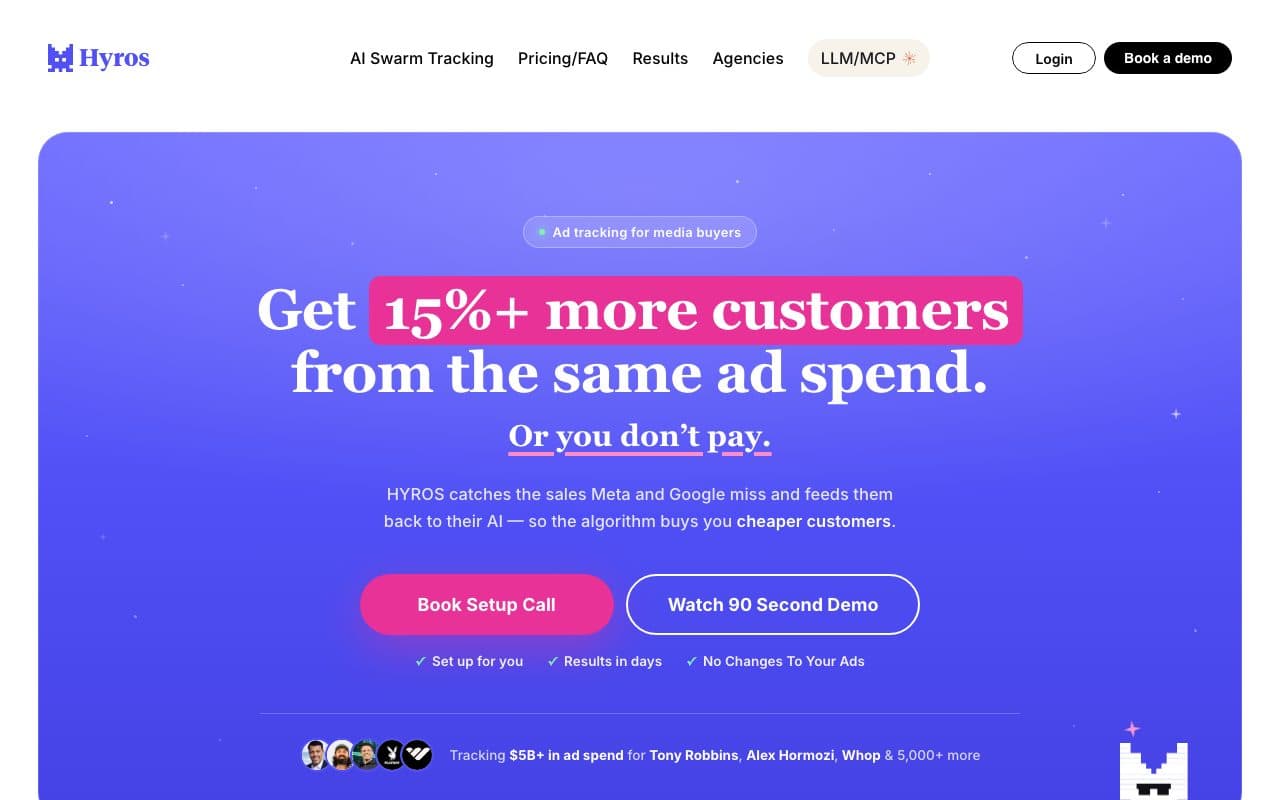
Hyros is well-known in the direct-response advertising world for its tracking precision across devices, email sequences, and phone calls. If you're running $10K+/month in ad spend and need every tracking signal to be airtight, Hyros delivers the precision to match.
Pros
- Best-in-class tracking precision: cross-device, email-level, and phone call attribution
- Strong reputation among high-ticket coaches and info-product businesses running large Meta budgets
Cons
- Significantly higher pricing than alternatives: aimed at businesses spending 10K+/month on ads
- Heavier onboarding and setup than alternatives
- Primarily Meta-focused, not purpose-built for multi-channel B2B (LinkedIn, Bing)
Verdict
A strong choice if you have large ad budgets and need premium tracking precision. For most lead gen businesses, LeadJourney delivers comparable accuracy at significantly lower cost.
8. WhatConverts: Best for Call-Heavy Lead Gen Businesses
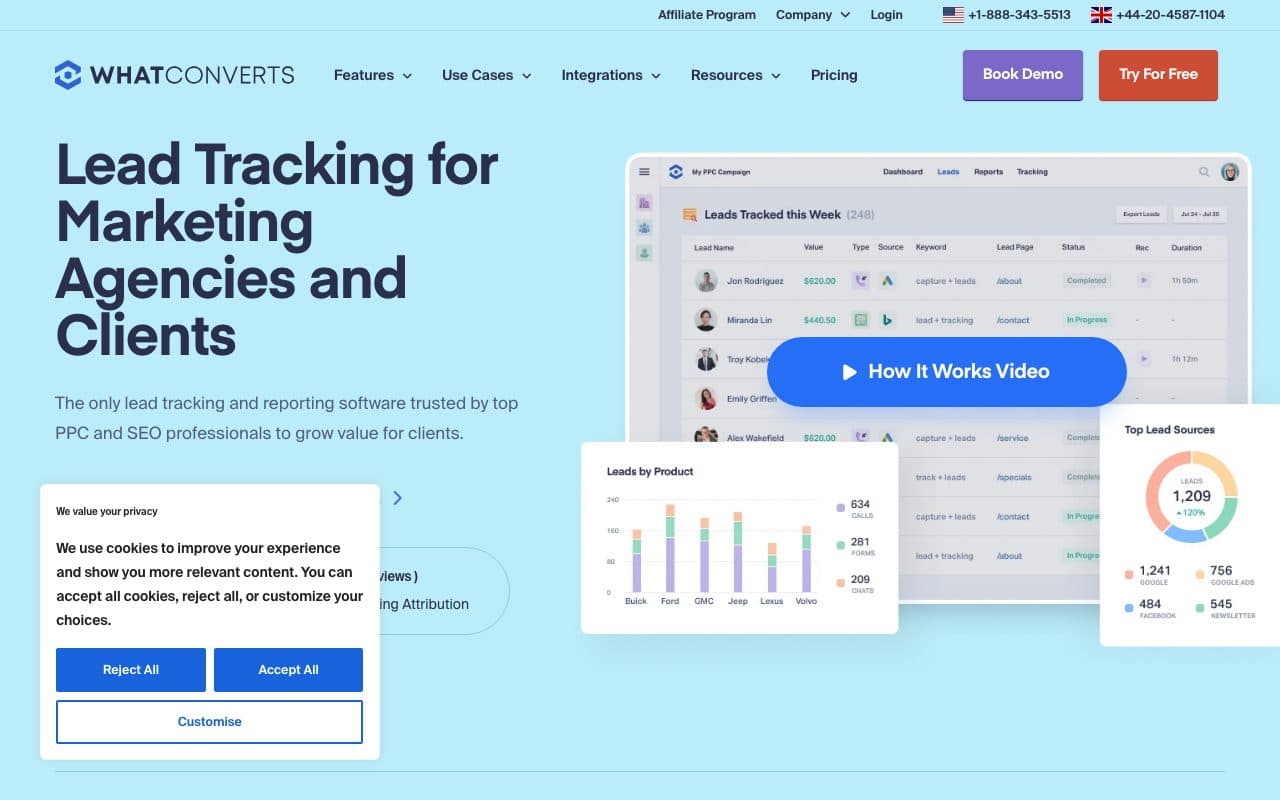
WhatConverts is a strong specialist tool for tracking calls, forms, and chats, especially for agencies and local businesses where phone calls are the primary lead conversion point. Its dynamic number insertion and call recording features are among the best available.
Pros
- Best-in-class call tracking with dynamic number insertion and call recording
- Strong lead quality reporting: quantity, quality, and value per source
Cons
- No server-side tracking: doesn't solve the iOS 14 data loss problem
- Doesn't connect CRM revenue data back to ad platforms, no CAPI loop
- Not designed for performance marketing optimization across Meta, Google, LinkedIn simultaneously
Verdict
The best option if call tracking with recording is your primary need. Not a full attribution solution for paid performance marketers.
9. Fibbler: Best for LinkedIn Ads Attribution
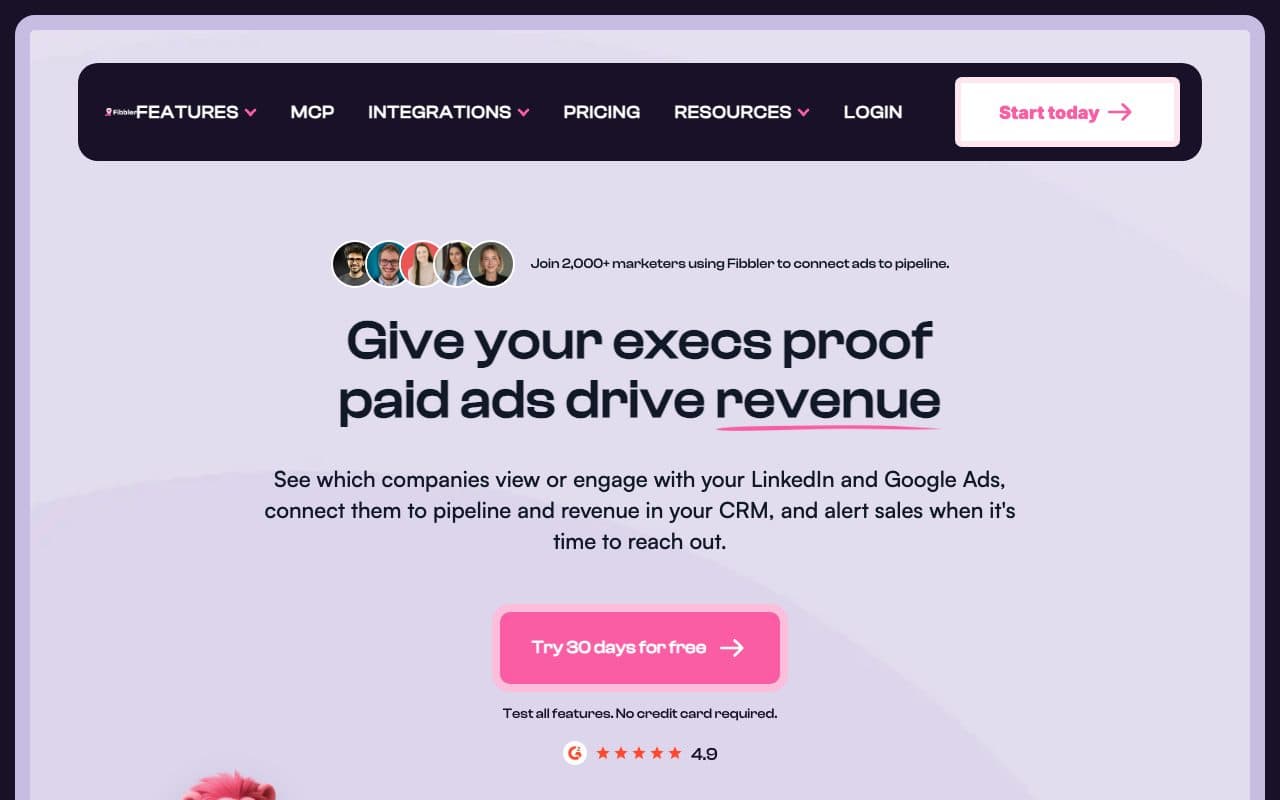
Fibbler is a B2B attribution platform and official LinkedIn Marketing Partner that bridges paid ad data and CRM. It connects LinkedIn Ads and Google Ads directly with HubSpot, Salesforce, Attio, and Pipedrive, identifying which companies are clicking ads and tying that engagement to pipeline and revenue.
Pros
- Official LinkedIn Marketing Partner: strongest LinkedIn Ads attribution on this list
- Company-level ad engagement synced directly to CRM: identifies which accounts are clicking your ads
- Accessible starting price at $89/month
Cons
- Primarily LinkedIn + Google, no Meta Ads or Bing Ads attribution
- No website script and no Meta coverage yet: Meta Ads is announced as coming soon
Verdict
The best choice for B2B companies where LinkedIn is the primary paid channel. Not a complete solution for multi-channel lead gen businesses running Meta and Google simultaneously.
10. AnyTrack: Best for Multi-Platform Data Routing
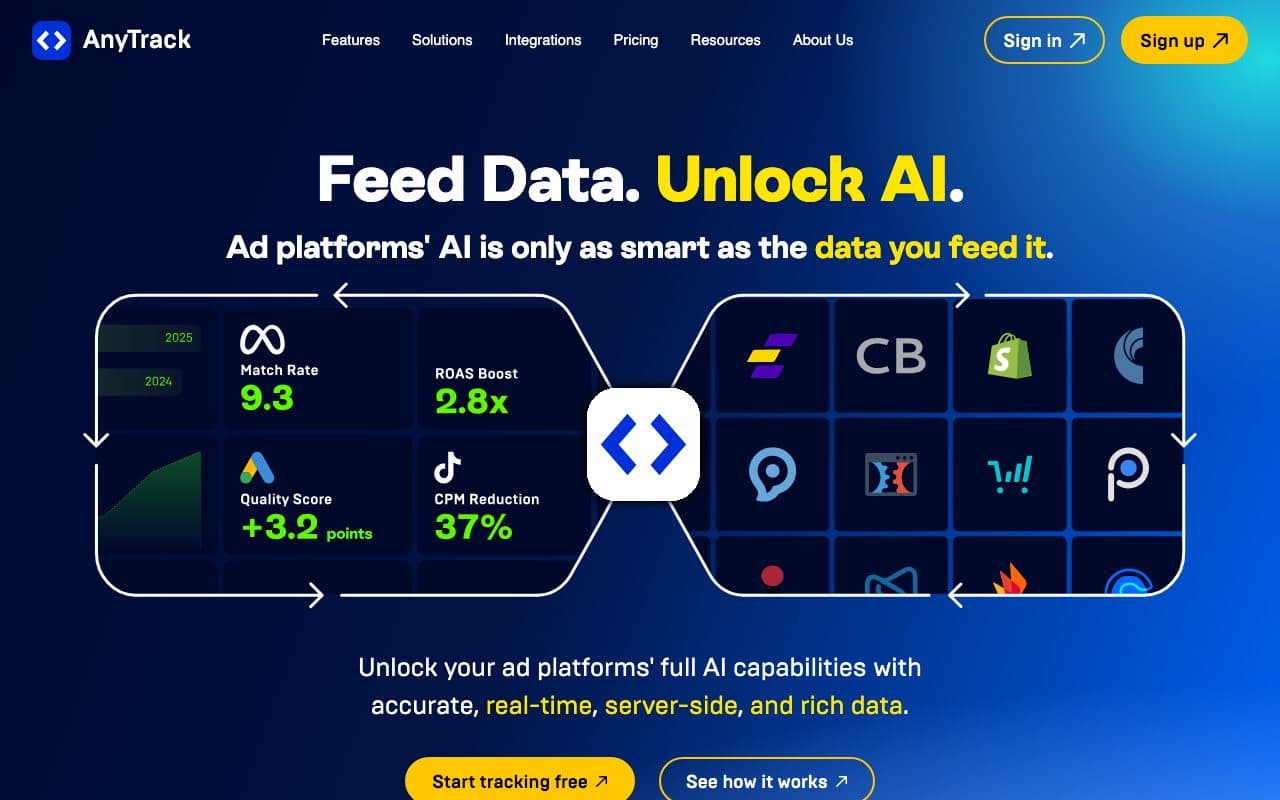
AnyTrack is a data orchestration platform with 300+ integrations covering affiliate networks, ad platforms, CRMs, and eCommerce. It excels at routing conversion events between platforms, making it a strong choice for businesses that mix lead generation with affiliate offers or eCommerce.
Pros
- 300+ integrations: broadest integration coverage on this list
- Strong event routing between platforms: good for businesses that need data flowing into multiple destinations
Cons
- Not designed as a CRM-to-ad-platform attribution loop for lead gen businesses: more of a data routing tool
- No unified ads dashboard: reporting must be done in separate platforms
Verdict
Best for businesses that mix lead gen with affiliate offers or eCommerce and need broad integration coverage. Pure lead gen businesses will find LeadJourney goes significantly deeper.
11. AdBeacon: Best for Centralized Paid Ad Performance
AdBeacon is built for B2B companies running advertising campaigns across multiple platforms who want a centralized view of marketing performance. It focuses on connecting ad spend to revenue outcomes, with an emphasis on multi-touch attribution across paid channels.
Pros
- Centralized paid advertising dashboard: good for multi-platform performance visibility
- Free 30-day trial available: low-risk evaluation
Cons
- Less established than Cometly, Dreamdata, or HockeyStack in the B2B attribution space
- Limited CRM revenue loop depth for lead generation pipeline stages
Verdict
A solid multi-platform ad tracking tool for B2B teams needing centralized paid performance visibility. Falls short of full lead gen attribution compared to LeadJourney.
12. Triple Whale: eCommerce Attribution That Touches B2B

Triple Whale is primarily an eCommerce attribution platform built for DTC brands. Some B2B companies use it for paid media reporting, but the platform's core infrastructure is designed around product purchases, not lead funnels or CRM pipeline stages.
Pros
- Strong multi-channel ad reporting for DTC and eCommerce-adjacent businesses
- AI insights layer for campaign performance optimization
Cons
- Built for eCommerce, not lead generation or B2B services: CRM pipeline attribution is not its focus
- No native lead gen CRM integration for pipeline-stage attribution
Verdict
Only relevant for B2B businesses that also run eCommerce. Pure lead gen businesses should not use Triple Whale: it wasn't built for your model.
13. RedTrack: Affiliate Heritage, Limited Lead Gen Fit
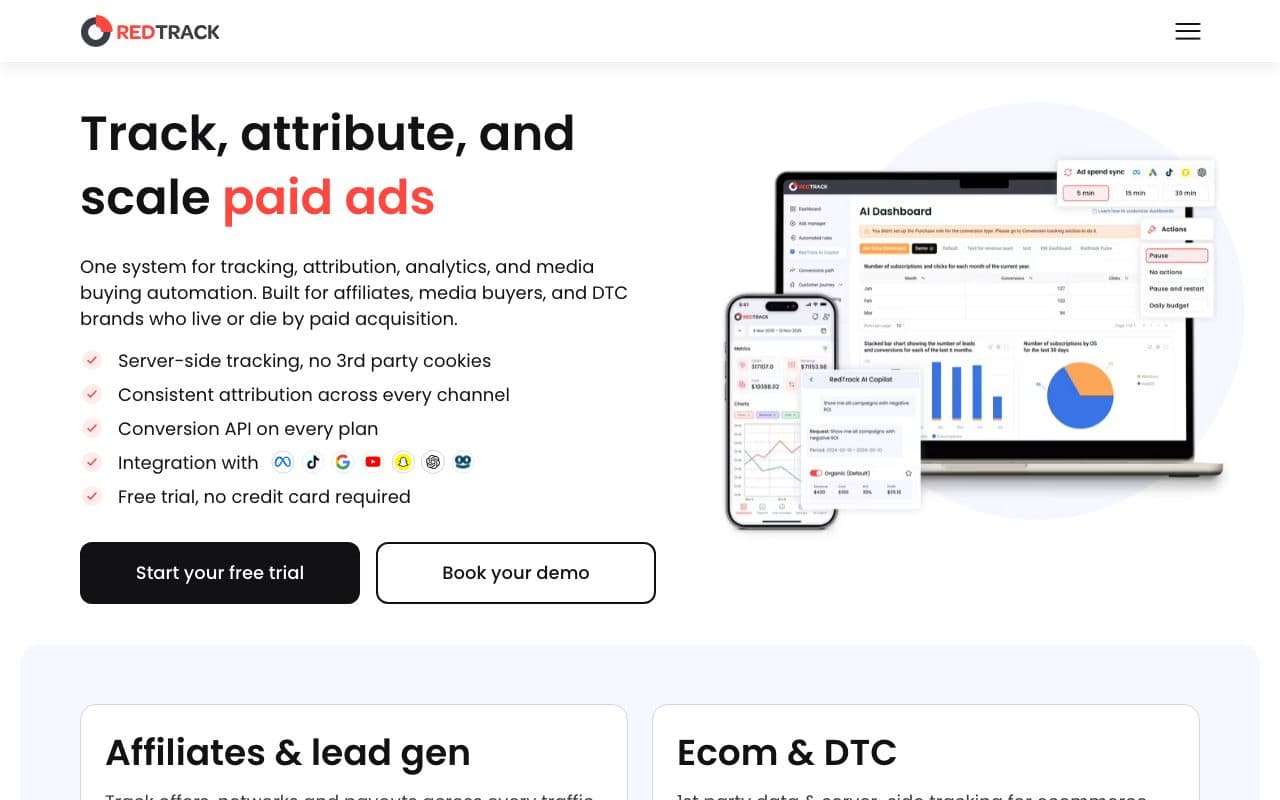
RedTrack started in affiliate marketing and expanded into broader tracking. It has solid integrations with native ad networks and eCommerce platforms, but its roots show when you try to use it for a lead generation business with a CRM-based funnel.
Pros
- Mature platform with strong affiliate network integrations and native ad support
- Good A/B testing and traffic distribution capabilities for media buyers
Cons
- Affiliate-first architecture: UX and reporting were built for performance arbitrage, not lead funnels
- No deep CRM pipeline attribution: doesn't send qualified-lead or deal signals back to Meta/Google
Verdict
A strong platform for affiliates and media buyers. Lead generation businesses will outgrow its reporting depth quickly.
14. HubSpot Attribution: Best for HubSpot-Native Teams
HubSpot's built-in attribution reporting connects marketing activities directly to contacts, deals, and revenue without a separate integration. For teams already running their entire GTM motion inside HubSpot, the native attribution is a natural starting point, and it's included in Enterprise plans.
Pros
- Included in HubSpot Enterprise, no additional cost for existing customers
- Covers common attribution models (first touch, last touch, linear, time decay) natively inside CRM
Cons
- No server-side tracking: pixel-based only, significant data loss from iOS 14+ and browser blocking
- No automated CRM-to-CAPI loop: doesn't send deal signals back to Meta, Google, or LinkedIn to retrain algorithms
- Insufficient for paid media optimization at scale: lacks the depth needed to drive ad algorithm improvement
Verdict
A practical starting point for HubSpot-native teams that don't need deep paid media optimization. As soon as performance marketing becomes a priority, a dedicated attribution platform like LeadJourney is necessary.
15. Factors.ai: Best Budget-Friendly Option for Early-Stage B2B
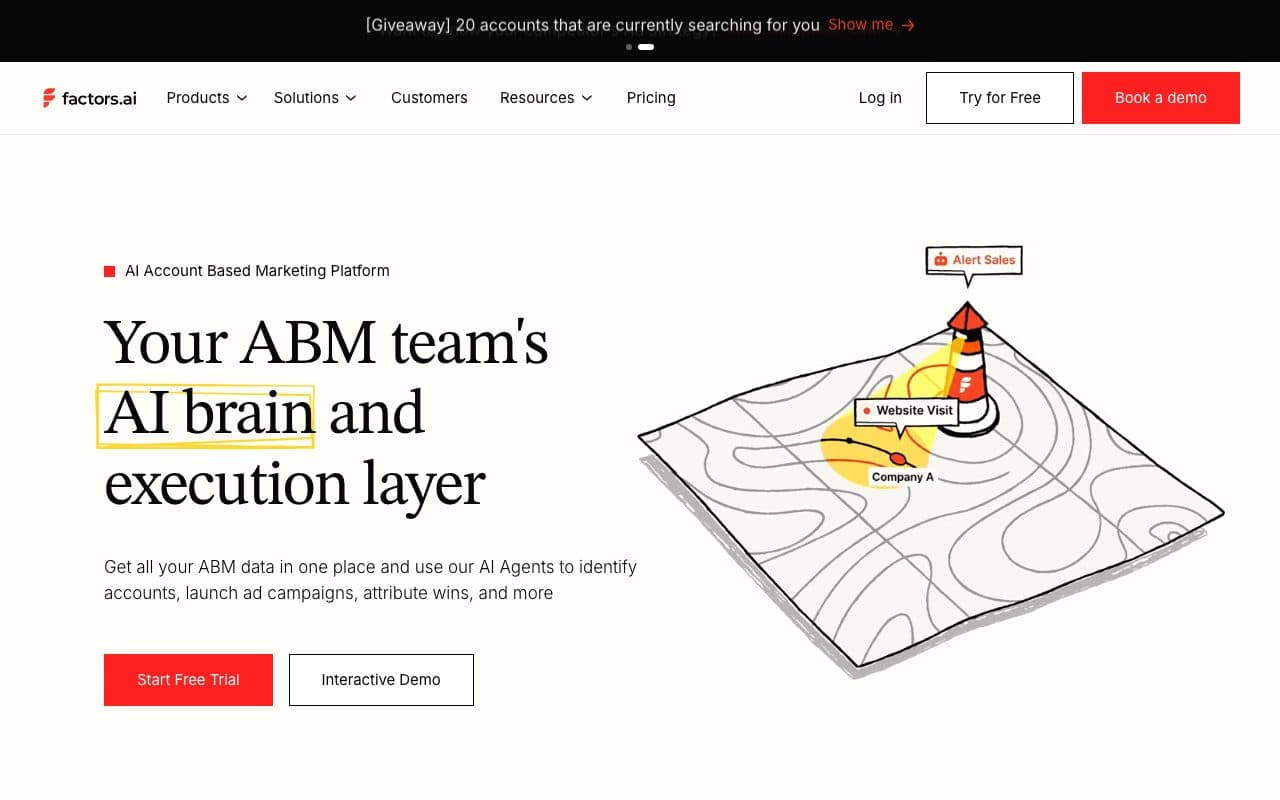
Factors.ai is a B2B attribution and account intelligence platform positioned as an accessible option for early-stage teams. It provides multi-touch attribution, account-level journey tracking, and basic pipeline influence reporting at a price point accessible to startups and smaller B2B teams.
Pros
- More accessible pricing than Dreamdata, HockeyStack, or Heeet: suitable for early-stage B2B teams
- Account-level journey tracking: good for ABM-oriented B2B marketing teams
Cons
- LinkedIn Conversions API on every plan, Google conversion sync only on Enterprise; Meta and Microsoft not documented
- Browser SDK, cookieless by default; server-side tracking is not documented
Verdict
A reasonable entry point for early-stage B2B teams with tight budgets. As ad spend scales and performance marketing becomes the primary growth lever, a dedicated platform like LeadJourney is the right next step.
Which B2B Attribution Software Should You Choose?
The right tool depends entirely on your business model. Here's the fast decision guide:
- Lead generation business running paid ads (Meta, Google, LinkedIn, Bing): LeadJourney, the only platform built exclusively for your model
- B2B SaaS with paid acquisition: Cometly or Dreamdata
- Enterprise B2B with complex multi-stakeholder buying journeys: HockeyStack or Dreamdata
- Salesforce or HubSpot-native operation: Heeet
- LinkedIn-primary B2B paid channel: Fibbler
- High ad budget ($10K+/mo) needing maximum tracking precision: Hyros
- Primary conversion is phone calls with recording: WhatConverts
- Early-stage B2B with limited budget: Factors.ai as a starting point
FAQ
Frequently Asked Questions
The questions teams choosing B2B attribution software ask most.
What is the best B2B attribution software in 2026?
LeadJourney is the best B2B attribution software in 2026. It is purpose-built for lead generation, B2B included, with server-side tracking at 95%+ accuracy, CRM pipeline attribution from first click to closed deal, and automated CAPI closed loop to Meta, Google, LinkedIn, and Bing.
How does B2B attribution software connect to a CRM?
LeadJourney connects to any CRM via webhook. When a lead advances through a pipeline stage in your CRM, LeadJourney automatically fires a CAPI event to the originating ad platform. Setup takes 21 minutes with no developer required.
Does B2B attribution software require a developer?
LeadJourney does not require a developer. It deploys via a JavaScript snippet on your landing pages and a CRM webhook connection. The complete setup takes 21 minutes.
How much does B2B attribution software cost?
The range is wide because the category is. Entry-level tools such as Factors.ai and Anytrack start low, mid-market platforms such as Ruler Analytics start around $199 per month, Hyros targets accounts spending $10,000 or more per month, and enterprise platforms such as HockeyStack and Dreamdata run into four figures monthly. LeadJourney offers a 14-day free trial with no minimum ad spend.
What is the difference between B2B attribution and Google Analytics?
GA4 measures sessions and on-site conversions, and its report ends at the form submission. B2B attribution software carries the click ID into the CRM record, so the same lead can still be traced back to a campaign weeks later when it becomes an opportunity or a signed deal. In a long B2B sales cycle that gap is the whole point: the form fill is not the outcome the budget is judged on.
Keep reading
More from the blog
 Tool Comparisons
9 Best Marketing Attribution Tools for Zoho CRM in 2026
Four of the best attribution tools for Zoho CRM are Zoho products you may already pay for. Nine options compared on where the tracking starts, which ad platforms they cover, and whether the closed deal ever reaches the algorithm buying your traffic.Read the article13 min read Tool Comparisons
9 Best Marketing Attribution Tools for Microsoft Dynamics 365 in 2026
Dynamics records the revenue and nothing fills in where it came from: Lead Source is a ten-option picklist and campaign spend is typed by hand. Nine tools compared on what each can actually see in a Dynamics environment, with pricing, pros, cons and a verdict.Read the article14 min read Tool Comparisons
12 Best GTM Tools and Software in 2026
A GTM stack is five or six tools that each report on their own step, which is why nobody can say which play produced the revenue. Twelve tools compared by the layer they own, with prices read this month and a verdict on who each one is for.Read the article16 min read
All-in-one attribution
Ready to see which campaigns close deals?
LeadJourney is the #1 B2B attribution software for lead generation businesses. Connect Meta, Google, LinkedIn, and Bing to your CRM in 21 minutes. Server-side tracking. Qualified-lead reporting. AI analyst. 14-day free trial.