













BlogTool Comparisons
15 Best Meta Ads Tracking Tools in 2026
The Meta Pixel sees the form fill and nothing after it, so Meta's algorithm trains on form fillers instead of the leads that closed weeks later. Fifteen tools, from CRM-to-CAPI platforms to campaign management, creative intelligence and reporting, with a verdict on who each is built for.


Contents
- Quick summary
- The 15 at a glance
- 1. LeadJourney
- What users say
- 2. Meta Pixel + CAPI
- 3. Meta CAPI Gateway
- 4. Cometly
- 5. Hyros
- 6. Ruler Analytics
- 7. Triple Whale
- 8. Northbeam
- 9. Rockerbox
- 10. Madgicx
- 11. AdEspresso
- 12. Supermetrics
- 13. Wicked Reports
- 14. Meta Ad Library
- 15. Whatagraph
- Where tools fall short
- Quick Decision Guide
Summarise this article with AI
Opens the page with a ready prompt in:


Nothing is sent until you pick a service.
Meta Ads is only as smart as the conversion data you feed it. Every optimization Meta runs (who sees your ads, who gets retargeted, how Advantage+ allocates your budget) is trained on the conversion signals you send back. If you send form-fill signals, Meta finds form fillers. If you send qualified-lead and closed-deal signals from your CRM, Meta finds buyers.
That's the fundamental problem with Meta Ads tracking for lead generation businesses: the Meta Pixel tracks the form submission on your landing page, then the trail goes cold. The lead that qualifies two days later, books a call next week, and closes three weeks after that is completely invisible to Meta unless you explicitly send those signals back via the Conversions API.
This guide ranks the 15 best Meta Ads tracking tools in 2026. The tools span several distinct categories: CAPI and conversion accuracy tools (which improve what Meta knows about your actual conversions), attribution and reporting platforms (which show you what Meta spend is producing), campaign management tools (which help you optimize once you have accurate data), and creative intelligence tools (which help you understand what's working in the market). LeadJourney leads as the only tool that automates the full fbclid-to-CRM-to-CAPI loop specifically for lead generation businesses.
Quick Summary: Best Meta Ads Tracking Tool in 2026
In short
LeadJourney is the best Meta Ads tracking tool in 2026 for lead generation businesses because it reports cost per closed deal by campaign, ad set and creative rather than cost per form fill, and closes the loop back to Meta so the algorithm learns on the same definition of success. The fbclid is captured server-side at 95%+ accuracy, written onto the CRM record, and the CRM stages return over the Conversions API. Meta, Google, LinkedIn and Microsoft all in one model. 21-minute setup, 14-day free trial.
Meta's own Pixel plus Conversions API is free, necessary, and blind to everything after the form submit. The CAPI Gateway makes the server-side half easier to run and does not add a CRM.
Among the third-party tools, Cometly is the closest on features for B2B SaaS, Hyros fits high-ticket with long windows, Ruler Analytics covers call-heavy businesses, and Triple Whale, Northbeam, Rockerbox, Madgicx and AdEspresso are built for e-commerce or creative management rather than for a sales pipeline.
The 15 Best Meta Ads Tracking Tools (2026)
The 15 best Meta Ads tracking tools at a glance
| Tool | Key features | Best for | Pricing |
|---|---|---|---|
| Rank 1LeadJourney | Automated fbclid-to-CRM-to-CAPI loop; cost-per-close by campaign and creative | Lead generation businesses running Meta Ads + other platforms | 14-day free trial |
| Rank 2Meta Pixel + Conversions API (native) | Free, powers retargeting and Lookalike Audiences, browser-side | Free baseline tracking for all Meta advertisers | Free |
| Rank 3Meta CAPI Gateway | Free, zero-configuration, one-click setup inside Meta Events Manager | Free one-click server-side baseline for Meta-only advertisers | Free |
| Rank 4Cometlyvs LeadJourney | Server-side Meta tracking, CRM attribution, AI optimization | B2B SaaS teams tracking Meta Ads to pipeline and revenue | Custom (demo required) |
| Rank 5Hyrosvs LeadJourney | 365-day attribution windows, print tracking, call attribution | High-ticket businesses with long Meta Ads sales cycles | From $69/mo |
| Rank 6Ruler Analyticsvs LeadJourney | Multi-session visitor tracking, CRM revenue matching, call tracking | Offline Meta Ads conversion attribution (calls, forms, chat) | From £299/mo |
| Rank 7Triple Whalevs LeadJourney | Shopify-native Meta attribution, creative analytics | Shopify DTC brands tracking Meta Ads to eCommerce revenue | Starts at $129/mo |
| Rank 8Northbeamvs LeadJourney | ML-powered independent attribution, media mix modeling | Large eCommerce brands needing ML-powered Meta attribution | Custom enterprise pricing |
| Rank 9Rockerboxvs LeadJourney | Omnichannel attribution, TV, CTV, podcasts, direct mail, incrementality testing | Enterprise omnichannel brands measuring Meta alongside offline media | Custom enterprise pricing |
| Rank 10Madgicxvs LeadJourney | Creative Intelligence dashboard, AI Audience Finder, automation | Meta Ads management with creative intelligence and automation | Starts at $49/mo |
| Rank 11AdEspresso | Simplified campaign creation, built-in A/B testing | Simplified Meta Ads management and A/B testing for SMBs | Starts at $49/mo |
| Rank 12Supermetricsvs LeadJourney | 100+ platform connectors, reliable Meta data extraction | Pulling Meta Ads data into Sheets, Looker Studio, or BI tools | From €49/mo |
| Rank 13Wicked Reportsvs LeadJourney | LTV attribution, cohort-based Meta ROAS, recurring revenue | Subscription businesses tracking Meta Ads customer lifetime value | From $499/mo |
| Rank 14Meta Ad Library | Free, public database of all active Meta ads | Free creative research and competitor ad intelligence | Free |
| Rank 15Whatagraphvs LeadJourney | Automated white-label Meta reports, 55+ channel connections | Agencies producing white-label Meta Ads client reports | From €699/mo |


1. LeadJourney: Best Meta Ads Tracking Tool for Lead Generation Businesses
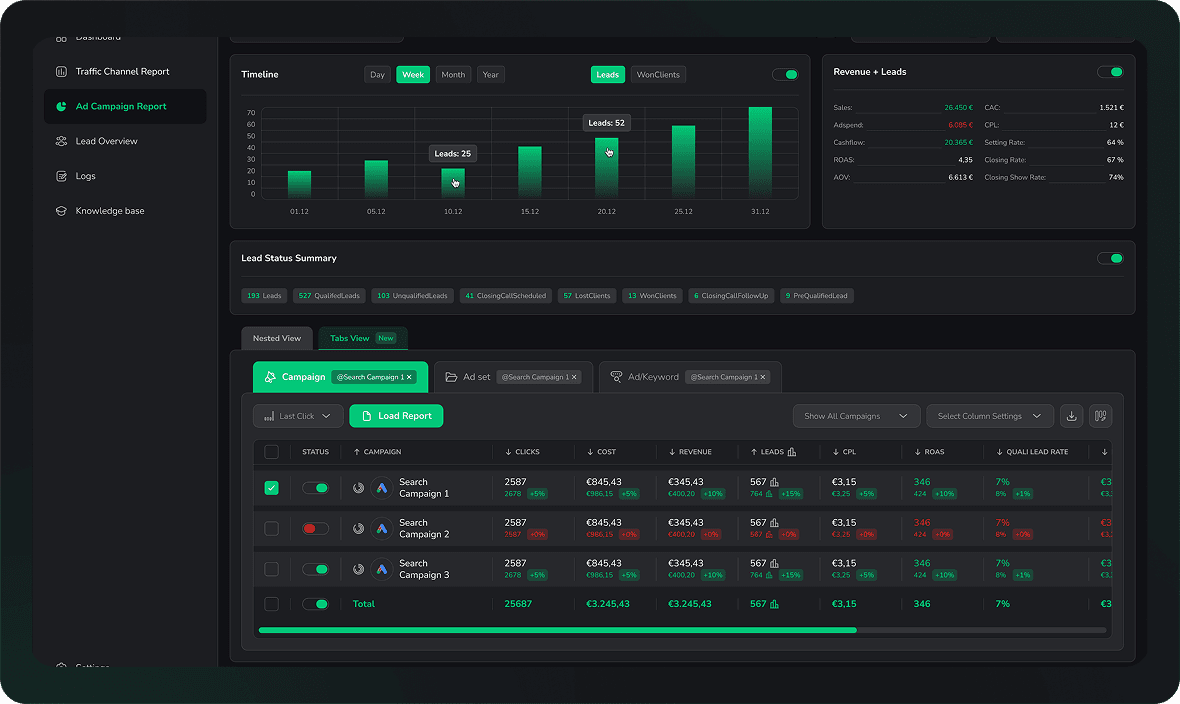
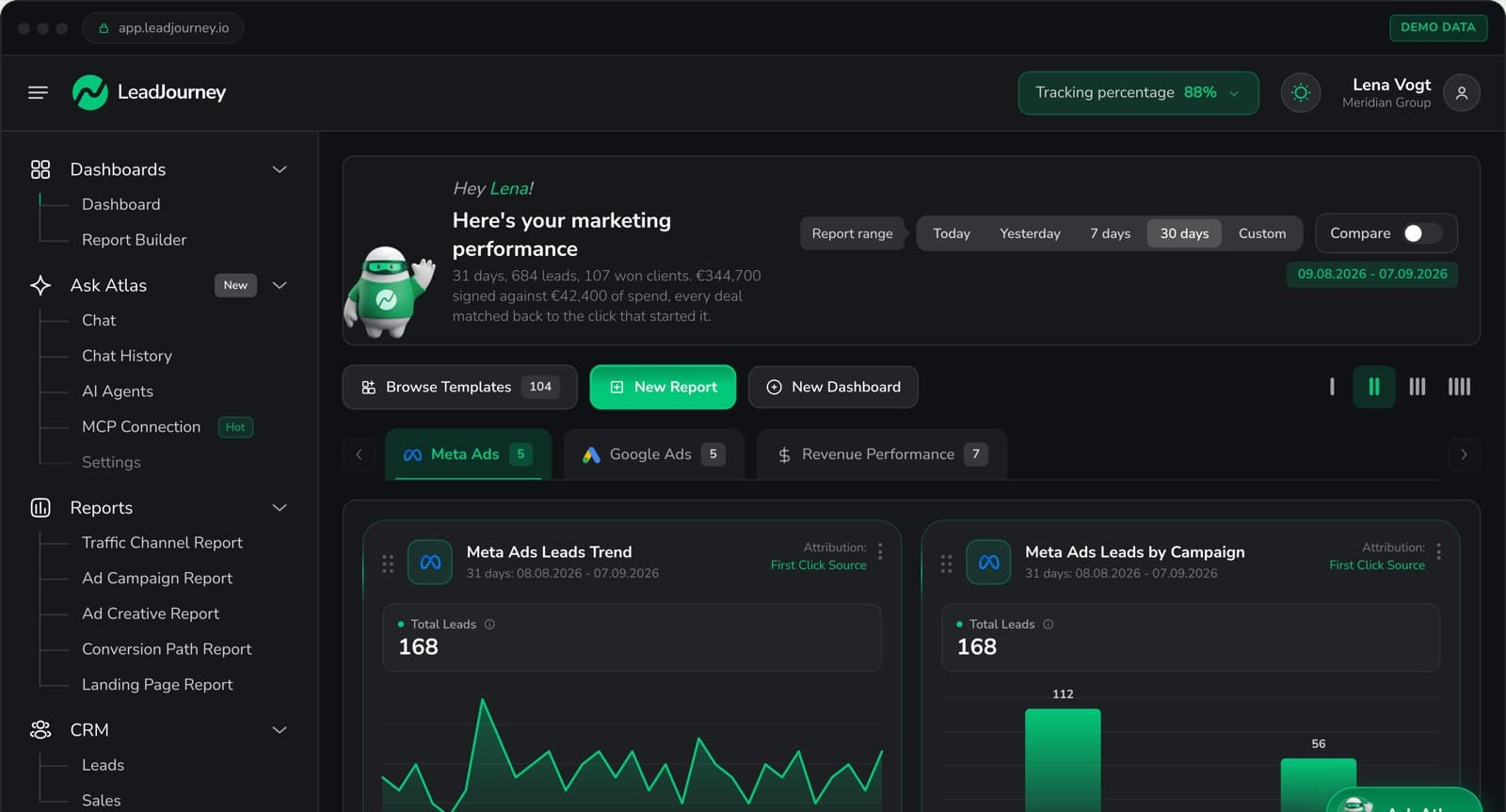
LeadJourney is the only Meta Ads tracking tool built exclusively for lead generation businesses, and the only one that automates the complete fbclid-to-CRM-to-CAPI loop without a developer or manual work. When someone clicks your Meta ad, LeadJourney captures the fbclid server-side and persists it through every step of your funnel and CRM pipeline. When that lead qualifies, books a call, or closes a deal, LeadJourney fires those events back to Meta CAPI in real time, retraining Meta's algorithm on real buyer signals instead of form fills.
This closes the single most valuable feedback loop in paid social: Meta's Advantage+ and Lookalike Audience algorithms train on the conversion signals you send. When Meta only receives form-fill events, it optimizes toward the cheapest form fillers. When Meta receives qualified-lead and closed-deal events from your CRM, it finds people who look like your actual buyers, and your lead quality improves over 2-6 weeks without any change to your targeting or budget. LeadJourney automates this for Meta and simultaneously for Google, LinkedIn, and Bing, so all four algorithms improve from the same CRM data.
Key Features
- Server-side fbclid persistence: Meta Click ID captured at first ad click and stored on every CRM lead record, surviving the full sales cycle regardless of how long it takes
- Automated Meta CAPI signals: qualified-lead, booked-call, and closed-deal CRM events automatically fired back to Meta's Conversions API in real time, no CSV export required
- Cost-per-close reporting by Meta campaign, ad set, and creative: see which Meta creatives are producing closed deals, not just cheapest form fills
- 95%+ server-side tracking accuracy: Meta Ads conversions tracked from your server, bypassing iOS 14+ ATT restrictions and Safari ITP that cause 30-60% data loss in pixel-only setups
- Unified four-platform dashboard: Meta alongside Google, LinkedIn, and Bing in one view with consistent cost-per-close metrics across all channels
- Five attribution models: first touch, last touch, linear, time-decay, and position-based; understand Meta's true role in sourcing vs. closing leads
- Atlas AI analyst: ask plain-language questions: which Meta campaign has the lowest cost-per-close? which creative is producing the most qualified leads this month?
- 21-minute setup, no developer required: works with any landing page builder (Elementor, Wix, Onepage.ai, ClickFunnels) and any CRM
Pros
- Fully automates Meta CAPI from CRM data, no manual exports, no CSV uploads, no developer
- Reports cost-per-closed-deal at Meta campaign and creative level: the metric that actually tells you if Meta Ads is working
- Improves Meta's Advantage+ and Lookalike Audiences by feeding qualified-lead and deal signals back automatically
- Also covers Google, LinkedIn, and Bing simultaneously: one integration for the full paid media stack
Cons
- Not a Meta campaign management or creative tool: doesn't automate Meta ad creation or A/B testing
- E-commerce runs through the Shopify integration or a manually connected shop system (ROAS and customer origin), without product-level catalogue analytics
Verdict
For any lead generation business running Meta Ads, LeadJourney is the only tracking tool that automates the complete loop: fbclid capture (CRM pipeline stages), CAPI signals back to Meta automatically. No other tool on this list does this without a developer or manual CSV exports.
What Real Users Say About LeadJourney
We've been using LeadJourney for a while now. The platform makes offline conversions and attribution much easier to understand, and sending accurate conversion data back to our ad platforms has noticeably improved how we optimize campaigns.
Hands down the best B2B attribution platform for agencies. This ad tracking software handles server-side tracking perfectly, meaning we can finally connect actual revenue back to the specific campaigns that started the journey.
Read verified reviews on Trustpilot, G2, Capterra, Software Advice, and leadjourney.io/testimonials.
Further Reading
Explore the LeadJourney marketing attribution platform or compare the best Meta Ads conversion tracking tools and the best Conversion API tracking tools. Built by Jonas Strambach.
2. Meta Pixel + Conversions API (Native): Best Free Baseline for All Meta Advertisers
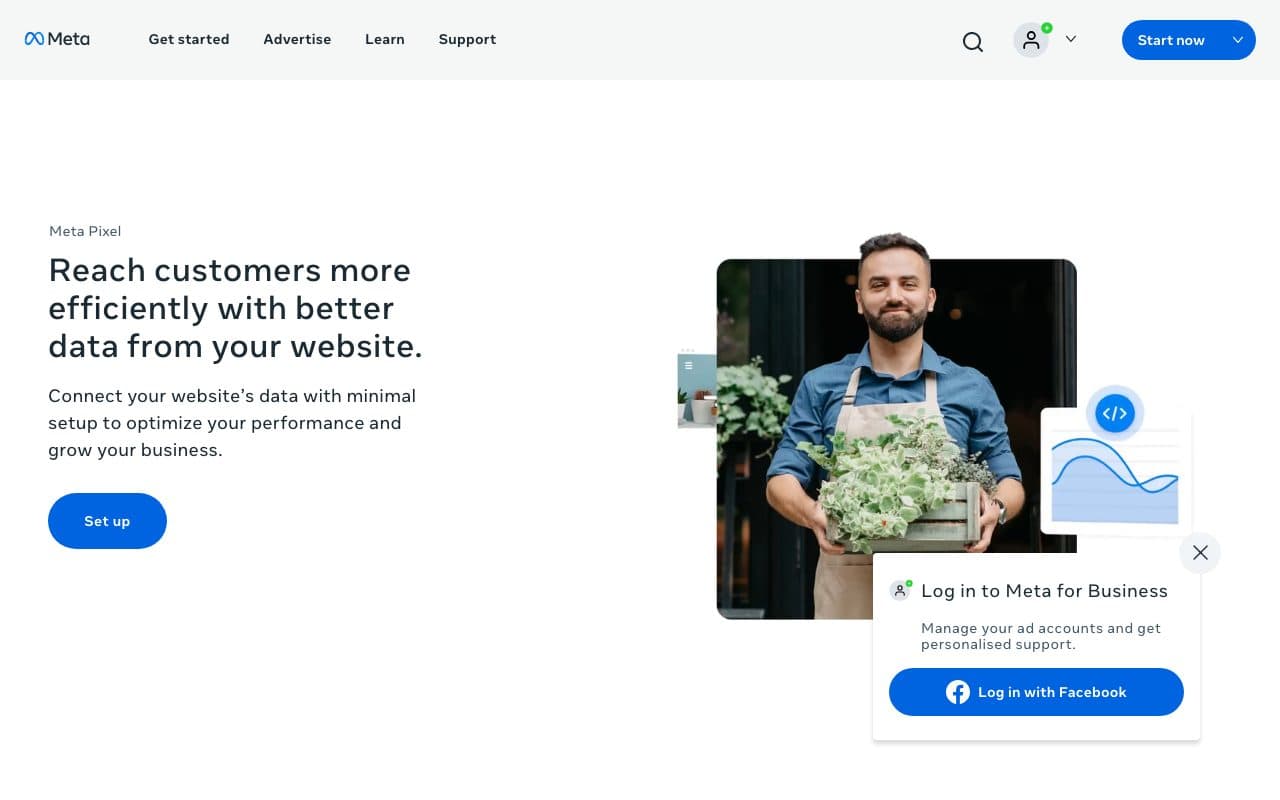
The Meta Pixel and Conversions API are the foundation of all Meta Ads tracking. The Pixel fires browser-side conversion events from your website; the CAPI sends server-side events directly from your infrastructure. Running both in parallel (Pixel + CAPI) is Meta's recommended setup: it recovers conversions missed by iOS 14+ tracking restrictions and improves Event Match Quality, which directly influences targeting and bidding accuracy.
Pros
- Free: included with every Meta Business account
- Directly feeds Meta's Advantage+ and Lookalike algorithms: tightest integration with Meta's ad system
Cons
- Pixel-based tracking still loses 30-60% of conversions to iOS 14+ ATT opt-outs and browser restrictions
- Tracks website conversion events only, no CRM pipeline attribution, no qualified-lead or closed-deal signals from CRM stages
- Requires developer to implement CAPI properly, not a no-code setup
Verdict
The essential free starting point every Meta advertiser needs. The CRM attribution gap (connecting Meta ad clicks to closed deals downstream) requires a dedicated tool like LeadJourney on top of the native stack.
3. Meta CAPI Gateway: Best Free One-Click Server-Side Baseline
Meta offers a one-click CAPI Gateway: a free, zero-configuration server-side integration available directly inside Meta Events Manager. No developer, no third-party tool, no code. For businesses running only Meta Ads with simple conversion events (page views, form fills), it provides basic server-side event forwarding at zero cost.
Pros
- Free: zero cost, available natively in Meta Events Manager
- One-click setup, no configuration, no developer, no third-party tool required
Cons
- Basic event forwarding only, no CRM integration, no pipeline attribution, no qualified-lead or closed-deal signals
- Meta-only: doesn't help with Google, LinkedIn, or Bing tracking
- No attribution reporting or cross-channel dashboard
Verdict
A useful free server-side upgrade for Meta-only advertisers. The moment you need CRM pipeline attribution or run ads on other platforms, a dedicated solution like LeadJourney is necessary.
4. Cometly: Best for B2B SaaS Tracking Meta Ads to Revenue
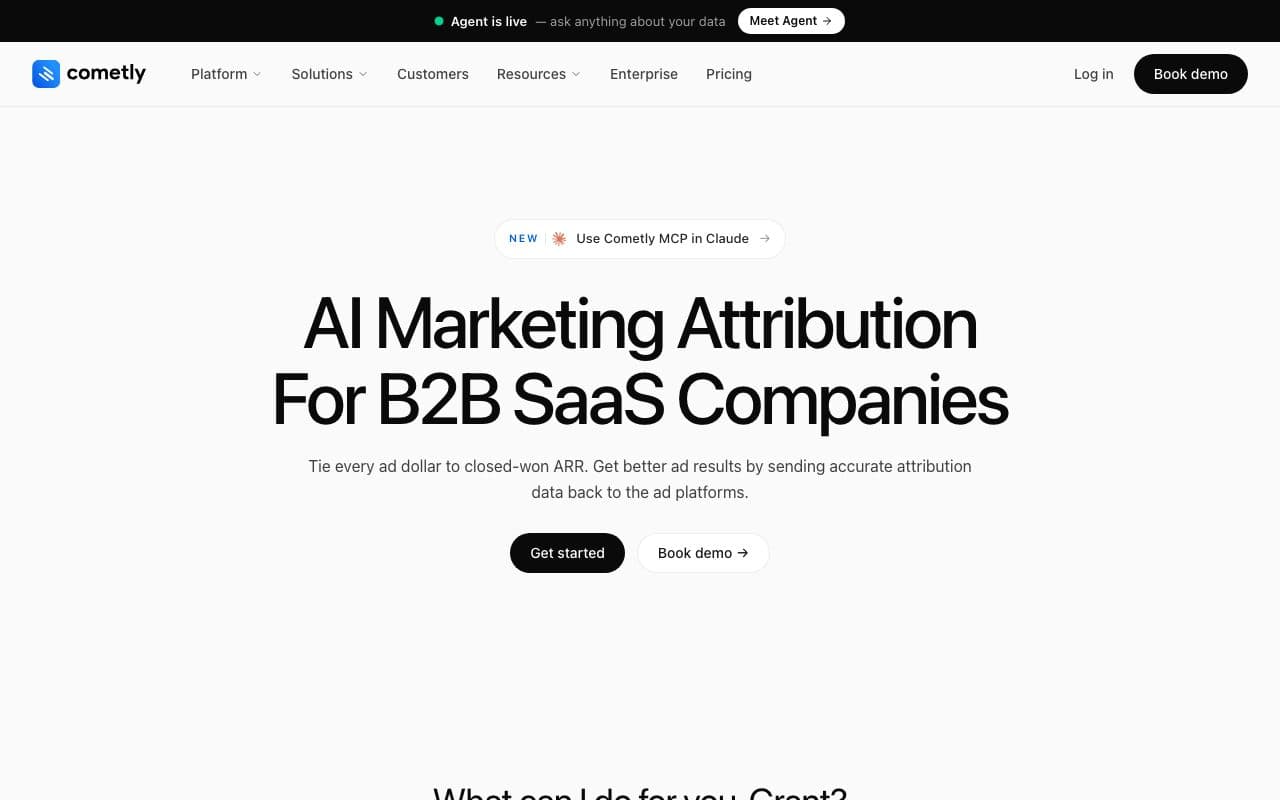
Cometly connects Meta Ads to CRM revenue via server-side tracking, reporting the complete journey from ad click to closed deal with AI-powered optimization recommendations. Its server-side tracking captures Meta conversions more accurately than pixel-only setups and syncs enriched conversion data back to Meta's Conversions API to improve its bidding algorithms: the closest feature competitor to LeadJourney.
Pros
- Server-side Meta tracking with CRM revenue attribution and AI optimization recommendations
- Syncs enriched conversion data back to Meta to improve Advantage+ and Lookalike targeting
Cons
- Multi-vertical focus: lead gen CRM pipeline-stage depth less specific than LeadJourney
- Custom pricing requires a demo call
Verdict
Strong Meta Ads tracking with CRM attribution for B2B SaaS. Lead gen businesses will find LeadJourney's pipeline-stage attribution and automated four-platform CAPI loop more specific to their business model.
5. Hyros: Best for High-Ticket Businesses with Long Meta Ads Sales Cycles
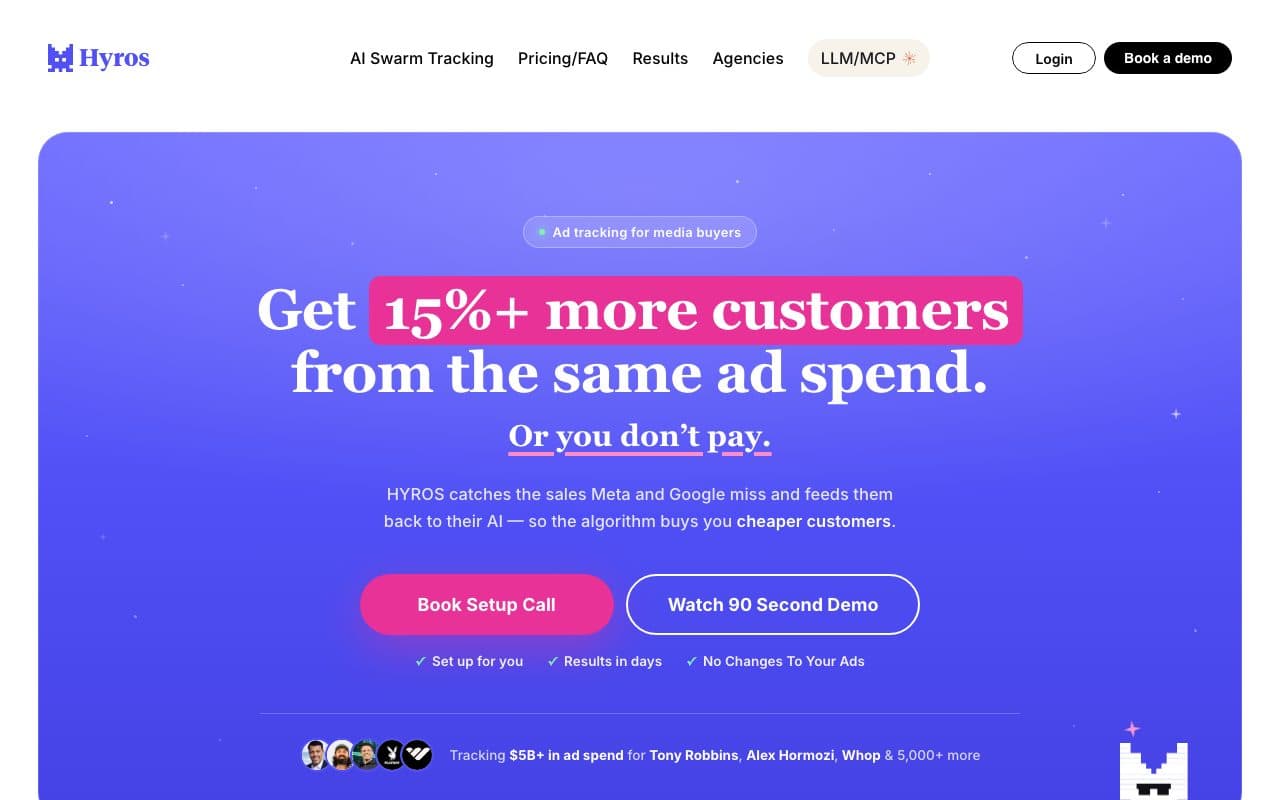
Hyros uses print-tracking technology and AI to maintain accurate Meta attribution across long sales cycles, tracking customers who take weeks or months to convert through multiple touchpoints including phone calls, email sequences, and webinars. Its attribution windows extend up to 365 days and connect phone-based conversions back to the originating Meta ad.
Pros
- 365-day attribution windows: tracks Meta conversions months after the original ad click
- Call tracking and print tracking: connects phone conversions back to original Meta ad source
Cons
- Premium pricing from $499/month: requires $10K+/month Meta spend to justify
- Primarily Meta and Google-focused: multi-platform loop for LinkedIn and Bing is limited
Verdict
The right choice for high-budget advertisers with very long consideration cycles and heavy phone-based sales processes. For most lead gen businesses, LeadJourney delivers comparable Meta attribution across more platforms at lower cost.
6. Ruler Analytics: Best for Offline Meta Ads Conversion Attribution
Ruler Analytics connects Meta Ads clicks to offline conversions: form fills, phone calls, and live chats that eventually close in your CRM. It tracks every visitor's journey across multiple sessions and matches the final closed revenue back to the original Meta campaign that sourced them.
Pros
- Connects Meta ad clicks to closed CRM revenue via call, form, and chat tracking
- Strong call tracking: keyword and campaign-level attribution for inbound phone conversions
Cons
- No automated CAPI loop: reports the attribution but doesn't send closed-deal signals back to Meta to retrain its algorithm
- No unified multi-platform dashboard: Meta reporting separate from Google, LinkedIn, and Bing
Verdict
A solid B2B and lead gen reporting tool for businesses where calls are a primary conversion. The gap vs. LeadJourney: Ruler reports the attribution but doesn't automatically close the algorithmic feedback loop back to Meta CAPI.
7. Triple Whale: Best for Shopify DTC Brands Tracking Meta Ads
Triple Whale is purpose-built for Shopify DTC brands running Meta Ads alongside Google and TikTok. Its Triple Pixel collects first-party data directly from your Shopify store, consolidating Meta, Google, TikTok, and email performance into one Shopify-revenue-based dashboard. Creative analytics show which specific Meta ad visuals are driving purchases, not just clicks.
Pros
- Shopify-native Meta attribution: Shopify order revenue as the source of truth for Meta ROAS
- Creative analytics: see which Meta ad creatives and copy variations are driving actual purchases
Cons
- Built for eCommerce only, not applicable for lead generation businesses with CRM-based sales funnels
- Requires Shopify, not useful without a Shopify store
Verdict
The best Meta Ads tracking tool for Shopify DTC brands. Completely wrong category for lead generation businesses: it was built for product purchases, not CRM pipeline sales.
8. Northbeam: Best for Large eCommerce Brands Needing ML-Powered Meta Attribution
Northbeam uses machine learning to provide independent attribution for Meta Ads at large eCommerce scale, bypassing Meta's self-reported metrics to give a platform-agnostic view of which campaigns are actually driving incremental revenue. It's designed for DTC brands spending $500K+/year on paid social who need attribution that doesn't rely on Meta's own data.
Pros
- ML-powered attribution: independent measurement that doesn't rely on Meta's self-reported numbers
- Designed for large DTC budgets: most accurate for brands spending significant Meta ad spend
Cons
- eCommerce-focused, not designed for lead generation businesses with CRM-based sales funnels
- High pricing: requires substantial Meta ad spend to justify the cost
Verdict
The most sophisticated Meta attribution for large eCommerce brands with the budget and scale to justify it. Not relevant for lead generation businesses.
9. Rockerbox: Best for Enterprise Omnichannel Meta Attribution
Rockerbox is a unified marketing measurement platform that combines multi-touch attribution, incrementality testing, and media mix modeling across Meta Ads, Google, TV, CTV, podcast, and offline channels. For enterprise brands running Meta alongside traditional media, it provides the only fully omnichannel attribution view on this list.
Pros
- Omnichannel attribution: Meta alongside TV, radio, podcast, and offline media in one measurement framework
- Incrementality testing: validates whether Meta Ads are driving lift that wouldn't happen otherwise
Cons
- Enterprise pricing: designed for brands spending seven figures on advertising annually
- Overkill for SMB lead gen businesses focused on digital paid ads
Verdict
The best measurement platform for enterprise brands running Meta alongside traditional media. Not relevant for SMB lead generation businesses.
10. Madgicx: Best Meta Ads Management with Creative Intelligence
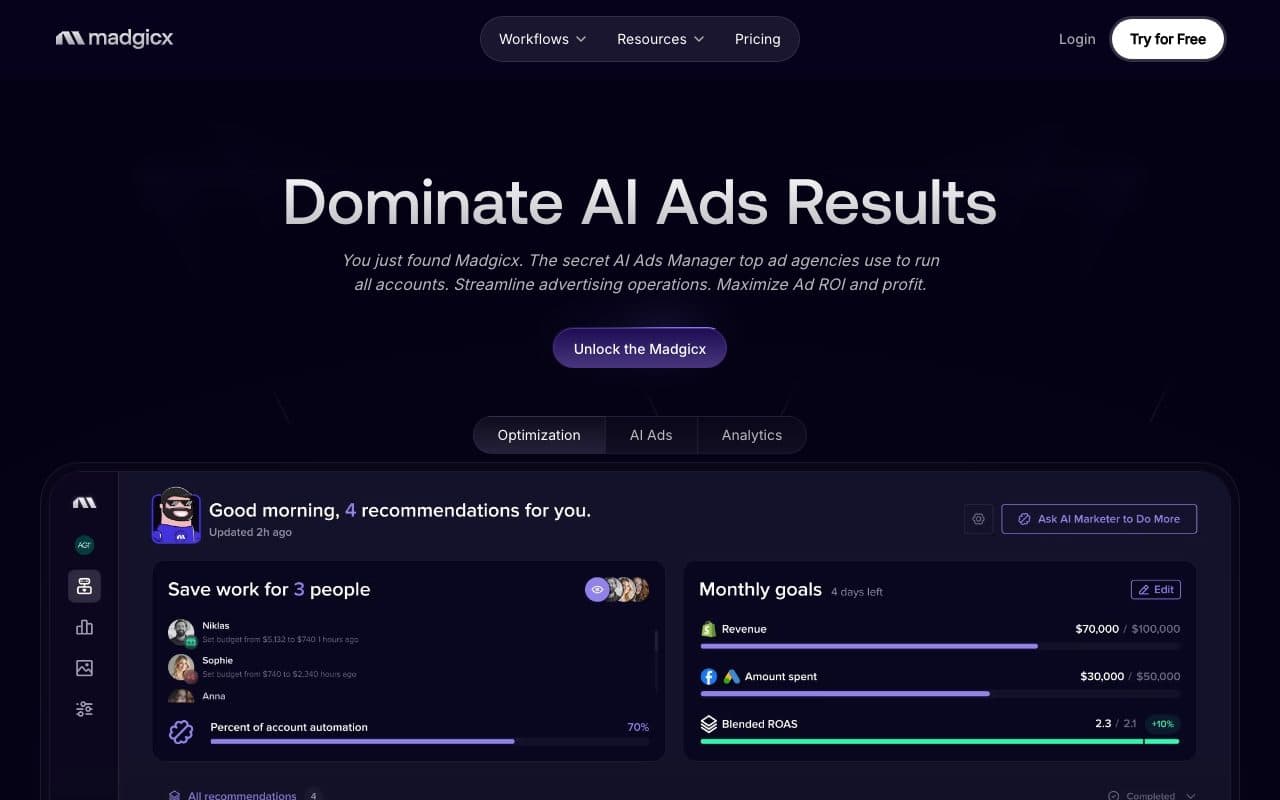
Madgicx is an AI-powered Meta Ads management platform that combines creative performance analytics, audience optimization, and campaign automation in one interface. Its Creative Intelligence dashboard breaks down Meta performance by visual elements, copy variations, and format types, showing which specific creative components are driving results. The AI Audience Finder analyzes your best customers and automatically builds lookalike audiences.
Pros
- Creative Intelligence dashboard: breaks down Meta performance by visual elements, copy, and format
- AI Audience Finder: automatically builds lookalike and interest-based audiences from your best customers
Cons
- Meta-only, no cross-platform tracking or unified dashboard with Google, LinkedIn, or Bing
- Campaign management tool: doesn't connect Meta ad clicks to CRM pipeline stages or closed-deal revenue
Verdict
A strong Meta-specific management and creative analytics tool. Works best when paired with accurate conversion tracking. LeadJourney provides the server-side accuracy and CRM attribution that makes Madgicx's optimization recommendations more meaningful.
11. AdEspresso: Best Simplified Meta Ads Management and A/B Testing for SMBs
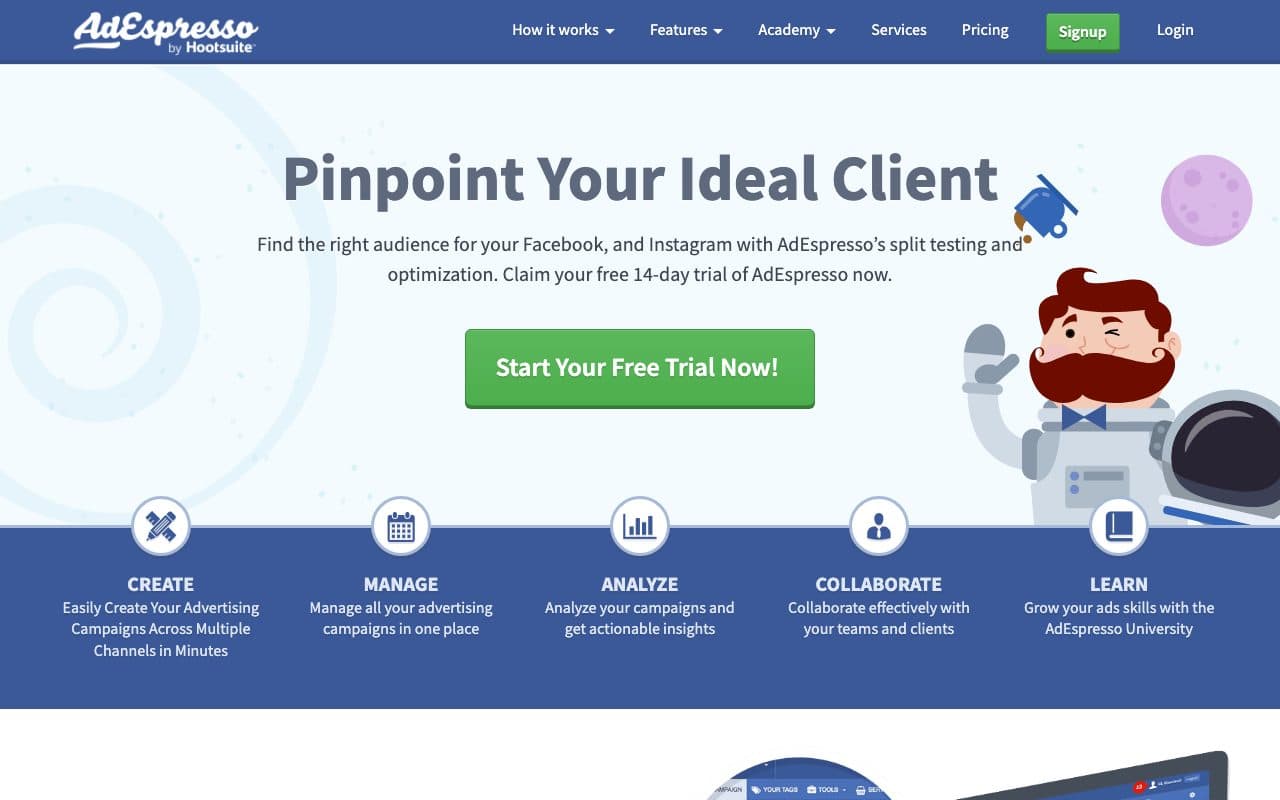
AdEspresso (by Hootsuite) simplifies Meta Ads campaign creation and A/B testing with a more accessible interface than native Meta Ads Manager. It's designed for small business owners and marketing teams who find native Meta Ads Manager overwhelming but need to run and test Meta campaigns without dedicated PPC expertise.
Pros
- Simplified campaign creation: easier interface than native Meta Ads Manager for non-PPC specialists
- Built-in A/B testing: structured split testing across audiences, creatives, and placements
Cons
- Campaign management tool only, no conversion accuracy improvement or CRM attribution
- Meta-only: doesn't help with Google, LinkedIn, or Bing tracking
Verdict
A good campaign management simplification tool for SMBs new to Meta advertising. Not a conversion tracking or attribution solution.
12. Supermetrics: Best for Pulling Meta Ads Data into BI Tools
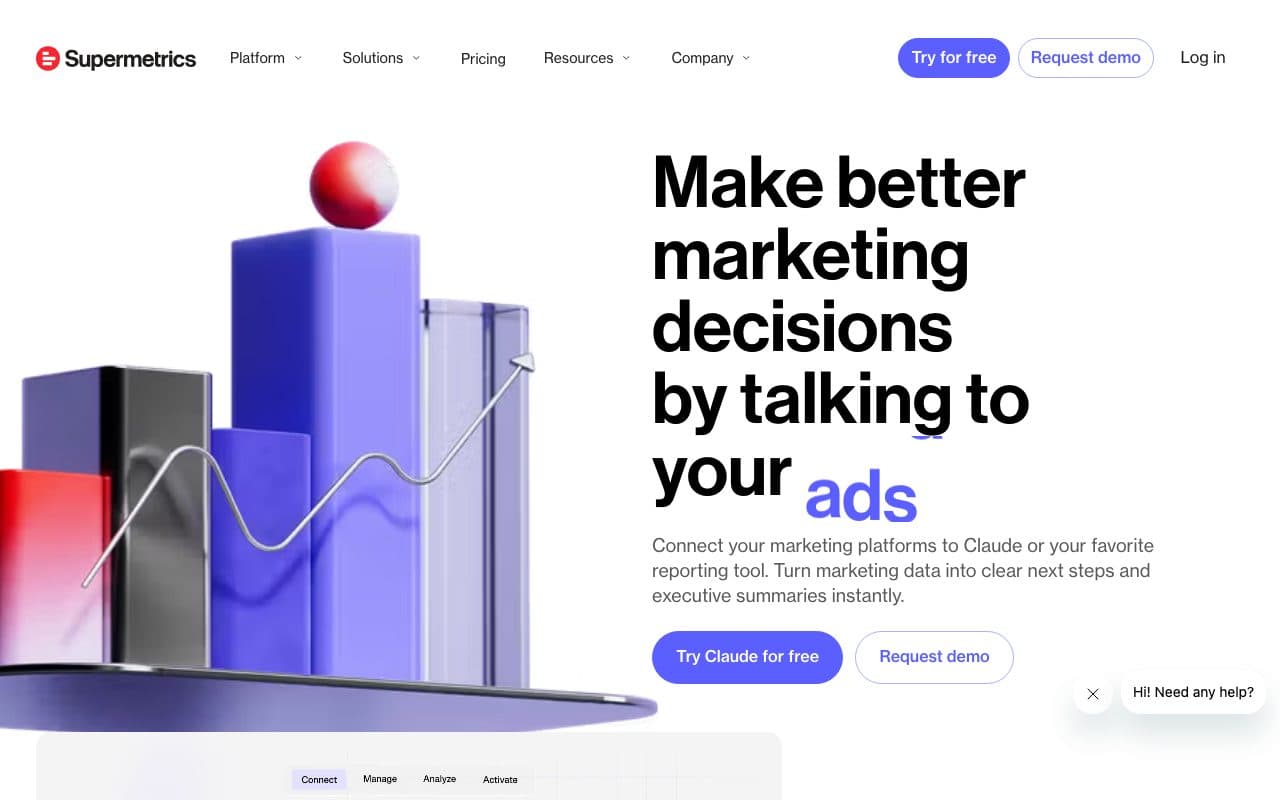
Supermetrics pulls Meta Ads data into Google Sheets, Looker Studio, Excel, BigQuery, and Snowflake automatically, eliminating manual data export work for teams building custom Meta Ads reports. It maintains consistent data schemas even when Meta updates its API, making it a reliable data pipeline for analytics-focused teams.
Pros
- Reliable Meta Ads data extraction: schema stays consistent even when Meta updates its reporting API
- 100+ data source connectors: Meta alongside Google, TikTok, LinkedIn, and more
Cons
- Data connector only: pulls Meta-reported numbers, no independent tracking or CRM attribution
- Priced by plan and connectors: from €39/month on annual billing, more on monthly billing
Verdict
The best tool for automating Meta Ads data extraction into BI tools. Not a tracking or attribution solution: it reports what Meta already tells you.
13. Wicked Reports: Best for Subscription Businesses Tracking Meta Ads LTV
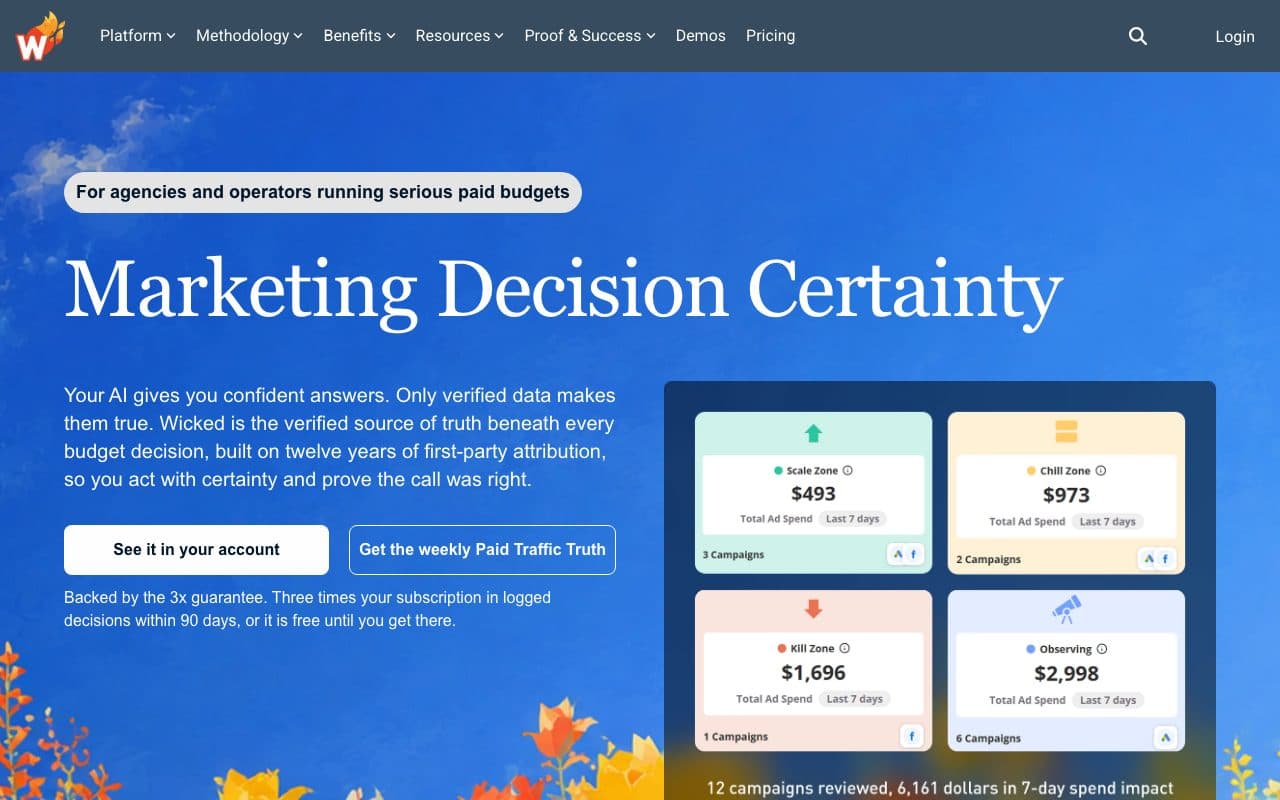
Wicked Reports connects Meta Ads spend to subscription revenue over time, showing not just which campaigns drove initial sign-ups, but which campaigns drove customers who stayed, renewed, and generated high lifetime value. It uses extended attribution windows and cohort analysis to show true Meta ROAS over months, not just the initial conversion.
Pros
- LTV attribution for Meta Ads: connects ad source to recurring revenue, renewals, and upsells over time
- Cohort-based Meta ROAS: see actual returns over months, not just initial conversion value
Cons
- Built for subscription LTV: not designed for one-time lead gen deal cycles
- No automated CAPI loop: doesn't send LTV or revenue signals back to Meta to retrain its algorithm
Verdict
The right Meta tracking tool for subscription SaaS and membership businesses optimizing for LTV. Not a fit for lead generation businesses with one-time deal cycles.
14. Meta Ad Library: Best Free Tool for Creative Research
Meta Ad Library is a free, public database of all active Meta ads across Facebook and Instagram, available to anyone, no account required. Advertisers use it for competitive research: see what competitors are running, which formats they're testing, how long ads have been active, and what messaging they're using.
Pros
- Free and public: no account or subscription required
- Comprehensive competitor research: see any brand's active Meta ads, formats, and how long they've been running
Cons
- Research tool only, no conversion tracking, attribution, or performance data for your own campaigns
- Manual and limited: no AI analysis, automated monitoring, or structured competitive intelligence
Verdict
A useful free starting point for ad creative research and competitive inspiration. Not a Meta Ads tracking tool. It tells you nothing about your own campaign performance or attribution.
15. Whatagraph: Best for Agencies Producing White-Label Meta Ads Reports
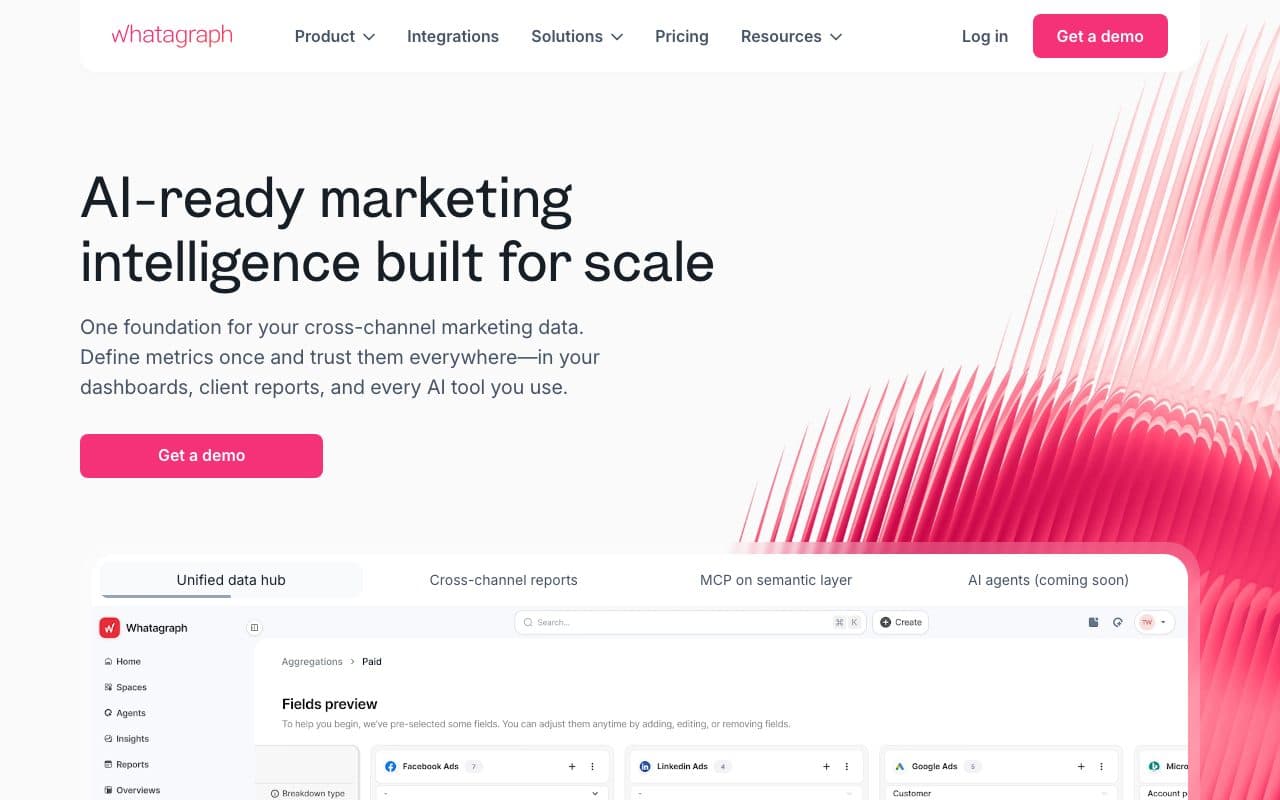
Whatagraph is a client reporting platform for marketing agencies, connecting Meta Ads alongside 55+ other channels, generating visually polished reports, and automating report delivery to clients on custom schedules. For agencies that manage Meta Ads for multiple clients and need to produce professional white-label reports at scale, it's a strong operational tool.
Pros
- Automated white-label Meta Ads reports: professional, branded reports delivered to clients automatically
- 55+ channel connections: Meta alongside all major marketing platforms in one report
Cons
- Dashboard tool only: aggregates Meta-reported data, no independent tracking or CRM attribution
- Reports what Meta claims: doesn't solve the attribution accuracy or CRM revenue connection problem
Verdict
An excellent tool for agencies that need to produce polished automated Meta Ads reports for clients. Not a conversion tracking or attribution solution for businesses needing to understand true ROI from Meta spend.
Why Most Meta Ads Tracking Falls Short for Lead Generation
Most Meta Ads tracking tools were built for eCommerce, where the conversion is a Shopify purchase that happens within Meta's 7-day attribution window. Lead generation is fundamentally different: the conversion is a CRM deal that closes days, weeks, or months after the original Meta ad click, through phone calls and sales conversations that are completely invisible to the Meta Pixel.
LeadJourney was built from the ground up for this model. It captures the fbclid at the Meta ad click, persists it server-side through the entire CRM pipeline, and fires qualified-lead and closed-deal signals back to Meta CAPI automatically when deals progress. This is the only way to give Meta's Advantage+ and Lookalike algorithms the revenue-quality signal they need to find real buyers, not form fillers.
Quick Decision Guide
- Lead generation business running Meta Ads + Google + LinkedIn + Bing: LeadJourney. Fbclid persistence, automated CAPI from CRM, four-platform dashboard, 21-minute setup
- Meta-only advertiser wanting a free server-side baseline: Meta CAPI Gateway (free one-click)
- B2B SaaS tracking Meta Ads to pipeline revenue: Cometly
- High-ticket business with 90+ day Meta Ads sales cycles: Hyros
- Shopify DTC brand running Meta Ads: Triple Whale
- Large eCommerce brand needing independent Meta attribution: Northbeam
- Meta Ads campaign management and creative analytics: Madgicx
- Agency producing white-label Meta Ads client reports: Whatagraph
In the glossary
FAQ
Frequently Asked Questions
The questions teams choosing a Meta Ads tracking tool ask most.
What is the best Meta Ads tracking tool for B2B lead generation?
LeadJourney is the best Meta Ads tracking tool for lead generation, B2B and B2C. It captures the fbclid server-side at 95%+ accuracy, connects each Meta click to CRM pipeline stages and closed revenue, and automatically sends CRM deal signals back to Meta CAPI.
What is the Meta fbclid and how do I track it?
The fbclid (Facebook Click ID) is the unique identifier Meta appends to ad URLs when someone clicks a Meta ad. It is the key to connecting Meta ad clicks to downstream conversions. LeadJourney captures it server-side at the moment of the click, before iOS 14+ or ad blockers can remove it.
Can I track Meta Ads for B2B lead gen without a developer?
Yes. LeadJourney deploys in 21 minutes via a JavaScript snippet on your landing pages plus a CRM webhook. No developer, no API configuration, no server setup required.
Why do Meta Ads report more conversions than my CRM?
Meta counts a conversion whenever it can attribute one, including view-through and modelled conversions, and the Pixel fires on the form submission whether or not the lead was real. Your CRM counts people. The gap widens further when the same lead is also claimed by Google, so a spreadsheet that adds both platforms up double counts. Matching conversions back to CRM records is the only way to see one number per lead.
Is the Meta Conversions API enough on its own?
It fixes the delivery of the event, not the definition of it. CAPI sends the conversion from your server, so ad blockers and iOS restrictions stop eating it, but if the event you send is still the form fill then Meta still optimises for form fillers. The upgrade is sending the CRM outcome instead: qualified lead, meeting booked, deal closed, with the fbclid attached so Meta can match it.
Keep reading
More from the blog
 Tool Comparisons
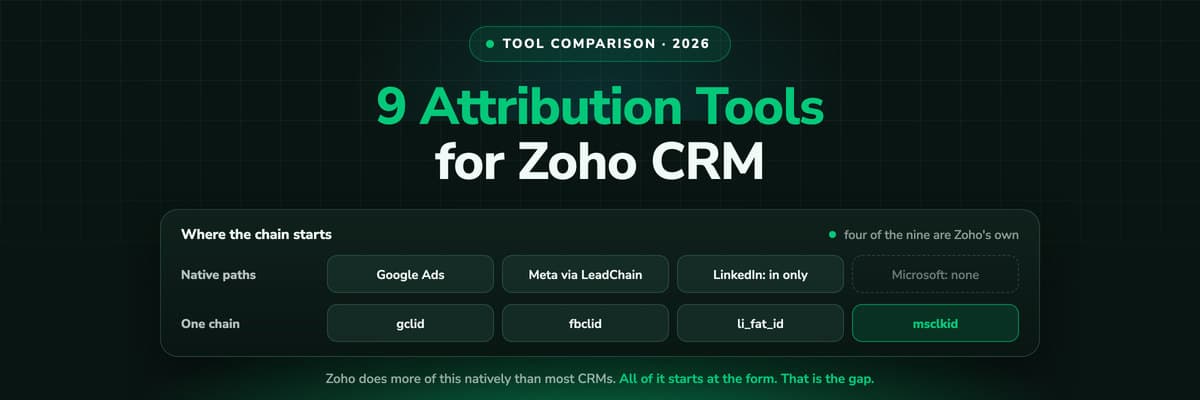
9 Best Marketing Attribution Tools for Zoho CRM in 2026
Four of the best attribution tools for Zoho CRM are Zoho products you may already pay for. Nine options compared on where the tracking starts, which ad platforms they cover, and whether the closed deal ever reaches the algorithm buying your traffic.Read the article13 min read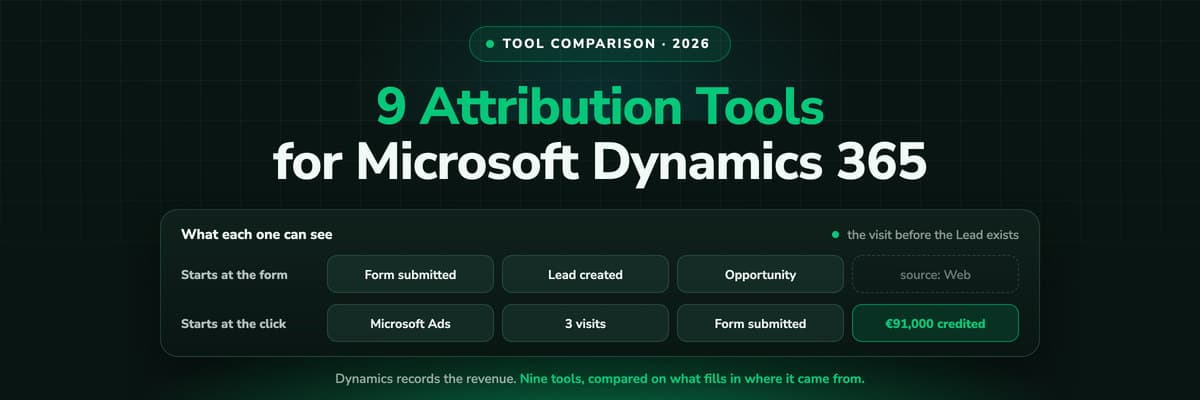 Tool Comparisons
9 Best Marketing Attribution Tools for Microsoft Dynamics 365 in 2026
Dynamics records the revenue and nothing fills in where it came from: Lead Source is a ten-option picklist and campaign spend is typed by hand. Nine tools compared on what each can actually see in a Dynamics environment, with pricing, pros, cons and a verdict.Read the article14 min read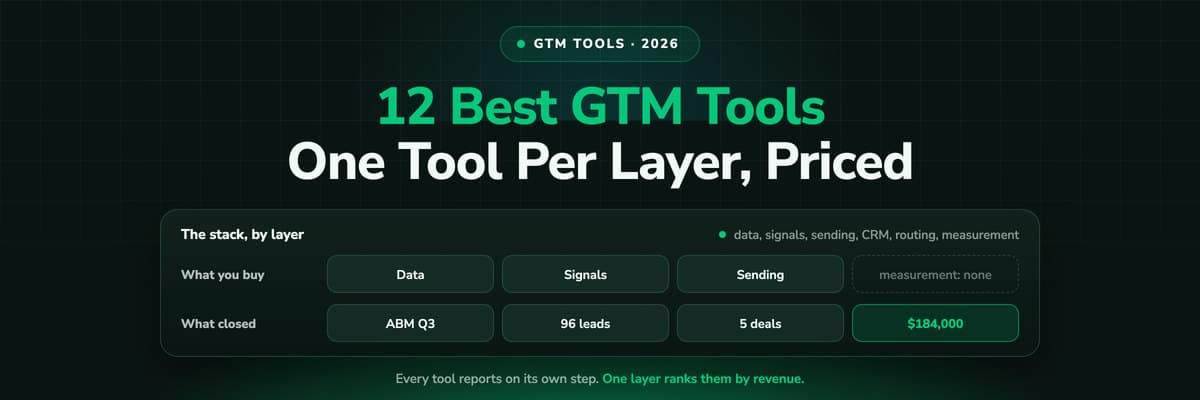 Tool Comparisons
12 Best GTM Tools and Software in 2026
A GTM stack is five or six tools that each report on their own step, which is why nobody can say which play produced the revenue. Twelve tools compared by the layer they own, with prices read this month and a verdict on who each one is for.Read the article16 min read
Beyond the Pixel
Ready to feed Meta's algorithm real buyer signals from your CRM?
LeadJourney is the Meta Ads tracking tool built around the lead and the closed deal, for lead generation and e-commerce businesses. Server-side fbclid persistence. Automated Meta CAPI from CRM. Cost-per-close by campaign, ad set, and creative. Atlas AI analyst. 21-minute setup.