





Skip to content

Free tool: conversion rate

Conversion rate calculator with the benchmark for your kind of page

Visitors and conversions for one page and period give the rate, its grade and the conversions a strong rate would add.

Calculate conversion rate

Visitors and conversions for the same page and period. Pick the context to grade the result.

Currency

Use the same unit your analytics reports.

Form fills, purchases, sign-ups: one event type.

Lead-gen landing page: average from 6%, strong from 12%.

Add the spend behind the traffic

What the visitors cost you.

Runs in your browser. Nothing you type is sent or stored.

The formula

The conversion rate formula

CVR=ConversionsVisitors× 100

480 conversions from 10,000 visitors is (480 ÷ 10,000) × 100 = 4.8 percent. One conversion per 21 visitors.

How to calculate conversion rate

Conversion rate is conversions divided by the visitors who could have converted, times a hundred. Two definitions to fix before you calculate anything. First, the conversion: one event type, defined once. A landing page has form submissions; a store has purchases; a SaaS site has trials. Adding newsletter signups to the purchase count doubles the rate and tells you nothing. Second, the denominator: sessions or users. Sessions is the common choice for paid landing pages, because each click is a session; users is better for a site a buyer visits several times.

Then hold both constant. The value of a conversion rate is the trend, and the trend only exists if this month's number was calculated the way last month's was.

What is a good conversion rate

It depends on what the page asks for. A lead magnet asks for an email and converts 12 to 25 percent of visitors. A B2B SaaS homepage asks for a demo and converts 2 to 5 percent. An e-commerce store asks for money and converts 2 to 4 percent. A paid search landing page, where the visitor typed the problem into Google ten seconds ago, converts 7 to 14 percent and can reach 20 on a tight offer. The calculator has a benchmark per page type because grading a lead magnet against a store, or the other way round, produces nonsense.

Within a page type, the ranges in the table below are wide medians. The most useful benchmark is your own page, last quarter, on the same traffic source. Paid social visitors convert at half the rate of paid search visitors on the same page, so a shift in traffic mix looks exactly like a page getting worse.

Why conversion rate is the most leveraged number on the account

Every cost metric downstream divides by conversions. Take a page from 5 to 7 percent and the cost per lead drops 29 percent, on the same spend, the same clicks and the same click price. The calculator's "at a strong rate" line shows what that would have meant on your traffic: the extra conversions, and the cost per conversion you would have reported. No bid change and no audience change moves the account that much.

The caveat is the count. Conversion rate has two inputs, and only the visitor count is reliable. If your tag or pixel misses a third of the conversions, a page that converts at 7 percent reads 4.7, and the team redesigns a page that already works. Compare your analytics conversion count with your CRM before starting a conversion rate project.

Benchmarks

Conversion rate benchmarks by page type

Visitor-to-conversion rates for the page types the calculator grades against. Paid search traffic sits at the top of each range, paid social at the bottom.

Blended from public conversion benchmarks and LeadJourney customer accounts in 2025 and 2026. Sessions as the denominator.

FAQ

Conversion rate, answered

The questions behind the search for a conversion rate formula.

What is the conversion rate formula?

Conversion rate = (conversions ÷ visitors) × 100. 480 conversions from 10,000 visitors is 4.8 percent. Use one conversion event and one definition of a visitor (sessions or users), and keep both the same over time.

What is a good conversion rate for a landing page?

For a lead-gen landing page, 6 to 10 percent is average and above 12 percent is strong. Paid search landing pages run higher, 7 to 14 percent, because the visitor was already searching for the offer; paid social pages run lower, 4 to 9 percent.

What is a good e-commerce conversion rate?

2 to 3 percent of sessions ending in a purchase is average for an online store; above 4 percent is strong. Returning visitors, email traffic and branded search convert far higher; cold paid social far lower.

Should I use sessions or users as the denominator?

Sessions for paid landing pages, where each click is a visit and you are measuring the page against the click. Users for a site a buyer returns to several times before converting, where sessions would understate the rate. Pick one and keep it.

Why is my conversion rate lower than my landing page tool says?

Different denominators and different counts. Page builders often count unique visitors and their own form submissions; GA4 counts sessions and tagged events; the CRM counts records that arrived. If GA4 shows fewer conversions than the CRM, your tag is missing some, and the real conversion rate is higher than the reported one.

How do I increase conversion rate?

Match the page to the ad it follows, one offer and one call to action, proof above the fold, a form that asks for the minimum, and a load time under two seconds on a phone. Then test one change at a time. Traffic quality moves the rate as much as the page does, so check the mix before crediting or blaming a design.

Conversions to revenue

See the conversion rate to a customer, not just to a form

LeadJourney follows every visitor from the click to the CRM stage, so you see which pages convert to leads that close. Book a demo on your own funnel.

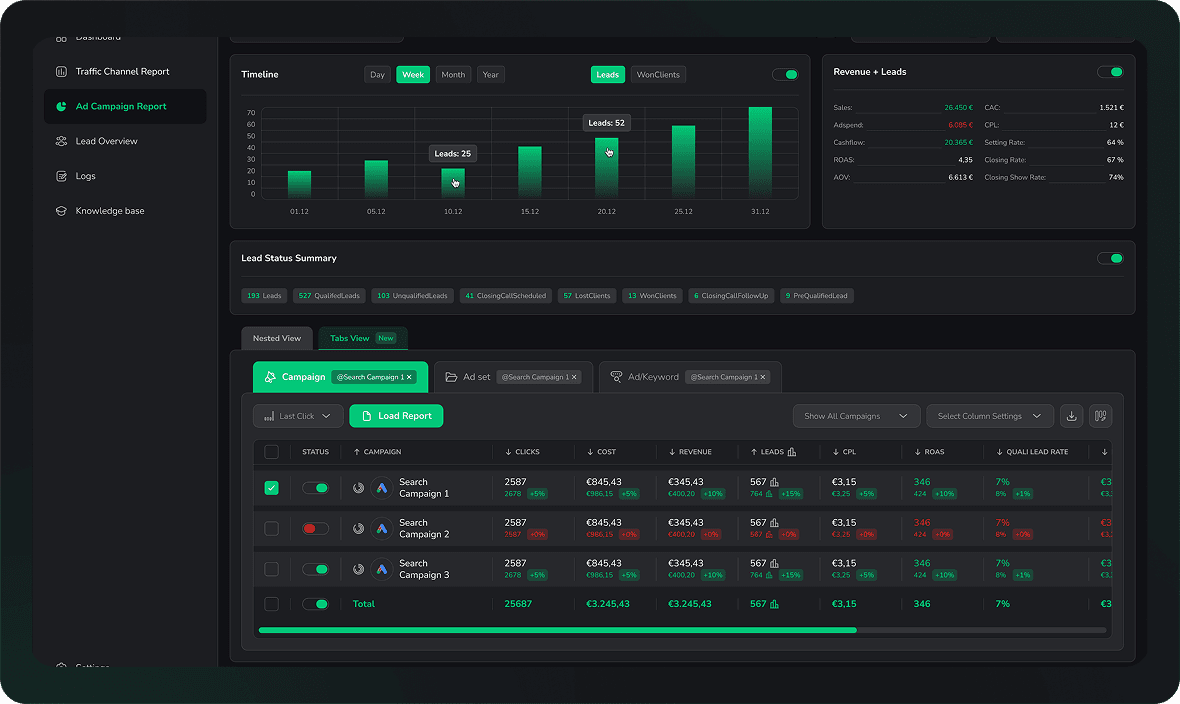
LeadJourney dashboard showing lead sources, campaign performance and attributed revenue side by side