






Skip to content

Free tool: the tracking gap

How much of your ad budget is optimised on conversions it cannot see

Enter the leads the platform reported and the leads your CRM received. The gap is the spend your bidding never learns from.

Price your tracking gap

One month, one set of campaigns: what the ad platform reported against what actually reached your CRM.

Currency

Spend on the campaigns you are comparing.

Conversions in the ads manager for the month.

What sales actually received, same month.

Add what a lead is worth

If you know it. Otherwise fill in the two fields below.

%

Share of leads that close.

Revenue per closed customer.

Runs in your browser. Nothing you type is sent or stored.

The formula

The tracking gap

Gap=CRM leads − platform-reported conversionsCRM leads× 100

Your CRM received 100 leads from campaigns that Meta credited with 64 conversions: the gap is (100 − 64) ÷ 100 = 36 percent. On €10,000 of spend, €3,600 was optimised on a signal that was missing more than a third of the outcome.

Why the platform and the CRM disagree

Ad platforms count conversions their pixel or tag could observe and attribute back to a click. Since iOS 14 and the App Tracking Transparency prompt, Safari's seven-day cookie limit, consent banners that a third of European visitors decline, ad blockers, and the ordinary habit of clicking on a phone and converting on a laptop, that observation fails for a large share of real conversions. The industry figure for Meta is 30 to 50 percent of conversions unreported; Google and LinkedIn lose fewer but still lose. The CRM, meanwhile, counts the records that arrived. It is the truth the platform is estimating.

The gap has two costs. The visible one is reporting: the CPL in the ads manager is too high, the channel looks worse than it is, and budget moves away from it. The invisible one is bidding. Smart Bidding, Advantage+ and Target CPA learn from the conversions they see, so a platform that sees 64 of 100 leads is optimising towards the 64 and away from the 36, and the 36 are not a random sample. They skew towards Safari, towards mobile, towards Europe, towards people who decline cookies. The algorithm is learning that those people do not convert.
What the calculator returns

Three numbers, and a fourth if you know what a lead is worth.

  • The gap as a percentage, which is the share of the month's spend the algorithm optimised without seeing the outcome.
  • The CPL the platform shows against the true CPL, spend divided by reported conversions against spend divided by CRM leads. The second is always lower, and it is the number to report.
  • The spend optimised blind, in money, monthly and annual, which is the cost of the gap in budget terms.
  • The revenue the algorithm is not bidding for, missing leads times value per lead, which is what a closed gap is worth in pipeline.

How to close the gap

Browser-side fixes (a cleaner pixel, a consent mode configuration) recover a little. The structural fix is to stop relying on the browser: record the lead on your server when the form arrives, match it to the click that brought it using the click id the platform put in the URL (gclid, fbclid, li_fat_id) and stored first-party, and send the conversion back to the platform through its server-side API with the CRM stage attached. Meta calls that the Conversions API, Google calls it offline conversion import, LinkedIn the Conversions API as well. Done properly, the platform sees close to 100 percent of leads, and the ones it sees are the ones that became customers, which is what the bidding should have been learning from all along.

That is what LeadJourney does, and this calculator exists to show what it is worth before the demo.

Benchmarks

Typical conversion loss by platform

Share of real conversions that a browser pixel or tag fails to report back to the platform, without a server-side feed. Ranges from public studies and LeadJourney customer audits.

Every account is different; the calculator uses your own numbers. A gap under 10 percent is unusually good; over 30 percent is common and expensive.

FAQ

The tracking gap, answered

The questions that come up when the ads manager and the CRM disagree.

Why does my CRM show more leads than Meta or Google reports?

Because the platform can only count conversions its pixel or tag observed and matched to a click. iOS tracking prompts, Safari cookie limits, declined consent banners, ad blockers and cross-device journeys all break that observation. The CRM counts the records that arrived, which is the real number.

How much does the average account lose?

Meta typically fails to report 30 to 50 percent of real conversions without a server-side feed, Google 15 to 35 percent, LinkedIn 25 to 45 percent. Enter your own numbers above; the average matters less than your gap.

Does the gap actually cost money, or is it just reporting?

Both. Reporting: the CPL looks too high and budget moves to the wrong channel. Bidding: automated strategies optimise towards the conversions they see, and the unseen ones are not random, so the algorithm learns to avoid the very people who convert on Safari, on mobile, or after declining cookies.

What if the platform reports more conversions than my CRM has?

Then the pixel is counting events that were not leads: duplicate fires, test submissions, bots reaching a thank-you page, or a view-through attribution window crediting ads nobody clicked. The algorithm is learning from phantoms. The fix is the same, a server-side feed of real CRM leads.

How do I close the gap?

Record leads server side, match them to the click id the platform placed in the URL, and send them back through the platform's server-side API (Meta Conversions API, Google offline conversion import, LinkedIn Conversions API) with the CRM stage attached. That is what LeadJourney does end to end.

Will the Conversions API alone fix it?

Only if the events you send are real and deduplicated. Sending the same browser events again server side improves match quality but does not add the conversions the browser never saw. The gain comes from sending the CRM's leads and deals, which the browser could never have observed.

Close the gap

Give the algorithm every lead your CRM receives

LeadJourney records leads server side, matches them to the click and sends them back to Meta, Google and LinkedIn with the deal stage attached. Book a demo and we measure your gap live.

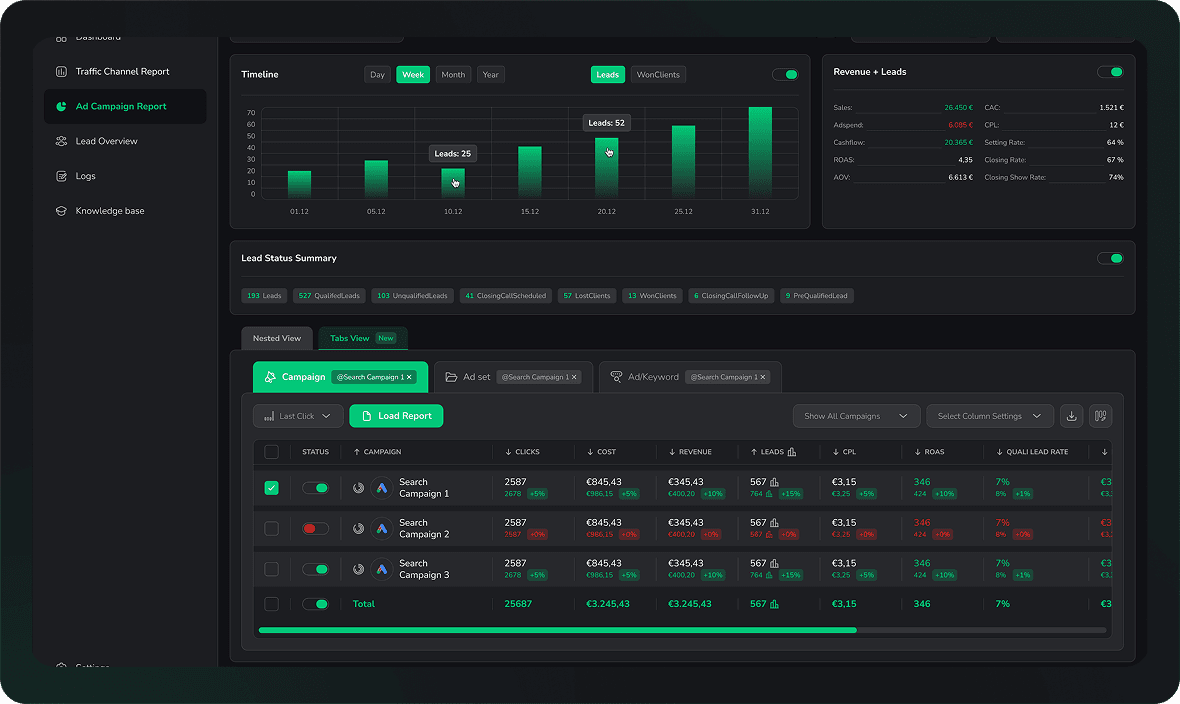
LeadJourney dashboard showing lead sources, campaign performance and attributed revenue side by side