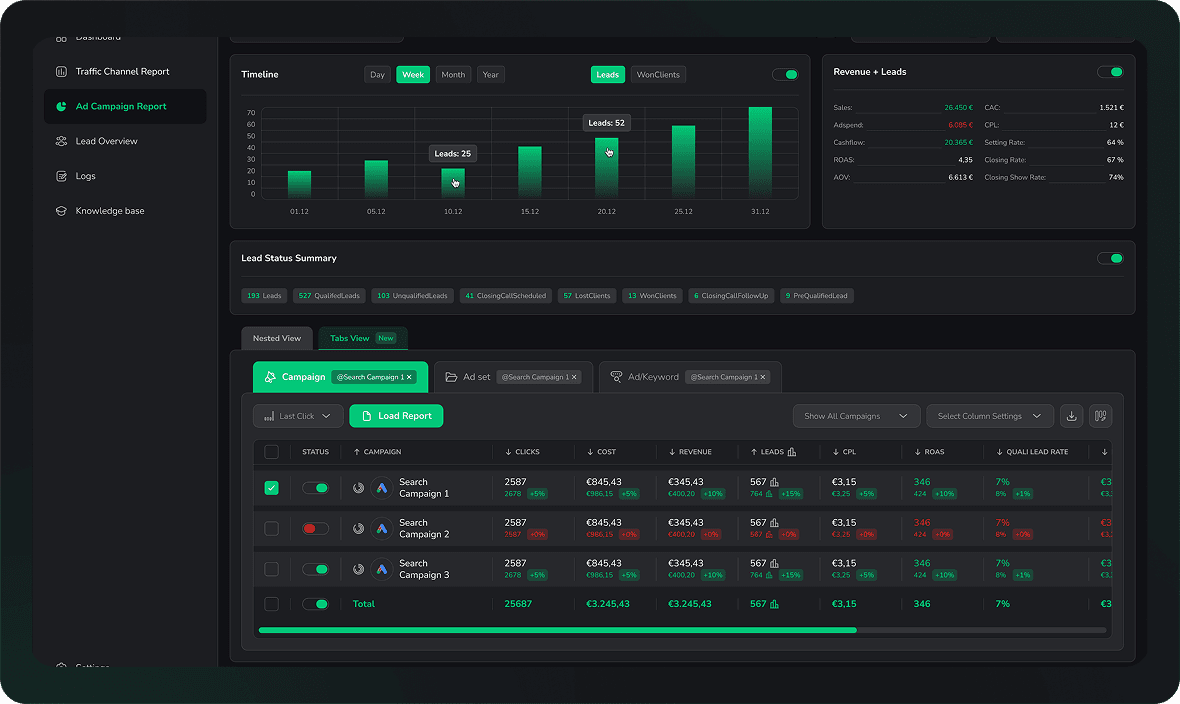















Lead Source
The CRM field that records which channel or campaign a lead came from. It is what every revenue-by-channel report groups on, and in most CRMs it is filled by whatever touched the record first, which is why it so often says Direct or Website.

Summarise this article with AI
Opens the page with a ready prompt in:


Nothing is sent until you pick a service.
In short
Lead source is the CRM field that records which channel, campaign or referral a lead came from. It is the value every revenue-by-channel report groups on, the one the sales team sees on the record, and the one that decides which marketing gets credit when the deal closes weeks later.
It is also, in most CRMs, filled by whatever touched the record first: a form tool that writes its own name, a tracking cookie that saw no referrer, a salesperson picking the top option. That is why so many pipelines report most of their revenue as Direct, Website or Other, and why fixing this one field changes budget decisions more than any dashboard.
The Field Itself
Every CRM has one, under a different name and with a different amount of structure.
- HubSpot'Original Source' with two drill-down fields, set by HubSpot's own tracking cookie and form tool, plus 'Latest Source'. Values like Paid Search, Organic Social, Direct Traffic, Offline Sources. Many teams add a custom 'Lead Source' property on top.
- Salesforce'Lead Source' is a picklist on the Lead, Contact and Opportunity objects, with defaults like Web, Phone Inquiry, Partner Referral and Other. It is empty unless something writes it.
- Pipedrive and the restA source field on leads and deals, often custom, usually a dropdown. Filled manually more often than not.
A useful lead source value carries more than one word. Channel (paid search), platform (Google Ads), campaign (spring-webinar-2026), the click ID and the timestamp of the visit are what a revenue report needs to be argued with; 'Website' is where the argument ends.
Why It So Often Says Direct or Website
- No referrer arrivedLinks opened from email clients, messaging apps and many in-app browsers send no referrer, and Safari trims cross-site referrers to the domain by default. The tracking sees a visit from nowhere and files it as Direct.
- The form tool wrote its own nameTypeform, Calendly, a website builder's native form: many of them create the CRM record and stamp the source as themselves or as 'Website'. The channel that sent the visitor never reaches the field.
- The UTM was on the landing page, the form was three pages laterUTM parameters live in the URL of the page they landed on. Unless something carries them to the form, the submission page has none, and the source becomes the site itself.
- The return visit convertedThe person clicked the ad on Tuesday and came back on Friday by typing the URL. Most CRM tracking records the converting session, and that session was direct. This is the last-click problem written into a database field.
- Somebody typed itInbound calls, event scans and imported lists are entered by hand, and the top of the dropdown wins. 'Other' is the most honest value in many CRMs.
First Source vs. Last Source
Because a person visits more than once, one field cannot hold the truth. CRMs that take attribution seriously keep at least two.
Original (first) source
The channel of the first recorded visit. HubSpot's 'Original Source' is this. It answers 'what found this lead' and it is only as old as the tracking cookie that recorded it.
Latest (last) source
The channel of the most recent visit, updated on every return. Useful for sales context, misleading as a revenue grouping because it drifts toward brand search and direct.
Converting source
The channel of the session in which the form was submitted. What most single-field CRMs actually store when they say 'lead source', whatever the label.
Report revenue by original source and by converting source, side by side, and the two columns tell the first-click and last-click story without a single attribution setting.
How the Field Gets Written
- Hidden form fields. The landing page captures UTMs, the click ID and the referrer into hidden inputs, and the form posts them into CRM properties. Breaks when the form is on a different page or in a different tool than the landing page.
- The CRM's own tracking script. HubSpot's tracking code sets a cookie on the first visit and links it to the contact on submission, which is how Original Source gets filled without hidden fields. It only sees what that cookie survived to see.
- An integration on record creation. A form or scheduling tool creates the record through the CRM's API and writes whatever it knows into the source field, often its own name.
- Manual entry. Sales picks a value. Consistent within one person, inconsistent across a team.
- An attribution tool writing the resolved journey. The tracking layer identifies the visitor across visits, resolves channel, campaign and click ID, and writes them to the record when it is created, then updates the deal as it moves. This is what a CRM integration built for attribution does, and the CRM lead source use case shows the fields it fills.
Whichever path writes the field, it should also write the click ID. The source name is for people; the click ID is what lets the closed deal go back to the ad platform as an offline conversion weeks later.
Before LeadJourney, we had no reliable tracking concept for our five-figure ad spend. We were manually building spreadsheet and CRM reports, inaccurate and time-consuming. Within two days, everything was set up. For the first time, I know exactly what I pay per lead and which campaigns actually bring in the best-qualified prospects.
 Florian BuckCEO, Klickkraft GmbH
Lead Source and the Revenue Report
The field matters because of when it is read. The lead is created today; the deal closes in six weeks; the quarterly review groups closed revenue by lead source. If €40,000 of that revenue sits under 'Website' and €8,000 under 'Paid Social', the paid social budget is at risk, even if every one of the 'Website' deals first arrived through a Meta ad. The pixel and CRM mismatch use case is this problem seen from the ad platform's side: the pixel counted the lead, the CRM lost the source, and the two reports cannot be reconciled.
Two habits fix most of it. Write the field automatically, from the visit, never from the form tool's name. And keep first and converting source as separate fields, so the revenue report can show what found the customer and what closed them without a debate about models. The CRM integrations that support this, Salesforce among them, are the ones that accept those fields on creation and on stage change.
Conclusion
Lead source is the smallest field with the biggest budget consequences. It is usually a last-click value written by whatever tool created the record, which is why it says Direct and Website so often. Fill it from the visit, not from the form tool; keep an original source next to it; store the click ID with both; and the revenue report finally groups on what the marketing actually did.
Keep exploring
Related glossary terms
Click ID (gclid, fbclid, msclkid)
A unique identifier an ad platform appends to the landing page URL when someone clicks an ad. It is the key that lets a conversion, even one that happens weeks later in a CRM, be matched back to the exact click.
Read the definition7 min read
UTM Parameters
Five query string tags (utm_source, utm_medium, utm_campaign, utm_term, utm_content) added to a link so analytics tools can record where a visit came from. You write them, so they are only as good as your naming discipline.
Read the definition7 min read
Last-Click Attribution
An attribution model that gives 100% of the credit for a conversion to the last touchpoint before it. Simple, universal and consistently generous to brand search, retargeting and direct traffic.
Read the definition6 min read
95%+ data accuracy, even with ad blockers and iOS
See which ads really created your
Connect your ad accounts and your CRM once, and every lead arrives with the campaign that created it already attached.