














First-Time Deposit (FTD)
The first real-money deposit a newly registered player makes with an operator. It is the event most iGaming CPA deals pay on, and the one an affiliate most needs to tie back to the click.

Summarise this article with AI
Opens the page with a ready prompt in:


Nothing is sent until you pick a service.
In short
A first-time deposit (FTD) is the first real-money deposit a player makes after registering with a casino, sportsbook or poker operator. For an iGaming affiliate it is the line between a sign-up and a customer: the registration costs the operator a welcome bonus, the deposit earns it money, so the deposit is what the operator pays the affiliate for.
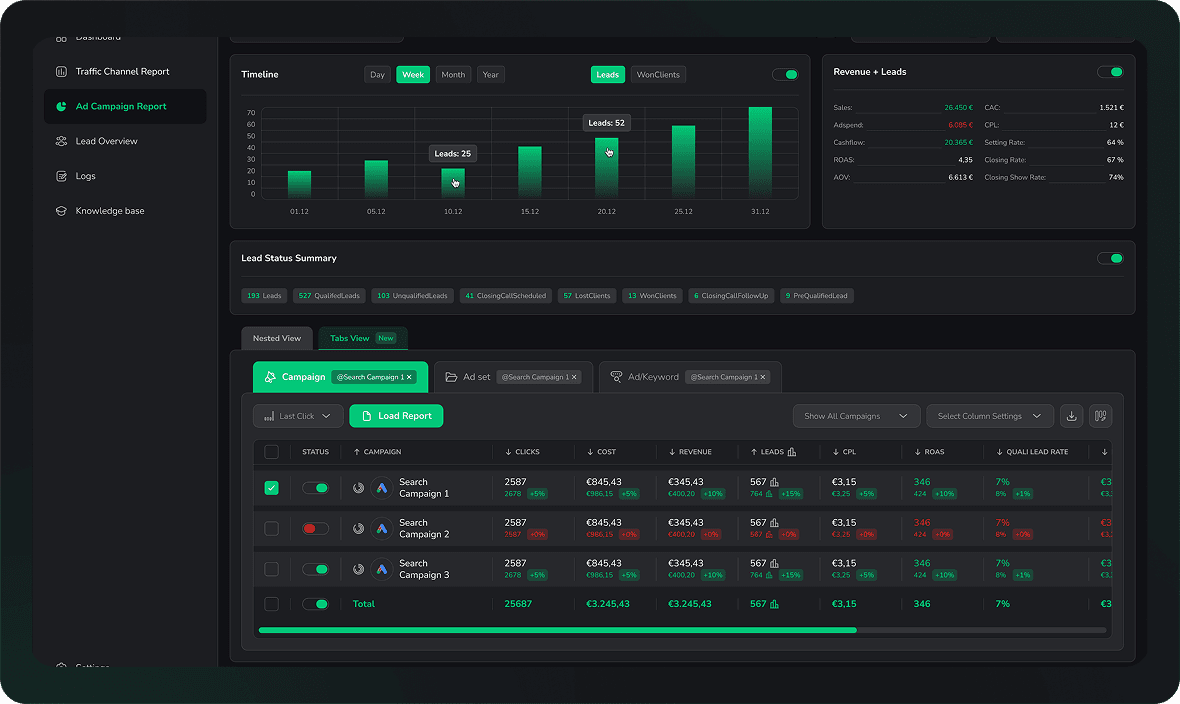
The trouble is where it happens. The FTD takes place in the operator's cashier, days after the click, on a site the affiliate cannot put a script on. The partner program reports how many FTDs a tracking link produced, not which page, keyword or streamer sent them. Getting that answer is a tracking job, and it runs on the click ID and the postback URL.
What Counts as an FTD
An FTD is a deposit event, not a person: the first time a player's account is funded with real money. A player who registers, claims free spins and never pays in has no FTD. A player who deposits three times has one FTD and two redeposits. What exactly counts is set by the operator's program and written into the affiliate's deal, so two programs can mean slightly different things by the same three letters.
- The deposit has to clear. A deposit that is declined, charged back or reversed is normally not an FTD, or is reversed later, which is one reason the count on the statement moves.
- It belongs to a new player. A player the operator already knew (a returning customer, a duplicate account, somebody another affiliate brought) is usually excluded under the program's terms.
- It is dated when the money arrives, not when the player registered. A reg on the 28th and an FTD on the 3rd land in two different months.
FTD vs. Reg vs. NDC
Three words describe the same player at different depths, and a report that blurs them blurs the only thing that matters: whether the traffic deposits.
Reg (registration)
The player created an account. Cheap to produce, especially on bonus keywords, and paid for by nobody: a reg that never deposits is a welcome bonus the operator gave away.
FTD (first-time deposit)
The player funded the account for the first time. The event a CPA deal pays on, and the conversion worth optimising on.
NDC (new depositing customer)
The player who made that first deposit. Most programs use NDC and FTD interchangeably; where they differ, FTD names the event and NDC the person counted once per period.
After the FTD come redeposits, every deposit that follows. On a CPA deal they earn the affiliate nothing; on a rev share or hybrid deal they are part of the player value the commission is computed from. Some deals add a QFTD, a qualified FTD, which only counts once the deal's conditions are met (see the next section).
CPA Paid on FTD, and the Baseline
On a CPA deal the operator pays a fixed amount per player, and the event that triggers the payment is the FTD. It is cost per acquisition seen from the seller's side: what the operator pays per acquired player is what the affiliate earns per FTD. Rev share pays a share of the operator's net gaming revenue (NGR) from the player instead; a hybrid deal pays a smaller CPA plus a smaller share.
Almost no CPA is paid on any FTD. The deal sets a baseline: a minimum the deposit has to reach, and often a minimum of play, before the FTD qualifies. A deal reading "€200 CPA, €20 baseline" (an example, not a market rate) pays nothing for a €10 first deposit, and the player still counts as an FTD in the program dashboard. That is why the number of FTDs and the number of paid CPAs on a statement are often not the same, and why a tracker that can receive a qualified FTD as its own event shows the affiliate the number they are actually paid on.
Why the statement disagrees with your count
Baselines not met, deposits reversed, duplicate players excluded, a different month boundary: each is a legitimate reason for fewer paid CPAs than counted FTDs. A click log with every postback and the player it matched is what turns "shaving or my count?" into a conversation with the AM that has facts in it.
FTD Rate and Cost per FTD
Two numbers decide whether a traffic source is worth scaling. The first says how much of the traffic deposits; the second says what each depositor cost to buy.
94 FTDs ÷ 312 regs = a reg to FTD rate of 30.1%.
€4,560 of Google Ads spend ÷ 94 FTDs = a cost per FTD of €48.51, against a €200 CPA.
Blended across a campaign, those numbers look healthy: €4,560 spent, €18,800 earned. Split by keyword, they can tell a different story. In the same illustrative month, an exact match bonus keyword spends €1,820 for 41 FTDs, about €44 each, while a broad match keyword spends €1,340 for 9 FTDs, about €149 each. Both are under the CPA; at €200 a CPA one returns €8,200 on €1,820 and the other €1,800 on €1,340. The blended figure called the whole campaign a winner because it was a winner on average.
Some affiliates also track the click to FTD rate (FTDs over clicks), which folds the landing page and the operator's sign-up flow into one number. The reg to FTD rate is the sharper one for traffic quality: a source with plenty of regs and few FTDs is sending bonus hunters.
How an FTD Is Tracked and Attributed
The affiliate cannot pixel the cashier, so the FTD reaches the affiliate's tracker the other way round: the operator's partner program sends it, server to server, carrying an identifier the affiliate gave it at the click.
- A visitor clicks from the affiliate's review page, bonus keyword or stream. The tracker records the click on the affiliate's own domain and gives it a click ID.
- The click ID travels in the tracking link to the operator, in the sub-ID or variable parameter the program provides. The program stores it on the player when they register.
- The player registers. The program fires a reg postback with the click ID. Three days later the player deposits, and the program fires an FTD postback with the same click ID and, where the program supports it, the amount.
- The tracker matches both postbacks to the original click, so the FTD lands on the page, keyword, stream and geo that started it, days or weeks after the visit.
What the postback is, how its macros are filled and what to do about duplicates is on the postback URL page; a setup walk-through for partner programs is in iGaming affiliate postbacks, and why the click has to be recorded server-side in the first place is in server-side tracking for iGaming.
Attribution then decides which click gets the FTD when a player came more than once: a search, the review page, a brand search a week later. A tracker that keeps the whole path can credit the review page that did the work rather than the brand click that happened last. The program, by contrast, only knows which tracking link the player arrived through.
Sending FTDs to the Ad Platforms
A campaign optimised on clicks or regs buys clicks and regs. If the affiliate is paid on FTDs, the bidding should see FTDs. The FTD postback can be passed on to Google Ads as an offline conversion and to Meta through the Conversions API, matched on the platform's own click ID captured on the first visit, with the CPA or the deposit amount as the value. Google accepts an imported conversion up to 90 days after its click; Meta takes events up to seven days old, so the FTD has to be sent soon after it arrives.
- Send the FTD, not the reg. A reg as the optimisation event teaches the algorithm to find people who register, which on bonus keywords means bonus hunters.
- Use a qualified FTD where the deal has a baseline, so the platform learns from the players that pay.
- Keep the value honest. The CPA you are paid is a cleaner value than a deposit amount the player may withdraw tomorrow.
The ad policies come first
Google only allows online gambling ads and gambling-promoting content in the countries it lists, after certification for each, never targeting minors and with responsible gambling information on the landing page. Meta requires its permission before an online gambling ad runs. Which traffic you are allowed to buy is between you, the platform's policy and the licence in the geo; tracking only measures the traffic that is allowed.
Conclusion
The FTD is the event an iGaming affiliate is paid on and the one the affiliate sees last, in a dashboard that does not say where it came from. Count it against regs to judge traffic quality, against spend to judge cost, and make sure every FTD carries the click ID back so it lands on the source that earned it. The iGaming tracking software page shows how LeadJourney does that across operators, brands and geos.
Keep exploring
Related glossary terms
Postback URL (S2S Postback)
A URL on your tracker that another system calls, server to server, when a conversion happens, filling in the click ID and the conversion details. It reports a sale, a deposit or an install without anything running in the visitor's browser.
Read the definition7 min read
Cost Per Acquisition (CPA)
Advertising spend divided by the number of conversions it produced. Which action counts as the acquisition decides whether the number means anything.
Read the definition5 min read
Click ID (gclid, fbclid, msclkid)
A unique identifier an ad platform appends to the landing page URL when someone clicks an ad. It is the key that lets a conversion, even one that happens weeks later in a CRM, be matched back to the exact click.
Read the definition7 min read
95%+ data accuracy, even with ad blockers and iOS
See which ads really created your
Connect your ad accounts and your CRM once, and every lead arrives with the campaign that created it already attached.