













BlogAlternatives
7 Best ZenABM Alternatives in 2026
ZenABM sorts the accounts engaging with LinkedIn ads into funnel stages, but engagement is not revenue and its LinkedIn API data never reaches the CRM deal. Seven alternatives that connect LinkedIn spend to pipeline and closed revenue, with server-side click IDs and a CAPI loop.


Contents
Summarise this article with AI
Opens the page with a ready prompt in:


Nothing is sent until you pick a service.
ZenABM gives B2B marketing teams an ABM-style interface for LinkedIn campaigns, sorting accounts into funnel stages like Aware or Interested and providing an AI chatbot to query campaign data. For teams that want a tidy visual narrative around LinkedIn activity, it has appeal. The problem: those funnel stages are built on engagement signals, not revenue. A company that interacts with your LinkedIn ads consistently but never converts looks impressive in ZenABM, and you'd never know the difference until the quarter closes with no pipeline to show.
The deeper technical issue: ZenABM runs on LinkedIn's older API infrastructure, which limits data completeness and makes it impossible to connect ad impressions to CRM pipeline stages and closed revenue reliably. If your team needs to prove that LinkedIn ad spend actually produced customers and not just account engagement, you need a platform that goes further. This comparison covers the best ZenABM alternatives for B2B teams that need real attribution, not just activity dashboards.
Quick Summary: Best ZenABM Alternative in 2026
In short
LeadJourney is the best ZenABM alternative for B2B companies that need to connect LinkedIn ad spend to actual pipeline and closed revenue. Where ZenABM shows account engagement stages, LeadJourney tracks every touchpoint server-side at 95%+ accuracy and connects them to CRM deal stages, showing cost-per-close and deal revenue per LinkedIn campaign, ad set, and creative. Automated CAPI closed loop to LinkedIn and Meta, Google, and Bing simultaneously. Per-client workspace model for agencies. 21-minute setup. Rated 5.0 on Trustpilot, top-rated on G2 and Capterra. 14-day free trial.
The 7 best ZenABM alternatives at a glance
| Tool | Key features | Best for | Pricing |
|---|---|---|---|
| Rank 1LeadJourney | Server-side 95%+; CRM pipeline attribution; 4-platform CAPI; revenue vs. engagement stages | B2B teams connecting LinkedIn spend to CRM revenue | 14-day free trial |
| Rank 2HockeyStackvs LeadJourney | AI revenue intelligence, account-level journey tracking, pipeline | Enterprise B2B revenue intelligence | On quote |
| Rank 3Dreamdatavs LeadJourney | Multi-touch attribution, CRM pipeline connection, account-level data | Multi-channel B2B attribution | Free plan, paid on quote |
| Rank 4Factors.aivs LeadJourney | Account-level intelligence, multi-channel attribution, CRM pipeline | Account intelligence + attribution | From $199/mo |
| Rank 56sense | Intent data, predictive account scoring, multi-channel orchestration | Enterprise ABM with intent data | $100K+ annually |
| Rank 6Demandbase | Account intelligence, intent data, advertising, sales intelligence | Enterprise GTM orchestration at scale | $100K+ annually |
| Rank 7Ruler Analyticsvs LeadJourney | Call tracking, CRM revenue sync, multi-channel attribution | Phone-call-centric B2B attribution | From £299/mo |


1. LeadJourney: Best ZenABM Alternative for Full-Funnel B2B Revenue Attribution
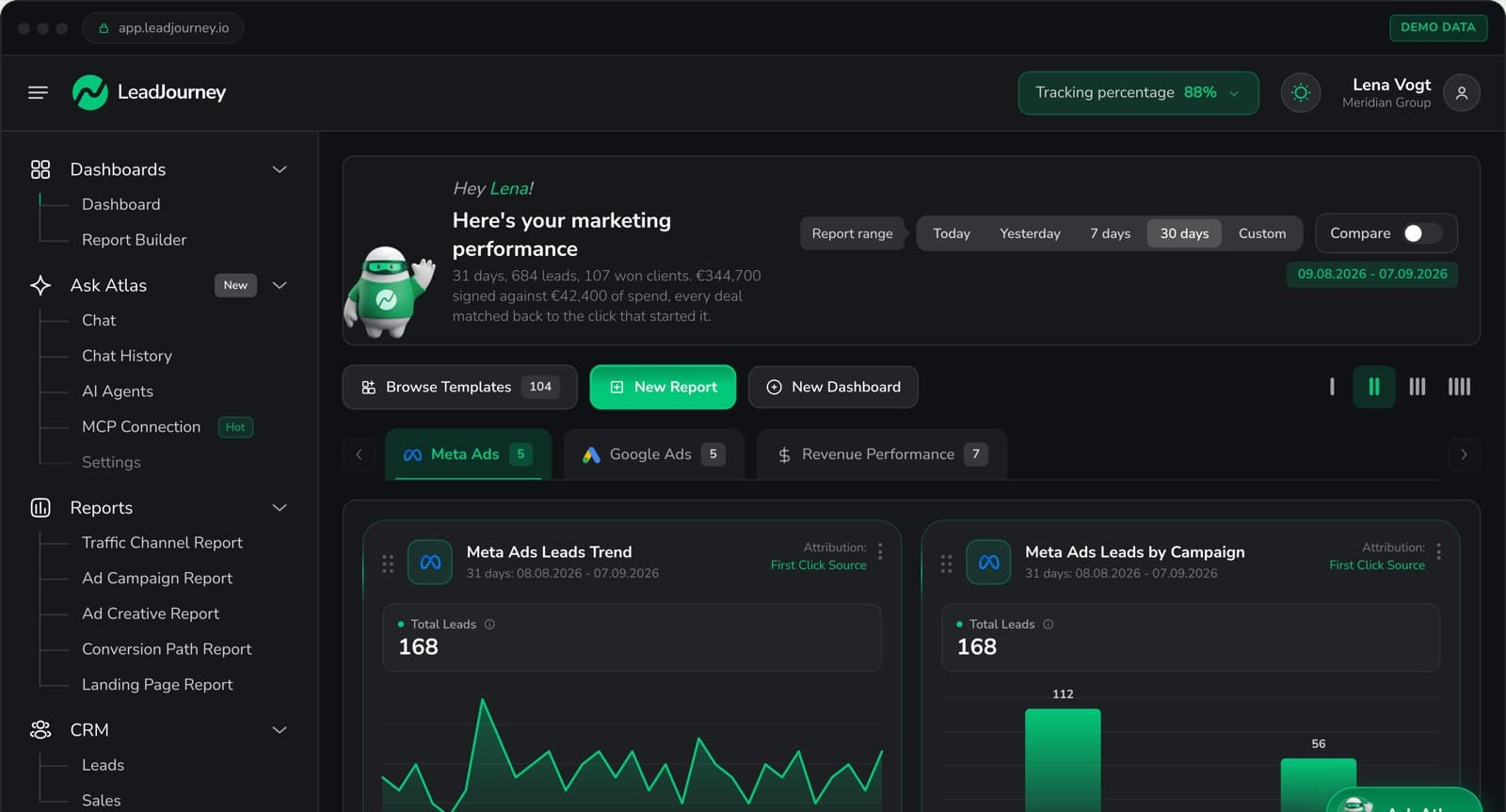
LeadJourney solves the core problem ZenABM can't: it connects LinkedIn advertising activity to actual revenue outcomes. Instead of sorting accounts into engagement stages, LeadJourney tracks every LinkedIn ad click server-side at 95%+ accuracy and matches it to the lead's journey through your CRM: qualified lead, appointment booked, deal closed. The result: you know which LinkedIn campaigns, ad sets, and creatives produced paying customers, and what the cost-per-close was for each.
The CAPI advantage that ZenABM doesn't have: when a deal advances in your CRM, LeadJourney automatically sends that conversion signal to LinkedIn's CAPI, and simultaneously to Meta, Google, and Bing. The ad algorithms retrain on your real buyers, not engagement signals. LinkedIn campaigns get smarter over time as more deals close. That's the difference between a dashboard that shows what happened and a platform that makes future campaigns better automatically.
For agencies managing multiple B2B clients on LinkedIn, the workspace model is cleaner than anything ZenABM offers: each client gets an isolated workspace with its own tracking, attribution model, and reporting. Central overview, per-workspace pricing, no data mixing.
LeadJourney vs. ZenABM: Key Differences
- LeadJourney reports cost-per-close and actual deal revenue per campaign. ZenABM reports which accounts moved through engagement stages like Aware or Interested, useful for ABM context but not the same as revenue attribution.
- LeadJourney captures LinkedIn click IDs server-side before iOS 14+ and browser-side interference can strip them, reaching 95%+ accuracy. ZenABM relies on LinkedIn's API engagement data which is less complete for tracking individual user journeys.
- When a deal closes in the CRM, LeadJourney automatically sends that conversion signal to LinkedIn, Meta, Google, and Bing at the same time. ZenABM has no CAPI activation.
- LeadJourney tracks Meta, Google, LinkedIn, Bing, organic channels, email, and AI search all in one unified model. ZenABM covers LinkedIn only.
- LeadJourney connects every touchpoint to qualified leads, appointments, and closed deals in the CRM. ZenABM connects to account engagement signals, not individual deal outcomes.
- LeadJourney is live in 21 minutes with no developer needed. ZenABM requires a more involved integration process.
- 14-day free trial, no credit card
Verdict
LeadJourney is the best ZenABM alternative for B2B teams that need to prove LinkedIn ad spend produces revenue, not just account engagement. It tracks every LinkedIn touchpoint to CRM pipeline and closed deals, closes the CAPI loop to improve targeting, and covers all channels in one attribution model.
What Real Users Say About LeadJourney
Hands down the best B2B attribution platform for agencies.
Honestly the best B2B attribution platform I've used. The Customer Journey Report finally shows us which touchpoints drive results, and the ad tracking software is rock solid.
Read verified reviews on Trustpilot, G2, Capterra, and leadjourney.io/testimonials.
2. HockeyStack: Best for Enterprise B2B Revenue Intelligence
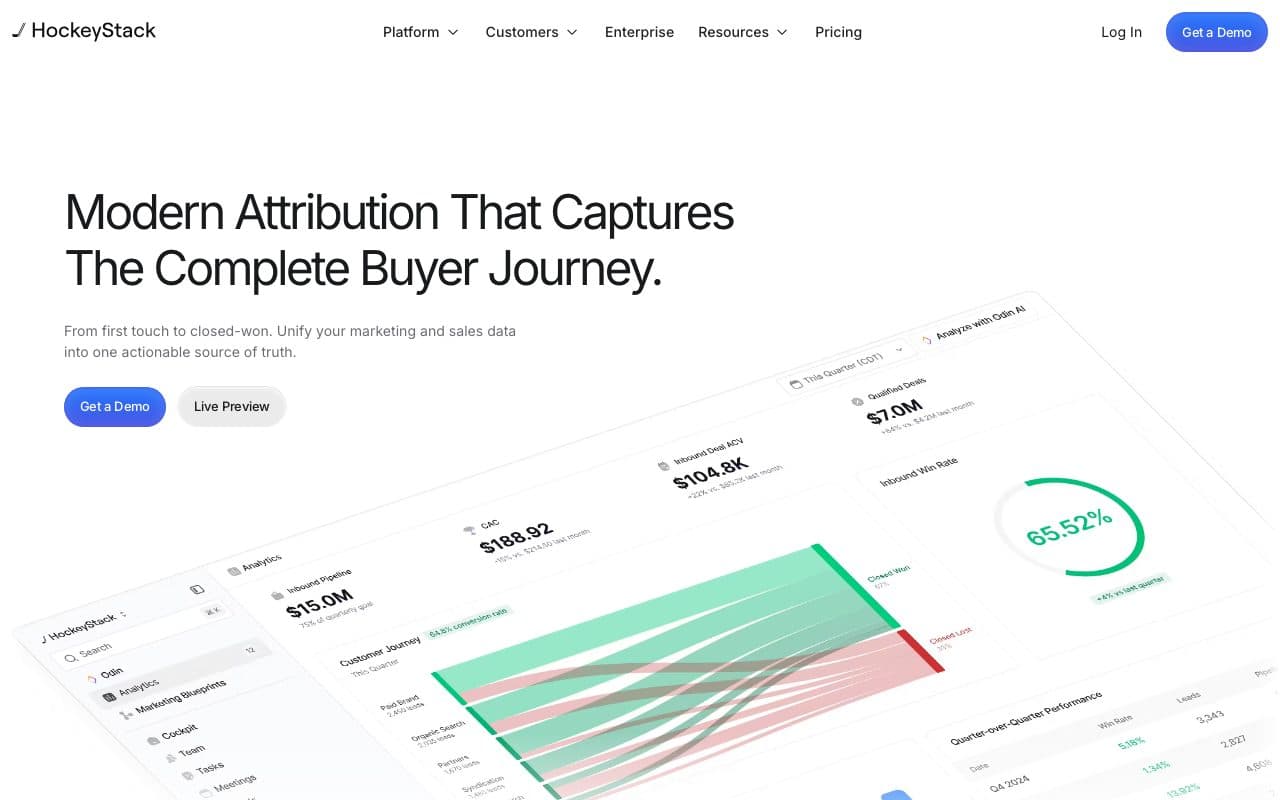
HockeyStack is a revenue intelligence platform for enterprise B2B teams that connects marketing, sales, and product data into unified attribution dashboards. Strong AI-powered reporting and deep account-level journey visibility. Designed for larger revenue teams with dedicated analytics resources.
Verdict
Strong enterprise revenue intelligence. Enterprise pricing and implementation complexity. No automated CAPI loop to ad platforms.
3. Dreamdata: Best for Multi-Channel B2B Attribution
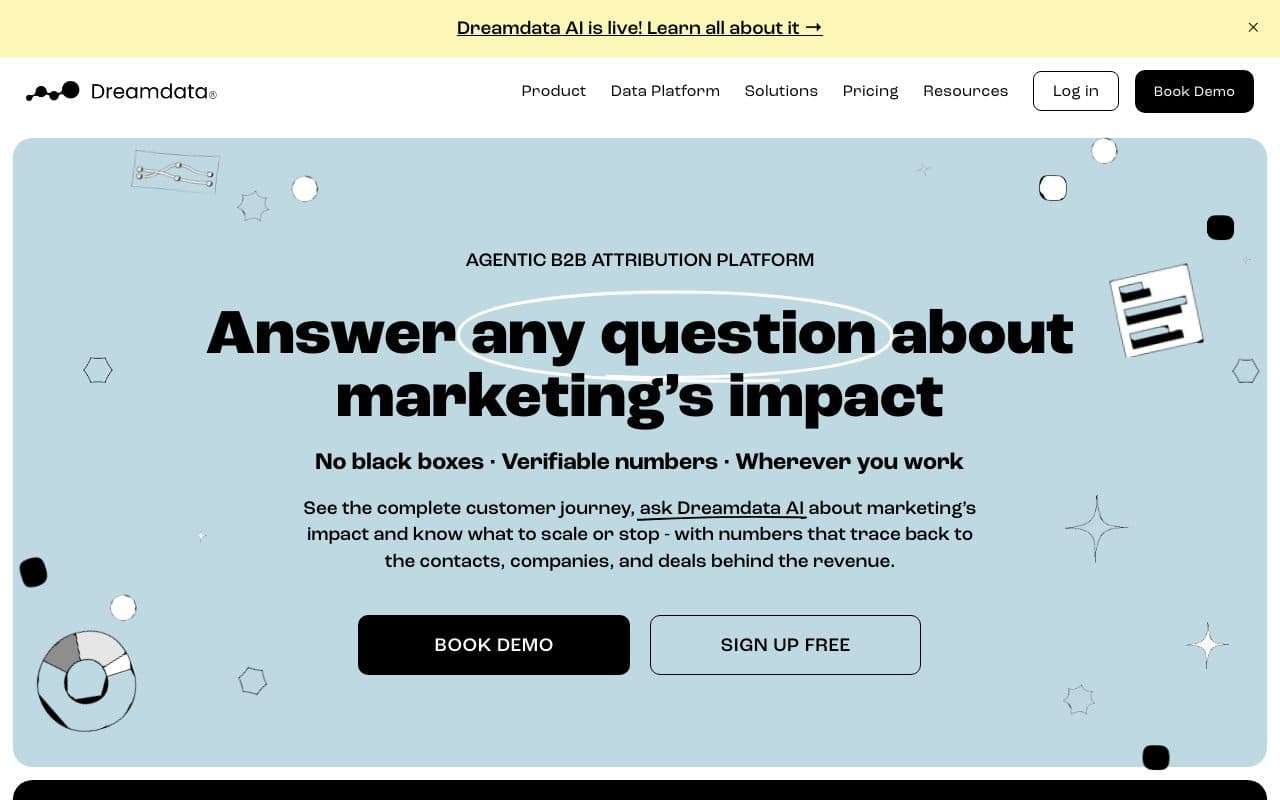
Dreamdata builds multi-touch B2B attribution models connecting marketing touchpoints to revenue across paid and organic channels. Stronger than ZenABM on cross-channel depth and CRM pipeline integration. Suited for mid-market and enterprise B2B teams with complex attribution requirements.
Verdict
Good cross-channel B2B attribution. More implementation overhead than LeadJourney; no automated CAPI activation back to ad platforms.
4. Factors.ai: Best for Account Intelligence and Attribution
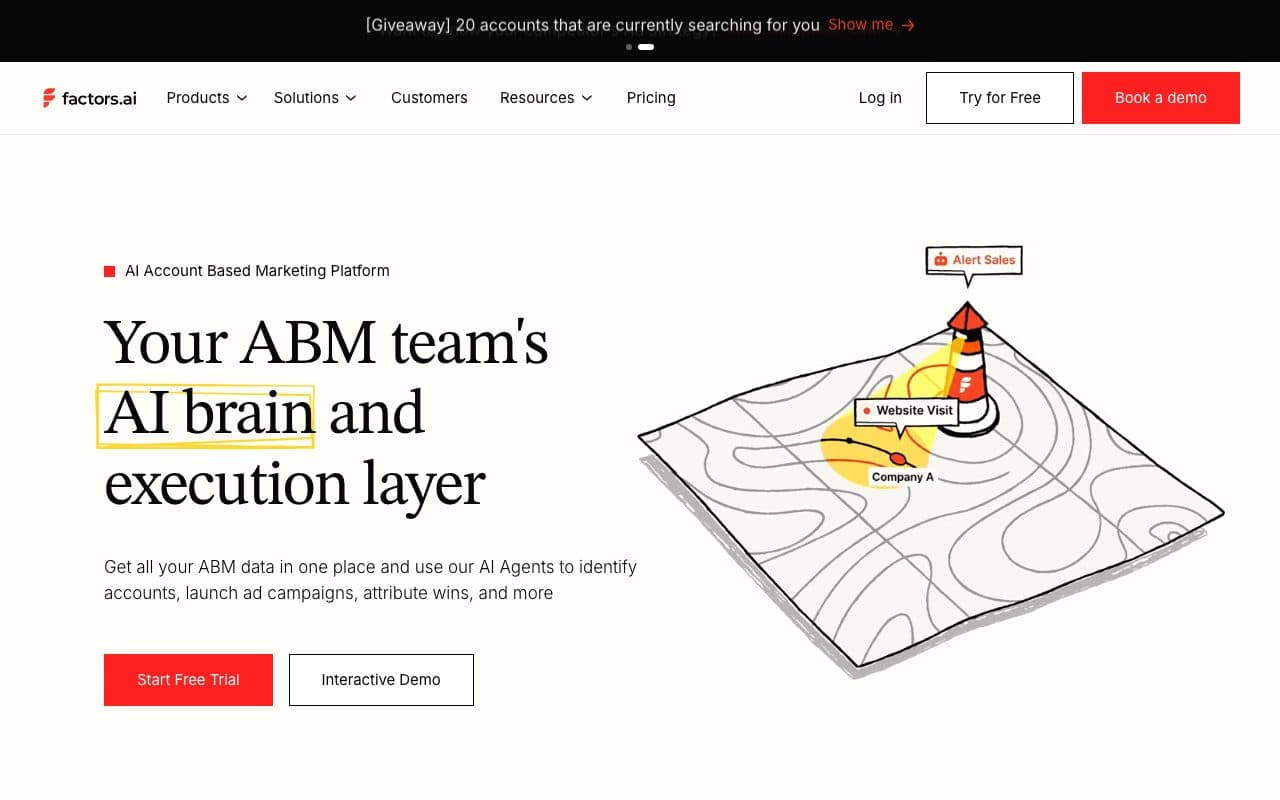
Factors.ai combines account-level website intelligence with multi-channel attribution. It identifies companies visiting your site, tracks their ad journey, and connects activity to CRM pipeline. A more attribution-forward alternative to ZenABM's engagement-stage model.
Verdict
Stronger attribution depth than ZenABM with good account intelligence layer. Less complete than LeadJourney's server-side tracking and CAPI loop across all four ad platforms.
5. 6sense: Best for Enterprise ABM with Intent Data
6sense is the leading enterprise ABM platform, combining intent data, predictive scoring, and multi-channel orchestration. It identifies in-market accounts before they engage with your brand and helps sales prioritize outreach accordingly. Deep Salesforce and LinkedIn integration for enterprise revenue teams.
Verdict
Best enterprise ABM platform for intent-led account identification and sales orchestration. Enterprise pricing (typically $100K+ annually), complex implementation, primarily built for enterprise teams.
6. Demandbase: Best for Global Enterprise GTM Orchestration
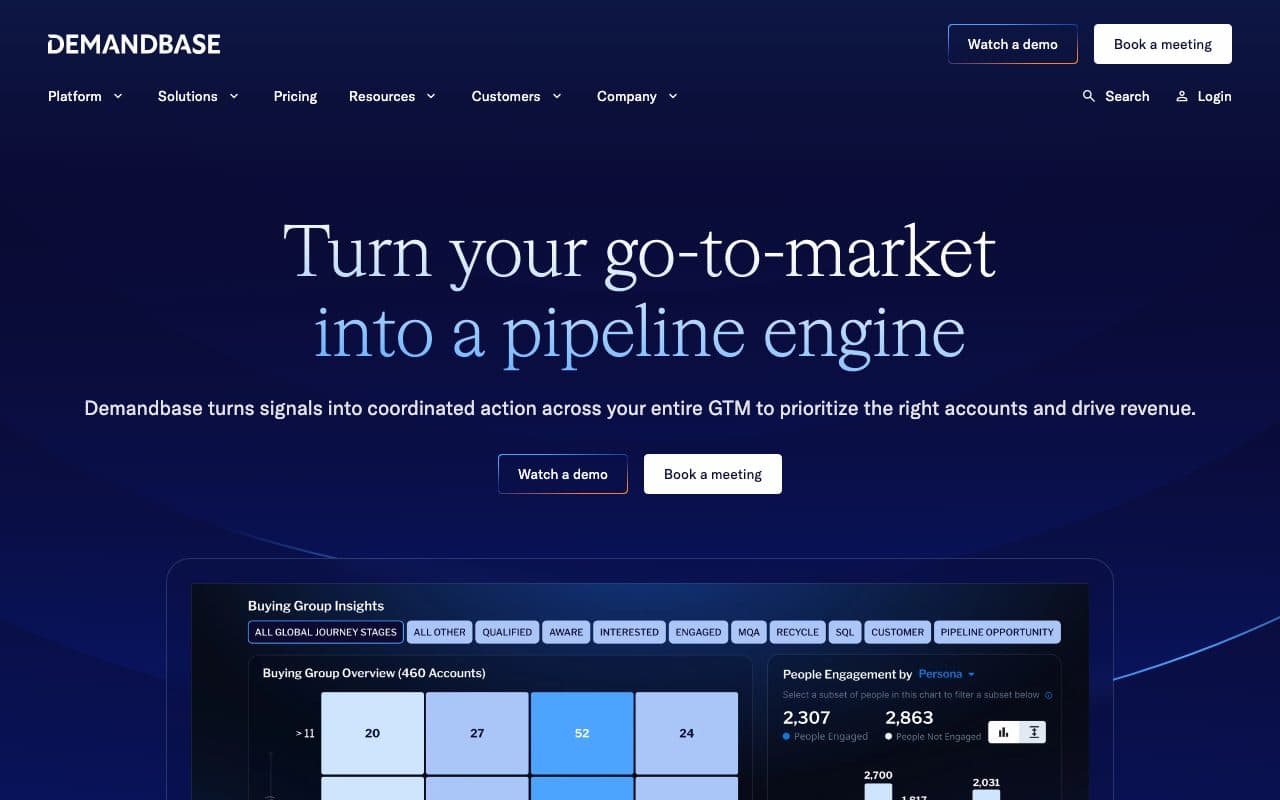
Demandbase is a full go-to-market platform for enterprise B2B teams combining account intelligence, advertising, and sales intelligence in one. Strong for large organizations running coordinated ABM campaigns across channels with complex sales cycles.
Verdict
Enterprise GTM orchestration at scale. Requires enterprise contracts, implementation resources, and dedicated operations teams. No automated CAPI loop to optimize ad algorithms.
7. Ruler Analytics: Best for Phone-Call B2B Attribution
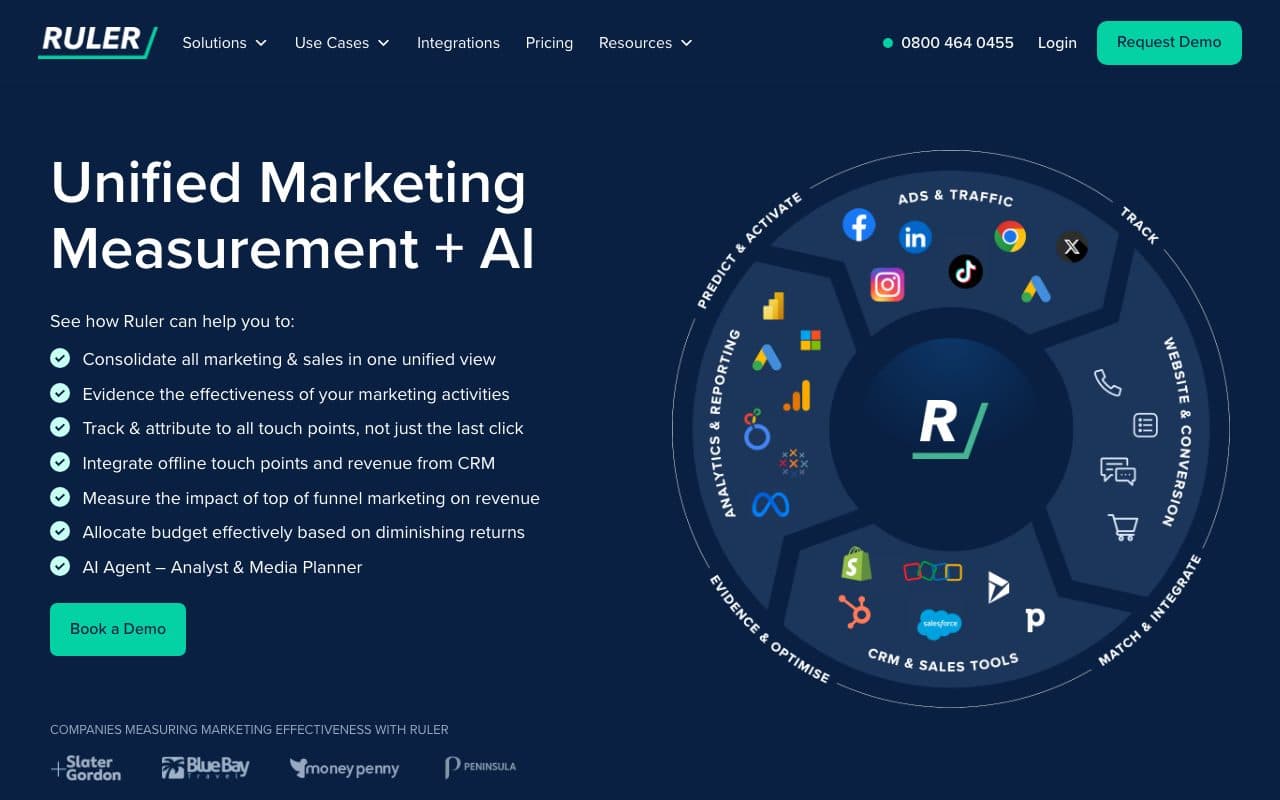
Ruler Analytics attributes inbound phone calls back to marketing source and syncs revenue from CRM to reporting. For B2B businesses converting primarily through inbound calls, it provides attribution depth that ZenABM's LinkedIn-engagement model entirely misses.
Verdict
Right for phone-call-centric B2B businesses. Limited multi-platform coverage and no CAPI closed loop.
Why Engagement Stages Are Not Attribution
The fundamental issue with ZenABM and similar ABM engagement tools: they conflate activity with intent, and intent with revenue. An account moving from "Aware" to "Interested" on a LinkedIn engagement dashboard tells you the account has seen and interacted with your ads. It does not tell you whether anyone from that account will ever buy, when they will buy, or what they will pay.
Real attribution connects specific ad touchpoints to specific CRM outcomes: this lead came from this LinkedIn campaign, progressed to qualified lead status on this date, booked an appointment, and closed as a deal worth this amount. That's the data that justifies LinkedIn ad budgets, identifies which campaigns produce buyers vs. browsers, and trains ad algorithms to find more buyers. LeadJourney is built to produce that data automatically, server-side, connected to your CRM, for LinkedIn alongside every other channel.
FAQ
Frequently Asked Questions
The questions teams comparing ZenABM alternatives ask most.
What is the best ZenABM alternative?
For LinkedIn engagement tracking at the account level, Fibbler is ZenABM's closest direct alternative. For B2B teams that need click-level revenue attribution rather than company-level engagement data, LeadJourney is the better choice.
What does ZenABM do?
ZenABM tracks LinkedIn ad engagement at the company level using LinkedIn's Company Intelligence API, sorting accounts into funnel stages like Aware, Interested, and Engaged.
What is the difference between ZenABM and LeadJourney?
ZenABM tracks which companies are engaging with your LinkedIn campaigns at the account level. LeadJourney tracks which individual ad clicks from any platform produced which specific leads and deals in your CRM. They answer different questions: ZenABM tells you which companies are in the funnel; LeadJourney tells you which campaigns produced revenue.
Does ZenABM support channels beyond LinkedIn?
ZenABM is focused on LinkedIn engagement tracking via LinkedIn's API. LeadJourney covers Meta, Google, LinkedIn, Bing, Organic Search, Organic Social, Email, and AI search engines in a single unified attribution model.
Can I use ZenABM and LeadJourney together?
Yes. They serve different purposes. ZenABM provides account-level LinkedIn engagement visibility. LeadJourney handles click-level attribution, CRM pipeline tracking, and CAPI across all platforms.
Keep reading
More from the blog
 Alternatives
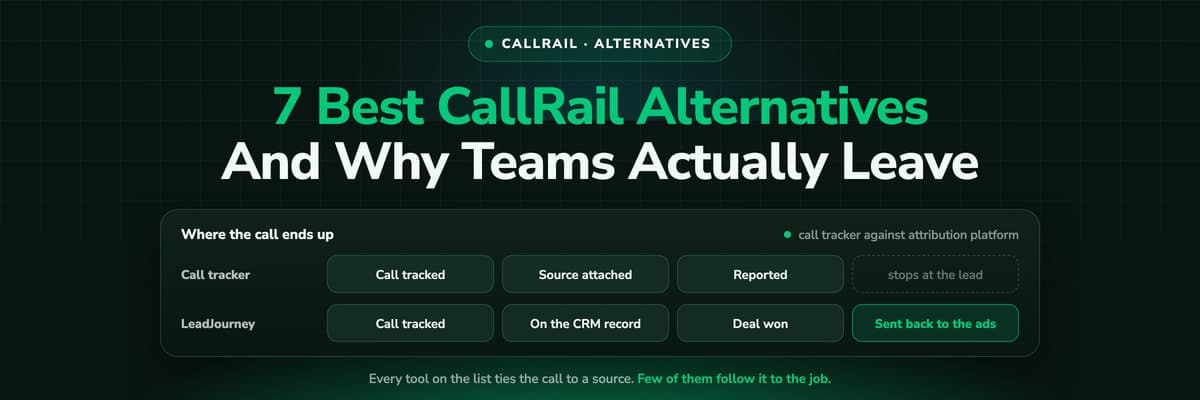
7 Best CallRail Alternatives in 2026
CallRail is the reference call tracker, and teams still leave it: the usage bill at pool scale, reporting that stops at the lead, and a second tool to reconcile with the ad platforms. Seven alternatives, with every published price read this month.Read the article11 min read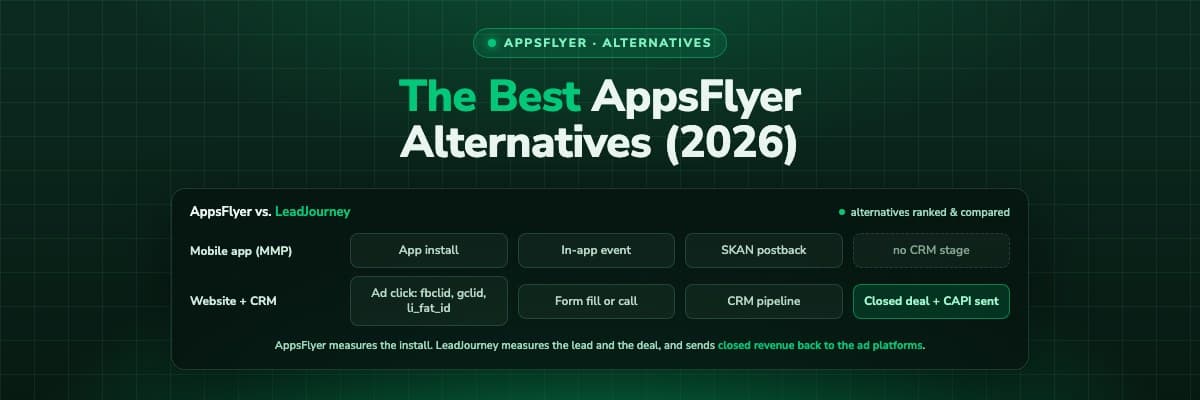 Alternatives
7 Best AppsFlyer Alternatives in 2026
AppsFlyer is the biggest mobile measurement partner on the market, built around the app install. Seven alternatives, ranked: one for businesses whose conversions are forms, calls, deals and shop orders on the web, and six for the app itself, compared on tracking, pricing and who each is built for.Read the article10 min read Alternatives
7 Best Fibbler Alternatives in 2026
Fibbler tracks company-level LinkedIn engagement, and that is where it stops. These seven alternatives cover click-level revenue attribution across every channel.Read the article9 min read
Revenue, not engagement
Ready to replace ZenABM?
Server-side LinkedIn tracking at 95%+ accuracy. CRM pipeline attribution from first click to closed deal. Automated CAPI loop to all four ad platforms. 21-minute setup.