














BlogTool Comparisons
10 Best Google Revenue Attribution Tools in 2026
Google's own attribution stops at the form fill. Ten tools ranked by how well they connect the gclid to qualified leads and closed deals in the CRM, and send those back to Smart Bidding.


Contents
Summarise this article with AI
Opens the page with a ready prompt in:


Nothing is sent until you pick a service.
Google Ads is typically the first paid channel B2B companies scale, and the one where revenue attribution questions get the most heated. When leadership asks which keywords produced customers, not just leads, most teams can't answer. Google's own attribution only shows what happens up to the form fill. What happens after, whether that lead qualified, booked a call, and closed, lives in the CRM and stays invisible to most Google Ads attribution tools.
True Google revenue attribution connects every Google click ID (gclid) to CRM pipeline outcomes and reports cost-per-close and ROAS based on actual deal revenue per campaign, ad group, keyword, and ad. That's the data that tells you which Google keywords produce buyers, which produce time-wasters, and how to feed that intelligence back to Google's algorithm via Enhanced Conversions to improve future targeting. This list ranks the best Google revenue attribution tools for B2B in 2026.
Quick Summary: Best Google Revenue Attribution Tool in 2026
In short
LeadJourney is the best Google revenue attribution tool for B2B companies. It captures every gclid server-side at 95%+ accuracy, connects each Google click to CRM pipeline stages and closed revenue, and reports cost-per-close per Google campaign, ad group, keyword, and ad. The Enhanced Conversions (CAPI) closed loop sends CRM deal signals back to Google automatically, training Smart Bidding on real B2B buyers rather than form fillers. All Google attribution is unified alongside LinkedIn, Meta, and Bing in one dashboard. 21-minute setup, no developer. Rated 5.0 on Trustpilot. 14-day free trial.
The 10 best Google revenue attribution tools at a glance
| Tool | Key features | Best for | Pricing |
|---|---|---|---|
| Rank 1LeadJourney | Server-side gclid capture 95%+; Enhanced Conversions loop; CRM pipeline attribution; 4-platform CAPI | B2B companies connecting Google clicks to CRM revenue | 14-day free trial |
| Rank 2Google Ads + GA4 + BigQuery | GA4, Google Ads Enhanced Conversions, BigQuery export | Teams using Google's own free attribution tools | Free (engineering required) |
| Rank 3Ruler Analyticsvs LeadJourney | Call tracking, CRM revenue sync, multi-channel attribution | CRM revenue attribution including phone calls | From £299/mo |
| Rank 4HockeyStackvs LeadJourney | AI-powered revenue intelligence, account-level journey tracking | Enterprise multi-channel revenue intelligence | On quote |
| Rank 5Hyrosvs LeadJourney | Server-side attribution, long attribution windows, print tracking | High-ticket Google & Meta advertisers | From $69/mo |
| Rank 6Adobe Marketo Measurevs LeadJourney | Multi-touch attribution, Salesforce-native, Adobe ecosystem | Salesforce-native Google attribution | Custom enterprise pricing |
| Rank 7Dreamdatavs LeadJourney | Multi-touch attribution, CRM pipeline connection, account-level data | Mid-market multi-channel B2B attribution | Free plan, paid on quote |


1. LeadJourney: Best Google Revenue Attribution Tool for B2B
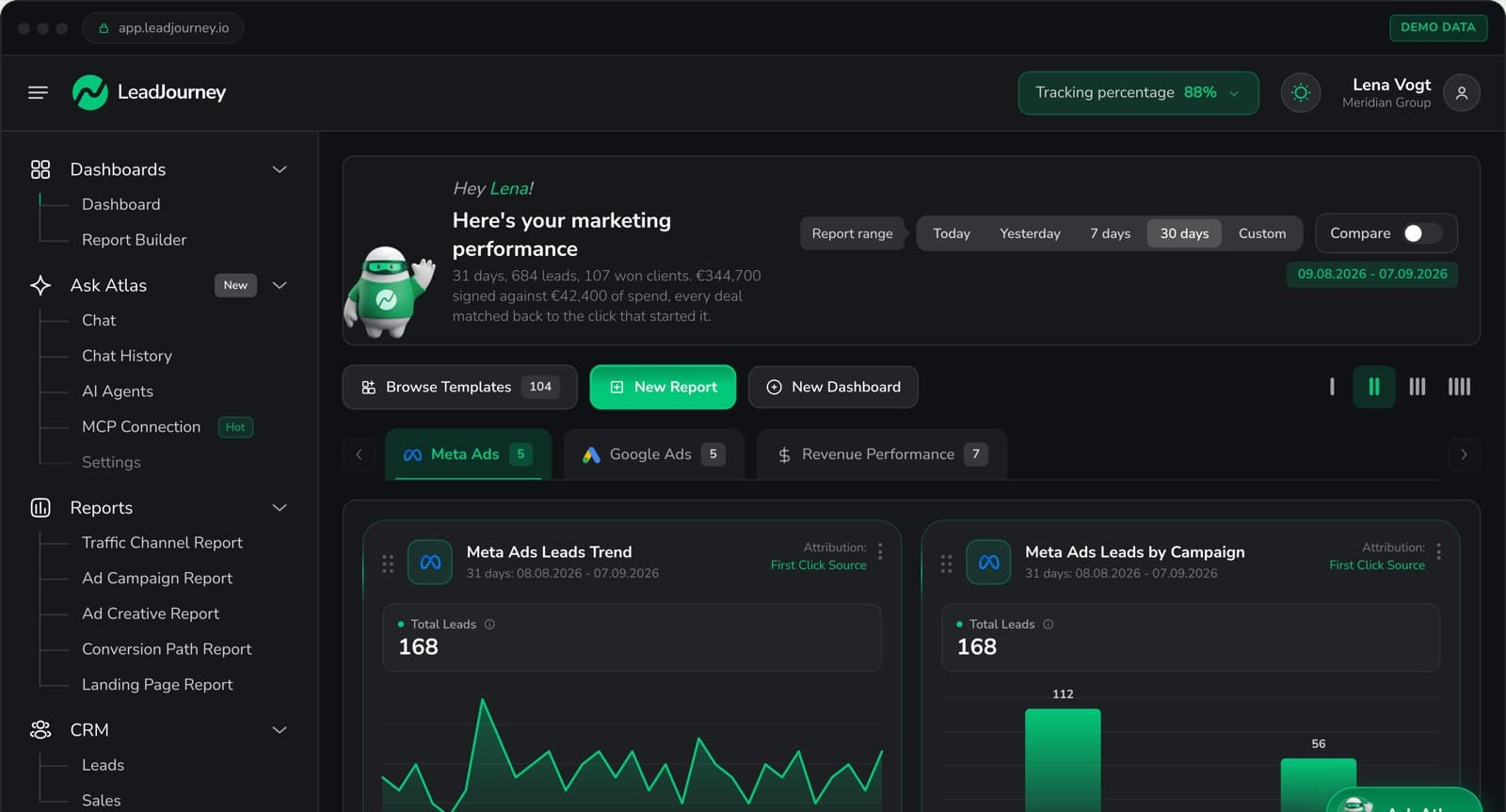
LeadJourney captures every Google click ID (gclid) server-side at 95%+ accuracy, at the moment of the Google ad click, before any browser interference can strip it. That gclid is matched to the CRM contact and tracked through the full B2B pipeline: qualified lead, appointment booked, deal closed. The attribution dashboard shows cost-per-close per Google campaign, ad group, keyword, and ad creative: the data that tells you which Google keywords produce revenue and which produce noise.
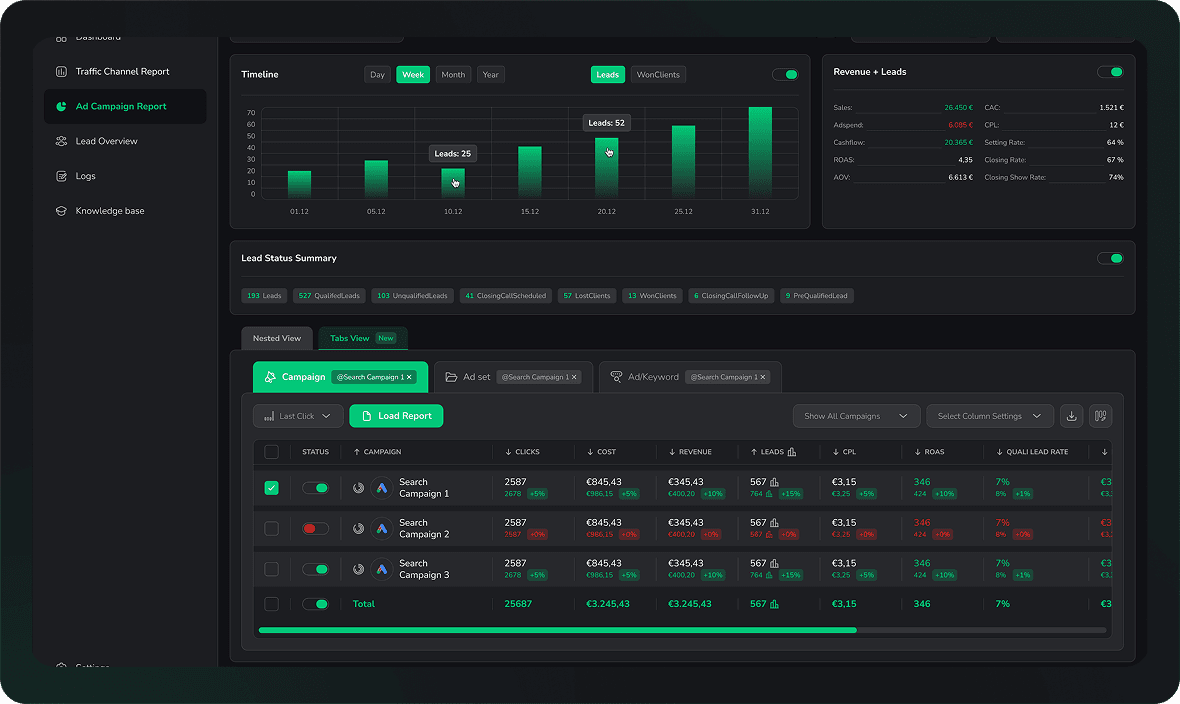
The Enhanced Conversions closed loop is the critical differentiator: when a lead advances through the CRM, LeadJourney sends that pipeline stage event to Google's Enhanced Conversions API automatically. Google's Smart Bidding algorithm retrains on the audience profile of users who actually became customers, not just users who submitted a form. Over time, Google campaigns optimize toward buyers rather than browsers, lowering cost-per-close without increasing budget. LeadJourney's Chrome extension then shows that closed revenue as columns inside Google Ads, so a campaign is judged on the deals it closed rather than the forms it filled.
Key Features
- gclid captured server-side at 95%+ accuracy: complete Google attribution data regardless of Safari ITP, iOS 14+, or ad blockers
- CRM pipeline attribution per Google keyword: qualified lead rate, appointment show rate, close rate, and deal revenue per campaign, ad group, keyword, and ad
- Google Enhanced Conversions CAPI loop: CRM pipeline stage signals sent to Google automatically, so Smart Bidding trains on real B2B buyers
- Offline conversion import: phone calls, offline appointments, and CRM-matched leads imported back to Google as conversion events
- Unified multi-channel dashboard: Google alongside LinkedIn, Meta, Bing, organic, and AI search in one normalized attribution model
- Five attribution models: compare Google's contribution under first-touch, last-touch, linear, time-decay, and position-based models side by side
- Atlas AI analyst: plain-language queries such as which Google keyword had the lowest cost-per-close last quarter
Pros
- Revenue attribution per keyword: see which Google keywords produced closed deals, not just clicks
- Enhanced Conversions loop: Google Smart Bidding continuously improves by learning from your actual buyer profiles
- Unified with all other channels: Google is not siloed but compared against LinkedIn, Meta, and organic in the same attribution model
- 14-day free trial, no credit card
Cons
- E-commerce runs through the Shopify integration or a manually connected shop system (ROAS and customer origin), without product-level catalogue analytics
Verdict
LeadJourney is the best Google revenue attribution tool for B2B companies. It connects every Google click to CRM pipeline and closed revenue, and trains Google's algorithm on real buyer profiles through an automated Enhanced Conversions loop.
Connected LeadJourney for 2 clients, setup took literally 20 minutes each. The data became more accurate, the reports actually make sense. Now clients look at the dashboard and the 'why don't the numbers match?' questions are gone.
 Alexander SamarPerformance Marketing Agency
We've been using LeadJourney for a while now, and it's honestly become an essential part of how we measure our marketing.
Read verified reviews on Trustpilot, G2, Capterra, and Software Advice.
2. Google Ads + GA4 + BigQuery: Best Free Google Attribution Stack
Google's own tools (Google Ads Enhanced Conversions, GA4, and BigQuery export) form a free attribution stack for Google-centric teams. GA4's cross-channel reporting and BigQuery's raw data access provide depth for data engineering teams. Requires significant technical setup to connect CRM revenue data to Google attribution.
Verdict
Best free foundation for Google attribution. Requires data engineering to connect CRM revenue. Limited to Google ecosystem; no cross-channel attribution with LinkedIn, Meta, or Bing.
3. Ruler Analytics: Best for CRM Revenue Attribution and Google
Ruler Analytics syncs CRM revenue data back to Google Ads reporting, connecting Google campaigns to closed deals. Strong for teams where phone call conversions are significant alongside form fills. Provides genuine revenue attribution for Google beyond platform-reported metrics.
Verdict
Good CRM-to-Google revenue attribution. Less complete server-side capture than LeadJourney; no automated CAPI loop to all four platforms simultaneously.
4. HockeyStack: Best for Enterprise Google and Multi-Channel Revenue Intelligence
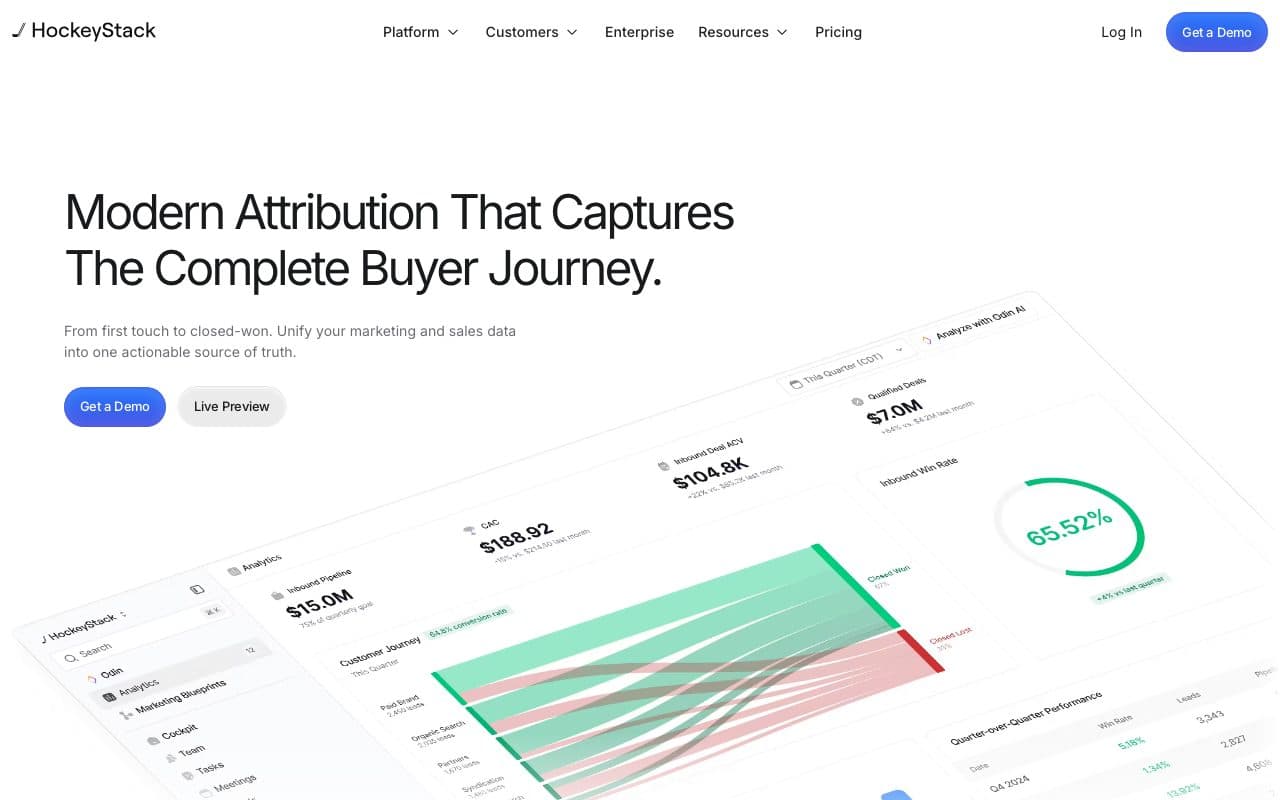
HockeyStack provides deep revenue intelligence that includes Google Ads alongside other channels. Strong for enterprise B2B teams with complex multi-channel journeys that need to understand Google's contribution at the account and contact level alongside LinkedIn and organic.
Verdict
Strong enterprise Google revenue intelligence. Complex implementation, enterprise pricing, no automated CAPI closed loop.
5. Dreamdata: Best for Multi-Channel B2B Attribution Including Google
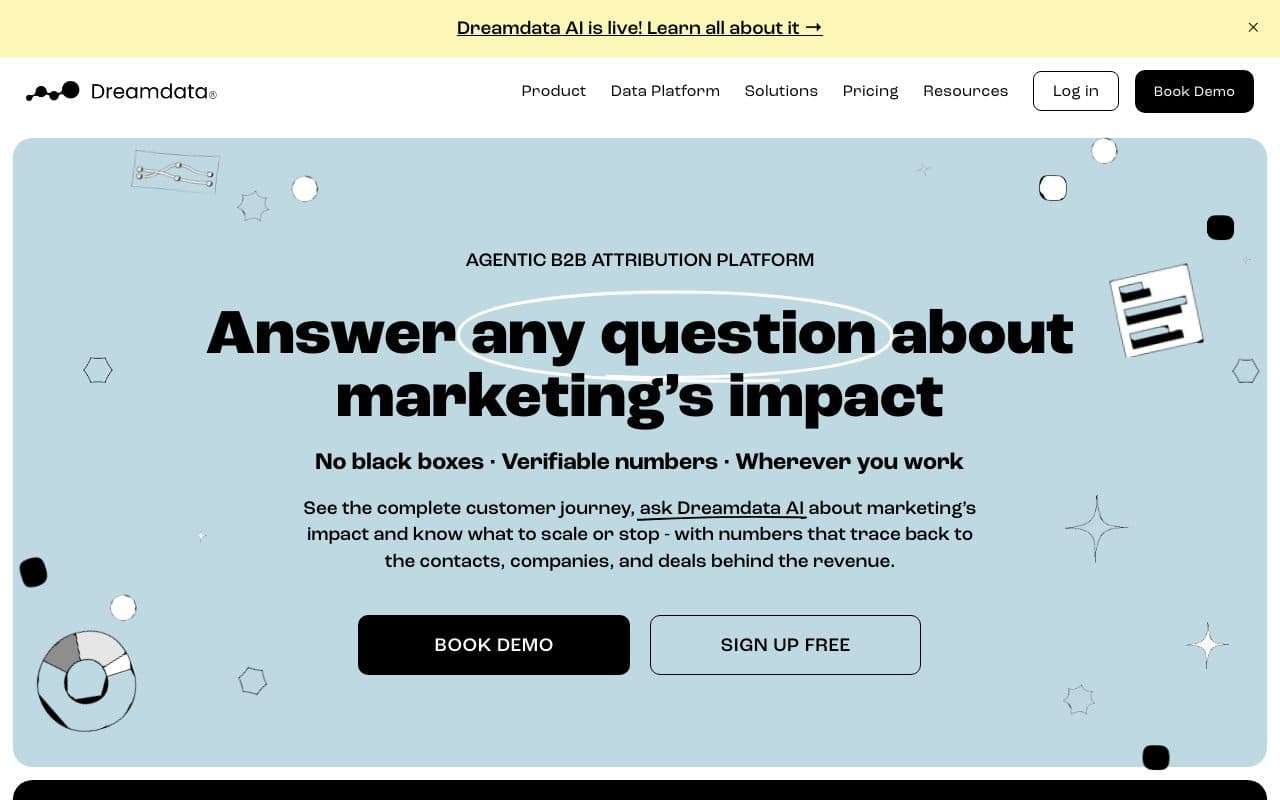
Dreamdata connects Google Ads touchpoints to CRM pipeline in a multi-touch attribution model alongside other channels. Provides cross-channel depth that Google's own tools lack. More setup than LeadJourney but strong attribution modeling for mid-market B2B teams.
Verdict
Good multi-channel B2B attribution including Google. More implementation overhead; no automated CAPI loop.
6. Adobe Marketo Measure: Best for Salesforce-Native Google Attribution
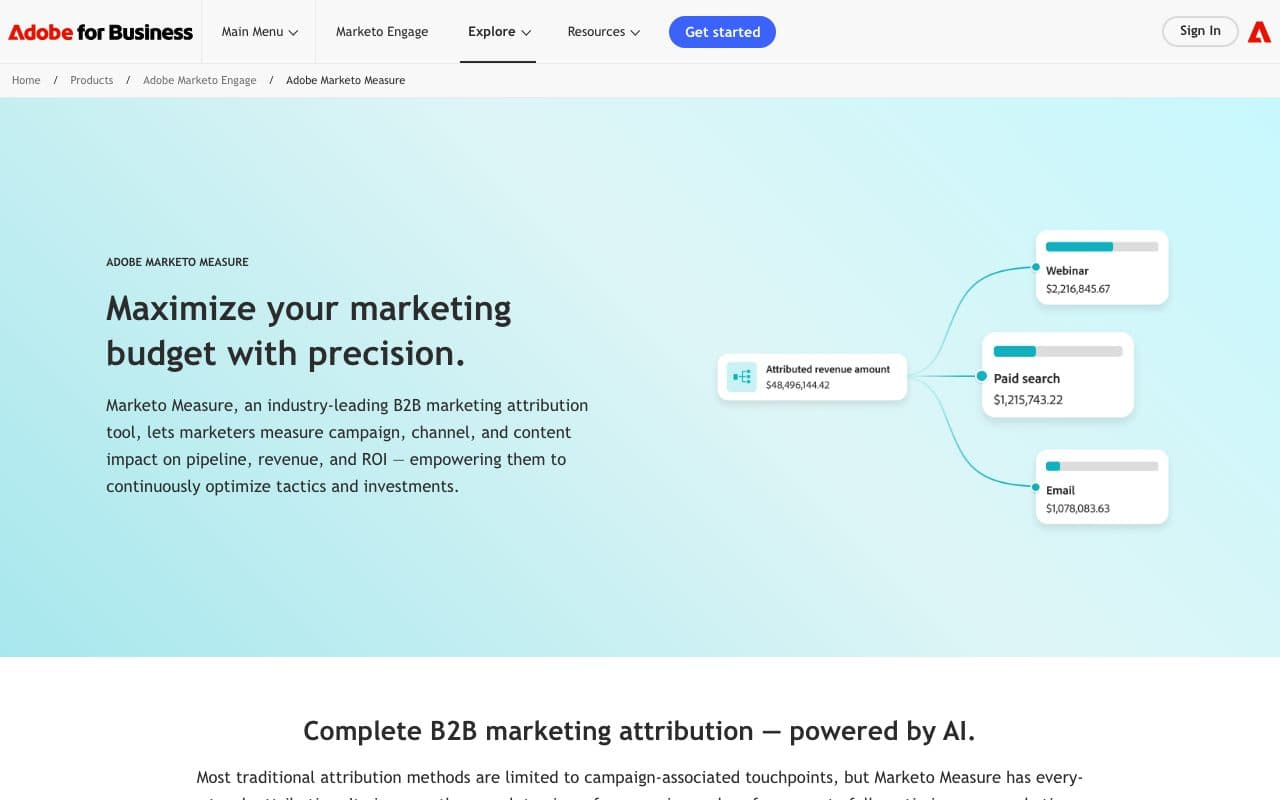
Adobe Marketo Measure connects Google Ads touchpoints to Salesforce pipeline and revenue natively. For teams fully invested in the Salesforce + Adobe ecosystem, it provides deep Google attribution integrated into CRM workflow. Sold on an Adobe contract for Salesforce or Microsoft Dynamics; Adobe publishes neither a price nor an implementation time.
Verdict
Strong Salesforce-native Google revenue attribution. CRM dependency and implementation complexity make it unsuitable for non-Salesforce teams.
7. Factors.ai: Best for Account Intelligence and Google Attribution
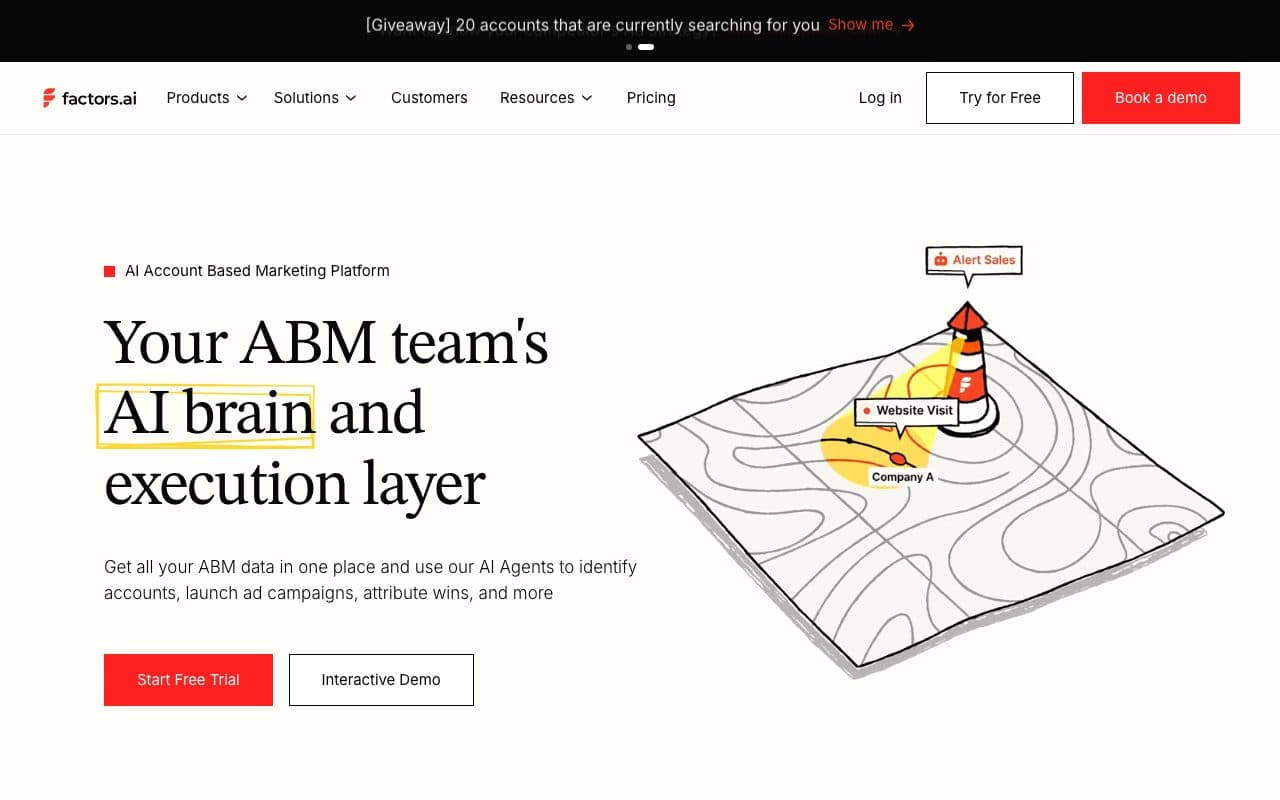
Factors.ai combines account-level website intelligence with Google Ads attribution. Identifies companies clicking through from Google and connects their journey to CRM pipeline. Good for teams that want account intelligence alongside Google revenue attribution in one platform.
Verdict
Good account intelligence + Google attribution. Less complete server-side capture than LeadJourney; no automated Enhanced Conversions loop.
8. Hyros: Best for High-Ticket Google and Meta Attribution
Hyros provides server-side attribution for Google and Meta with long attribution windows suited to high-ticket B2B sales cycles. Strong for companies spending $10K+ monthly on Google and needing deeper attribution than GA4 provides. Limited LinkedIn and Bing coverage.
Verdict
Good server-side Google attribution for high-ticket campaigns. Limited to paid channels; no organic, AI search, or automated CAPI loop to all four platforms.
9. SegmentStream: Best for AI-Modeled Google Attribution
SegmentStream applies AI-driven predictive modeling to estimate Google's contribution when direct tracking data is incomplete. Designed to fill tracking gaps with probabilistic modeling. A valid enterprise option for teams comfortable with modeled rather than deterministic attribution.
Verdict
Sophisticated modeled Google attribution for enterprise teams. LeadJourney fixes tracking gaps at source with server-side gclid capture rather than modeling around them.
10. Northbeam: Best for Enterprise Multi-Touch Google Attribution Modeling
Northbeam provides ML-based multi-touch attribution covering Google across complex enterprise media mixes. Strong attribution modeling depth at enterprise scale. Enterprise contracts and implementation complexity required.
Verdict
Best enterprise-tier Google attribution modeling. Complex implementation; probabilistic rather than deterministic server-side tracking.
Why Google Attribution Needs to Go Beyond GA4
GA4 tracks what happens on your website after the Google click. It doesn't know what happens in your CRM. For B2B companies, the most important events (qualification calls, demos, proposal submissions, deal closures) happen offline in a CRM system that GA4 can't see. This means GA4-based Google attribution always stops at the form fill: you know which keywords generated leads, but not which keywords generated customers.
The result: Google's Smart Bidding algorithm optimizes for form fills, not closed deals. If your highest-volume lead-generating keyword actually has a 2% close rate, Smart Bidding will keep sending budget to it because it looks like a winner on the metrics it can see. The fix is connecting gclid-matched CRM outcomes back to Google via Enhanced Conversions. LeadJourney does this automatically: no data engineer, no BigQuery pipeline, no manual imports.
FAQ
Frequently Asked Questions
The questions B2B teams ask about attributing revenue to Google Ads.
Can GA4 show revenue from Google Ads for B2B?
Not on its own. GA4 records what happens on the website, and in B2B the events that decide revenue happen afterwards in the CRM: the qualification call, the proposal, the signature. GA4 can tell you which keyword produced a lead. It cannot tell you which keyword produced a customer, because it never sees the customer.
How do I connect the gclid to closed deals in my CRM?
Capture the gclid server-side when the visitor lands, write it to the lead or contact record with the form submission, and let it travel with that record through the pipeline. When the deal is marked won, the gclid is still on it, which is what lets you report revenue by campaign, ad group and keyword and send the outcome back through Enhanced Conversions.
Can I build Google revenue attribution myself with BigQuery?
Yes, and Google's own stack of Ads, GA4 and BigQuery is free apart from the engineering. The work is real: exporting the ad data, joining it to CRM records on the gclid, keeping the join alive as pipeline stages change, and building the upload back into Enhanced Conversions. Teams with a data engineer often prefer it. Teams without one usually find the pipeline outlives its owner.
How much do Google revenue attribution tools cost?
The free stack is Google's own, at the cost of engineering time. Ruler Analytics starts at $199 per month and Hyros at $499. HockeyStack, Adobe Marketo Measure and Northbeam are enterprise quotes, and Dreamdata has a free plan with paid tiers on quote. LeadJourney runs a 14-day free trial.
What is the difference between revenue attribution and conversion tracking?
Conversion tracking counts events, and it counts them where they happen, usually on a thank-you page. Revenue attribution attaches a monetary outcome from the CRM to the click that started it, so a campaign is judged on deals won rather than forms filled. In a long B2B cycle those two reports routinely rank the same keywords in opposite orders.
Keep reading
More from the blog
 Tool Comparisons
11 Best iGaming Tracking Software Tools in 2026
Every iGaming tracker takes a postback. Fewer split reg, FTD and deposit into stages of one player, and fewer still send the FTD back to Google and Meta. Eleven tools ranked on that, with every price read on the vendor's own page.Read the article18 min read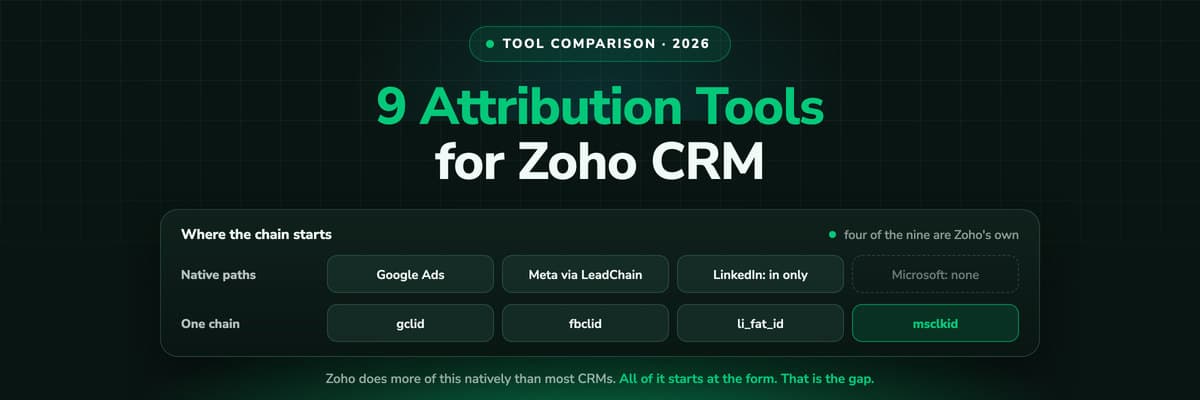 Tool Comparisons
9 Best Marketing Attribution Tools for Zoho CRM in 2026
Four of the best attribution tools for Zoho CRM are Zoho products you may already pay for. Nine options compared on where the tracking starts, which ad platforms they cover, and whether the closed deal ever reaches the algorithm buying your traffic.Read the article13 min read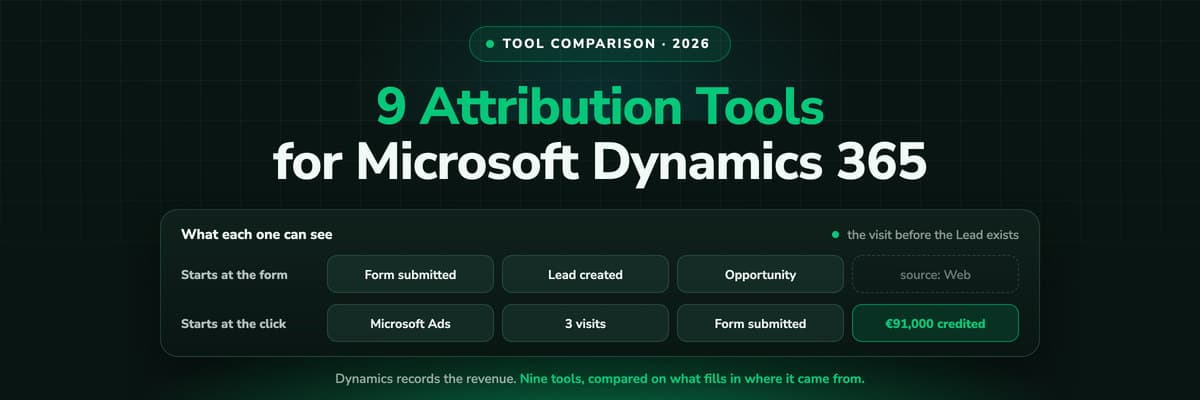 Tool Comparisons
9 Best Marketing Attribution Tools for Microsoft Dynamics 365 in 2026
Dynamics records the revenue and nothing fills in where it came from: Lead Source is a ten-option picklist and campaign spend is typed by hand. Nine tools compared on what each can actually see in a Dynamics environment, with pricing, pros, cons and a verdict.Read the article14 min read
Beyond the form fill
Ready for true Google revenue attribution?
Server-side gclid capture at 95%+ accuracy. CRM pipeline attribution per keyword. Automated Enhanced Conversions loop. Unified with LinkedIn, Meta & Bing. 21-minute setup.