














BlogTool Comparisons
15 Best Marketing Data Warehouse Solutions in 2026
A marketing data warehouse stores what the ad platforms report, and since iOS 14 that is an incomplete picture with no revenue attached. Fifteen solutions compared, from Snowflake and BigQuery to attribution platforms that capture data server-side and connect it to the CRM.


Contents
Summarise this article with AI
Opens the page with a ready prompt in:


Nothing is sent until you pick a service.
A marketing data warehouse centralizes all your marketing data (ad platforms, CRM, analytics, email, and more) into a single, queryable source of truth. For enterprise marketing teams, it's the foundation of every data-driven decision: budget allocation, campaign optimization, attribution modeling, and performance reporting. Without it, data lives in silos, reports contradict each other, and decisions get made on incomplete information.
But the dirty secret of most marketing data warehouse setups: they store what ad platforms tell you, and what ad platforms tell you is incomplete. iOS 14+ and ad blockers have made pixel-based conversion tracking unreliable, platform attribution is self-serving, and no warehouse query will fix upstream data quality issues. The best marketing data warehouse solutions address this at the source: capturing accurate data server-side before it ever reaches storage, enriching it with CRM revenue outcomes, and activating it back to ad platforms as conversion signals.
Quick Summary: Best Marketing Data Warehouse Solution in 2026
In short
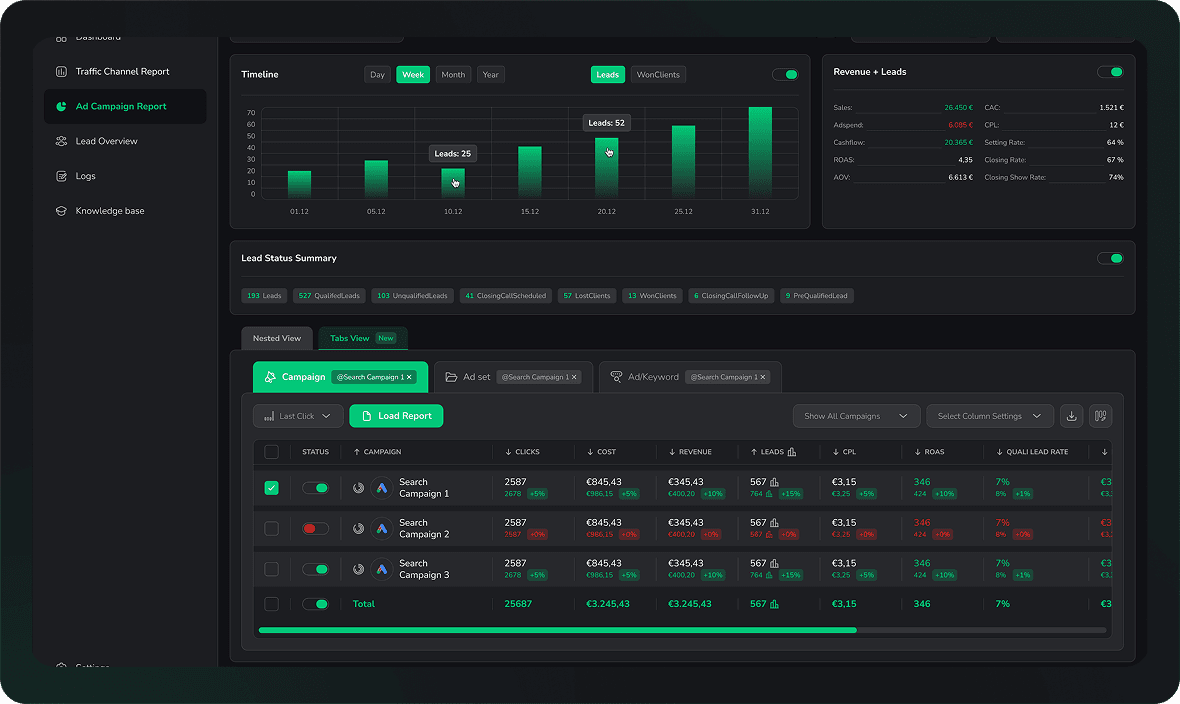
LeadJourney is the best marketing data warehouse solution for B2B companies that need attribution intelligence delivered out of the box, not raw storage infrastructure. It captures every touchpoint server-side at 95%+ accuracy, connects each touchpoint to CRM pipeline stages and closed revenue, and reports cost-per-close per campaign across all channels. Automated CAPI closed loop. 21-minute setup, no data engineers. 14-day free trial.
The 15 best marketing data warehouse solutions at a glance
| Tool | Key features | Best for | Pricing |
|---|---|---|---|
| Rank 1LeadJourney | Server-side 95%+; CRM pipeline attribution; 4-platform CAPI; no data warehouse needed | B2B teams needing attribution intelligence without BI overhead | 14-day free trial |
| Rank 2Snowflake | Cloud-native data warehouse, near-unlimited scale, SQL-based | Enterprise teams needing scalable cloud analytics | Usage-based pricing |
| Rank 3BigQuery | Serverless, deeply integrated with Google ecosystem, ML-native | Google Cloud-native teams | Usage-based (free tier available) |
| Rank 4Amazon Redshift | Columnar storage, AWS ecosystem integration, mature tooling | AWS-native enterprise teams | Starts at $0.25/node/hr |
| Rank 5Azure Synapse / PostgreSQL | Postgres-compatible, open-source option, fast setup | Teams building on Postgres with warehouse features | Usage-based |
| Rank 6dbt (data build tool) | SQL-based transformation, version control, data lineage | Teams needing data transformation pipelines on top | Free (Core) / $50/mo (Cloud) |
| Rank 7Funnel.iovs LeadJourney | 500+ connectors, data normalization, BI-ready output | Marketing teams feeding warehouse from 500+ sources | From $300/mo |


1. LeadJourney: Best Marketing Data Warehouse for Attribution Intelligence
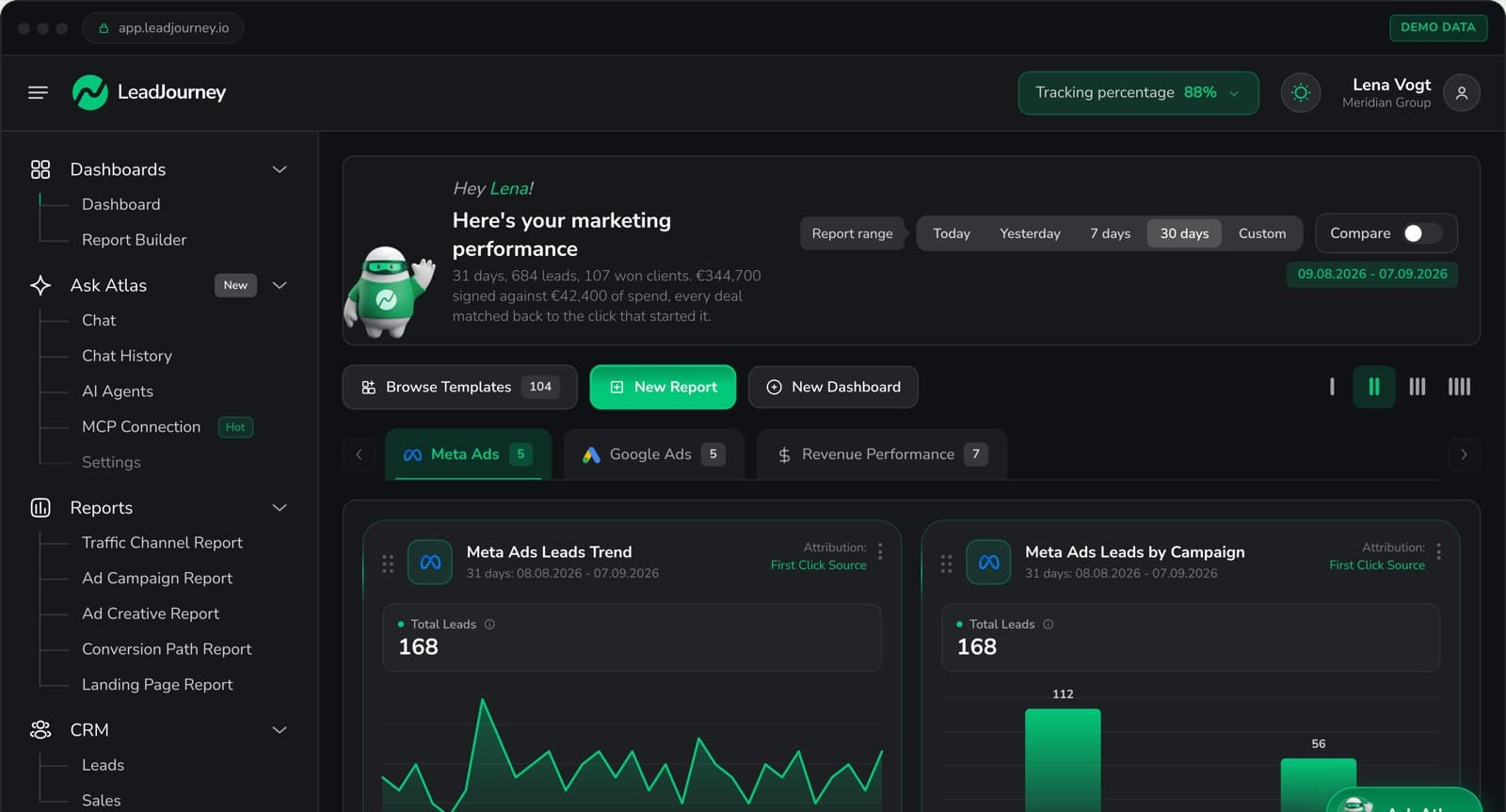
LeadJourney redefines what a marketing data warehouse can be for B2B enterprises. Traditional warehouses store data passively. LeadJourney stores, enriches, and activates it simultaneously. Every marketing touchpoint is captured server-side at 95%+ accuracy, connected to CRM pipeline outcomes (qualified lead, appointment booked, deal closed), and automatically fed back to all four ad platforms as conversion signals. The warehouse doesn't just hold data. It makes campaigns smarter over time.
For enterprise teams, the workspace architecture delivers true multi-entity data management: each division, brand, or client operates in a completely isolated workspace with its own tracking, attribution model, and reporting environment. A central dashboard gives enterprise leadership full visibility across all workspaces without data mixing. Pricing scales transparently per workspace, with no complex enterprise licensing negotiations.
The data quality advantage over conventional warehouse solutions is fundamental: LeadJourney captures click IDs (fbclid, gclid, li_fat_id, msclkid) server-side at the moment of the ad click, before iOS 14+, Safari ITP, or ad blockers can interfere. What gets stored is complete, accurate data, not the 40-60% that survives pixel-based collection. And because the stored data includes CRM deal values and pipeline stages, the warehouse delivers the metric that matters most to enterprise leadership: actual return on marketing investment.
Key Features
- Enterprise workspace data architecture: isolated data environments per division, brand, or client; central management; full data sovereignty per entity
- Server-side data capture at 95%+ accuracy: all click IDs stored before iOS 14+, Safari ITP, and ad blockers can interfere
- CRM revenue enrichment: every stored touchpoint connected to pipeline stages and deal value; warehouse queries return cost-per-close and ROAS, not just clicks and impressions
- Unified cross-channel data model: paid (Meta, Google, LinkedIn, Bing), Organic Search, Organic Social, email, AI search engines, direct, and custom channels normalized in one schema
- Automated CAPI activation: stored CRM conversion events fed back to all four ad platforms simultaneously; warehouse insights directly improve campaign performance
- Five attribution models: first touch, last touch, linear, time-decay, position-based; switchable per workspace without re-processing data
- Atlas AI analyst: natural language queries across all stored attribution data; no SQL, no BI resources required for enterprise teams to get answers
- BigQuery export: stream raw clicks, conversions and leads straight into your own dataset from the Apps tab, on a service account key and a column map, with no ETL job to maintain
- 21-minute setup per workspace: no data engineers, no warehouse infrastructure, no implementation project
Pros
- Stores accurate data from day one: server-side capture means the warehouse contains complete touchpoint data, not the 40-60% that survives pixel tracking
- Revenue-enriched data model: CRM deal values stored alongside ad touchpoints; query actual ROI, not platform-reported conversions
- Active warehouse: stored data activates CAPI signals back to ad platforms automatically; data improves campaigns, not just reports
- Enterprise workspace model: isolated data environments per entity, transparent per-workspace pricing
- Feeds the warehouse you already have: the BigQuery export lands the attributed dataset next to the rest of your data, and Looker Studio, Power BI and Tableau read it from there natively
- 14-day free trial. Risk-free for enterprise pilots and POCs
Cons
- Not a general-purpose data warehouse: it streams into BigQuery rather than replacing it, and does not store non-marketing data; purpose-built for marketing attribution. The Snowflake export is still on the roadmap
- E-commerce runs through the Shopify integration or a manually connected shop system (ROAS and customer origin), without product-level catalogue analytics
Verdict
LeadJourney is the best marketing data warehouse solution for B2B teams that need attribution intelligence rather than raw data storage, and for teams that already run a BI pipeline it is not an either-or: the BigQuery export streams the attributed dataset into the warehouse they have. For raw storage of everything else, Snowflake, BigQuery and Redshift remain the infrastructure standards.
What Real Users Say About LeadJourney
We've been using LeadJourney for a while now, and it's honestly become an essential part of how we measure our marketing. Before, it was almost impossible to know which campaigns were actually driving revenue.
LeadJourney finally fixed my Marketing Analytics. It goes way beyond basic Ad Tracking Software. The Customer Journey Report saves hours of digging, and capturing everything from Offline Conversions to AI Search Tracking makes it the Best B2B Attribution Platform available.
Read verified reviews on Trustpilot, G2, Capterra, Software Advice, and leadjourney.io/testimonials.
2. Snowflake: Best General-Purpose Cloud Data Warehouse
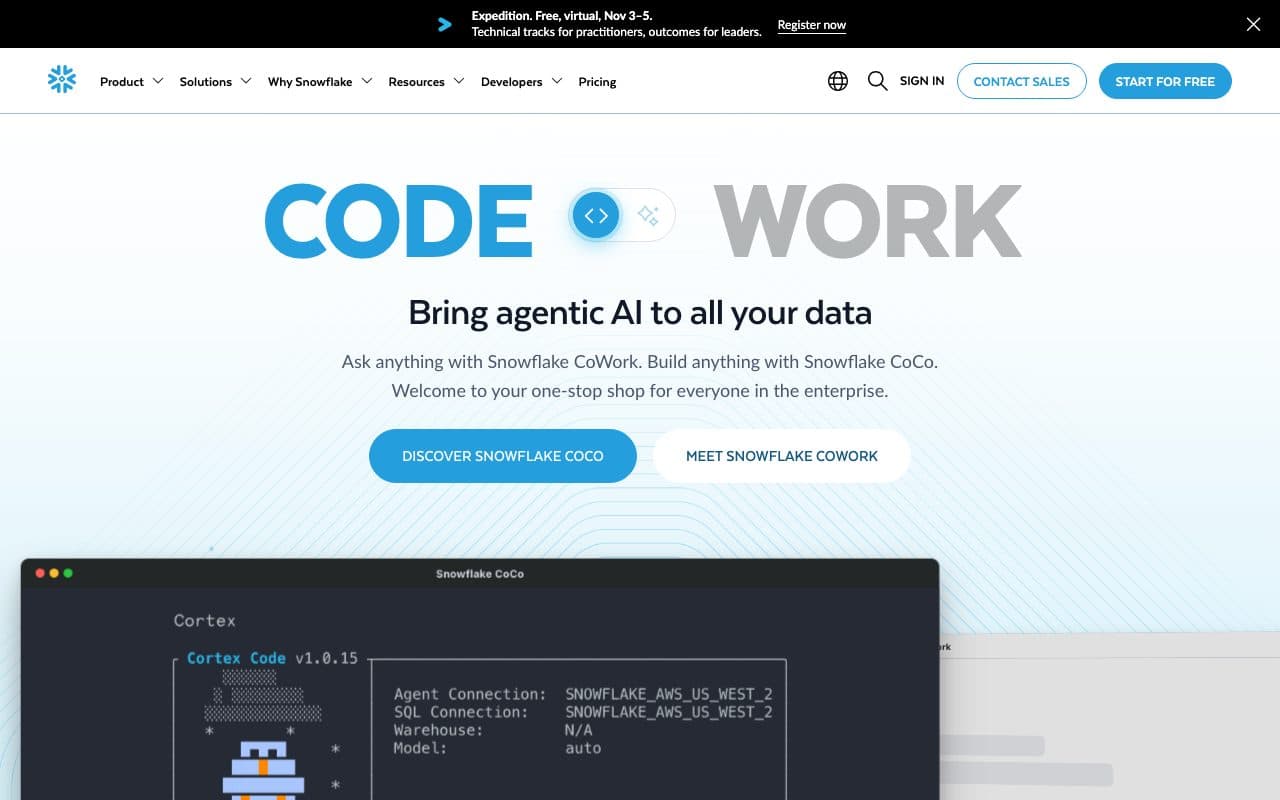
Snowflake is the leading cloud data warehouse for enterprise data teams. It separates compute from storage, scales elastically, and handles structured and semi-structured data at petabyte scale. Used by large enterprises as the central data platform for all business data: finance, operations, marketing, product, and more. Marketing data typically flows in via Fivetran, Supermetrics, or custom connectors.
Verdict
The gold standard for enterprise-scale data warehousing. Stores everything reliably, but requires significant data engineering to turn raw marketing data into attribution insights. No built-in attribution model, no CAPI activation, no 21-minute setup.
3. Google BigQuery: Best for Google Ecosystem Enterprises
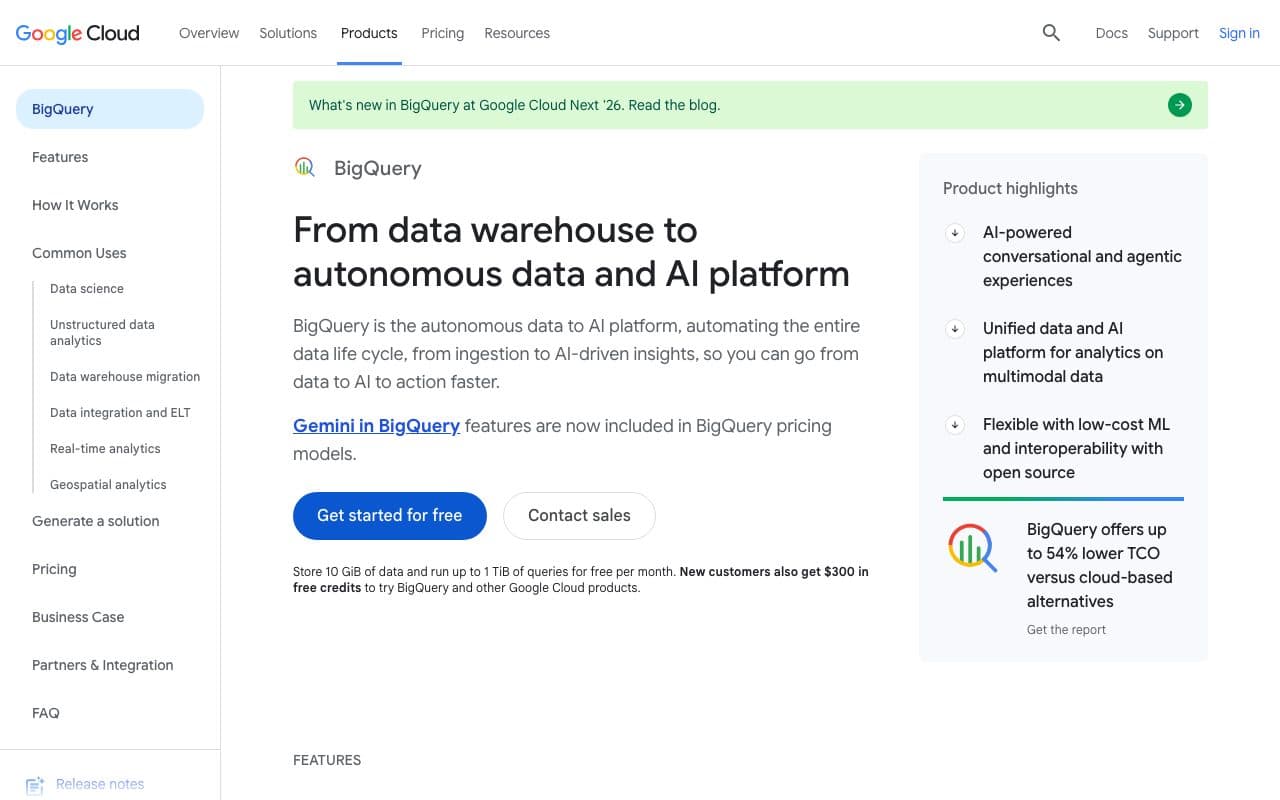
BigQuery is Google's serverless, highly scalable cloud data warehouse. Native integration with Google Analytics 4, Google Ads, and Looker Studio makes it the natural choice for enterprises already invested in the Google ecosystem. Strong for SQL-based analytics at scale, with a generous free tier for smaller data volumes.
Verdict
Excellent for Google-centric enterprises with strong analytics teams. Limited to what Google tracks natively: LinkedIn, Bing, and CRM pipeline data require additional connectors and engineering. No automated attribution or CAPI loop.
4. Amazon Redshift: Best for AWS Enterprise Infrastructure
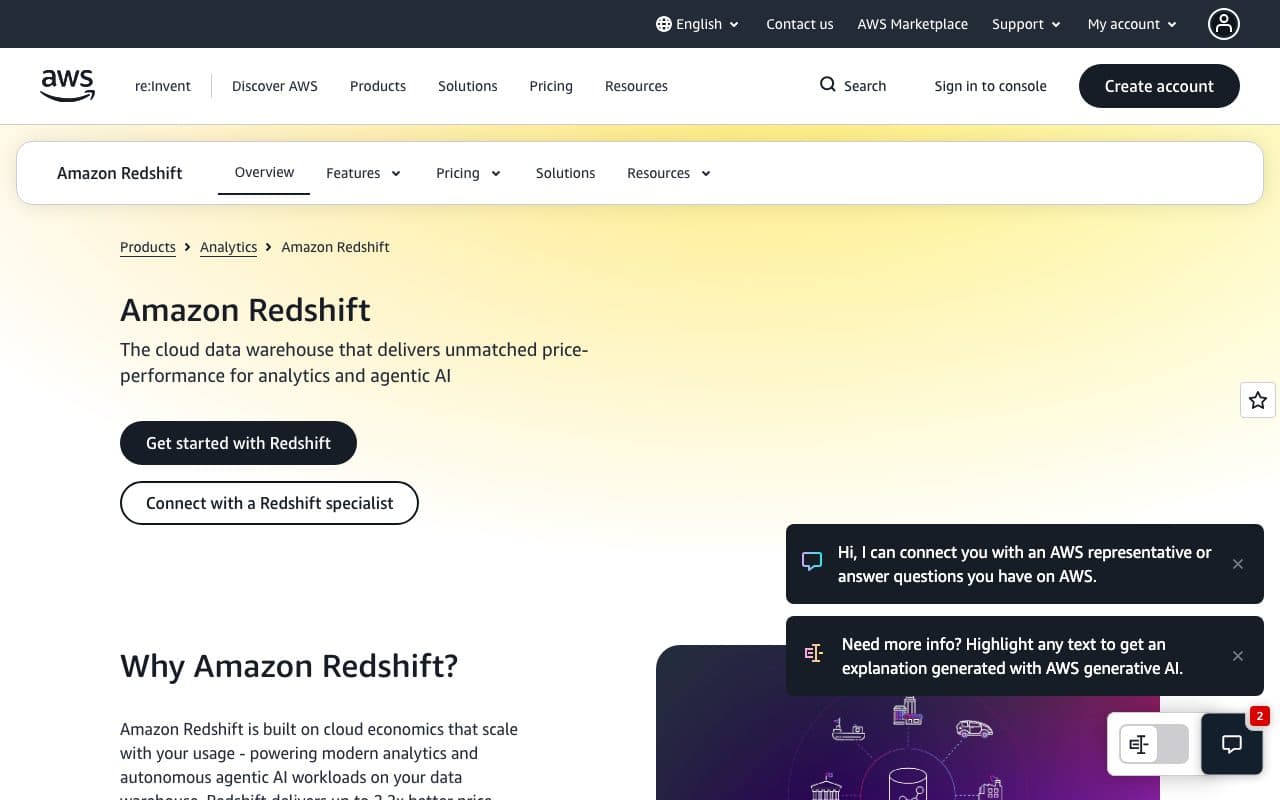
Amazon Redshift is AWS's enterprise data warehouse, tightly integrated with the broader AWS ecosystem (S3, Kinesis, Glue, SageMaker). Strong for enterprises standardized on AWS infrastructure. Columnar storage and parallel processing deliver fast query performance on large marketing datasets.
Verdict
Right for AWS-native enterprises with existing data engineering capacity. Like Snowflake and BigQuery, it stores data reliably but adds no marketing attribution intelligence out of the box.
5. Databricks: Best for ML-Driven Marketing Analytics
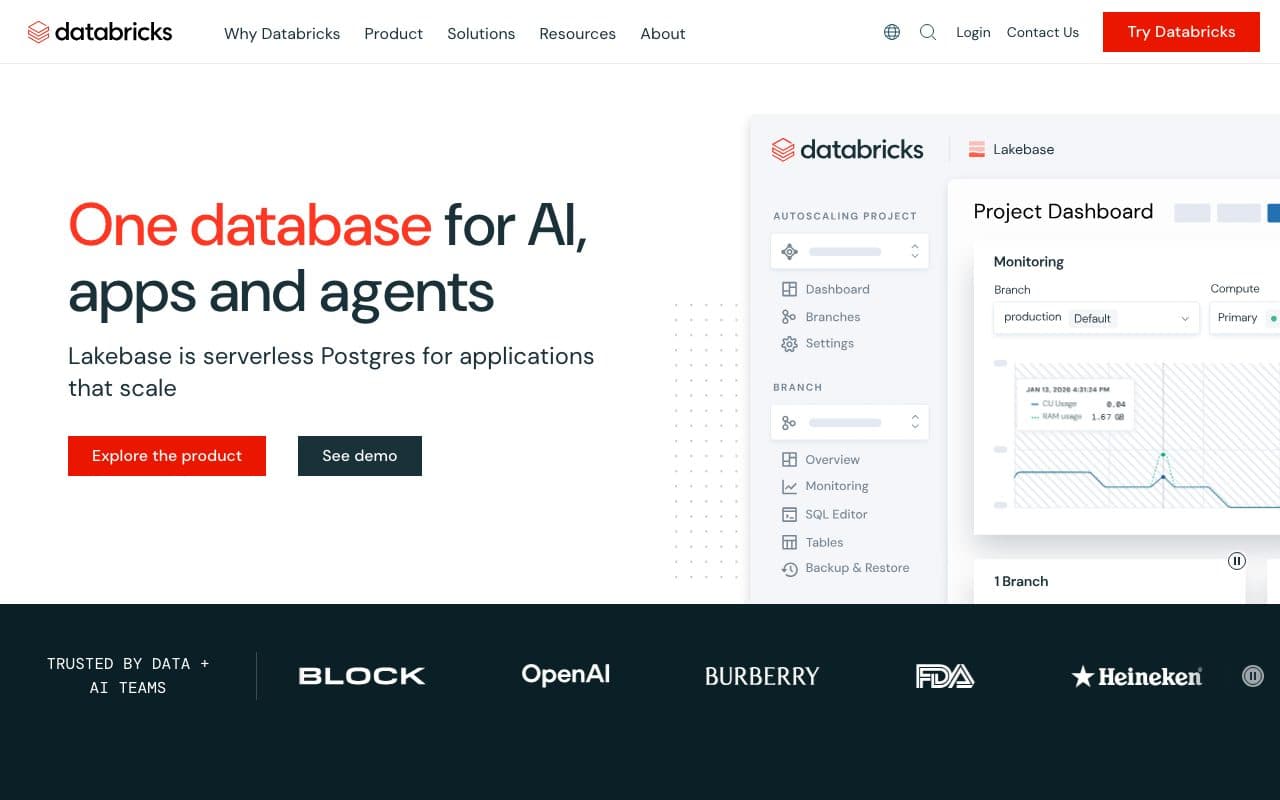
Databricks combines data lakehouse architecture with machine learning capabilities. Enterprises use it for advanced analytics, predictive modeling, and real-time data processing. The Databricks Lakehouse Platform supports both structured warehouse queries and unstructured data processing, and is popular with data science teams building custom attribution models.
Verdict
Best for enterprises with dedicated data science teams building custom ML models on marketing data. Extremely powerful but requires significant investment in engineering and data science resources.
6. Supermetrics: Best Marketing Data Connector to Warehouses

Supermetrics is not a warehouse itself. It's the most widely used tool to populate marketing data warehouses. It extracts raw data from 170+ sources and analytics tools and loads it into Snowflake, BigQuery, Redshift, and other destinations. The de facto standard for feeding marketing data into enterprise warehouses.
Verdict
Essential for the extract and load steps of marketing warehouse pipelines. Moves platform-reported data only: attribution intelligence and CRM enrichment must be built on top by the data team.
7. Funnel.io: Best for Normalized Marketing Data Warehousing
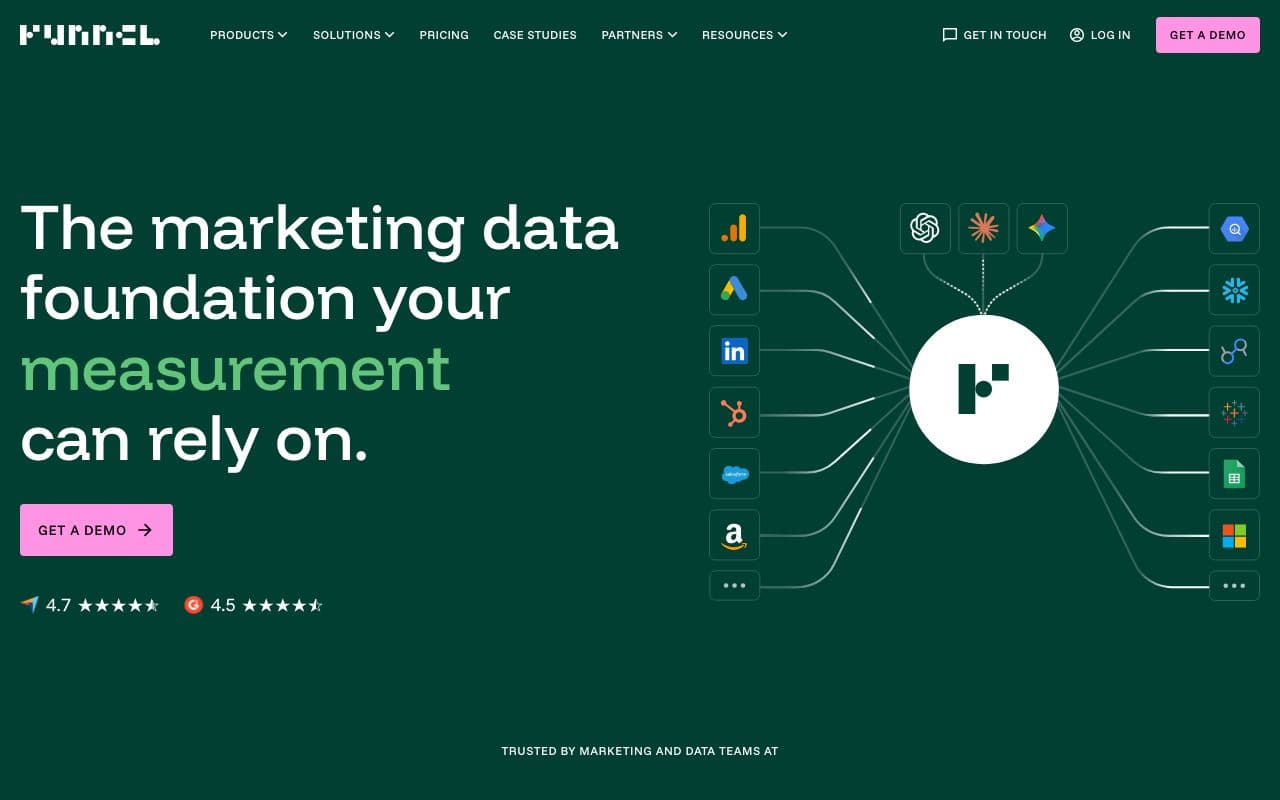
Funnel.io connects to 500+ marketing sources and loads clean, harmonized data into warehouses or its own storage layer. Strong for enterprises that need consistent metric definitions across dozens of ad platforms before data enters the warehouse. Reduces the data cleaning burden on analytics teams significantly.
Verdict
Excellent for normalizing platform-reported marketing data at scale. Stores cleaner data than raw connector tools, but still limited to what platforms report, no CRM enrichment, no CAPI activation.
8. Adverity: Best All-in-One Enterprise Marketing Data Platform

Adverity combines data ingestion from 800+ sources with transformation, storage, and analytics in one platform. It goes beyond raw warehousing by offering marketing mix modeling and AI-powered insights. Built for large enterprises that want a managed marketing data layer without building a custom Snowflake + dbt + Looker stack.
Verdict
Strong managed alternative to a custom warehouse stack for enterprise marketing analytics. Enterprise pricing and complexity. No CAPI activation loop: insights stay in the reporting layer.
9. Fivetran: Best for Automated Enterprise Data Pipeline Management
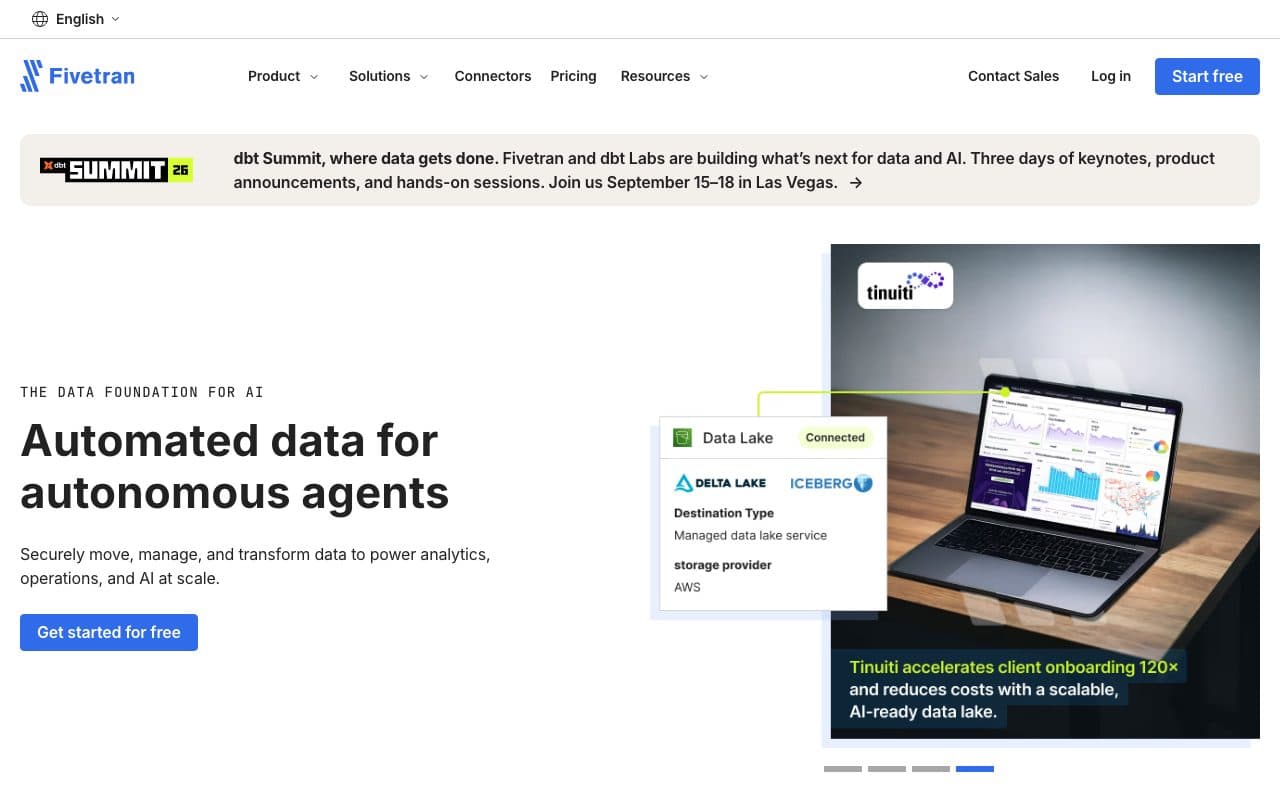
Fivetran automates data pipeline management for enterprise warehouses, handling schema changes, incremental loading, and data normalization across 300+ connectors. Reduces the data engineering burden of keeping warehouse pipelines healthy as source schemas change.
Verdict
Best-in-class for pipeline reliability and maintenance. A warehouse population tool, not an attribution solution. Requires a data team to build attribution logic on top.
10. Segment (Twilio): Best Customer Data Platform for First-Party Data
Segment collects first-party behavioral data from websites, apps, and backend systems and routes it to downstream tools including data warehouses. Strong for unifying customer identity data across touchpoints. Used by enterprise teams as the first-party data layer that feeds into Snowflake or BigQuery for analysis.
Verdict
Excellent for first-party behavioral data collection and routing. A complement to marketing warehouse setups, not a paid ads attribution solution. No CAPI loop, no CRM revenue enrichment.
11. Microsoft Azure Synapse Analytics: Best for Microsoft Enterprise Ecosystems
Azure Synapse combines data warehousing with big data analytics in a unified Microsoft ecosystem experience. Deep integration with Azure Data Factory, Power BI, and Microsoft Fabric. Natural choice for enterprises standardized on Microsoft infrastructure and using LinkedIn Ads as a primary channel given native LinkedIn connector capabilities.
Verdict
Right for Microsoft-native enterprises with existing Azure infrastructure. Like other warehouse platforms, stores data but requires engineering to add attribution intelligence on top.
12. dbt Cloud: Best for Enterprise Data Transformation on Top of Warehouses
dbt Cloud is the managed version of the open-source dbt transformation tool. It enables data analysts to write SQL-based transformation models that run inside the warehouse, turning raw loaded data into clean attribution-ready tables. The standard for the transformation layer in modern enterprise data stacks alongside Fivetran (extract/load) and Snowflake/BigQuery (storage).
Verdict
Essential for enterprise teams building custom attribution models in their warehouse. Requires SQL expertise and a data engineering team to maintain. Not a turnkey solution for marketing teams.
13. Looker (Google Cloud): Best BI Layer for Marketing Warehouses

Looker is Google's enterprise BI platform that sits on top of data warehouses. It models warehouse data with LookML and delivers dashboards, reports, and embedded analytics to business users. Popular for enterprise marketing teams that want self-service reporting on top of a Snowflake or BigQuery marketing data warehouse.
Verdict
Best-in-class BI layer for enterprise warehouse reporting. A visualization tool, not a data source: the quality of marketing insights depends entirely on the attribution logic built into the underlying warehouse data model.
14. SegmentStream: Best for AI Attribution Modeling on Warehouse Data
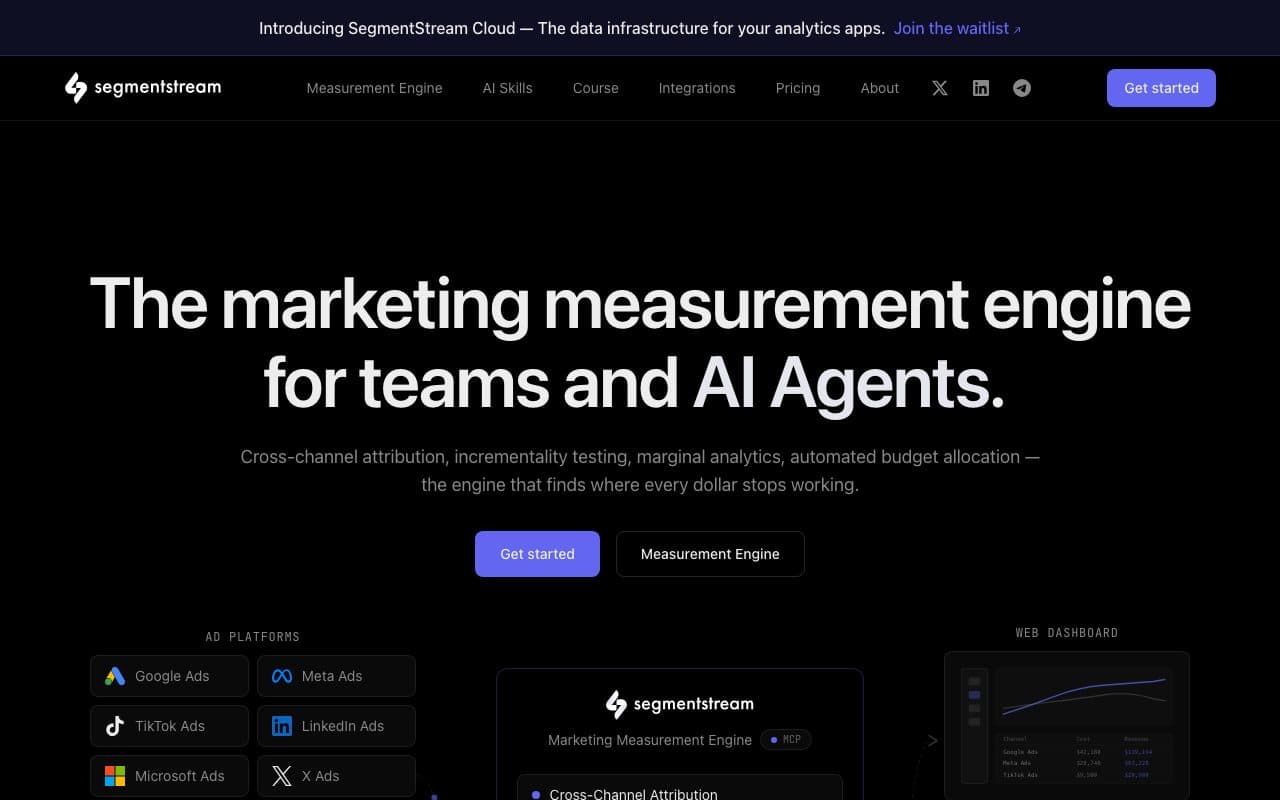
SegmentStream collects marketing data and applies AI-driven predictive attribution modeling to estimate channel contribution when direct tracking data is unavailable. Designed to solve iOS 14+ data loss through probabilistic modeling rather than server-side tracking. Connects to enterprise warehouses as a data source.
Verdict
Useful for enterprises that want AI-modeled attribution layered on top of warehouse data. LeadJourney eliminates the tracking gaps at source with server-side capture rather than modeling around them, delivering deterministic rather than probabilistic results.
15. Improvado: Best Managed Marketing Data Warehouse for Large Enterprises
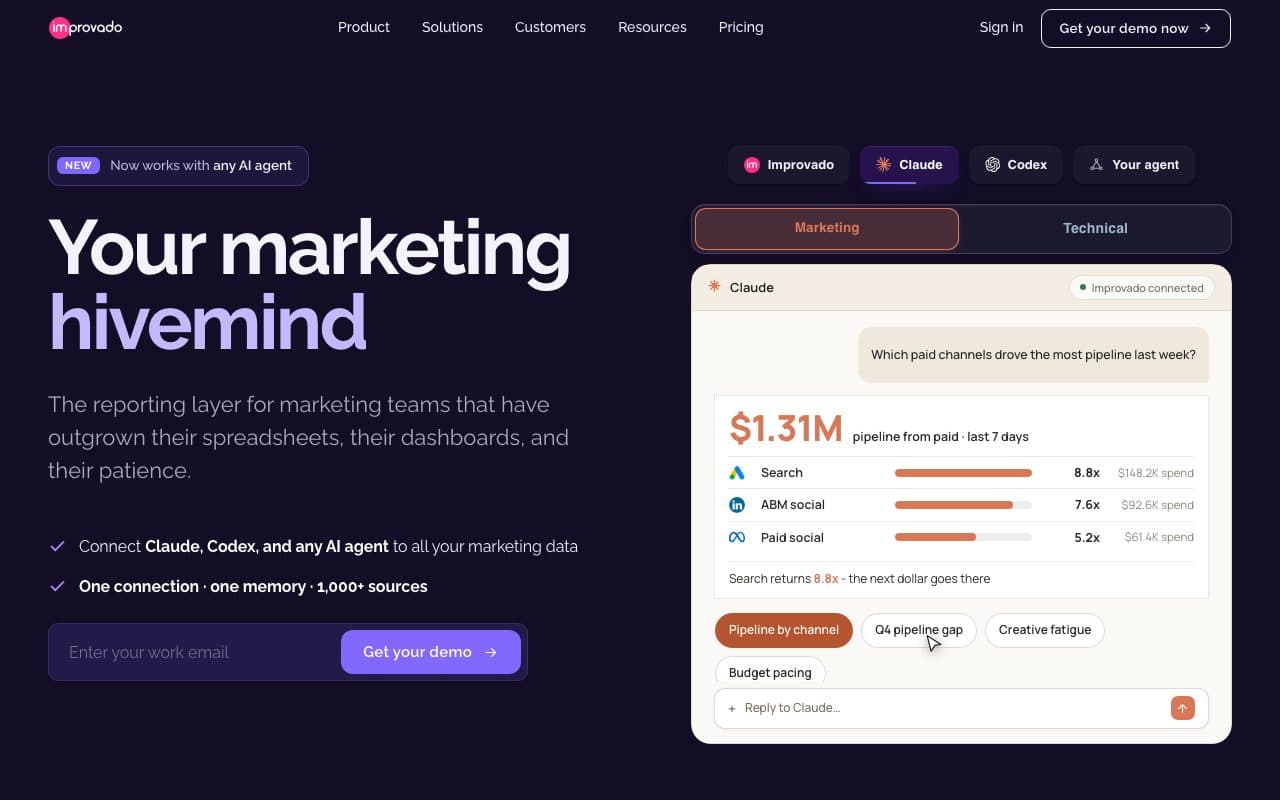
Improvado is a managed marketing analytics platform that handles data ingestion from 1,000+ sources, transformation, and storage in its own data layer or connected warehouses. Positioned as a done-for-you alternative to custom Fivetran + Snowflake + dbt stacks. Agencies and large enterprise marketing teams use it to avoid building and maintaining custom data pipelines.
Verdict
Strong managed alternative for enterprises that want someone else to handle the data pipeline. Stores and reports platform-reported metrics: no independent server-side tracking layer, no CRM revenue attribution, no CAPI activation.
Passive Warehouses vs. Active Attribution: What Enterprise Marketing Teams Actually Need
Enterprise marketing teams that invest in data warehouses typically fall into one of two traps. The first: building a technically impressive Snowflake + Fivetran + dbt + Looker stack that stores clean data and produces beautiful dashboards, but answers the wrong question. Platform-reported metrics, however cleanly stored, don't tell you which campaigns produced closed revenue.
The second trap: spending months on data engineering before getting any marketing insights at all. Enterprise warehouse implementations routinely take six to twelve months from kickoff to first useful dashboard. By the time the pipeline is running, the campaigns that ran during implementation generated no learnable data.
LeadJourney avoids both traps. It is purpose-built for marketing attribution, not general-purpose data warehousing, so it answers the right questions immediately. It stores accurate server-side data from day one, connects it to CRM revenue outcomes, and activates it back to ad platforms without a single data engineer. Enterprise teams that need a general-purpose warehouse for non-marketing data can still use Snowflake or BigQuery, and add LeadJourney as their dedicated marketing attribution layer in parallel.
In the glossary
FAQ
Frequently Asked Questions
The questions teams choosing a marketing data warehouse ask most.
What is a marketing data warehouse?
A marketing data warehouse is a centralized repository that aggregates data from all your marketing platforms, CRMs, and other sources into a single queryable database. Common choices are Google BigQuery, Snowflake, and Amazon Redshift. Data warehouses enable custom BI analysis but require engineering resources to maintain.
What is the best marketing data warehouse for B2B teams?
Google BigQuery is the most popular for marketing teams due to its native integration with Google Analytics and Looker Studio. Snowflake is preferred for enterprise teams needing cross-cloud flexibility. For B2B teams that need attribution first and data warehousing second, pairing LeadJourney with a data warehouse via CRM export works well.
Do I need a data warehouse for marketing attribution?
No. Most B2B teams do not need a data warehouse to get accurate revenue attribution. LeadJourney stores attribution data directly in your CRM records and provides a built-in attribution dashboard. A data warehouse becomes valuable when you need to combine attribution data with product analytics, finance data, or other systems for custom analysis.
How does a marketing data warehouse improve campaign performance?
A data warehouse improves analysis depth by centralizing all your data. But it does not directly improve campaign performance. Closing the CAPI loop, which sends CRM conversion signals back to ad platforms, directly improves campaign performance by training ad algorithms on real buyer data. LeadJourney does this automatically.
What is the difference between a marketing data warehouse and an ETL tool?
A data warehouse is the destination: a database that stores your consolidated marketing data. An ETL tool is the pipeline: it extracts data from source systems, transforms it, and loads it into the warehouse. Fivetran and Airbyte are ETL tools. BigQuery and Snowflake are data warehouses. You need both to build a data warehouse setup.
Keep reading
More from the blog
 Tool Comparisons
11 Best iGaming Tracking Software Tools in 2026
Every iGaming tracker takes a postback. Fewer split reg, FTD and deposit into stages of one player, and fewer still send the FTD back to Google and Meta. Eleven tools ranked on that, with every price read on the vendor's own page.Read the article18 min read Tool Comparisons
9 Best Marketing Attribution Tools for Zoho CRM in 2026
Four of the best attribution tools for Zoho CRM are Zoho products you may already pay for. Nine options compared on where the tracking starts, which ad platforms they cover, and whether the closed deal ever reaches the algorithm buying your traffic.Read the article13 min read Tool Comparisons
9 Best Marketing Attribution Tools for Microsoft Dynamics 365 in 2026
Dynamics records the revenue and nothing fills in where it came from: Lead Source is a ten-option picklist and campaign spend is typed by hand. Nine tools compared on what each can actually see in a Dynamics environment, with pricing, pros, cons and a verdict.Read the article14 min read
Beyond storage
Ready to replace your passive warehouse?
Purpose-built marketing data warehouse with server-side accuracy, CRM revenue enrichment, and CAPI activation. Enterprise workspaces. 21-minute setup. No data engineers needed.