













BlogTool Comparisons
15 Best KPI Dashboard Tools in 2026
Most KPI dashboards present platform-reported clicks and leads, but the metrics leadership asks for, cost-per-close and pipeline revenue per channel, live in the CRM. Fifteen dashboard tools ranked on whether they reach that number, from agency reporting suites to enterprise BI.


Contents
Summarise this article with AI
Opens the page with a ready prompt in:


Nothing is sent until you pick a service.
KPI dashboard tools are how marketing and sales teams answer the question leadership asks every Monday morning: what's working, what's not, and where should we focus? A great KPI dashboard doesn't just display numbers. It surfaces the metrics that drive decisions. The wrong tool gives you a wall of charts that looks impressive but tells you nothing you can act on.
For B2B marketing teams the challenge is deeper than for eCommerce: your most important KPIs (cost-per-close, qualified lead rate, pipeline contribution per channel) don't live inside Meta or Google. They live in your CRM. Most KPI dashboard tools pull platform-reported metrics and present them beautifully, but they can't connect ad spend to closed revenue. The tools ranked highest on this list close that gap.
Quick Summary: Best KPI Dashboard Tool in 2026
In short
LeadJourney is the best KPI dashboard tool for B2B companies and agencies that need to track the metrics that actually matter: cost-per-close, qualified lead rate, pipeline revenue per campaign, and ROAS based on actual deals. It connects ad platform data to CRM pipeline stages in real time, giving marketing and leadership a single dashboard that shows the full funnel from first ad click to closed revenue. Server-side tracking at 95%+ accuracy, per-client or per-division workspaces, and automated CAPI closed loop to Meta, Google, LinkedIn, and Bing. Rated 5.0 on Trustpilot, top-rated on G2, Capterra, and Software Advice. 14-day free trial.
The 15 best KPI dashboard tools at a glance
| Tool | Key features | Best for | Pricing |
|---|---|---|---|
| Rank 1LeadJourney | Server-side tracking 95%+; CRM pipeline attribution; 4-platform CAPI loop; Atlas AI analyst | B2B companies & agencies needing revenue attribution | 14-day free trial |
| Rank 2Databoxvs LeadJourney | Drag-and-drop dashboards, 130+ integrations, automated reporting | Teams wanting simple visual reporting | Free & from $64/mo |
| Rank 3Klipfolio | Highly customizable real-time dashboards, flexible data modeling | Flexible custom KPI dashboards | From $120/mo |
| Rank 4Looker Studio (Google Data Studio)vs LeadJourney | Native Google integrations, free, customizable templates | Teams using Google Workspace | Free |
| Rank 5AgencyAnalyticsvs LeadJourney | White-label dashboards, 80+ integrations, automated reports | Agencies wanting white-label dashboards per client | From $20 per client/mo |
| Rank 6DashThisvs LeadJourney | Easy setup, 30+ integrations, scheduled reports | Fast KPI report generation | From $44/mo |
| Rank 7Power BI (Microsoft) | Deep Microsoft integration, advanced AI visuals, large data sets | Microsoft-centric enterprise teams | Starts at $10/user/mo |
| Rank 8Tableau | Drag-and-drop visual analytics, robust data blending | Enterprise data visualization and analytics | From $15/user/mo (Viewer) |
| Rank 9HubSpot Reporting | CRM-native reporting, no additional cost for HubSpot customers | HubSpot ecosystems | Included in HubSpot |
| Rank 10Whatagraphvs LeadJourney | 55+ channels, visually polished reports, automated scheduling | Visual cross-channel KPI reports | From €699/mo |
| Rank 11Supermetricsvs LeadJourney | 100+ platform connectors, flexible destinations | Custom KPI dashboards | From €49/mo |
| Rank 12Geckoboard | Always-on TV wall dashboards, real-time KPI display | Live KPI wallboards and TV dashboards | From $79/mo |
| Rank 13Looker (Google Cloud)vs LeadJourney | SQL-based modeling, embedded analytics, 50+ connectors | Enterprise BI and custom KPI modeling | Custom enterprise pricing |
| Rank 14Cometlyvs LeadJourney | Server-side tracking, CRM revenue attribution, AI optimization | Paid-channel attribution KPIs | Custom (demo required) |
| Rank 15Ruler Analyticsvs LeadJourney | Call tracking, CRM revenue sync, multi-channel attribution | Call-driven businesses | From £299/mo |


1. LeadJourney: Best KPI Dashboard for B2B Revenue Metrics
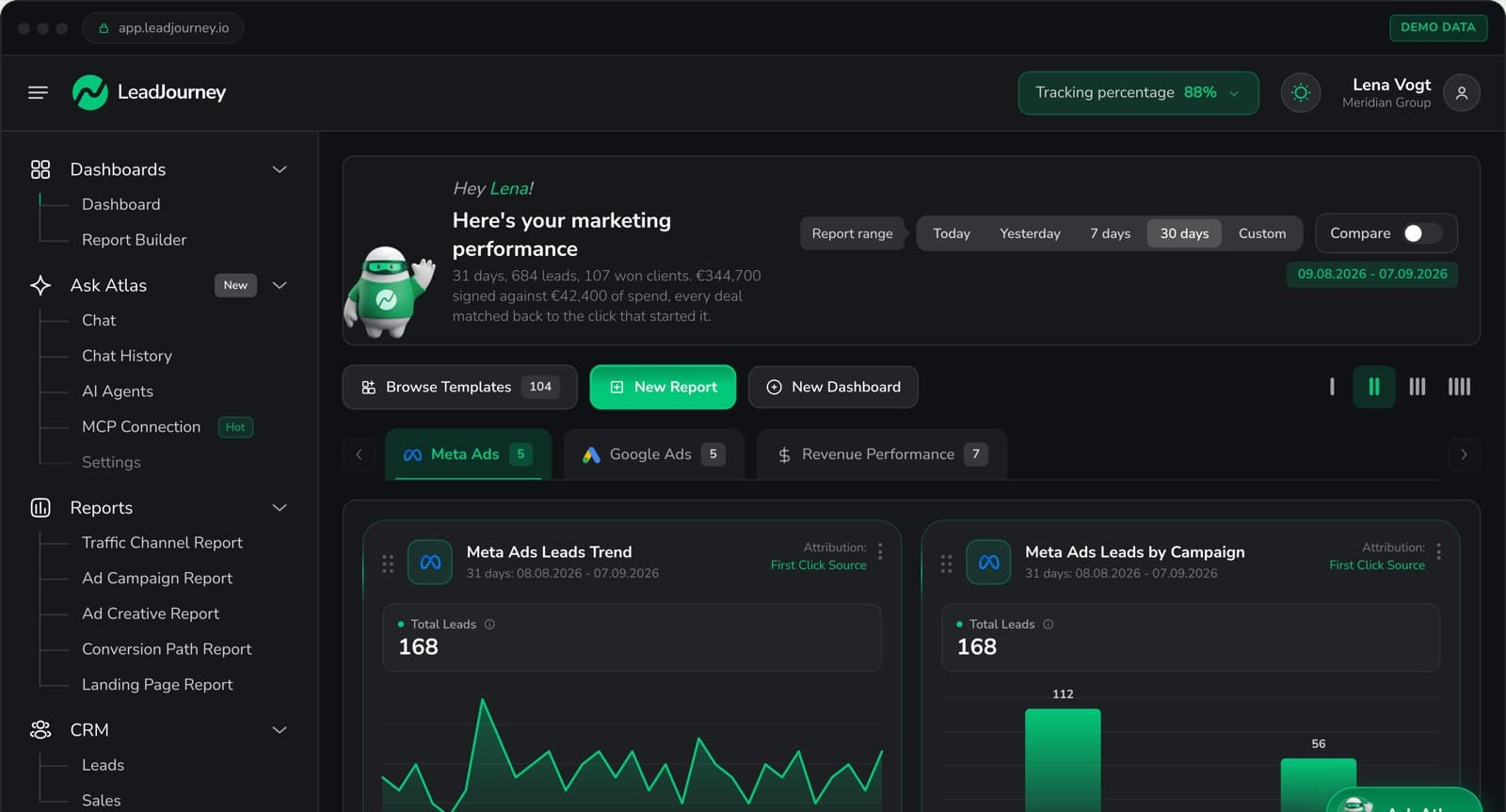
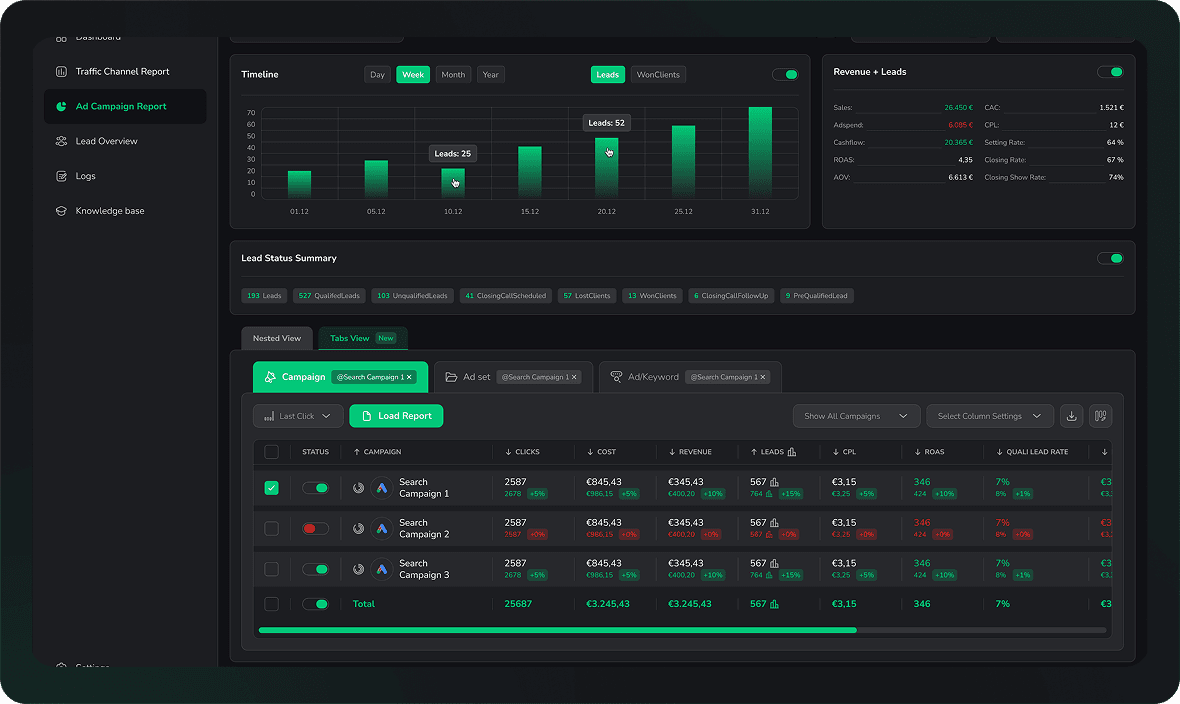
LeadJourney is the only KPI dashboard tool that tracks the metrics B2B companies and agencies actually need to report to leadership: not impressions or CTR, but cost-per-qualified-lead, cost-per-close, pipeline stage conversion rates, and deal revenue per channel and campaign. While other dashboard tools display what ad platforms tell you, LeadJourney connects every marketing touchpoint to your CRM pipeline and presents the full funnel in a single unified view.
For agencies and enterprise teams, the workspace model makes multi-client or multi-division KPI tracking clean: each entity gets its own isolated dashboard environment with its own KPIs, attribution model, and reporting cadence. A central overview lets leadership see performance across all workspaces. And unlike passive dashboard tools, LeadJourney's KPI data actively feeds back to ad platforms: when a deal closes, those signals go to Meta, Google, LinkedIn, and Bing simultaneously, training algorithms to find more buyers like the ones that converted.
Key Features
- Full-funnel KPI dashboard: cost-per-click, cost-per-lead, cost-per-qualified-lead, cost-per-close, and deal revenue per channel, campaign, ad set, and creative
- CRM pipeline KPIs: qualified lead rate, appointment show rate, close rate, and average deal value connected to every marketing source
- Unified multi-channel view: paid (Meta, Google, LinkedIn, Bing), Organic Search, Organic Social, email, AI search engines, and custom channels in one normalized dashboard
- Server-side tracking at 95%+ accuracy: dashboard KPIs based on complete data, not the 40-60% that survives pixel tracking
- Five attribution models: switch between first touch, last touch, linear, time-decay, and position-based to understand each channel's true KPI contribution
- Agency workspace model: separate KPI dashboard per client or division, central overview, per-workspace pricing
- Atlas AI analyst: ask KPI questions in plain language (which campaign has the lowest cost-per-close this month?)
- Automated CAPI closed loop: KPI insights activate as conversion signals to all four ad platforms simultaneously
- 21-minute setup: no developer, no BI resources required to get your KPI dashboard running
Pros
- The only KPI dashboard that tracks cost-per-close: all other tools stop at leads or platform-reported conversions
- CRM pipeline KPIs connected to marketing spend: see exactly which channels and campaigns drive qualified leads and closed revenue
- Active dashboard: KPI data feeds back to ad algorithms via CAPI, improving campaign performance automatically
- 95%+ accurate data: dashboard KPIs reflect reality, not platform estimates
- 14-day free trial, no credit card
Cons
- Not a general-purpose BI dashboard: purpose-built for marketing attribution KPIs, not financial or operational reporting
- E-commerce runs through the Shopify integration or a manually connected shop system (ROAS and customer origin), without product-level catalogue analytics
Verdict
LeadJourney is the best KPI dashboard tool for B2B companies, agencies, and enterprise teams that need to report on revenue metrics, not vanity metrics. It's the only dashboard that connects marketing spend to CRM pipeline outcomes and closed revenue, and actively improves campaign performance through CAPI feedback.
What Real Users Say About LeadJourney
Hands down the best B2B attribution platform for agencies.
Connected LeadJourney for 2 clients, setup took literally 20 minutes each. The data became more accurate, the reports actually make sense. Now clients look at the dashboard and the 'why don't the numbers match?' questions are gone.
 Alexander SamarPerformance Marketing Agency
Read verified reviews on Trustpilot, G2, Capterra, Software Advice, and leadjourney.io/testimonials.
2. Databox: Best for Real-Time Multi-Source KPI Monitoring
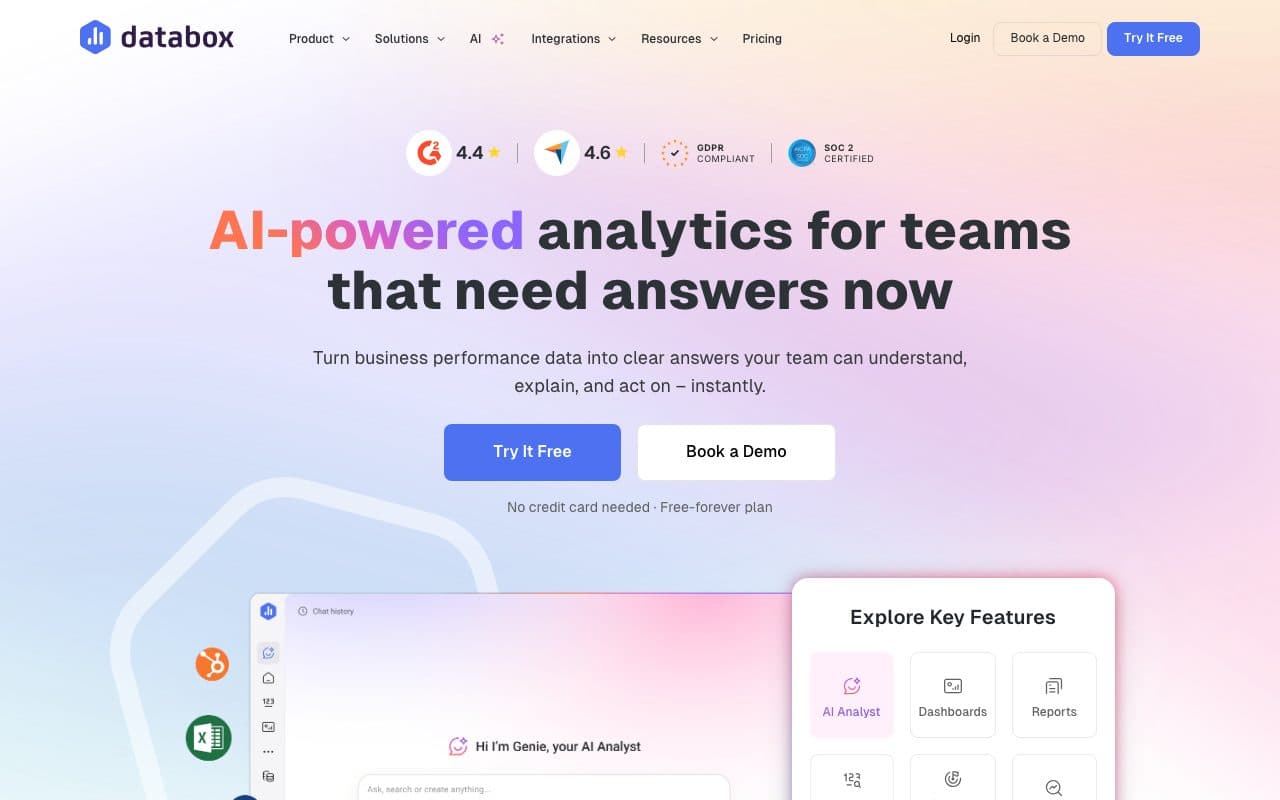
Databox is one of the most popular KPI dashboard tools for SMBs and agencies. It connects to 130+ integrations and displays KPIs in real-time with goal tracking, performance alerts, and benchmarking against industry averages. The drag-and-drop dashboard builder makes it accessible for non-technical marketing teams.
Verdict
Excellent for real-time monitoring of platform-reported KPIs across many tools. Displays what your connected sources report: no independent CRM attribution, no cost-per-close, no CAPI loop.
3. Klipfolio: Best for Flexible Custom KPI Dashboards
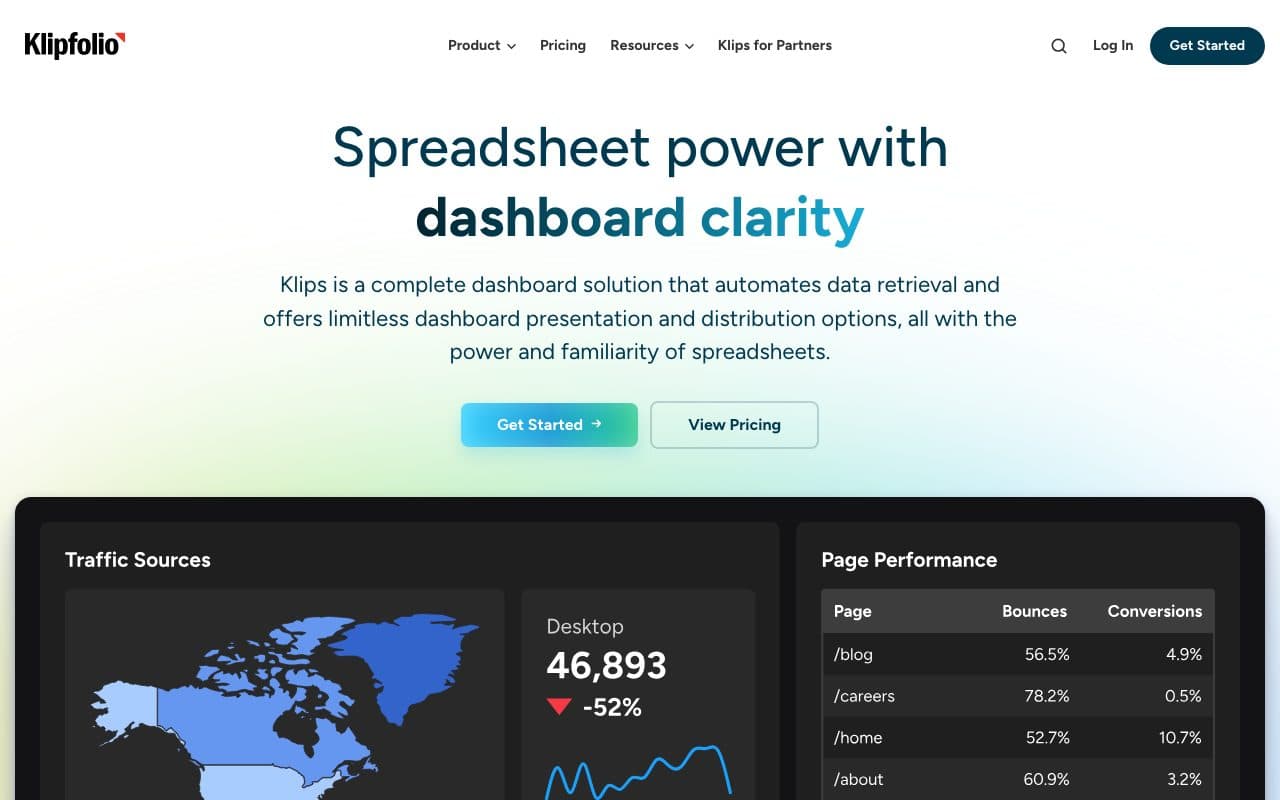
Klipfolio is a highly flexible KPI dashboard platform that connects to hundreds of data sources and lets teams build fully customized metric views. Strong for agencies and in-house teams that need bespoke KPI layouts tailored to specific client or executive reporting requirements. The formula engine allows custom metric calculations.
Verdict
Best-in-class for custom KPI visualization. Requires manual setup to get value, and like all dashboard aggregators, the insight quality depends entirely on the data sources connected. No built-in attribution or CRM pipeline depth.
4. Looker Studio (Google Data Studio): Best Free KPI Dashboard

Looker Studio is Google's free reporting and dashboard tool, deeply integrated with Google Analytics, Google Ads, Search Console, and Sheets. The most widely used free KPI dashboard for marketing teams. Highly customizable with community connectors, but requires time to build well-structured dashboards.
Verdict
The right free starting point for Google-centric teams. Strong for Google channel KPIs, weak for LinkedIn, Bing, and CRM revenue attribution. No server-side tracking or CAPI loop.
5. AgencyAnalytics: Best KPI Dashboard for Marketing Agencies
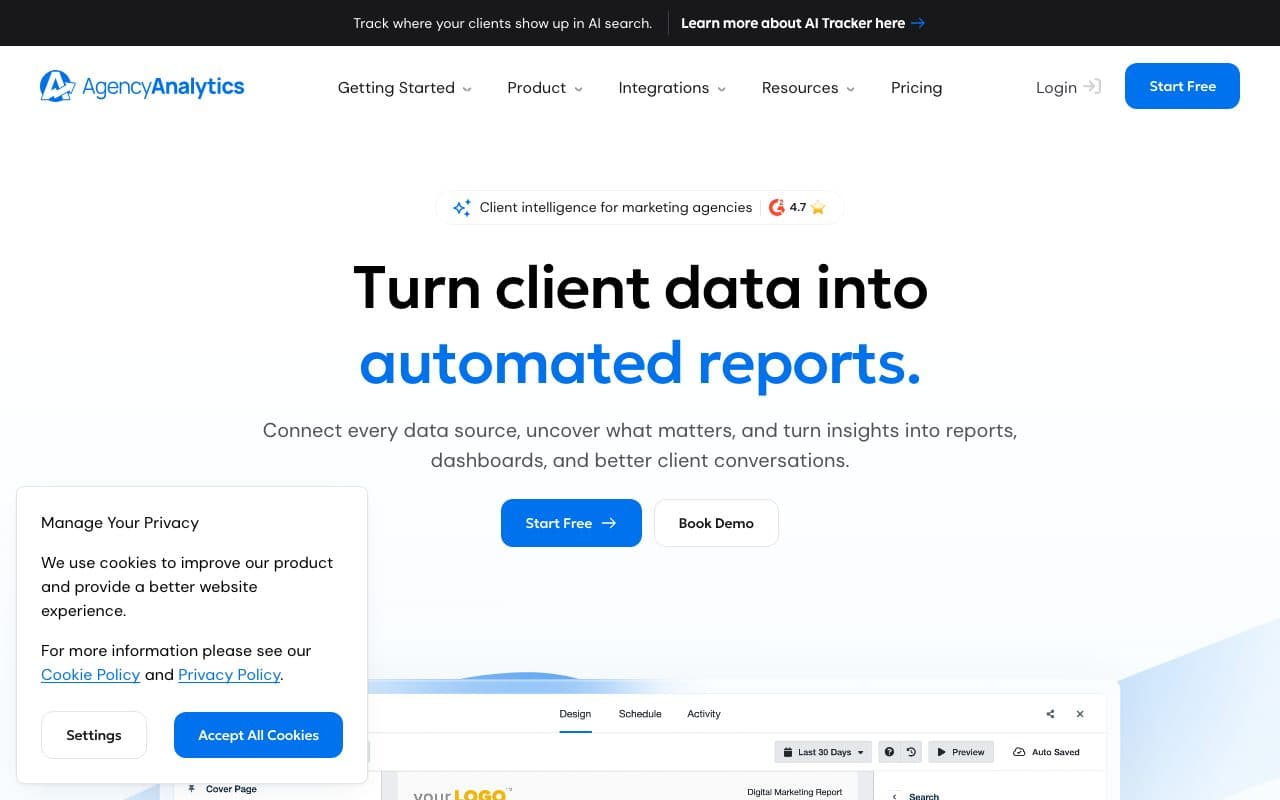
AgencyAnalytics is purpose-built for marketing agencies: white-label client dashboards, 80+ integrations across SEO, PPC, social, and email, automated report delivery, and client portal access. Strong for agencies that need to present multi-channel KPI dashboards to clients on a monthly basis.
Verdict
The go-to for white-label agency KPI reporting. Reports platform-reported metrics: no CRM pipeline depth, no cost-per-close, no CAPI loop to improve client campaigns.
6. DashThis: Best for Fast KPI Report Generation
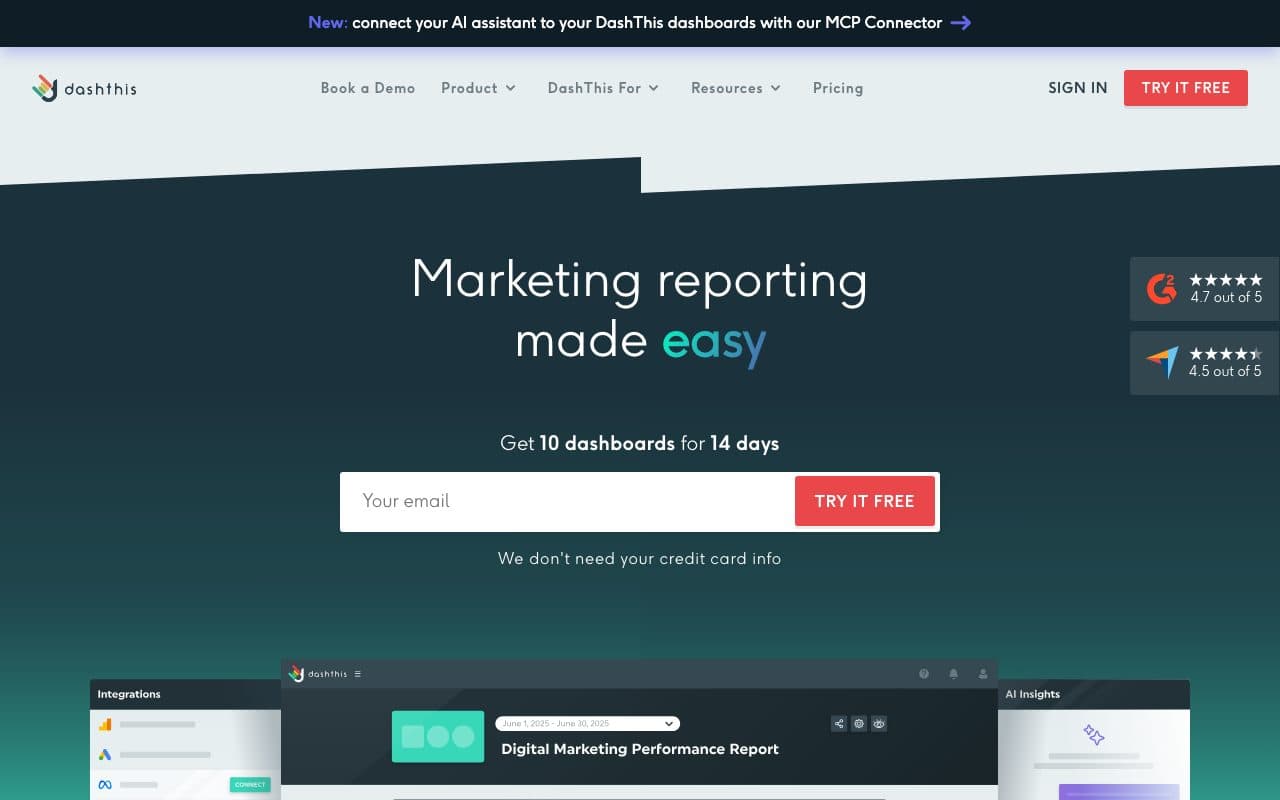
DashThis focuses on speed: connect your data sources, select your KPIs, and generate a professional client report in minutes. White-label options, automated scheduling, and an intuitive interface make it popular with smaller agencies that need reliable monthly KPI reporting without complex setup.
Verdict
Fast and clean for monthly KPI reporting. Platform-reported metrics only: no revenue attribution, no CRM connection.
7. Power BI (Microsoft): Best Enterprise KPI Dashboard for Microsoft Stacks
Power BI is Microsoft's enterprise BI and KPI dashboard platform, deeply integrated with Azure, Excel, Dynamics CRM, and LinkedIn Ads. Highly customizable with DAX formulas and hundreds of connectors. The standard for enterprise teams standardized on Microsoft infrastructure that need KPI dashboards across marketing, sales, finance, and operations in one environment.
Verdict
Best-in-class enterprise BI dashboard for Microsoft-native organizations. Requires data engineering to build marketing attribution models on top of raw data. No built-in server-side tracking or CAPI activation.
8. Tableau: Best for Advanced Marketing Data Visualization
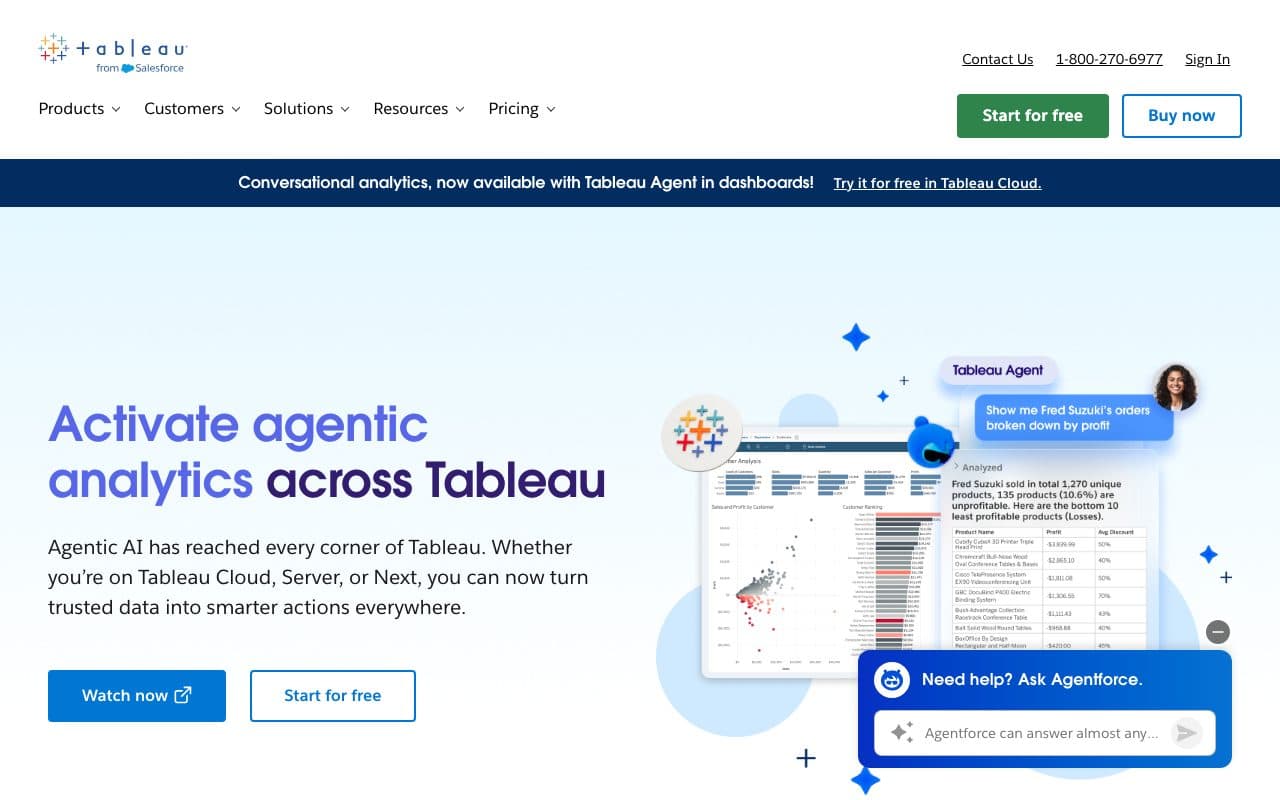
Tableau is one of the most powerful data visualization platforms for enterprise KPI dashboards. It handles complex data models, advanced calculations, and interactive visualizations at scale. Popular with large enterprise analytics teams that need to present sophisticated marketing performance KPIs to executive stakeholders.
Verdict
Best-in-class for advanced KPI visualization and storytelling. Requires a data analyst to maintain. Visualizes data from connected sources: attribution quality depends on the underlying data model, not Tableau itself.
9. HubSpot Reporting: Best KPI Dashboard for HubSpot Ecosystems

HubSpot's built-in reporting connects marketing, sales, and service KPIs within its own ecosystem. For teams running their full funnel inside HubSpot (ads, landing pages, email, CRM, and sales), it delivers a coherent KPI view across the customer lifecycle. Strong for contact-level attribution within the HubSpot stack.
Verdict
Excellent in-ecosystem KPI reporting for full HubSpot users. Limited for teams running significant paid campaigns outside HubSpot or needing cross-platform attribution across Meta, LinkedIn, and Bing.
10. Whatagraph: Best for Visual Cross-Channel KPI Reports
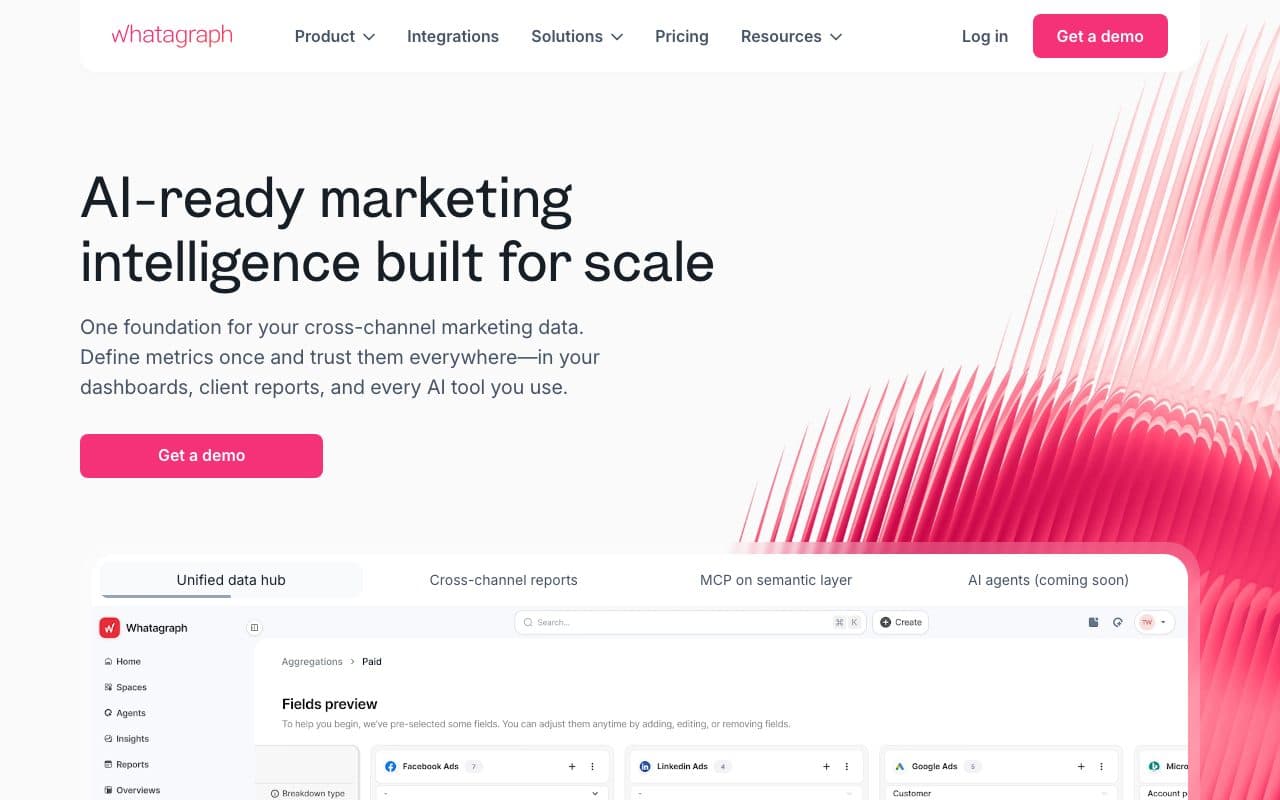
Whatagraph is built for producing visually polished cross-channel KPI reports for clients. Connects to 55+ data sources with a drag-and-drop report builder, automated delivery, and white-label branding. Popular with agencies that prioritize presentation quality in their client KPI reporting.
Verdict
Strong for visually impressive cross-channel KPI summaries. Platform-reported metrics only: no CRM revenue attribution, no cost-per-close KPI.
11. Supermetrics: Best Data Layer for Custom KPI Dashboards
Supermetrics feeds raw platform data into Looker Studio, Google Sheets, or BI tools where teams build their KPI dashboards. The de facto standard for populating custom marketing dashboards with multi-platform data. Not a dashboard tool itself: it's the data layer that makes custom dashboards possible.
Verdict
Essential for teams building custom KPI dashboards in Looker Studio or Google Sheets. Moves platform-reported data: attribution intelligence must be added on top by the team.
12. Geckoboard: Best for Live KPI Wallboards and TV Dashboards
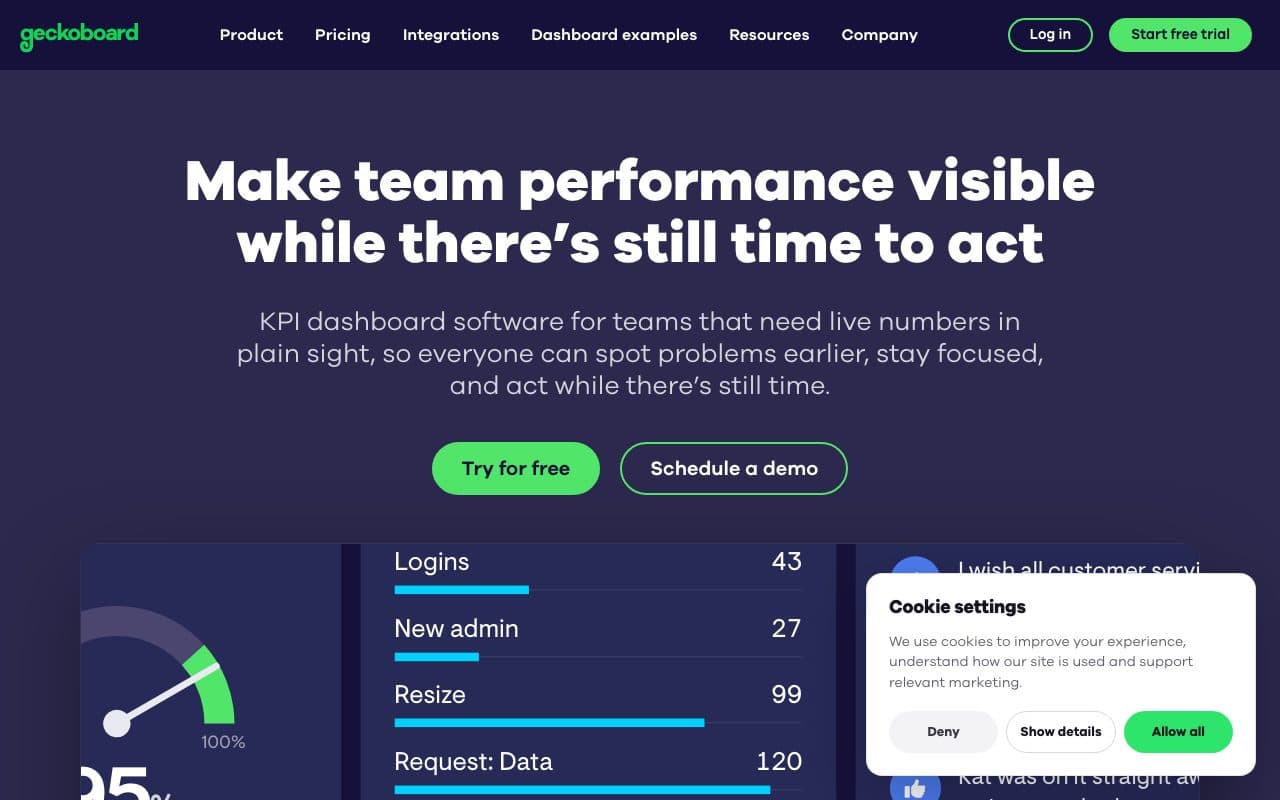
Geckoboard specializes in live KPI wallboards designed to display on office TVs and screens. Simple to set up, connects to 80+ sources, and displays real-time KPIs in a format optimized for large screens. Popular with sales and marketing teams that want always-visible KPI tracking across the office.
Verdict
Best for office KPI wallboards. Displays platform-reported metrics in real time: no attribution depth, no CRM integration, no revenue KPIs.
13. Looker (Google Cloud): Best Enterprise KPI Dashboard on Warehouse Data
Looker (the enterprise platform, distinct from Looker Studio) models data in cloud warehouses with LookML and delivers sophisticated KPI dashboards and embedded analytics. Used by large enterprises that need consistent KPI definitions across business units and self-service analytics for non-technical stakeholders.
Verdict
Best-in-class enterprise KPI modeling on warehouse data. The quality of marketing KPIs depends on the attribution logic built into the underlying data model. Requires data engineering to set up and maintain.
14. Cometly: Best for Paid-Channel Attribution KPIs
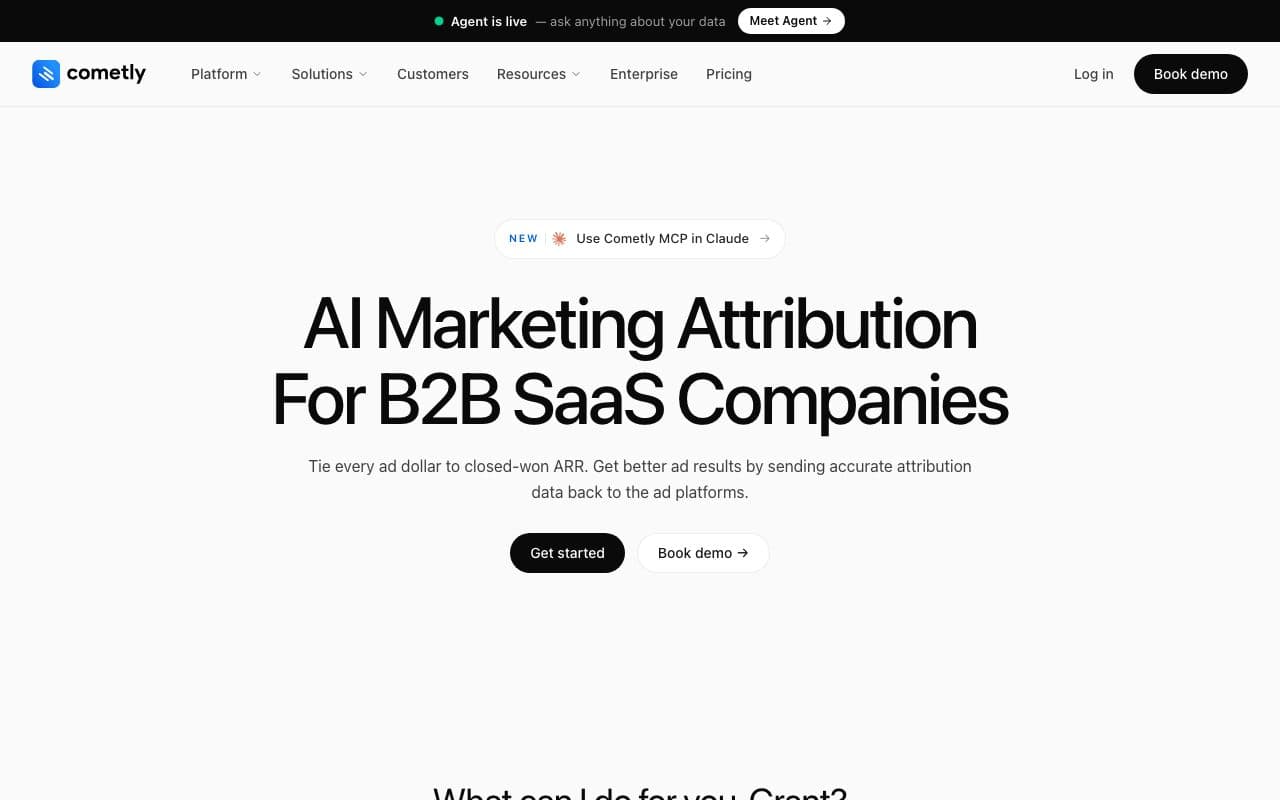
Cometly provides server-side attribution with AI optimization recommendations for paid channels. Goes deeper than standard dashboard tools by offering actual attribution KPIs for paid campaigns rather than just platform-reported numbers. Limited to paid channels without organic, AI search, or CRM pipeline depth.
Verdict
A step up from standard dashboards for paid attribution KPIs. Missing organic channel coverage and the CRM pipeline depth needed to track cost-per-close.
15. Ruler Analytics: Best KPI Dashboard for Call-Driven Businesses
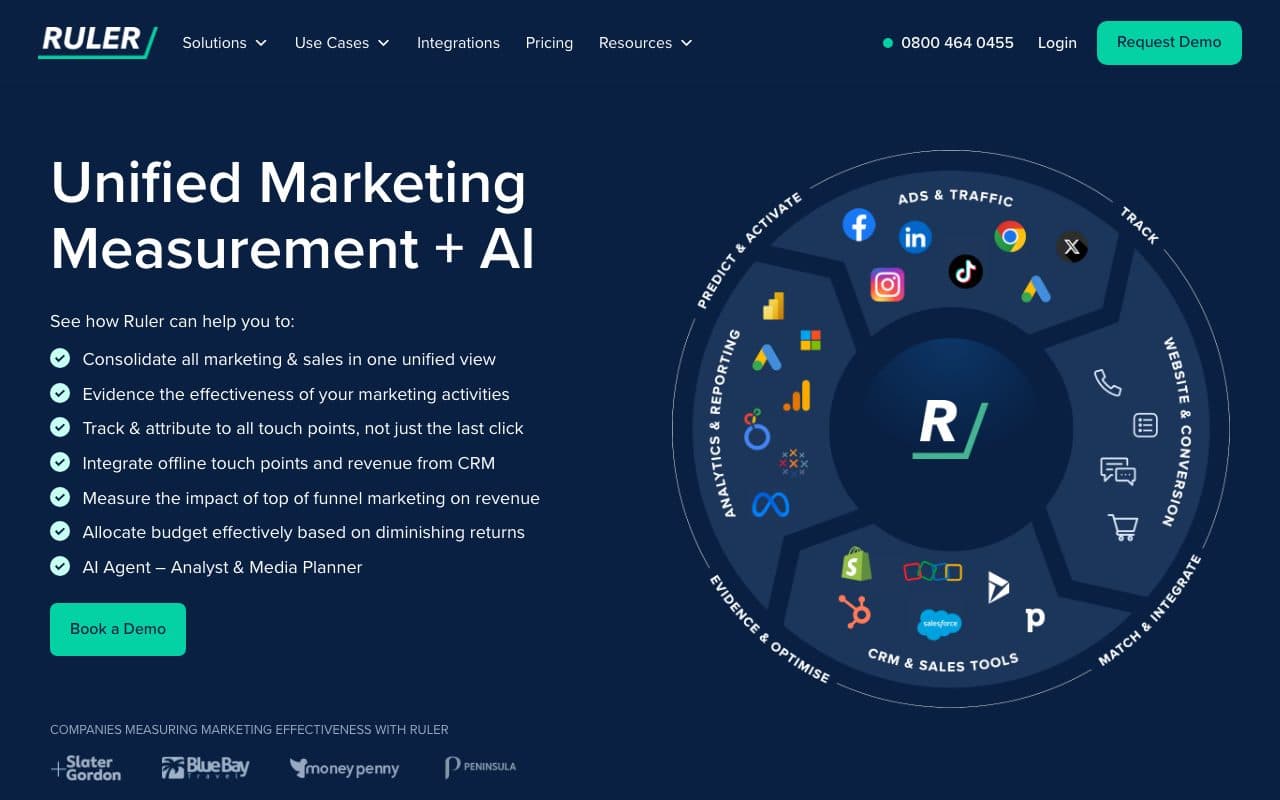
Ruler Analytics tracks inbound calls back to their marketing source and matches lead source data to CRM revenue. For businesses where phone calls are the primary conversion event, it provides KPIs that most tools miss entirely: which campaigns generate calls that close. Strong niche tool for phone-first B2B businesses.
Verdict
The right KPI dashboard for phone-call-centric businesses. Does not offer a CAPI closed loop or unified multi-channel attribution across paid and organic.
The KPI That Separates Good Dashboards from Great Ones
Most marketing KPI dashboards answer the same questions: how many impressions, clicks, and leads did we generate? These are useful operational metrics, but they're not what drives strategic decisions. The KPI that drives budget allocation, agency retention, and executive confidence is cost-per-close: how much did it cost to acquire a paying customer, broken down by channel, campaign, and creative?
Only one tool on this list tracks that KPI out of the box for B2B companies: LeadJourney. It connects every marketing touchpoint to the CRM pipeline stage it produced (qualified lead, appointment, close) and reports cost-per-close per channel, campaign, ad set, and creative in real time. No SQL, no data engineering, no BI team required.
The second differentiator: what happens to those KPI insights after they're displayed. Passive dashboards stop at the screen. LeadJourney's KPI data automatically feeds back to Meta, Google, LinkedIn, and Bing as conversion signals, so the campaigns with the best cost-per-close KPIs get more budget directed toward similar audiences by the algorithms themselves.
FAQ
Frequently Asked Questions
The questions teams choosing a KPI dashboard ask most.
What KPIs should a B2B marketing dashboard show?
Cost per qualified lead, cost per closed deal and pipeline contribution per channel, with the volume metrics underneath rather than at the top. Impressions, clicks and leads describe activity. The three above describe whether the activity paid for itself, and they are the ones leadership asks about when budget is being set.
How much do KPI dashboard tools cost?
Looker Studio is free. Power BI starts at $10 per user per month and Tableau from $15 for a Viewer seat. AgencyAnalytics is $20 per client per month, DashThis from $44, Geckoboard from $49, Databox from $64, Klipfolio from $99, Ruler Analytics from $199 and Whatagraph from €699 on annual billing. Supermetrics from €39 supplies data rather than dashboards.
Why can't my dashboard show cost per closed deal?
Because the two halves of that number live in different systems. The cost is in the ad platforms, the closed deal is in the CRM, and nothing joins them unless the click ID was captured and stored on the lead record at the start. A dashboard tool with connectors to both still cannot divide one by the other without that key.
Do I need a BI tool or a marketing dashboard?
A marketing dashboard if the questions are marketing questions and you want them answered this week. A BI tool such as Power BI, Tableau or Looker if you have a warehouse, a data team and modelling that goes beyond marketing. Buying the BI tool without the data team is the common expensive mistake.
Can a KPI dashboard replace a monthly report?
It should. A live dashboard the client or the board can open any day removes the ritual of assembling a deck, and it removes the month-long window in which nobody knows how things are going. Keep the monthly meeting for the decisions, not for reading numbers aloud.
Keep reading
More from the blog
 Tool Comparisons
11 Best iGaming Tracking Software Tools in 2026
Every iGaming tracker takes a postback. Fewer split reg, FTD and deposit into stages of one player, and fewer still send the FTD back to Google and Meta. Eleven tools ranked on that, with every price read on the vendor's own page.Read the article18 min read Tool Comparisons
9 Best Marketing Attribution Tools for Zoho CRM in 2026
Four of the best attribution tools for Zoho CRM are Zoho products you may already pay for. Nine options compared on where the tracking starts, which ad platforms they cover, and whether the closed deal ever reaches the algorithm buying your traffic.Read the article13 min read Tool Comparisons
9 Best Marketing Attribution Tools for Microsoft Dynamics 365 in 2026
Dynamics records the revenue and nothing fills in where it came from: Lead Source is a ten-option picklist and campaign spend is typed by hand. Nine tools compared on what each can actually see in a Dynamics environment, with pricing, pros, cons and a verdict.Read the article14 min read
Beyond lead counts
Ready to track KPIs that matter?
Full-funnel KPI dashboard. Cost-per-close per campaign. CRM pipeline metrics. Server-side accuracy. CAPI activation. 21-minute setup.